Trinity Rising
 71
71

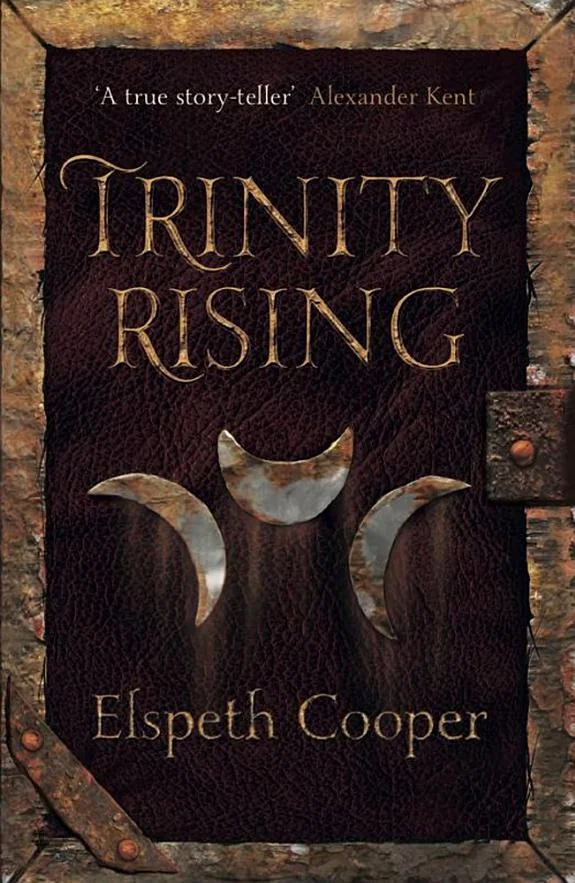
Trinity Rising
Elspeth Cooper’s Trinity Rising is not a simple tale of heroism. It begins with the palpable weight of Gair’s grief, a raw and affecting portrayal that grounds the subsequent fantastical elements. The author skillfully depicts the protagonist’s reluctant descent into a conflict that quickly dwarfs his personal sorrows. A particular strength lies in the portrayal of Gair’s mentor, whose wisdom is tested and ultimately insufficient against the scale of the emerging threat. However, the pacing in the middle section can feel somewhat attenuated, with the grander stakes occasionally obscured by prolonged introspection. The initial confrontation with the force described as ‘greater and even more deadly’ is handled with a compelling blend of terror and confusion, highlighting the narrative’s darker undertones. Cooper’s work here is a study in how personal devastation can precede, and perhaps even necessitate, engagement with larger, existential struggles. It’s a narrative that demands patience but rewards it with a grounded exploration of unwilling courage.
📝 Description
71
Elspeth Cooper's Trinity Rising, published in 2013, begins with a protagonist grappling with profound loss.
Gair finds himself drawn into a conflict that extends beyond his personal tragedies and his mentor's counsel. The novel examines how individual suffering connects to events that could change the world, moving past simple adventure to consider the nature of opposition and its outcomes. It will appeal to readers who look for stories that combine personal misfortune with a broad scope, especially those interested in how characters face seemingly insurmountable challenges. The book suits individuals who appreciate a plot that builds gradually, where the protagonist's inner state directly affects his involvement in critical, high-stakes situations. Those who enjoy a slower development toward major confrontations will find this work rewarding.
The early 2010s saw a continued appetite for fantasy and speculative fiction that addressed darker subjects and complex character developments. Trinity Rising appeared during this time, presenting a story that, while grounded in personal grief, expands to include wider, potentially devastating consequences. This period also marked a renewed interest in mythological figures within mainstream fiction.
This novel emerges within a tradition of supernatural fiction that uses personal struggles as a gateway to understanding larger, often hidden forces. The concept of 'rising,' suggested by the title, points to an internal transformation or awakening spurred by hardship, pushing the protagonist beyond his initial limits. It reflects a common trope in occult narratives where individuals are called to confront powers or destinies they did not anticipate, often as a result of personal upheaval. The story investigates how individual decisions, made under pressure, can have far-reaching effects, mirroring esoteric ideas about karma and interconnectedness.
💡 Why Read This Book?
• You will learn how profound personal loss can serve as an unlikely impetus for confronting world-altering conflicts, as seen in Gair’s journey from grief to engagement with the escalating threat. • You will feel the narrative tension created by the mentor’s limitations, understanding how established wisdom can prove inadequate when faced with unprecedented dangers. • You will grasp the thematic significance of 'rising' as a response to adversity, observing how characters are forced to evolve beyond their initial circumstances due to the conflict's scale.
⭐ Reader Reviews
Honest opinions from readers who have explored this book.
❓ Frequently Asked Questions
When was Trinity Rising first published?
Trinity Rising was first published on February 19, 2013, marking its entry into the contemporary speculative fiction landscape.
What is the primary focus of Gair's character arc in Trinity Rising?
Gair's arc centers on his struggle with grief following the loss of his beloved and home, which propels him into a much larger, deadly conflict than he anticipated.
Does Trinity Rising contain elements of magic or supernatural forces?
While the blurb doesn't explicitly detail magic, it refers to a conflict 'greater and even more deadly than he or his mentor ever anticipated,' suggesting elements beyond the mundane.
Who is the author of Trinity Rising?
The author of Trinity Rising is Elspeth Cooper.
What genre does Trinity Rising fall under?
Trinity Rising is categorized under Esoteric, suggesting themes that go beyond conventional fantasy or adventure, often exploring deeper philosophical or mystical underpinnings.
What is the central conflict Gair is drawn into?
Gair walks into a conflict that is described as significantly greater and more deadly than he or his mentor had ever foreseen, implying a threat of immense proportion.
🔮 Key Themes & Symbolism
Grief as Catalyst
The narrative positions Gair's profound grief not as an endpoint, but as a potent catalyst for his involvement in a larger struggle. The loss of his beloved and home strips him of his former life, making him susceptible and perhaps even uniquely qualified to perceive and engage with the encroaching, deadly conflict. This theme moves beyond simple mourning to explore how personal devastation can forge an unexpected path towards action and resistance against overwhelming forces. The work suggests that the capacity to feel deeply, even in sorrow, can become a source of strength when faced with external threats.
Escalating Conflict
Trinity Rising meticulously details how an individual's struggle can become entangled with forces far beyond comprehension. The conflict Gair enters is explicitly described as greater and more deadly than anticipated, hinting at a scope that transcends typical mortal disputes. This theme explores the terrifying realization that personal troubles can be mere preludes to existential dangers. The narrative builds this sense of escalating threat, showing how a localized problem can rapidly expand to encompass wider implications, challenging the characters’ understanding of reality and their place within it.
Mentor's Limitations
A significant aspect of the narrative involves the confrontation between Gair's burgeoning awareness and the established wisdom of his mentor. The blurb highlights that the conflict surpasses what the mentor 'ever anticipated,' underscoring the limitations of experience and knowledge when faced with novel or unprecedented threats. This theme looks at the complexities of mentorship and the moments when traditional guidance proves insufficient. It suggests a world where established paradigms are insufficient, forcing protagonists to rely on their own evolving understanding and resilience.
The Nature of 'Rising'
The title itself, Trinity Rising, implies a process of ascension or awakening, particularly in the face of adversity. Gair's journey is not merely reactive; it is a movement towards confronting and potentially overcoming a devastating situation. This theme explores the concept of emergent strength and the transformation that occurs when individuals are pushed to their absolute limits. The 'rising' can be interpreted as a spiritual, psychological, or even physical ascent, driven by the necessity to face a conflict that threatens existence itself, suggesting that profound challenges can unlock latent capabilities.
💬 Memorable Quotes
Direct passages from the work, attributed to the author.
“Gair, struggling with grief over the loss of his beloved and his home, walks into a conflict that is greater and even more deadly than he or his mentor ever anticipated.”
— This foundational statement establishes the novel's core tension: the intersection of profound personal suffering with an overwhelming, external threat. It suggests that Gair's internal state is not separate from the external conflict but is intrinsically linked to his entry into it.
“The conflict is greater and even more deadly than he or his mentor ever anticipated.”
— This highlights the inadequacy of conventional wisdom or experience when confronting unknown, potentially apocalyptic forces. It signals a narrative where established understanding is insufficient, pushing characters into uncharted territory.
“The mentor's anticipation of danger proves insufficient.”
— This points to a key thematic element: the limitations of established knowledge and experience when confronted by forces that defy conventional understanding or prediction.
💡 Key Ideas
Editorial paraphrase of the work's core concepts — not direct quotes.
The work explores the unexpected escalation of personal tragedy into a wider, existential struggle.
This paraphrased concept emphasizes the narrative's scope, moving from individual loss to a conflict with potentially world-altering consequences, a common trope in esoteric and mythological narratives.
Gair's journey from grief to engagement with a deadly conflict.
This summarizes the protagonist's arc, suggesting a transformation driven by circumstance rather than choice, where personal sorrow becomes a precursor to facing immense danger.
🌙 Esoteric Significance
Tradition
While not explicitly aligned with a single named tradition like Gnosticism or Hermeticism, Trinity Rising engages with themes common in esoteric thought, particularly the concept of the 'hero's journey' as an internal and external crucible. The narrative’s focus on a conflict exceeding mortal comprehension and the protagonist’s forced transformation echoes archetypal patterns found in many mystical traditions. It explores the idea that profound personal suffering can strip away illusions, making one receptive to deeper, albeit dangerous, realities. The 'trinity' in the title might subtly allude to various triadic concepts found in esoteric lore, suggesting a complex nature to the rising forces or challenges.
Symbolism
The concept of 'rising' itself functions as a potent symbol, representing not just a physical ascent but a spiritual or psychological awakening in response to overwhelming adversity. Gair’s grief can be seen as a descent into the underworld or a symbolic death, from which he must 'rise' to face the external conflict. The mentor figure, while ultimately limited, may symbolize the established order or the limitations of conventional knowledge that must be transcended. The 'greater and even more deadly' conflict can symbolize the shadow self, collective unconscious anxieties, or an encroaching spiritual darkness that demands a radical response.
Modern Relevance
Contemporary esoteric practitioners and students of comparative mythology might find Trinity Rising relevant for its exploration of archetypal patterns in modern narrative. The novel’s depiction of personal trauma as a gateway to confronting larger, often terrifying, realities speaks to modern psychological and spiritual frameworks that examine the transformative power of crisis. Thinkers exploring the 'shadow' in Jungian psychology or those interested in how fictional narratives can model spiritual or existential crises would find parallels. The work's focus on an individual's struggle against seemingly insurmountable odds continues to be a compelling theme in contemporary discussions of resilience and personal growth.
👥 Who Should Read This Book
• Readers interested in narrative explorations of grief and trauma as catalysts for personal transformation will find Gair's journey compelling. • Students of archetypal storytelling and the 'hero's journey' will appreciate how the narrative reinterprets these patterns within a conflict that exceeds conventional understanding. • Those who enjoy speculative fiction that looks at darker themes and examines the limitations of established knowledge when faced with unprecedented threats will find this work engaging.
📜 Historical Context
Elspeth Cooper's Trinity Rising emerged in 2013, a period where speculative fiction was increasingly exploring morally complex characters and darker thematic material, influenced in part by the success of authors like George R.R. Martin. The early 2010s also saw a continued fascination with mythological archetypes and epic narratives within fantasy literature. While not directly tied to a specific esoteric movement of the time, the book's focus on profound personal loss escalating into a world-threatening conflict aligns with a broader trend in literature and popular culture to examine the human condition under extreme duress. This era was marked by a significant output of fantasy novels that challenged traditional heroic tropes, often placing protagonists in situations where their personal suffering was inextricably linked to larger, often bleak, destinies. The reception of such works often focused on their gritty realism and character depth, distinguishing them from earlier, more overtly optimistic fantasy.
📔 Journal Prompts
Gair's grief and the subsequent conflict.
The mentor's insufficient anticipation.
The nature of the 'rising' force.
The personal cost of confronting a greater conflict.
How loss precedes engagement with the unknown.
🗂️ Glossary
Gair
The protagonist of Trinity Rising, characterized by his profound grief over personal losses and his subsequent entanglement in a deadly, escalating conflict.
Mentor
A figure in the narrative whose wisdom and anticipation of danger are ultimately surpassed by the magnitude and deadliness of the conflict Gair encounters.
Conflict Escalation
The narrative process by which a personal or localized struggle rapidly expands in scope and severity to become a threat of much greater proportion.
Beloved
Refers to a significant lost individual in Gair's life, whose death is a primary source of his grief and a catalyst for his involvement in the story's central conflict.
Home
Represents not just a physical place but also a state of belonging and security, the loss of which contributes to Gair's profound sense of bereavement.
Anticipation
The ability to foresee or predict future events; in the context of the book, the mentor's anticipation proves inadequate against the novel conflict.
Rising
A key concept, possibly thematic, suggesting an emergence, awakening, or confrontation with a greater force or destiny, often in response to crisis.
This book appears in 1 collection
🔮 Readers Also Liked
Browse all →









From the “Precognition” Collection
View all →





More Free Occult Philosophy Books
View all →