Trenn
 78
78

Trenn
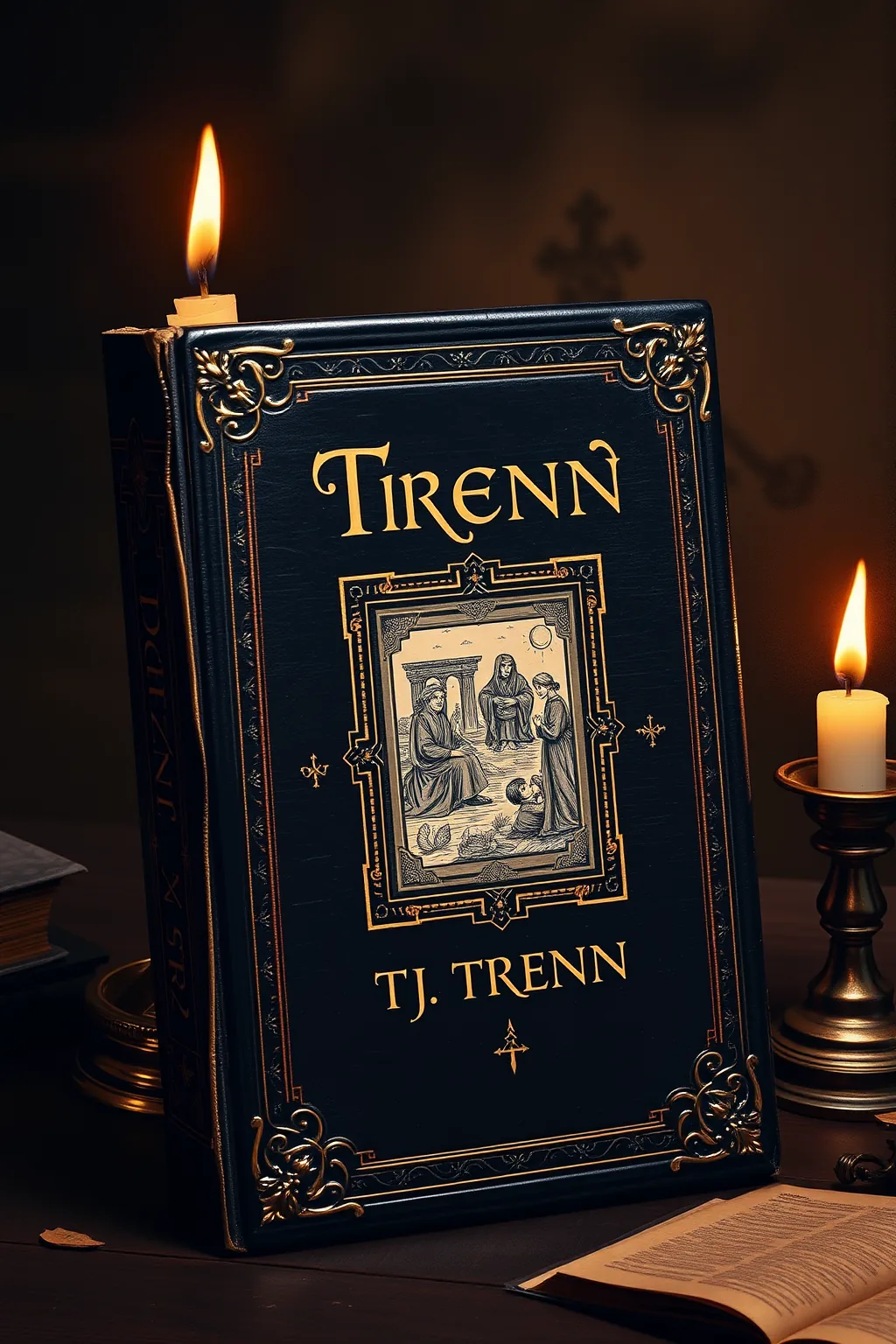
The impact of TJ Trenn’s 1981 publication, *Trenn*, is less about immediate accessibility and more about the slow burn of its conceptual density. The work’s strength lies in its unwavering commitment to exploring the architecture of consciousness from a perspective that feels both ancient and startlingly original. For instance, the persistent exploration of the 'Inner Citadel' as a concept, distinct from mere psychological resilience, offers a unique lens on personal agency. However, the book's primary limitation is its almost complete lack of concession to the reader; the prose can be exceptionally opaque, demanding significant prior engagement with esoteric philosophy. A passage where the text discusses the 'sympathetic resonance' between the macrocosm and microcosm, while potent, requires considerable interpretive effort. *Trenn* is a work for the dedicated explorer, not the casual browser.
📝 Description
78
T.J. Trenn's 1981 book explores consciousness and reality through symbolic systems.
Published in 1981, Trenn is a challenging work for students of esoteric philosophy. Its dense prose and unconventional structure present interconnected ideas rather than a linear narrative. The book is aimed at those comfortable with abstract thought and symbolic language, who seek to question established paradigms. Readers looking for simple introductions or self-help advice will find it demanding. The text engages with radical philosophical and spiritual inquiry, requiring careful study.
The work is set within a tradition of metaphysical exploration that saw renewed interest following the counter-culture movements of the mid-20th century. While influenced by figures like Aleister Crowley and the Theosophical movement, Trenn carves out its own distinct intellectual territory. It examines the nature of consciousness, the structure of reality, and methods for spiritual change. Key ideas include the 'Inner Citadel' as a source of personal authority and the 'Veil of Maya' representing the illusory quality of everyday perception. The book details a complex interaction between the visible and invisible worlds, often using symbolic frameworks.
Trenn emerged in 1981 during a resurgence of interest in occult and metaphysical subjects, following the counter-cultural shifts of the 1960s and 70s. This intellectual climate saw a renewed focus on hermetic studies and a growing openness to non-traditional spiritual paths. Figures like Aleister Crowley and the broader Theosophical movement continued to exert influence, yet Trenn charts its own unique course within this milieu. The book engages with radical philosophical and spiritual inquiry, demanding deep study from its readers.
💡 Why Read This Book?
• Gain a novel framework for understanding consciousness by grappling with the concept of the 'Inner Citadel,' a recurring motif that posits a unique locus of internal power and self-definition. • Explore the symbolic language of reality through the text's intricate descriptions of the 'Veil of Maya,' offering a fresh perspective on perception and illusion. • Understand the esoteric currents of the early 1980s by situating *Trenn*'s publication within the broader revival of metaphysical inquiry, providing context for its unique philosophical stance.
⭐ Reader Reviews
Honest opinions from readers who have explored this book.
❓ Frequently Asked Questions
What is the primary philosophical stance of TJ Trenn's *Trenn*?
The primary philosophical stance of *Trenn* is a form of radical idealism and esoteric ontology, focusing on the construction of inner reality and the nature of consciousness as the primary determinant of experience.
When was *Trenn* originally published?
*Trenn* was first published in 1981, a period marked by significant interest in occult and metaphysical literature.
Who is TJ Trenn?
TJ Trenn is the author of the esoteric work *Trenn*. Little public biographical information is widely available, adding to the enigmatic nature of the text itself.
What kind of esoteric tradition does *Trenn* draw from?
While not strictly adhering to a single tradition, *Trenn* draws heavily from Hermetic, Gnostic, and Neoplatonic concepts, reinterpreting them through a unique lens of consciousness and symbolic architecture.
Is *Trenn* considered an easy read?
No, *Trenn* is widely considered a challenging text. Its dense prose, abstract concepts, and lack of conventional narrative structure require significant reader engagement and background knowledge in esoteric philosophy.
What is the 'Inner Citadel' as discussed in *Trenn*?
The 'Inner Citadel' in *Trenn* refers to a fundamental, inviolable space within consciousness that serves as the source of true will and self-sovereignty, distinct from external circumstances or psychological states.
🔮 Key Themes & Symbolism
The Inner Citadel
This concept forms the bedrock of Trenn's exploration into self-sovereignty and conscious power. It is presented not as a psychological state but as a fundamental, inviolable core of being. The text suggests that true liberation and effective engagement with the external world stem from the fortification and understanding of this Inner Citadel. It is the locus from which one can perceive reality more authentically, unclouded by external conditioning or illusion. Accessing and mastering this internal space is a primary goal articulated within the work.
Veil of Maya & Perception
Trenn frequently references the concept of the 'Veil of Maya,' drawing from Eastern philosophical traditions to describe the illusory nature of ordinary sensory perception. The book argues that our everyday experience is a construct, a limited interpretation of a far vaster, underlying reality. Understanding and penetrating this veil is crucial for spiritual advancement, allowing for a direct apprehension of truth beyond phenomenal appearances. This theme underscores the work's critique of mundane consciousness.
Sympathetic Resonance
The principle of sympathetic resonance is explored as a fundamental law governing the interconnectedness of all things. The work posits that the macrocosm and microcosm are not separate entities but reflect and influence each other through invisible sympathetic links. This concept explains how inner states can influence outer events and vice versa, and how specific symbols or actions can resonate with universal forces. It provides a framework for understanding magical correspondences and the subtle energies of the cosmos.
Architecture of Reality
Rather than viewing reality as a fixed external phenomenon, Trenn presents it as a dynamic, constructed edifice. The book examines the underlying principles and symbolic structures that shape our perceived world. This involves an examination of consciousness itself as the primary architect, actively participating in the creation of experience. Understanding this 'architecture' allows the practitioner to work with the fundamental laws of existence, rather than being passively subject to them.
💬 Memorable Quotes
Direct passages from the work, attributed to the author.
“Perception is the architect of the prison.”
— This interpretation emphasizes the role of our subjective experience in creating limitations. It implies that by altering our perception, we can fundamentally change the nature of our reality and escape self-imposed restrictions.
“Sympathy binds the stars to the soul.”
— This evocative line suggests a deep, underlying connection between the celestial spheres (macrocosm) and the individual human being (microcosm), mediated by forces of attraction and resonance.
“The Veil of Maya is woven from unexamined assumptions.”
— This concept proposes that the illusions separating us from truth are not inherent to reality but are constructed from our own unexamined beliefs and habitual ways of thinking.
“To master the outer, one must first map the inner.”
— This principle underscores the esoteric axiom that external influence and control are secondary to internal mastery. It advocates for a deep exploration of one's own consciousness as the prerequisite for effective action in the world.
💡 Key Ideas
Editorial paraphrase of the work's core concepts — not direct quotes.
The Inner Citadel is not a fortress to be defended, but a space to be understood.
This paraphrased concept highlights the active, rather than defensive, nature of spiritual development. It suggests that true strength comes from internal clarity and self-knowledge, not from external resistance or isolation.
🌙 Esoteric Significance
Tradition
Trenn’s work draws from a broad spectrum of Western esoteric thought, particularly Hermeticism and Neoplatonism, while integrating insights that echo Gnostic and certain Eastern philosophical concepts. It departs from simpler correspondences by presenting a complex, almost architectural model of reality and consciousness. It fits within the lineage of authors who sought to articulate a unified field of consciousness underlying manifest existence, emphasizing inner transformation as the key to understanding cosmic principles.
Symbolism
Key symbols in *Trenn* include the 'Inner Citadel,' representing the inviolable core of self-awareness and will, a potent metaphor for spiritual sovereignty. The 'Veil of Maya' serves as a recurring motif for the illusory nature of ordinary perception, urging the reader to look beyond superficial appearances. The concept of 'Sympathetic Resonance' is also crucial, symbolizing the interconnectedness of all phenomena and the subtle energetic links that bind the cosmos together.
Modern Relevance
Contemporary practitioners of consciousness studies, Western esotericism, and certain branches of transpersonal psychology find value in *Trenn*'s exploration of subjective reality and the architecture of the mind. Its emphasis on inner sovereignty and the power of perception speaks to modern self-development philosophies that seek to integrate spiritual principles with psychological understanding. Thinkers exploring non-dual philosophies often cite its nuanced approach to the relationship between consciousness and manifestation.
👥 Who Should Read This Book
• Serious students of esoteric philosophy seeking to expand their understanding of consciousness and reality, particularly those interested in Hermetic and Gnostic traditions. • Advanced practitioners of meditation or contemplative disciplines looking for theoretical frameworks to deepen their inner work and explore concepts like the 'Inner Citadel.' • Comparative religion and philosophy scholars interested in unique, non-traditional interpretations of metaphysical concepts and the history of esoteric thought in the late 20th century.
📜 Historical Context
First published in 1981, TJ Trenn’s *Trenn* emerged during a period of significant resurgence in esoteric and occult studies, a trend that gained momentum following the cultural shifts of the 1960s and 70s. This era saw a growing dissatisfaction with purely materialistic worldviews and a renewed interest in Gnosticism, Hermeticism, and Eastern philosophies, often filtered through Western esoteric frameworks. Thinkers like Manly P. Hall had already laid groundwork for popularizing occult symbolism, and new movements were exploring consciousness expansion. *Trenn* distinguished itself by offering a highly abstract and philosophical approach, moving beyond the more direct magical practices favored by some contemporaries like those influenced by Aleister Crowley’s Ordo Templi Orientis. The book’s dense, conceptual nature meant it likely found a dedicated, albeit smaller, audience among serious students rather than widespread popular appeal. Its reception was characterized by quiet admiration within specific circles rather than public debate or academic engagement at the time.
📔 Journal Prompts
The architecture of the Inner Citadel: What are its foundational principles for you?
Reflecting on the Veil of Maya: How do your assumptions construct your perceived reality?
Sympathetic resonance: Identify an instance where you felt a connection between your inner state and external events.
The role of perception: How might altering your perception change your experience of limitation?
Mapping the inner landscape: What symbolic language best describes your current state of consciousness?
🗂️ Glossary
Inner Citadel
A central concept in Trenn, referring to the inviolable, sovereign space within consciousness that is the source of true will and self-awareness, independent of external conditions.
Veil of Maya
A philosophical concept, borrowed from Eastern thought, representing the illusory nature of the phenomenal world and ordinary sensory perception, which obscures a deeper, underlying reality.
Sympathetic Resonance
The principle that all things in the universe are interconnected and can influence each other through subtle energetic links, akin to sympathetic vibrations in physics.
Macrocosm
The universe as a whole; the greater world or system, often seen as a reflection or counterpart to the microcosm.
Microcosm
The human being or the individual; the smaller world or system, seen as a reflection or counterpart to the macrocosm.
Esoteric Ontology
The philosophical study of the nature of being and reality from a hidden, inner, or spiritual perspective, as opposed to exoteric or public teachings.
Consciousness Architecture
The idea that consciousness itself has a structured form or blueprint, which can be understood, mapped, and potentially modified or refined.
🔮 Readers Also Liked
Browse all →








More by TJ TRENN
All books →

More Free Occult Philosophy Books
View all →