Transcendental Meditation
 78
78

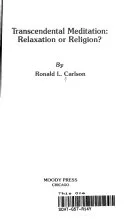
Transcendental Meditation
Carlson’s *Transcendental Meditation* offers a remarkably clear distillation of a practice that often gets shrouded in mystique. Its strength lies in its directness; it bypasses lengthy philosophical digressions to focus squarely on the mechanics of the technique. The 1978 publication date firmly places it within the initial wave of TM's popularization, providing a historical snapshot. A notable passage details the specific instructions for the initial stages of practice, emphasizing the non-striving nature required. However, the book's primary limitation is its inherent promotional aspect, which, while understandable given the context of the TM movement's growth, can feel somewhat prescriptive. The lack of comparative perspectives on other meditative traditions also narrows its scope. Despite this, it serves as a functional primer for those specifically interested in the TM method.
📝 Description
78
Ronald L. Carlson's 1978 book explains Transcendental Meditation's systematic approach.
Published in 1978, Ronald L. Carlson's "Transcendental Meditation" details a structured method for practicing a specific form of mantra meditation. The book guides readers from understanding the core principles to establishing a consistent practice aimed at achieving mental clarity and inner peace. Carlson's approach emphasizes a passive, effortless repetition of a personalized mantra, designed to allow the mind to settle naturally.
This text is best suited for individuals seeking practical, step-by-step instructions for stress reduction and mental quietude. It appeals to those who prefer a clear guide to developing a meditation habit, focusing on the psychological benefits of mental discipline rather than extensive philosophical discussions. It offers an accessible entry point for beginners interested in meditative techniques.
Carlson's work emerged in the late 1970s, a period when interest in Eastern spiritual practices was growing in the West. The Transcendental Meditation movement, founded by Maharishi Mahesh Yogi, had already gained significant attention. This book provides a focused explanation of the TM technique, differentiating it from other popular meditation styles like mindfulness or Vipassanā that were also gaining traction during that decade. It fits within the broader trend of making yogic and meditative practices accessible to a Western audience.
💡 Why Read This Book?
• Learn the specific mechanics of mantra selection and use as outlined by Carlson, distinct from concentration techniques, allowing for a potentially gentler entry into meditation. • Understand the psychological framework presented in the 1970s that positioned meditation as a tool for stress reduction and enhanced mental function, offering historical context. • Gain practical instructions for achieving a state of 'restful alertness' through effortless attention, a core concept unique to the TM technique described in the book.
⭐ Reader Reviews
Honest opinions from readers who have explored this book.
❓ Frequently Asked Questions
What is the core technique of Transcendental Meditation as described by Ronald L. Carlson?
The core technique involves the silent, effortless repetition of a specific, personalized mantra. The book emphasizes allowing the mind to settle naturally rather than forcing concentration, aiming for a state of 'restful alertness'.
When was Ronald L. Carlson's book on Transcendental Meditation first published?
Ronald L. Carlson's work on Transcendental Meditation was first published in 1978, placing it within the initial surge of popular interest in the technique.
Does the book require specific spiritual beliefs to practice the meditation?
No, Carlson's approach, as presented in the book, focuses on the psychological and physiological benefits of the technique. It is presented as a mental exercise accessible to individuals of any spiritual background or none.
How does Transcendental Meditation differ from other forms of meditation?
The book highlights that TM differs by using a specific mantra and focusing on effortless thinking, rather than concentration or contemplation, aiming for a unique state of deep rest.
What are the purported benefits of practicing Transcendental Meditation according to the book?
The book suggests benefits such as reduced stress, improved clarity of thought, increased creativity, and enhanced overall well-being through regular practice of the technique.
Is the mantra selection process detailed in the book?
While the book explains the concept of a personalized mantra, the specific, detailed process for selecting one typically involved instruction from a certified TM teacher, a point often clarified in the movement's literature.
🔮 Key Themes & Symbolism
Effortless Technique
The book centers on the principle of 'effortless transcending,' a core tenet of the Transcendental Meditation technique. Unlike methods requiring intense concentration or visualization, Carlson explains how the practice encourages the mind to settle naturally. The use of a mantra serves as a vehicle for this process, allowing the practitioner to disengage from active thought without struggle. This approach is positioned as accessible and sustainable, fostering a state of deep rest and mental quietude that distinguishes it from other contemplative practices emerging in the same era.
Mantra as a Tool
A key element detailed is the function of the mantra within Transcendental Meditation. Carlson outlines how a specific, personally assigned sound is used not for contemplation or meaning, but as a focal point that facilitates the mind's inward movement. The book suggests that the mantra's inherent nature, when used correctly, helps bypass the thinking process, leading to a unique state of consciousness. This aspect highlights the structured, systematic nature of the TM technique, differentiating it from practices that might use affirmations or visualizations.
Restful Alertness
The concept of 'restful alertness' is presented as the primary outcome of consistent Transcendental Meditation practice. Carlson describes this state as a unique physiological and psychological condition where the body is deeply rested, yet the mind remains alert and aware. This state is contrasted with sleep (deep rest but lack of awareness) and ordinary waking consciousness (alertness but less rest). The book posits that achieving this balance through the TM technique can lead to improved cognitive function, reduced stress, and enhanced overall well-being.
Psychological and Physiological Benefits
Carlson's work, published in 1978, emphasizes the practical, science-backed benefits of the TM technique. It explores how the practice can lead to tangible improvements in mental health, such as decreased anxiety and enhanced emotional regulation. Physiologically, the book touches upon research indicating reduced heart rate and blood pressure during meditation. This focus on empirical outcomes was crucial in the movement's effort to present TM as a secular and accessible mental training program, distinct from traditional religious or spiritual disciplines.
💬 Memorable Quotes
Direct passages from the work, attributed to the author.
“The mind has the ability to settle down.”
— This concept underscores the book's central premise: meditation is not about forcing the mind into a state, but about facilitating its natural tendency towards stillness and quietude.
“Use the mantra easily, without effort.”
— This instruction highlights the non-striving nature of the TM technique, distinguishing it from concentration-based methods and emphasizing passive awareness.
“The goal is a state of restful alertness.”
— This phrase captures the unique outcome of the practice, describing a balance between deep physical relaxation and clear mental awareness.
“Meditation is a tool for enhancing life.”
— This interpretation emphasizes the practical application of the technique, positioning it as a method for improving daily functioning and well-being.
💡 Key Ideas
Editorial paraphrase of the work's core concepts — not direct quotes.
Allow thoughts to come and go.
This paraphrased concept reflects the book's guidance on managing the mental stream during meditation, encouraging non-judgmental observation rather than suppression.
🌙 Esoteric Significance
Tradition
While often presented as a secular technique, Transcendental Meditation draws heavily from the Vedic traditions of India, a lineage with deep roots in esoteric philosophy. Its methodology, particularly the use of mantras, has parallels with practices found in Tantra and Yoga, though TM diverges by standardizing the transmission and application of mantras. It can be viewed as a modern, systematized adaptation of ancient contemplative technologies, stripped of overt religious dogma to appeal to a global audience. Its place within the broader esoteric spectrum is as a bridge, offering a taste of inner exploration accessible through a structured, repeatable mental discipline.
Symbolism
The primary symbolic element is the mantra itself. While the book may not examine deep symbolic meanings of individual mantras, their role is symbolic of a return to source consciousness. The act of repeating the mantra can be seen as a symbolic return to the 'seed' of awareness. Another subtle symbolic aspect is the concept of 'restful alertness,' symbolizing the integration of opposing states—activity and passivity, mind and body—a common theme in esoteric traditions seeking wholeness and balance.
Modern Relevance
The principles outlined in Carlson's work continue to influence contemporary approaches to mindfulness and stress reduction. Modern meditation apps and wellness programs often incorporate elements of effortless attention and mantra-based techniques, though not always under the TM banner. Researchers in neuroscience and psychology continue to explore the physiological and cognitive effects of TM, building on the early studies that Carlson's book alluded to. Thinkers in the positive psychology and secular spirituality movements still find value in its structured, accessible methodology for cultivating mental well-being.
👥 Who Should Read This Book
• Individuals seeking a structured, secular method for stress reduction and mental clarity, particularly those interested in the specific technique popularized by the TM movement. • Students of 20th-century esoteric and New Age movements who wish to understand a key practice that gained widespread popularity during the 1970s and 1980s. • Practitioners looking for a consistent, repeatable meditation technique that emphasizes effortless mental settling over active concentration or visualization.
📜 Historical Context
Ronald L. Carlson's *Transcendental Meditation*, published in 1978, emerged during a period of intense Western fascination with Eastern spiritual practices, particularly those offering accessible techniques for personal transformation. The Transcendental Meditation movement, spearheaded by Maharishi Mahesh Yogi, had already achieved significant cultural penetration throughout the 1970s, endorsed by figures like The Beatles. Carlson's book provided a focused exposition of the TM technique, aligning with the broader New Age and counterculture movements that sought alternatives to conventional Western lifestyles and psychologies. It appeared in an era when comparative religious studies were growing, and popular psychology books on consciousness and self-improvement flooded the market. While TM itself was a distinct phenomenon, it coexisted with a burgeoning interest in Zen Buddhism, yoga, and various forms of mindfulness meditation, creating a rich range of contemplative practices vying for attention.
📔 Journal Prompts
Reflect on the concept of 'restful alertness' and its potential application to your daily activities.
Consider the role of the mantra as described in the book, separate from its meaning.
Analyze the distinction between effortless settling and concentration as presented by Carlson.
Explore how the historical context of 1978 might have influenced the presentation of Transcendental Meditation.
Evaluate the idea of 'allowing thoughts to come and go' versus actively managing them.
🗂️ Glossary
Mantra
A word, syllable, or sound used in meditation. In Transcendental Meditation, it is a specific, personally assigned sound used for effortless repetition to quiet the mind.
Transcendence
In the context of TM, the process of moving the mind inward, beyond active thought, to a state of deep inner silence and awareness.
Restful Alertness
The unique state achieved during TM practice, characterized by deep physical rest coupled with a clear, alert mind.
Effortless Meditation
A style of meditation that does not rely on concentration or control, but rather on allowing the mind to settle naturally with the aid of a mantra.
Vedic Tradition
The ancient philosophical and spiritual tradition originating in India, from which many Eastern contemplative practices, including elements of TM, are derived.
Maharishi Mahesh Yogi
The spiritual teacher who founded the Transcendental Meditation movement and popularized its techniques globally.
Mantra Assignment
The process, traditionally conducted by a certified TM teacher, of selecting a specific mantra for an individual practitioner based on certain criteria.