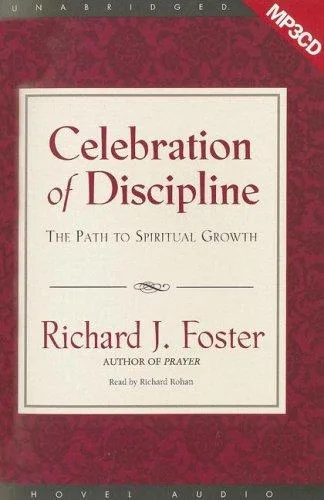
Celebration of discipline

 79
79

Celebration of discipline
Foster's Celebration of Discipline, published in 1984, remains a potent call to intentional spiritual living. Its strength lies in its clear articulation of spiritual disciplines as active engagements, not mere suggestions. The chapter on "Fasting," for instance, demystifies a practice often shrouded in guilt or neglect, presenting it as a practical means of focusing the will. However, the book's steadfast adherence to a specific Christian framework, while its intended audience, might limit its appeal to those outside that tradition seeking universal principles of self-mastery. A passage discussing "Solitude" effectively contrasts true biblical solitude with mere isolation, highlighting its purpose in communion with God. Foster’s work is a demanding, yet rewarding, manual for those serious about spiritual cultivation.
📝 Description
79
Published in 1984, Celebration of Discipline argues spiritual disciplines are vital for Christian life.
Richard J. Foster's 1984 book, Celebration of Discipline, examines spiritual practices as central to Christian growth. Foster posits that a deeper connection with God comes not from passive acceptance, but from deliberate, disciplined engagement. He breaks down various disciplines, presenting them as tools to cultivate a richer spiritual life. The book targets individuals looking to move beyond superficial faith experiences and who recognize that genuine spiritual development requires conscious effort and a systematic approach. It offers practical guidance for those interested in applying their faith within a Christian context, appealing to the earnest seeker ready for consistent spiritual work.
Foster's work emerged during the mid-1980s, a time when interest in contemplative spirituality grew alongside evangelical movements. It provided a contrast to faith approaches that were purely emotional or passive. By referencing figures like John Wesley and Thomas Keating, Foster connected with a historical Christian tradition of spiritual formation. He made these ancient practices accessible for a modern audience, offering a different perspective on spiritual dynamism than the prominent Charismatic movement of the era. The book centers on the idea that spiritual disciplines are pathways to maturity, categorized into "Inner Disciplines" like Meditation, Prayer, Fasting, and Study, and "Outer Disciplines" such as Simplicity, Solitude, Submission, and Service.
Celebration of Discipline engages with the historical Christian tradition of asceticism and spiritual formation. It draws from figures associated with structured spiritual life, such as John Wesley and the monastic contemplative practices influenced by Thomas Keating. The book places these practices within a framework of intentional spiritual growth, emphasizing that freedom in the spirit is achieved through consistent, deliberate action rather than solely through emotional experience or theological assent. It connects a long lineage of contemplative thought to contemporary Christian practice.
💡 Why Read This Book?
• You will learn how to actively engage in spiritual growth by understanding the "Inner Disciplines" like Meditation, Prayer, Fasting, and Study, as detailed in Foster's 1984 work, moving beyond passive faith. • You will gain practical methods for cultivating "Outer Disciplines" such as Simplicity, Solitude, Submission, and Service, enabling a more structured and intentional spiritual life. • You will discover how embracing deliberate spiritual practices, as advocated by Foster, can lead to a deeper, more tangible experience of the divine presence in everyday life.
⭐ Reader Reviews
Honest opinions from readers who have explored this book.
❓ Frequently Asked Questions
What are the "Inner Disciplines" discussed in Celebration of Discipline?
The Inner Disciplines, as outlined by Richard J. Foster in his 1984 book, are Meditation, Prayer, Fasting, and Study. These are presented as foundational practices for cultivating an interior spiritual life.
What is the historical significance of Richard J. Foster's Celebration of Discipline?
Published in 1984, the book revitalized interest in spiritual disciplines within contemporary Christianity, offering a structured approach to faith at a time when other movements emphasized emotional experience.
How does Celebration of Discipline define "Solitude"?
Foster defines "Solitude" not as mere isolation, but as a voluntary withdrawal from external stimuli to foster deeper communion with God, a key "Outer Discipline" in his framework.
What is the core message regarding spiritual disciplines in Foster's book?
The core message is that spiritual disciplines are active, intentional practices essential for obedience to God and experiencing His presence more fully, rather than passive or optional activities.
Can beginners benefit from reading Celebration of Discipline?
Yes, beginners seeking a practical, structured path to spiritual growth will find the book beneficial, though it requires commitment to the disciplined practices it describes.
What is the relationship between "Simplicity" and "Service" in Foster's work?
In Celebration of Discipline, "Simplicity" frees one from material attachments, enabling greater capacity for "Service," as both are presented as vital "Outer Disciplines" for a life focused on God and others.
🔮 Key Themes & Symbolism
The Practice of Inner Disciplines
Foster meticulously details the "Inner Disciplines"—Meditation, Prayer, Fasting, and Study—as the bedrock of spiritual formation. These are not presented as abstract ideals but as tangible actions. Meditation involves focused attention on God's presence, Prayer is explored in its many forms beyond simple supplication, Fasting is framed as a deliberate abstinence for spiritual clarity, and Study refers to the diligent engagement with scripture and theological texts. The emphasis is on consistent, intentional engagement to cultivate an interior life responsive to the divine.
Embracing Outer Disciplines
Complementing the inner life, Foster outlines "Outer Disciplines": Simplicity, Solitude, Submission, and Service. Simplicity calls for shedding material excess to focus on essential values. Solitude offers respite from constant external noise for inward reflection and divine communion. Submission involves yielding one's will in appropriate contexts, fostering humility. Service is the active outward expression of faith, dedicating one's energy to the needs of others. Together, these disciplines shape the individual's outward actions and interactions.
Discipline as Freedom
A central tenet is that true spiritual freedom is achieved not through the absence of restraint, but through the embrace of discipline. Foster argues that spiritual disciplines, far from being restrictive, are liberating. They free individuals from the bondage of self-interest, superficiality, and the chaos of an undisciplined life. By voluntarily submitting to these practices, believers find themselves empowered to live more fully according to God's will, experiencing a deeper, more authentic spiritual existence.
Cultivating Spiritual Maturity
The ultimate aim of these disciplines, according to Foster, is spiritual maturity and a profound encounter with God. The book posits that consistent practice over time transforms character, making individuals more Christ-like. It's a call to a lifelong process of growth, where each discipline acts as a tool for refining the spirit, deepening faith, and enabling a more effective and loving engagement with the world. This maturity is characterized by obedience, love, and an abiding sense of God's presence.
💬 Memorable Quotes
Direct passages from the work, attributed to the author.
“The Spirit of God can only produce what is born of the Spirit. We must be born of the Spirit if we are to be spiritual.”
— This highlights Foster's emphasis on divine agency in spiritual transformation, asserting that genuine spirituality originates from God's work within us, initiated by a spiritual rebirth.
“Disciplines are the active side of obedience.”
— This concise statement captures the essence of Foster's argument: that following God requires not just passive agreement but active, intentional practices that demonstrate obedience.
“Fasting, when practiced, is a holy act.”
— Foster elevates fasting beyond mere dieting, framing it as a sacred practice that, when undertaken with spiritual intent, aligns the individual more closely with God's will.
“Solitude is the furnace of transformation.”
— This powerful metaphor suggests that periods of intentional aloneness and quiet are essential crucibles where character is forged and spiritual change occurs.
“The greatest tragedy in the history of the church is the neglect of the spiritual disciplines.”
— Foster views the historical sidelining of these practices as a profound loss, hindering the church's spiritual vitality and its capacity to fulfill its divine mandate.
🌙 Esoteric Significance
Tradition
While firmly rooted in Christian theology, Celebration of Discipline engages with principles common to various esoteric traditions focused on inner transformation and spiritual ascent. Its emphasis on structured practices for self-mastery and communion with the divine echoes themes found in Gnostic disciplines, Hermetic asceticism, and mystical Sufism. Foster's work can be seen as a bridge, translating ancient contemplative techniques and the pursuit of direct spiritual experience into a language accessible to a broad Christian audience, thereby democratizing access to these profound inner technologies.
Symbolism
The book employs the concept of "disciplines" as symbolic tools for spiritual refinement. Fasting symbolizes the mastery of bodily appetites and desires, akin to ascetic practices across traditions. Solitude represents withdrawal from the material world to seek inner truth, mirroring the hermit archetype. Prayer and Meditation symbolize direct communion with a higher power or inner self. Simplicity, as a discipline, symbolizes detachment from worldly illusions, aligning with the Hermetic principle of correspondence between the inner and outer realms.
Modern Relevance
Contemporary movements such as the "New Monasticism" and various Christian contemplative networks frequently cite Foster’s work as foundational. Thinkers and practitioners exploring integrated spirituality, mindfulness within a faith context, and intentional communities draw heavily on his articulation of spiritual disciplines. His emphasis on practical, repeatable actions for spiritual growth remains relevant for individuals seeking tangible methods to deepen their spiritual lives amidst the distractions of modern existence, influencing secular self-help as well.
👥 Who Should Read This Book
• Individuals seeking a structured, practical approach to spiritual growth within a Christian framework will find clear guidance on "Inner" and "Outer" disciplines. • Those feeling stagnant in their faith journey and desiring intentional methods to deepen their connection with God will benefit from Foster's actionable advice. • Readers interested in the historical practices of Christian mystics and ascetics, presented in an accessible 20th-century context, will appreciate the book's foundational principles.
📜 Historical Context
Richard J. Foster’s Celebration of Discipline, published in 1984, arrived during a period of significant spiritual exploration within American Christianity. The mid-1980s saw a growing interest in contemplative practices and spiritual formation, partly as a response to the perceived excesses of the burgeoning Charismatic movement and the broader cultural emphasis on self-fulfillment. Foster’s work drew heavily from historical Christian traditions, particularly from figures like John Wesley and the early monastic movements, reintroducing these ancient practices to a modern audience. While the book found widespread acceptance, particularly within evangelical and mainline Protestant circles, it also sparked debate. Some critics, like J.I. Packer, while appreciative of the emphasis on discipline, cautioned against misinterpretations that could lead to legalism. Foster’s approach, however, offered a compelling alternative to purely experiential or intellectual forms of faith, grounding spiritual life in tangible, consistent practice.
📔 Journal Prompts
Reflect on the "Inner Disciplines" and identify one to practice daily for the next week.
Consider the concept of "Submission" as explored by Foster; where might it apply in your life?
Analyze the role of "Fasting" in your spiritual journey, as presented in the book.
How does the discipline of "Simplicity" challenge your current lifestyle?
Explore the meaning of "Solitude" beyond mere loneliness, as described by Foster.
🗂️ Glossary
Spiritual Disciplines
Intentional practices, both inner and outer, undertaken to cultivate spiritual growth, obedience to God, and a deeper experience of the divine presence.
Inner Disciplines
Practices focused on the internal life: Meditation, Prayer, Fasting, and Study, aimed at cultivating spiritual awareness and connection.
Outer Disciplines
Practices focused on outward actions and interactions: Simplicity, Solitude, Submission, and Service, shaping behavior and community life.
Meditation
A practice of focused attention, often on scripture or God's presence, to quiet the mind and open oneself to spiritual truth.
Fasting
The voluntary abstinence from food or other things for a specific period, undertaken to focus the will and deepen spiritual awareness.
Solitude
A deliberate withdrawal from external stimuli and social interaction, intended for introspection and communion with God.
Submission
The voluntary yielding of one's will in appropriate relationships and circumstances, fostering humility and obedience.
🔮 Readers Also Liked
Browse all →









More by Richard J. Foster
All books →
More Free Spiritual Development Books
View all →