Trance-Portation
 74
74

Trance-Portation
Paxson's approach to trance work in 'Trance-Portation' is commendably grounded, offering a practical guide that steers clear of sensationalism. Her emphasis on the 'multi-spirited way' to enter the inner realm provides a refreshing perspective, moving beyond singular, often Westernized, interpretations of spiritual experience. The text's strength lies in its detailed, step-by-step guidance, which empowers the reader to cultivate their own inner landscape with intention and discernment. However, the prose, while clear, occasionally leans towards academic dryness, which might temper the immediate experiential connection for some readers. A passage discussing the development of 'spirit allies' exemplifies the book's pragmatic yet evocative style, presenting these entities not as external deities but as facets of the self or guides within the psyche. 'Trance-Portation' offers a valuable, if sometimes reserved, manual for intentional consciousness exploration.
📝 Description
74
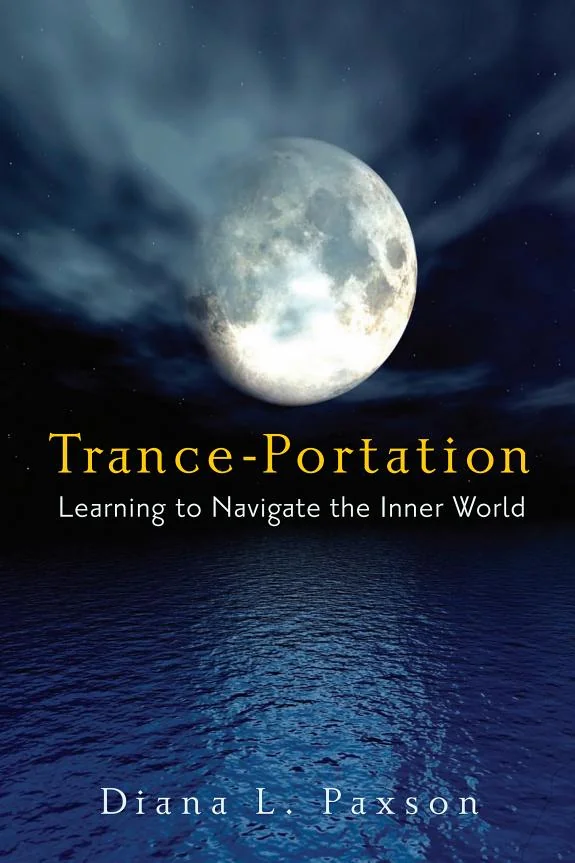
Diana L. Paxson's 2008 book 'Trance-Portation' details a method for accessing altered states of consciousness.
This text outlines a structured approach to entering altered states of consciousness, focusing on personal exploration. Paxson views trance not simply as dissociation, but as a deliberate shift in awareness for spiritual discovery. The book is intended for individuals interested in personal growth, spiritual insight, and creative work who seek a controlled and intentional framework for integrating these experiences.
Paxson emphasizes the active role of the practitioner in directing trance states. She describes the inner world as a layered reality where personal spirit allies can be developed. The work frames trance as a dynamic interaction with subtle energies and consciousness, rather than a passive event. It encourages a practical, user-directed engagement with these states.
Published in 2008, 'Trance-Portation' arrives in a period of renewed interest in practical applications of altered states and embodied spirituality within esoteric communities. It shares common ground with works on shamanic journeying and altered consciousness, such as those by Michael Harner. However, Paxson's work specifically highlights the practitioner's internal direction and their engagement with a multi-spirited inner world, distinguishing it from earlier traditions.
💡 Why Read This Book?
• Learn a systematic approach to intentionally enter altered states, moving beyond passive experience as detailed in the 'multi-spirited way' concept. • Understand how to map and engage with your 'inner realm' as a dynamic, layered space, a core principle explored throughout the book. • Develop practical techniques for integrating insights gained from trance states into daily life, a key takeaway emphasized by Paxson's guidance.
⭐ Reader Reviews
Honest opinions from readers who have explored this book.
❓ Frequently Asked Questions
What is the core concept of 'Trance-Portation'?
'Trance-Portation' introduces a comprehensive, multi-spirited approach to accessing and navigating the inner realm through intentional trance states, viewing it as a tool for personal and spiritual exploration.
When was Diana L Paxson's 'Trance-Portation' first published?
Diana L Paxson's 'Trance-Portation' was first published on November 1, 2008.
Who would benefit most from reading 'Trance-Portation'?
Individuals interested in practical methods for exploring altered states of consciousness for personal growth, spiritual insight, and creative development would find this book beneficial.
Does the book discuss specific techniques for entering trance?
Yes, 'Trance-Portation' offers detailed, step-by-step methodologies and exercises designed to guide the reader in intentionally entering and working within trance states.
What does Paxson mean by a 'multi-spirited way'?
The 'multi-spirited way' refers to an approach that acknowledges and engages with various aspects of consciousness and potential guides within the inner realm, rather than a singular, monolithic spiritual entity.
Is 'Trance-Portation' suitable for beginners?
The book provides a structured framework that can be accessible to beginners willing to engage with its practical exercises and introspective approach to altered states.
🔮 Key Themes & Symbolism
Intentional Altered States
The work posits that altered states of consciousness are not merely accidental or induced by external factors, but can be intentionally accessed and directed. Paxson provides methods for cultivating this intentionality, enabling practitioners to engage with the inner landscape purposefully. This contrasts with passive or uncontrolled dissociative experiences, framing trance as a skill to be developed and applied.
The Inner Realm
Paxson conceptualizes the 'inner realm' as a multi-layered, dynamic reality accessible through trance. This is not a purely psychological space but a spiritual geography populated by various forms and energies. The book guides readers in mapping this terrain, understanding its different strata, and interacting with its inhabitants and phenomena.
Spirit Allies and Guides
A significant aspect of 'Trance-Portation' involves the development and interaction with 'spirit allies' or guides encountered within the inner realm. Paxson approaches these figures not necessarily as external supernatural beings, but as potent aspects of consciousness, archetypes, or guides that can offer wisdom and assistance in the practitioner's journey.
Integration of Experience
Crucially, the book emphasizes the importance of integrating the experiences and insights gained during trance states into waking life. This ensures that altered state work leads to tangible personal growth, understanding, and practical application, rather than remaining solely an esoteric pursuit detached from daily reality.
💬 Memorable Quotes
Direct passages from the work, attributed to the author.
“The inner realm is a place one travels to, not merely a state one falls into.”
— This statement highlights the active, intentional nature of trance-portation as described by Paxson. It suggests that accessing inner states requires deliberate effort and direction, akin to a physical journey.
“Developing spirit allies provides unique perspectives and assistance for the traveler.”
— This concept underscores the practical utility of cultivating relationships with inner guides, framing them as sources of wisdom and support for reading through the complexities of the inner realm.
“Intentionality is the compass guiding exploration within the subconscious.”
— This interpretation emphasizes the crucial role of conscious purpose and direction when engaging with altered states, suggesting it acts as a navigational tool for inner exploration.
💡 Key Ideas
Editorial paraphrase of the work's core concepts — not direct quotes.
A multi-spirited approach acknowledges the diverse energies and forms encountered within.
This paraphrase captures the essence of Paxson's 'multi-spirited way,' emphasizing the recognition and engagement with a variety of non-physical presences or consciousness aspects within the inner landscape.
Integrating trance experiences enriches the fabric of waking life.
This paraphrase points to the book's focus on the practical application and beneficial impact of trance work on one's everyday existence, promoting holistic development.
🌙 Esoteric Significance
Tradition
Paxson's work can be seen as an evolution within the modern Western esoteric landscape, particularly influenced by the psychological and symbolic explorations of Carl Jung and the practical, experiential focus of contemporary shamanism and neopaganism. It moves beyond rigid dogma, offering a personalized framework for inner exploration that speaks to Hermetic principles of correspondence and the Gnostic emphasis on inner knowledge, but presented through a contemporary, accessible lens.
Symbolism
Key symbols in 'Trance-Portation' include the concept of the 'inner realm' itself, often depicted as a landscape with distinct regions (e.g., thresholds, sacred spaces), and 'spirit allies,' which can manifest in various symbolic forms—animals, archetypal figures, or abstract energies. These symbols represent the accessible facets of the subconscious and superconscious, serving as guides or representations of internal states and wisdom.
Modern Relevance
The methods and concepts presented in 'Trance-Portation' remain highly relevant for contemporary practitioners of lucid dreaming, energy work, and depth psychology. Thinkers and practitioners interested in embodied consciousness, personal mythology, and the integration of spiritual experience into daily life draw upon Paxson's structured approach to navigating inner landscapes and cultivating intentionality in altered states.
👥 Who Should Read This Book
• Aspiring practitioners of altered states seeking a structured, intentional methodology distinct from purely passive or uncontrolled experiences. • Students of comparative spirituality interested in contemporary approaches to inner exploration and consciousness work that bridge psychological and spiritual perspectives. • Creatives and intuitive individuals looking for techniques to access deeper wells of inspiration and insight through directed inner journeys.
📜 Historical Context
Diana L Paxson's 'Trance-Portation,' first published in 2008, arrived during a resurgence of interest in practical spirituality and consciousness studies. It sits within a lineage of Western esoteric traditions that explore altered states, drawing parallels with shamanic journeying techniques popularized by figures like Michael Harner and earlier explorations of psychic phenomena. However, Paxson's work distinguishes itself by offering a detailed, personal methodology focused on intentionality and a 'multi-spirited' engagement with the inner realm. This period also saw continued academic and popular engagement with Jungian psychology and archetypal theory, which implicitly informs Paxson's conceptualization of inner landscapes and symbolic encounters. While not facing widespread censorship, such works often exist in a niche, sometimes viewed with skepticism by mainstream academia, though respected within dedicated esoteric communities.
📔 Journal Prompts
The nature of the 'inner realm' as depicted in the text.
Your personal experience with intentionality during altered states.
The concept of 'spirit allies' and their potential manifestation.
How the 'multi-spirited way' differs from other approaches to trance.
Integrating insights from inner journeys into your daily life.
🗂️ Glossary
Inner Realm
The subjective, non-physical landscape accessed through altered states of consciousness, conceptualized as a dynamic and layered space for exploration and interaction.
Trance-Portation
The deliberate act of traveling within or projecting consciousness into the inner realm through focused intention and specific techniques.
Multi-Spirited Way
An approach to trance work that acknowledges and engages with a diversity of inner presences, energies, and consciousness aspects, rather than a singular focus.
Spirit Allies
Entities, guides, or symbolic figures encountered within the inner realm that offer wisdom, assistance, or perspectives to the practitioner.
Intentionality
The conscious purpose and directed will applied to the process of entering, navigating, and utilizing altered states of consciousness.
Threshold
A symbolic point or boundary within the inner realm that marks entry into new stages or different aspects of consciousness.
Integration
The process of incorporating insights, energies, or experiences gained during trance states into one's waking life and conscious awareness.
This book appears in 1 collection
🔮 Readers Also Liked
Browse all →







From the “Astral Projection” Collection
View all →






More Free Occult Philosophy Books
View all →