Indian Scriptures
 71
71

Indian Scriptures
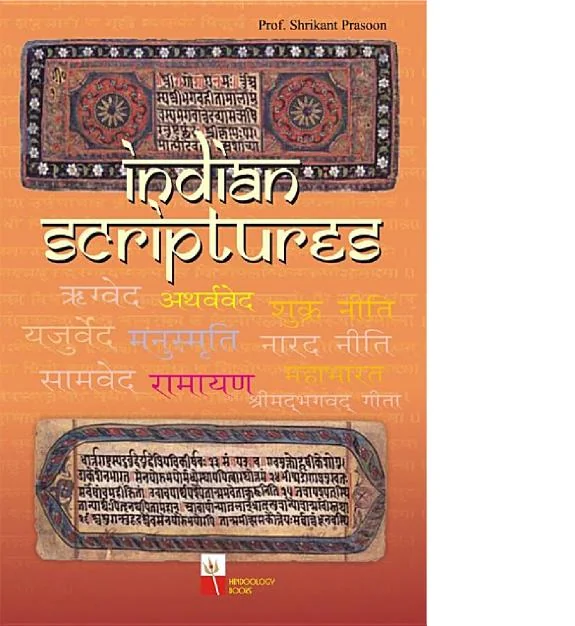
Prof. S.K. Prasoon’s *Indian Scriptures* offers a straightforward classification of Hindu textual traditions, prioritizing the Shruti-Smriti dichotomy. Its strength lies in its clear articulation of scriptural hierarchy, presenting the Vedas and their derivatives as primary. However, the work sometimes simplifies the vastness of Hindu literature, treating the collection as a monolithic entity rather than a dynamic, evolving corpus. The discussion on the Vedas as 'eternal books of knowledge' connected to the Supreme Lord, while central to many Hindu philosophies, could benefit from deeper engagement with diverse interpretive schools. A passage detailing the Upanishads as part of Shruti, representing philosophical inquiry stemming from Vedic roots, highlights the book's utility in mapping out the textual landscape. Ultimately, Prasoon provides a useful, if introductory, framework for understanding Hindu scriptural organization.
📝 Description
71
Prof. S.K. Prasoon's 2008 book, Indian Scriptures, maps the structure of Hindu religious texts.
Published in 2008, Indian Scriptures by Prof. S.K. Prasoon provides an introduction to the primary texts of Hinduism. The book begins by positing the Vedas as the original source of Hindu knowledge, from which later scriptures developed. Prasoon organizes these texts into two main divisions: Shruti, considered divinely revealed and of highest authority, and Smriti, texts based on tradition and memory. This division helps readers understand the hierarchy and application of different scriptures within the Hindu tradition.
The volume is designed for those new to Hindu religious literature. It is useful for students of comparative religion, theology, and philosophy. Anyone wishing to understand the organizational framework and core texts of Hinduism will find this a helpful starting point. The book aims to clarify the relationships between the various sacred writings that form the basis of Hindu practice and belief.
While not explicitly Gnostic, Indian Scriptures engages with traditions that deeply influenced later esoteric thought. The concept of Shruti, 'that which is heard,' points to a revealed knowledge transmitted through sound, a theme echoed in various mystical systems. The Upanishads, central to Shruti, contain philosophical inquiries into Brahman and Atman, concepts that resonate with ideas of ultimate reality and the divine spark within the individual found in many esoteric paths. The text's focus on scriptural hierarchy and interpretation also mirrors the ways esoteric traditions preserve and transmit their unique understandings of divine truth.
💡 Why Read This Book?
• Gain clarity on the Shruti and Smriti division, understanding the foundational authority of texts like the Vedas versus later traditions such as the Puranas, as presented in the 2008 publication. • Grasp the concept of scriptures as 'eternal books of knowledge' directly linked to the Supreme Lord, a core philosophical tenet explored by Prof. S.K. Prasoon. • Differentiate the primary authority of the Vedas, the origin point for other Hindu scriptures, from the secondary, interpretive role of Smriti texts within the Hindu canon.
⭐ Reader Reviews
Honest opinions from readers who have explored this book.
❓ Frequently Asked Questions
What is the primary distinction between Shruti and Smriti in Indian Scriptures?
Shruti, meaning 'that which is heard,' refers to divinely revealed texts like the Vedas, considered the ultimate authority. Smriti, meaning 'that which is remembered,' includes texts like the Puranas and epics, which are considered secondary and interpretative.
When was Indian Scriptures by Prof. S.K. Prasoon first published?
The book 'Indian Scriptures' by Prof. S.K. Prasoon was first published on January 25, 2008.
Which texts are considered the origin of all other Hindu scriptures according to the book?
The book identifies the Vedas as the eternal source of knowledge from which all other Hindu scriptures originated.
Does Indian Scriptures discuss different schools of Hindu thought?
While the book focuses on scriptural classification, its discussion of the Vedas and Upanishads implicitly touches upon the philosophical underpinnings that inform various schools of Hindu thought.
Is this book suitable for absolute beginners in Hinduism?
Yes, the book is designed as an introduction, clearly explaining the basic structure and primary sources of Hindu scriptures, making it suitable for beginners.
What does 'eternal books of knowledge' signify in the context of Hinduism?
This phrase signifies scriptures that are considered divinely inspired and timeless, carrying a sense of oneness with the Supreme Lord and providing ultimate truth.
🔮 Key Themes & Symbolism
Shruti and Smriti
The fundamental division of Hindu scriptures into two categories forms the core of this work. Shruti, comprising the Vedas and Upanishads, is presented as direct revelation, possessing supreme authority. Smriti, encompassing texts like the Puranas and epics, serves as secondary tradition, offering interpretation and expansion upon Shruti. This distinction is crucial for understanding the hierarchy and application of scriptural knowledge within Hinduism, guiding practitioners and scholars alike in discerning primary truths from their elaborations.
Vedas as Primary Source
Prof. Prasoon emphasizes the Vedas as the primordial wellspring of all Hindu religious and philosophical thought. They are described not merely as ancient texts but as 'eternal books of knowledge,' intrinsically linked to the concept of the Supreme Lord. This perspective underscores their foundational role, positioning them as the ultimate source from which all subsequent scriptures and traditions of Hinduism derive their legitimacy and meaning.
Scriptures and the Divine
The work explores the profound connection between holy scriptures and the concept of divinity. The idea that scriptures carry a 'sense of oneness with the Supreme Lord' suggests a divine origin and inherent sacredness. This theme highlights the spiritual function of these texts within Hinduism, viewing them as conduits for understanding ultimate reality and fostering a devotional relationship with the divine.
Hierarchical Structure of Knowledge
A significant aspect of *Indian Scriptures* is its elucidation of the structured approach to knowledge within Hinduism, particularly concerning its textual corpus. The clear delineation between Shruti as primary and Smriti as secondary authority reveals a system designed to preserve foundational truths while allowing for contextual interpretation and growth over time. This hierarchy ensures that core doctrines remain paramount, guiding the evolution of religious practice and understanding.
💬 Memorable Quotes
Direct passages from the work, attributed to the author.
“The Vedas are the eternal source of knowledge from which all the other Hindu Scriptures originated.”
— This statement establishes the Vedas' outstanding status as the genesis of Hindu textual tradition, positioning them as the foundational bedrock of religious and philosophical inquiry in India.
“When we say eternal books of knowledge, it carries a sense of oneness with the Supreme Lord.”
— This interpretation links the concept of divinely revealed, timeless scriptures directly to the divine essence, suggesting that true knowledge from these texts fosters spiritual unity.
“Scriptures are the holy books of a religion that are pious and revered.”
— This definition highlights the sacred nature and esteemed position of religious texts, emphasizing their role as objects of devotion and sources of moral and spiritual guidance.
“All the religions in the world have one scripture each whereas Hinduism has many Scriptures.”
— This observation points to a unique characteristic of Hinduism – its expansive and complex scriptural canon, distinguishing it from religions with a singular central text.
“the Shruti is the primary authority and the Smriti is the secondary.”
— This concise statement clarifies the essential hierarchical relationship between the two main categories of Hindu scriptures, defining their respective roles in religious authority.
🌙 Esoteric Significance
Tradition
While not explicitly aligned with a single Western esoteric tradition like Hermeticism or Kabbalah, *Indian Scriptures* engages with concepts fundamental to many spiritual paths. Its focus on the Vedas as direct revelation and its exploration of the divine connection inherent in scripture can be seen as resonating with the Gnostic emphasis on revealed knowledge and the Theosophical interest in ancient wisdom traditions. The work provides a gateway to a cosmology and epistemology that underpins many esoteric philosophies.
Symbolism
The work implicitly deals with the symbolism embedded within the Vedic corpus. While specific symbols aren't detailed in the blurb, the Vedas themselves function as potent symbols of primordial wisdom and cosmic order. The distinction between Shruti (heard, divine) and Smriti (remembered, human) can be seen as symbolic of the manifest and unmanifest realms, or the direct experience of truth versus its transmitted interpretation.
Modern Relevance
Contemporary spiritual seekers and scholars continue to draw on foundational texts like the Vedas, discussed in this book, for understanding concepts like dharma, karma, and Brahman. Modern yoga and meditation movements, often tracing their roots to Vedic and Upanishadic thought, indirectly benefit from accessible guides like Prasoon's work. Thinkers exploring comparative mysticism and the perennial philosophy also find value in understanding the structure of these ancient Indian sources.
👥 Who Should Read This Book
• Beginning students of Hinduism and comparative religion seeking a clear introduction to the structure and primary texts of this tradition. • Individuals interested in understanding the foundational scriptures like the Vedas and Upanishads, differentiating them from later texts like Puranas. • Spiritual seekers aiming to grasp the concept of divine revelation and the hierarchical nature of knowledge within Indic spiritual philosophy.
📜 Historical Context
Published in 2008, *Indian Scriptures* by Prof. S.K. Prasoon engages with a long lineage of Indological scholarship that began in earnest during the British colonial era. Figures like Sir William Jones, who translated Sanskrit texts in the late 18th century, and later scholars like Monier Monier-Williams, laid groundwork for understanding Vedic literature. Prasoon’s work appears in a contemporary academic environment where the interpretation of these ancient texts continues, often engaging with post-colonial critiques and diverse philosophical schools. While not directly engaging with a specific competing school of thought within the text itself, its classification implicitly contrasts with approaches that might prioritize philosophical schools like Vedanta or Yoga over a strict scriptural hierarchy. The reception of such works in the 21st century is largely within academic circles and among spiritual seekers, far removed from the initial colonial-era encounters with these texts.
📔 Journal Prompts
The concept of Shruti as primary authority implies a direct channel to truth; how does this contrast with knowledge gained through secondary interpretation (Smriti)?
Reflect on the idea of 'eternal books of knowledge' originating from the Vedas and their connection to the Supreme Lord.
Consider the significance of Hinduism possessing 'many Scriptures' rather than a single holy book.
Analyze the implications of the Vedas being the 'source of knowledge' for all subsequent Hindu scriptures.
Explore the spiritual reverence attached to 'pious and revered' holy books within religious traditions.
🗂️ Glossary
Vedas
The oldest and most authoritative scriptures of Hinduism, considered divinely revealed and forming the foundation of Hindu religious thought and practice.
Hindu Scriptures
A broad category of religious texts central to Hinduism, encompassing a vast collection of hymns, rituals, philosophy, and narratives.
Shruti
Literally 'that which is heard,' referring to the Vedas and Upanishads, considered divinely revealed and the highest scriptural authority in Hinduism.
Smriti
Literally 'that which is remembered,' referring to texts based on tradition and human recollection, such as the Puranas, epics, and law codes, serving as secondary authorities.
Supreme Lord
A concept referring to the ultimate reality or divine entity in Hinduism, often understood as the source and sustainer of the universe.
Pious
Characterized by or showing deep religious feeling or devotion; devout.
Revered
Respected and admired deeply, often due to age, wisdom, or sacred status.
This book appears in 1 collection
🔮 Readers Also Liked
Browse all →








From the “Hinduism” Collection
View all →






More Free Occult Philosophy Books
View all →