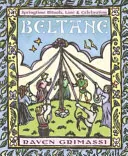
Il pendolo di Foucault
 83
83

Il pendolo di Foucault
Umberto Eco's *Il pendolo di Foucault* is less a novel and more a meticulously constructed labyrinth of ideas, a postmodern intellectual exercise masquerading as a thriller. The sheer density of historical and esoteric references, from the Knights Templar to Kabbalistic numerology, is staggering. Eco’s protagonists, Belbo, Casaubon, and Diotallevi, create a fictional conspiracy, the Plan, which then consumes them, a brilliant if chilling commentary on the power of narrative and belief. The novel's strength lies in its encyclopedic scope and its deconstruction of how fringe theories gain traction. However, its labyrinthine nature can also be its downfall; the narrative occasionally feels subservient to Eco's scholarly interests, leading to sections where the plot momentum falters under the weight of exposition. A particularly memorable passage involves the protagonist Casaubon's descent into paranoia as he grapples with the perceived interconnectedness of all esoteric phenomena. Ultimately, *Il pendolo di Foucault* is a challenging but rewarding exploration of how we make sense of the world, and the perilous consequences when our invented meanings become our reality.
📝 Description
83
Umberto Eco's 1988 novel *Il pendolo di Foucault* begins with a game of inventing conspiracies.
Three editors at a Milanese publishing house concoct a vast, fictional conspiracy called the Plan, linking historical occult orders. Their playful invention, intended to mock the credulity of occult enthusiasts, takes a dangerous turn when real-world followers of secret societies begin to believe the Plan is genuine. These individuals then act upon its supposed dictates, drawing the editors into deadly real-world consequences.
The narrative follows their desperate attempts to contain the chaos they unleashed. As the Plan gains traction, its fabricated connections between groups like the Knights Templar and modern mystics become terrifyingly real for some. The novel dissects how meaning is constructed, manipulated, and ultimately becomes destructive when taken as absolute truth.
Published in 1988, *Il pendolo di Foucault* appeared during a period of heightened interest in esoteric traditions and the proliferation of conspiracy narratives. Umberto Eco, a scholar of semiotics and medievalism, used this cultural moment to examine how belief systems, particularly those surrounding secret knowledge and hidden histories, are formed and propagated. The novel critiques the tendency to find patterns and connections where none exist, mirroring real-world trends in occultism and fringe history that often relied on selective interpretation of historical texts and symbols.
💡 Why Read This Book?
• Understand the mechanics of conspiracy theories: Learn how disparate historical events and symbols can be woven into a coherent, albeit fabricated, narrative, as demonstrated by the creation of the 'Plan' by the protagonists. • Explore the semiotics of esoteric knowledge: Grasp how signs and symbols within occult traditions, such as the Templar legacy or Kabbalistic permutations, acquire power and meaning through interpretation. • Witness the perils of intellectual games: Appreciate the novel's portrayal of how intellectual pursuits and playful manipulation of esoteric concepts, like those explored by Belbo and his colleagues in Milan, can lead to dangerous real-world outcomes.
⭐ Reader Reviews
Honest opinions from readers who have explored this book.
❓ Frequently Asked Questions
What is the 'Plan' in Foucault's Pendulum?
The 'Plan' is a fictional, grand conspiracy invented by the novel's protagonists, three editors who connect various historical occult orders and secret societies through a complex web of symbols and alleged historical events. Their game becomes dangerously real when others believe it.
What does Foucault's Pendulum symbolize in the book?
The pendulum, a real artifact featured in the novel, symbolizes the cyclical nature of history, the inescapable influence of the past, and the idea that all phenomena, however disparate, might be connected in a grand, possibly chaotic, cosmic design.
Which historical groups are mentioned in Foucault's Pendulum?
The novel references numerous historical and esoteric groups, including the Knights Templar, the Rosicrucians, the Freemasons, the Assassins, Kabbalists, and various Gnostic sects, weaving them into its intricate conspiracy narrative.
Is Foucault's Pendulum based on real conspiracies?
While the novel uses real historical groups and esoteric concepts as building blocks, the central 'Plan' is a fictional construct created by the characters. It satirizes and critiques the very nature of conspiracy theorizing and occult obsession.
What is the role of semiotics in Umberto Eco's Foucault's Pendulum?
Semiotics, the study of signs and symbols, is central. The novel explores how signs are interpreted, misinterpreted, and imbued with meaning, particularly within esoteric traditions, and how this process can lead to the creation of belief systems and perceived realities.
When was Foucault's Pendulum first published?
Umberto Eco's *Il pendolo di Foucault* was first published in Italy in 1988. It has since been translated into numerous languages and is considered one of his most significant works.
🔮 Key Themes & Symbolism
The Nature of Conspiracy
The novel meticulously dissects how conspiracy theories are constructed, not necessarily from genuine hidden truths, but from the human desire to find patterns and meaning. Eco demonstrates how disparate historical events, symbols, and texts can be recontextualized to form a seemingly coherent, all-encompassing 'Plan'. This theme explores the power of narrative and belief, showing how a fictional construct, once propagated, can acquire a terrifying reality for those who seek validation within its framework.
Semiotics and Interpretation
Central to the book is the concept of semiotics, the study of signs and symbols. Eco, a renowned semiotician, uses the narrative to illustrate how signs can be interpreted in myriad ways, leading to diverse meanings and potential misunderstandings. The characters' attempts to decipher ancient texts and occult symbols reveal the subjective nature of interpretation and the dangers of assuming a singular, correct meaning, especially within esoteric traditions.
The Occult Revival
Published in 1988, the novel reflects and critiques the late 20th-century resurgence of interest in occultism, secret societies, and mystical traditions. Eco satirizes the popularization and sometimes superficial engagement with complex esoteric systems, showing how genuine historical lineages can be distorted or appropriated by those seeking power, knowledge, or simply a sense of belonging within a grand, hidden order.
History as a Construct
The book challenges the notion of objective historical truth, suggesting that history itself is a narrative constructed from fragmented evidence and interpretations. Through the protagonists' game of inventing the Plan, Eco highlights how historical accounts can be manipulated and how the past continues to exert influence, often in unexpected and perilous ways, on the present.
💬 Memorable Quotes
Direct passages from the work, attributed to the author.
“When a man has begun to make a game of his passion, he has already lost.”
— This speaks to the tragic trajectory of the protagonists. Their initial intellectual game of creating the Plan escalates into a dangerous obsession, demonstrating how detached intellectualism can bleed into dangerous real-world consequences when the stakes are perceived as high.
“The world is a text to be deciphered.”
— This reflects Eco's semiotic perspective. It suggests that reality itself can be understood as a system of signs and symbols that require interpretation, but it also hints at the potential for misinterpretation and the creation of false meanings.
“We seek the light, but we are also drawn to the abyss.”
— This highlights the duality of human nature explored in the book. Characters are drawn to the pursuit of hidden knowledge and enlightenment (the light) but are simultaneously fascinated by and susceptible to the dark, chaotic, and potentially destructive aspects of esoteric lore (the abyss).
“Everything connects to everything else.”
— A mantra of the characters obsessed with the Plan, this phrase represents the dangerous tendency to find patterns where none exist, linking unrelated events and symbols into a grand, often paranoid, design. It's the foundation of many conspiracy theories.
💡 Key Ideas
Editorial paraphrase of the work's core concepts — not direct quotes.
We are all possessed by the desire to believe. We are all possessed by the desire to make the world intelligible.
This quote expresses the novel's core theme: the human drive to find order and meaning, even if it means constructing elaborate, fictional systems like the Plan to explain the world's perceived complexities.
🌙 Esoteric Significance
Tradition
While not adhering strictly to a single lineage, *Il pendolo di Foucault* draws heavily from Western Esotericism, particularly Hermeticism, Kabbalah, Gnosticism, and Rosicrucianism. Eco meticulously researches and satirizes the common threads and perceived connections between these traditions, focusing on how their symbolism and purported knowledge have been interpreted and reinterpreted across centuries, often leading to elaborate conspiracy narratives.
Symbolism
The novel is replete with esoteric symbols. The Foucault's Pendulum itself represents cyclical time and the interconnectedness of all things. The Knights Templar serve as a central motif, symbolizing a lost, powerful knowledge that various groups claim to inherit. Kabbalistic concepts, such as gematria (numerical interpretation of letters) and the Tree of Life, are employed by the characters to construct their grand conspiracy, illustrating the power and potential for misapplication of these symbolic systems.
Modern Relevance
Contemporary thinkers and practitioners in fields ranging from literary theory to fringe historical research continue to grapple with Eco's exploration of how belief systems are constructed. The novel remains relevant for understanding the psychology behind conspiracy theorizing, the semiotics of hidden knowledge, and the enduring appeal of secret societies in an increasingly complex world. It is often cited in discussions about postmodernism, the nature of truth, and the cultural impact of esoteric movements.
👥 Who Should Read This Book
• Students of semiotics and literary theory: Those interested in how signs, symbols, and narratives construct meaning will find Eco's intricate deconstruction of esoteric texts and beliefs particularly insightful. • Enthusiasts of historical conspiracy theories: Readers fascinated by the alleged connections between secret societies, historical anomalies, and hidden knowledge will appreciate the novel's encyclopedic scope and satirical approach. • Readers of complex, intellectually demanding fiction: Those who enjoy challenging narratives that require careful attention to detail, historical context, and philosophical underpinnings will find this novel a rewarding, albeit demanding, experience.
📜 Historical Context
Published in 1988, *Il pendolo di Foucault* emerged during a period of heightened interest in esoteric subjects and conspiracy theories, a trend mirrored in popular culture and academic discourse. Umberto Eco, already celebrated for *The Name of the Rose* (1980), leveraged his expertise in medieval studies and semiotics to craft a complex narrative. The novel can be seen as a postmodern response to the perceived fragmentation of knowledge and the proliferation of 'hidden histories.' It engaged with contemporary intellectual currents, including post-structuralism's skepticism towards grand narratives and the burgeoning field of cultural studies examining how meaning is produced and consumed. Eco's work implicitly commented on the intellectual climate of the late 20th century, a time when scholars like Jacques Derrida were questioning the stability of meaning, and popular authors like Umberto Eco were exploring the intersection of history, belief, and fiction. The novel's dense allusions and intricate plotting invited comparison to other complex literary works of the era, while its subject matter touched upon enduring fascinations with groups like the Knights Templar, a recurring theme in Western esotericism.
📔 Journal Prompts
The 'Plan' as a semiotic construct: How does the fictional conspiracy demonstrate the power of signs to create perceived reality?
Belbo's passion for the occult: Reflect on the line between intellectual curiosity and dangerous obsession as depicted in the novel.
The Foucault's Pendulum metaphor: How does the pendulum's swing symbolize the cyclical nature of historical interpretation in the book?
Casaubon's paranoia: Analyze the character's descent into believing the Plan and what it reveals about seeking hidden knowledge.
The role of publishers: Consider how the editorial process in the novel contributes to the creation and dissemination of esoteric narratives.
🗂️ Glossary
Semiotics
The study of signs and symbols and their interpretation. Umberto Eco, a leading semiotician, uses this framework extensively to explore how meaning is created and manipulated within the novel's narrative.
The Plan
A fictional, grand conspiracy devised by the novel's protagonists, connecting various historical occult groups and secret societies. It becomes dangerously real as others believe in its existence.
Knights Templar
A medieval Catholic military order. In the novel, they are central to the fictional conspiracy, representing a perceived source of lost esoteric knowledge and power.
Kabbalah
A system of Jewish mysticism exploring the divine nature and the creation of the universe through symbolic interpretation of scripture and specific diagrams like the Tree of Life.
Gnosticism
A diverse set of religious ideas and systems from the first few centuries AD, emphasizing spiritual knowledge (gnosis) for salvation and often positing a dualistic worldview.
Rosicrucianism
A mystical and esoteric tradition founded in the early 17th century, associated with secret teachings, alchemy, and spiritual enlightenment, often linked to Freemasonry.
Templarism
Refers to beliefs and practices associated with the Knights Templar, often involving claims of secret knowledge or succession from their supposed hidden legacy.
🔮 Readers Also Liked
Browse all →







More by Umberto Eco
All books →




More Free Occult Philosophy Books
View all →