Top Secret
 71
71

Top Secret
John Reynolds Gardiner’s *Top Secret* is an enigmatic text that offers more questions than answers, a quality that defines its peculiar strength. The narrative’s refusal to provide a definitive explanation for the titular 'top secret' forces the reader into an active role of interpretation, a far cry from the passive consumption often encouraged by genre fiction. One particularly striking aspect is the portrayal of how individuals internalize societal narratives to the point of self-policing, a concept the work illustrates through its characters’ interactions with veiled authority. However, the book's abstract nature can also be its primary limitation; readers seeking concrete plot resolution or character arcs might find its deliberate ambiguity frustrating. The narrative’s exploration of information control, while prescient, sometimes feels more like a philosophical exercise than a fully realized story. Ultimately, *Top Secret* is a challenging but rewarding read for those who appreciate literature that interrogates the foundations of knowledge and power.
📝 Description
71
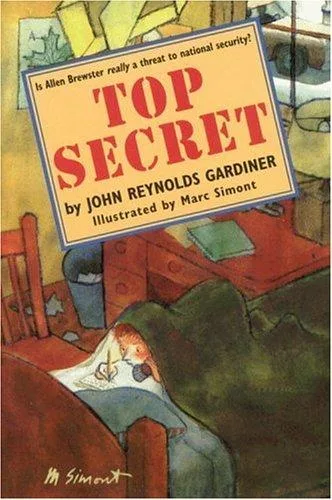
John Reynolds Gardiner's 1984 novel, Top Secret, questions how information is controlled.
Published in 1984, John Reynolds Gardiner's Top Secret is not a simple exposé but a fictional work examining how knowledge is managed and suppressed. The narrative operates on several levels, prompting readers to reconsider the nature of truth and authority as presented through its characters and plot.
This novel appeals to those who enjoy allegorical storytelling and philosophical examinations of power. It offers speculative fiction that probes consciousness, manipulation, and the unseen forces shaping society. Readers interested in the intersection of psychology and social commentary will find rich material within its pages.
Emerging in a year marked by concerns about technological advancement and surveillance, Top Secret reflects a cultural moment grappling with the early information age. Gardiner's work anticipates later discussions on information warfare and the spread of disinformation, positioning it within a tradition of questioning official narratives.
The novel engages with themes of hidden knowledge and societal control, suggesting an unseen force influencing global events. It examines secrecy not just as an absence of information, but as an active element shaping reality and upholding existing power structures. This aligns with esoteric traditions that explore hidden hierarchies and the manipulation of collective consciousness through veiled means.
💡 Why Read This Book?
• Gain insight into the construction of societal control mechanisms, as depicted through the narrative's exploration of how information is actively managed and suppressed, a key element of the book's plot. • Understand the psychological impact of hidden authorities and unseen influences, a central theme illuminated by the characters' reactions to the unknown. • Develop a critical perspective on official narratives by examining the book's portrayal of 'secrecy' as an active force, a concept central to the work's philosophical underpinnings.
⭐ Reader Reviews
Honest opinions from readers who have explored this book.
❓ Frequently Asked Questions
What is the main theme of John Reynolds Gardiner's Top Secret?
The main theme revolves around the nature of hidden knowledge and the mechanisms of societal control. The book explores how information is managed, suppressed, and disseminated, prompting readers to question truth and authority.
When was Top Secret first published?
Top Secret was first published in 1984, a period marked by growing concerns about technology and information control.
Is Top Secret a factual account or fiction?
Top Secret is a work of fiction, functioning as an allegorical exploration of power structures and information management rather than a documentary exposé.
Who is the author of Top Secret?
The author of Top Secret is John Reynolds Gardiner, who first published the book in 1984.
What kind of reader would appreciate Top Secret?
Readers who enjoy allegorical storytelling, philosophical inquiries into power, and speculative fiction that probes societal control and the nature of truth will find this book engaging.
Does Top Secret offer concrete answers about hidden knowledge?
No, the book deliberately maintains ambiguity, focusing on the process and implications of hidden knowledge and control rather than providing definitive explanations.
🔮 Key Themes & Symbolism
Information as Control
The book posits that information is not neutral but a potent tool for control. It examines how the selective release, suppression, or distortion of knowledge shapes public perception and maintains existing power structures. The narrative suggests that 'knowing what is not known' is a fundamental aspect of influence, and that understanding these hidden mechanisms is key to perceiving reality beyond official narratives. This theme is explored through the subtle manipulations depicted within the story's unfolding events.
The Nature of Secrecy
Secrecy is presented not merely as an absence of information but as an active, organizing principle. The work examines how the concept of 'top secret' itself functions to define boundaries of knowledge and enforce obedience. It questions who benefits from such divisions and how the creation of secrets reinforces the perceived legitimacy of those who hold them. The narrative implicitly asks readers to consider the societal structures built upon layers of concealed information.
Perception vs. Reality
A core element of the book is the dichotomy between perceived reality and underlying truth. The characters often operate under assumptions shaped by limited or manipulated information, leading them to misinterpret events and their own agency. Gardiner uses this to highlight how our understanding of the world is constructed and how easily it can be influenced by external forces. The book encourages a skeptical approach to accepted facts and official accounts.
Subtle Authority
Instead of overt dictatorships, the book explores the power of subtle, often unseen, authorities. This governing force operates through suggestion, implication, and the careful management of what is considered public knowledge. The narrative suggests that the most effective control is not through force, but through shaping the very framework of thought. This 'top secret' authority operates on a psychological level, influencing beliefs and behaviors indirectly.
💬 Memorable Quotes
Direct passages from the work, attributed to the author.
“Truth is not found, it is declared.”
— This interpretation underscores the book's exploration of how 'truth' can be a manufactured construct rather than an objective discovery. It implies that those in power often dictate what is considered true, shaping public consensus through pronouncements and controlled narratives.
“The greatest control is exercised when the controlled believe they are free.”
— This concept captures the essence of subtle manipulation explored in the book. It suggests that true power lies not in overt coercion but in creating a perception of autonomy, making individuals complicit in their own subjugation without realizing it.
“What is not revealed is as powerful as what is shown.”
— This statement emphasizes the significance of omission and the strategic use of absence in controlling perception. The book suggests that what remains hidden or unsaid can exert a profound influence on understanding and decision-making.
“Every secret creates its own shadow of reality.”
— This interpretation reflects how the existence of hidden information, or secrets, not only conceals truth but actively constructs a parallel, often distorted, version of reality for those outside the secret.
💡 Key Ideas
Editorial paraphrase of the work's core concepts — not direct quotes.
The boundaries of what we know are also the boundaries of what we are.
This paraphrased concept highlights the book's focus on how the limits of our information directly shape our identity and understanding of the world. It suggests that our personal reality is constructed by the knowledge we possess, and conversely, by what is kept from us.
🌙 Esoteric Significance
Tradition
While not strictly adhering to a singular esoteric lineage, *Top Secret* speaks to Gnostic themes of hidden knowledge and a world shaped by veiled demiurges or controlling forces. It shares with Hermetic thought a concern for understanding the underlying principles that govern reality, often obscured from the uninitiated. The work departs from traditional occultism by focusing on modern, systemic control rather than mystical rituals or ancient wisdom, presenting a contemporary interpretation of hidden governance.
Symbolism
The titular 'Top Secret' functions as a primary symbol, representing not just hidden information but the very architecture of controlled reality. The concept of 'shadows' or 'unseen forces' also permeates the work, symbolizing the subtle mechanisms of influence that operate beyond direct perception. The narrative itself can be seen as a symbolic representation of the Gnostic 'pleroma' and 'kenoma,' the fullness of divine knowledge versus the void or imperfect material world shaped by ignorance.
Modern Relevance
Contemporary thinkers in fields like critical theory, media studies, and even certain branches of conspiracy research find elements of their work in Gardiner's exploration of information control. The book's prescience regarding the power of narrative and the manipulation of public perception makes it relevant to discussions about 'fake news,' algorithmic control, and the psychological warfare of the digital age. Modern esoteric practitioners interested in societal archetypes and control systems might find its allegorical framework useful.
👥 Who Should Read This Book
• Students of political philosophy and media studies seeking fictional explorations of information control and propaganda. • Readers of speculative fiction interested in allegorical narratives that question societal structures and hidden authorities. • Individuals intrigued by the philosophical implications of knowledge, secrecy, and perception in the modern world.
📜 Historical Context
Published in 1984, John Reynolds Gardiner’s *Top Secret* emerged during a period of heightened global tension and rapid technological advancement. The Cold War was nearing its twilight, marked by proxy conflicts and an pervasive atmosphere of espionage and misinformation. Simultaneously, the nascent stages of the digital age were beginning to reshape communication and data management, fueling anxieties about surveillance and the control of information. Gardiner’s work can be seen as a literary reflection of these dual concerns. While not directly engaging with figures like George Orwell (whose *Nineteen Eighty-Four* predated it but shared thematic resonance) or the burgeoning cyberpunk literary movement, *Top Secret* offered a uniquely philosophical take on information control. Its reception was more niche than mainstream, appealing to readers interested in speculative fiction that probed deeper societal structures rather than genre tropes. The book’s allegorical nature allowed it to comment on the era’s climate of secrecy and the increasing complexity of global information flows.
📔 Journal Prompts
The concept of 'declared truth' and its impact on personal belief systems.
How the principle of 'secrecy' functions to maintain social order or hierarchy.
The psychological effects of believing one is free while being subtly controlled.
Personal reflections on instances where 'what is not revealed' shaped your understanding.
The relationship between personal boundaries of knowledge and individual identity.
🗂️ Glossary
Top Secret
In the context of the book, this refers not just to classified information but to a pervasive, often unseen, system or entity that actively manages and controls knowledge and public perception.
Declared Truth
A concept suggesting that 'truth' is often established through authoritative pronouncements or societal consensus rather than objective discovery, highlighting the role of power in defining reality.
Subtle Authority
A form of governance or influence that operates indirectly, through suggestion, implication, and the shaping of thought processes, rather than through overt coercion or force.
Information Management
The active process of controlling the flow, dissemination, and perception of information to achieve specific outcomes, often related to maintaining power or influencing behavior.
Shadow of Reality
A metaphorical concept representing the distorted or alternative reality that is constructed by the existence of secrets and hidden information.
Perception Shaping
The deliberate act of influencing how individuals or groups interpret events, information, or their circumstances, often to align with a particular agenda.
Controlled Freedom
A paradoxical state where individuals believe they possess autonomy and free will, while their choices and actions are subtly guided or predetermined by external forces.
🔮 Readers Also Liked
Browse all →







More by John Reynolds Gardiner
All books →
More Free Occult Philosophy Books
View all →