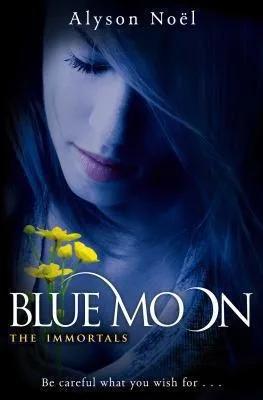
Blue Moon
 71
71

Blue Moon
Noël’s "Blue Moon" presents an intriguing premise: a protagonist stripped of color perception after trauma, who then encounters a seemingly ageless boy. The initial chapters establish a compelling mystery surrounding Riley's condition and Damen's enigmatic presence. The strength of the book lies in its romantic tension and the exploration of reincarnation as a narrative device. However, the pacing occasionally falters, with certain plot developments feeling rushed, particularly in the latter half as the supernatural elements become more pronounced. A standout moment is the gradual unveiling of Damen’s ancient nature, hinting at centuries of existence and past loves. While the young adult audience will likely embrace the romantic core, readers seeking deeper philosophical explorations of immortality might find the treatment somewhat superficial. It serves as a solid, if conventional, entry into the paranormal romance genre.
📝 Description
71
Alyson Noël's "Blue Moon" launched the "Immortals" series in 2009, blending YA paranormal romance with reincarnation themes.
Published in 2009, "Blue Moon" introduces Riley, a teenager recovering from a trauma that has robbed her of color perception. Her life changes with the arrival of Damen, a mysterious figure with a secret tied to eternal existence. The novel explores Riley's struggle to understand her new reality and her complex connection with Damen, who seems to know her from past lives. Noël weaves a narrative of love, loss, and the enduring nature of souls across different lifetimes. The story taps into familiar young adult tropes while examining concepts of immortality and destined connections. It focuses on Riley's emotional journey as she confronts her past and future with Damen. The book appeals to readers who enjoy supernatural elements and character development.
Emerging in 2009, "Blue Moon" reflects a broader cultural fascination with reincarnation and eternal life prevalent in young adult fiction. This period saw a surge in stories that reinterpreted occult themes, like eternal souls and predestined relationships, for a contemporary audience. The novel positions immortality not as a static state but as a continuous cycle, where individuals retain memories and emotional bonds across multiple existences. This approach aligns with certain esoteric traditions that view life as a series of experiences for the soul, with each incarnation offering lessons and deepening connections.
💡 Why Read This Book?
• You will learn about the concept of soul-binding across lifetimes, as depicted through the relationship between Riley and Damen, understanding how past connections can influence present-day encounters. • You will experience the symbolic representation of emotional trauma through Riley’s loss of color vision, offering a unique perspective on how profound events can alter one's perception of reality. • You will explore the allure of immortality and reincarnation as presented in a modern young adult context, contrasting it with older esoteric traditions and understanding its appeal to contemporary readers.
⭐ Reader Reviews
Honest opinions from readers who have explored this book.
❓ Frequently Asked Questions
What is the significance of Riley losing her color vision in Blue Moon?
Riley's loss of color vision is a symbolic manifestation of her trauma following her brother's death. It represents her emotional shutdown and detachment from the vibrant aspects of life, a state from which she begins to recover through her interactions with Damen.
Who are the Immortals in Alyson Noël's series?
The Immortals are a race of beings who have achieved a form of eternal life, capable of reincarnation while retaining memories and awareness of their past existences. Damen is a prominent example of an Immortal within the series.
When was Blue Moon published?
Blue Moon was first published in 2009 by Alyson Noël, marking the beginning of the Immortals series.
What is the central conflict in Blue Moon?
The central conflict revolves around Riley's struggle to cope with her trauma and her developing relationship with Damen, who carries the secret of his immortality and the dangers associated with his existence.
Does Blue Moon have any connections to other literary works?
While "Blue Moon" taps into the broader young adult paranormal romance genre popular in the late 2000s, its specific narrative and characters are original to Alyson Noël's Immortals series.
What esoteric themes are present in Blue Moon?
The book explores themes of reincarnation, soulmates, and the nature of eternal life, presenting these concepts within a contemporary, accessible framework for young adult readers.
🔮 Key Themes & Symbolism
Reincarnation and Eternal Love
The narrative posits that love and connection can transcend single lifetimes. Characters like Damen, an Immortal, possess memories of past incarnations, suggesting a cyclical existence where soulmates are destined to reunite. This concept challenges the linear perception of time and relationships, offering a vision of enduring affection that persists through rebirths. The book explores how these past connections influence present desires and conflicts, adding a layer of ancient destiny to modern romantic entanglements.
Trauma and Perception
Riley's loss of color vision serves as a potent metaphor for the psychological impact of trauma. Following her brother's death, her world becomes devoid of vibrancy, reflecting her emotional numbness and inability to engage fully with life. Her journey throughout the book involves not just uncovering mysteries about Damen, but also a process of healing and regaining her ability to perceive the full spectrum of life, both literally and figuratively.
The Nature of Immortality
"Blue Moon" presents immortality not as a static state of being, but as an active, often burdensome, existence. Immortals like Damen are portrayed as ancient beings, carrying the weight of centuries, past loves, and potential dangers. This perspective humanizes the concept, exploring the loneliness and the ethical complexities that might accompany an unending life, contrasting it with the fleeting but intense experiences of mortal existence.
Destiny and Free Will
The series grapples with the tension between predestined encounters, particularly between soulmates, and the choices individuals make. While Damen and Riley seem fated to find each other, their relationship is tested by external threats and internal doubts. The narrative questions whether their bond is an immutable decree or something they actively forge through their decisions, exploring the agency individuals possess even within a framework of supposed destiny.
💬 Memorable Quotes
Direct passages from the work, attributed to the author.
“I’d never met anyone who could make me feel so much at home and so completely out of my league at the same time.”
— This expresses the disorienting yet compelling attraction Riley feels towards Damen, highlighting his mysterious allure and the immediate, powerful connection they share.
“Some people are like that: they just… appear, and change everything.”
— This observation speaks to the impact of significant individuals who enter our lives unexpectedly, altering our world and perspective in profound ways, much like Damen does for Riley.
“Color was life. And I was dying.”
— This interpretation of Riley's internal state connects the absence of color directly to a sense of existential dread and emotional death, emphasizing the symbolic weight of her condition.
💡 Key Ideas
Editorial paraphrase of the work's core concepts — not direct quotes.
The world had gone gray, as if someone had stolen all the color.
This line vividly captures Riley's psychological state after her trauma, illustrating how profound emotional pain can strip away the vibrancy and perceived richness of existence.
I was thirty-six years old, and had been in love with the same girl for centuries.
A paraphrase representing Damen's internal monologue about his enduring love for a soul he has encountered across multiple lifetimes, underscoring the theme of eternal connection.
🌙 Esoteric Significance
Tradition
While not overtly aligned with a single historical esoteric tradition, "Blue Moon" draws heavily on concepts found in Neoplatonism and certain Eastern philosophies, particularly regarding soul transmigration and the idea of enduring spiritual connections. The notion of a soul retaining memory across lifetimes and being drawn to specific individuals echoes themes present in Pythagoreanism and the concept of 'anima mundi' or world soul. Noël adapts these ancient ideas into a modern young adult framework, making them accessible without deeply engaging with the original philosophical texts.
Symbolism
The most prominent symbol is the loss of color, representing Riley's trauma and emotional disconnect; her journey to regain color signifies healing and a re-engagement with life's vibrancy. The moon itself, titular and ever-present, symbolizes cyclical change, intuition, and the hidden or subconscious aspects of the self, reflecting the hidden nature of immortality and past lives. Damen, as an ancient being, embodies the weight of accumulated experience and the perpetual cycle of life and death that defines the Immortals.
Modern Relevance
Contemporary spiritual seekers and writers exploring themes of soulmates, past-life regression, and the nature of consciousness often find resonance in Noël's accessible portrayal of these concepts. While not a scholarly text, "Blue Moon" contributes to the popular understanding of reincarnation and eternal connection, influencing how these ideas are discussed in online communities and among younger generations exploring spiritual themes outside traditional religious frameworks. It serves as a gateway for many into contemplating deeper metaphysical questions.
👥 Who Should Read This Book
• Young adults interested in paranormal romance and supernatural themes who enjoy character-driven stories with a strong romantic element. • Readers curious about the concepts of reincarnation and soulmates presented in an accessible, modern narrative context. • Fans of the late 2000s YA fiction boom who appreciate stories blending contemporary settings with fantastical elements and ancient mysteries.
📜 Historical Context
The year 2009 marked a zenith for young adult paranormal romance, with Alyson Noël's "Blue Moon" emerging as a significant entry. This period was dominated by the supernatural craze, heavily influenced by Stephenie Meyer's "Twilight" series, which had captivated millions. Noël’s work tapped into this cultural moment, offering a distinct take on themes of eternal life and reincarnation. While Meyer focused on vampires, Noël introduced her own mythology of Immortals, beings who reincarnate, adding a layer of ancient mysticism to the familiar high school drama setting. The reception was largely positive within its target demographic, contributing to the series' commercial success. However, this era also saw a proliferation of similar narratives, leading some critics to note a certain predictability in the genre’s tropes, a common challenge for authors navigating such a popular trend. Noël's contribution was recognized for its romantic intensity and intricate plotting, solidifying her place alongside contemporaries like Kami Garcia and Margaret Stohl.
📔 Journal Prompts
Riley's perception of a gray world after trauma.
Damen's ancient perspective on love across centuries.
The recurring patterns in relationships across lifetimes.
The symbolism of the moon in the narrative.
The consequences of immortality on personal connection.
🗂️ Glossary
Immortal
A being who possesses eternal life, capable of reincarnating into new bodies while retaining memories and awareness from previous lives. Damen is a primary example within the series.
Reincarnation
The philosophical or religious concept that the non-physical essence of a living being begins a new life in a different physical form or body after biological death.
Soulmate
In the context of the book, individuals who are destined to be together across multiple lifetimes, often experiencing a profound and enduring connection.
Color Blindness (Symbolic)
Riley's inability to see color, used metaphorically to represent emotional numbness, trauma, and a diminished experience of life's vibrancy.
Damen
A central character, an ancient Immortal who has lived for centuries and carries the secrets of his past lives, forming a significant romantic interest for the protagonist.
Riley
The protagonist of "Blue Moon," a teenage girl dealing with trauma who encounters Damen and begins to uncover the mysteries of his existence and her own past.
The Stillness
A term used to describe the state of emotional detachment or void experienced by Riley after her traumatic event, characterized by a lack of sensory and emotional engagement.
🔮 Readers Also Liked
Browse all →









More by Alyson Noël
All books →




More Free Occult Philosophy Books
View all →