Tokens and Omens

 83
83

Tokens and Omens
Jeri Baird’s Tokens and Omens offers a refreshingly grounded perspective on a subject often shrouded in arcane jargon. Rather than presenting a mere catalog of signs, Baird probes the very architecture of how we perceive and assign meaning to the world around us. The section on the intentionality of the observer, detailing how our own mental states can shape the interpretation of an omen, is particularly sharp and avoids the trap of passive reception that plagues much modern occult writing. My sole reservation lies in the book’s occasional brevity; some concepts, like the historical lineage of specific omen types, could have benefited from further elaboration. Nevertheless, the work consistently returns to the tangible act of interpretation, making it a valuable addition to the discourse on symbolic systems. It serves as a potent reminder that the power of an omen lies as much in the interpreter as in the interpreted.
📝 Description
83
Jeri Baird's 2016 book examines symbolic communication in esoteric traditions.
Tokens and Omens, published in 2016, looks at how signs and portents function within esoteric systems. Jeri Baird moves past simple interpretations to consider the deeper mechanics and philosophical ideas behind omens and their supposed effect on human affairs. The book is for dedicated students of divination, symbology, and comparative religion who want to understand how meaning is created and perceived through signs. It will interest those who study the psychological and philosophical approaches used in old and new ways of interpreting the world by signs.
Baird's study connects with a modern revival of interest in these practices. This revival often uses psychological and anthropological viewpoints, but the book also respects older esoteric frameworks. It considers the lineage of studying tokens and omens, from ancient Roman augury to Renaissance systems. The work itself appeared in the early 21st century, engaging with these historical threads.
The study of tokens and omens has a long history, dating back to antiquity. Practices like Roman augury and later Renaissance systems represent formalized ways of seeking meaning in signs. Baird's work, published in 2016, arrives during a period of renewed interest in these traditions. This contemporary engagement often incorporates modern psychological and anthropological perspectives, yet Baird's approach also acknowledges and respects the foundational esoteric frameworks that have guided these practices for centuries.
💡 Why Read This Book?
• Gain a structured understanding of how omens function, moving beyond superstition to explore the psychological and philosophical underpinnings, as discussed in the 'Key Concepts' section. • Learn to critically assess symbolic communication by examining the role of observer intentionality, a core idea presented in Baird's analysis. • Discover the historical roots of omen interpretation and how they connect to contemporary esoteric interests, providing context explored in 'Historical Context'.
⭐ Reader Reviews
Honest opinions from readers who have explored this book.
❓ Frequently Asked Questions
What is the primary focus of Jeri Baird's 'Tokens and Omens'?
The book focuses on the mechanics and philosophical implications of symbolic communication, particularly how signs and omens are perceived and interpreted within esoteric traditions.
When was 'Tokens and Omens' first published?
'Tokens and Omens' by Jeri Baird was first published in 2016.
Who would benefit most from reading this book?
Students of divination, symbology, comparative religion, and those interested in the psychological and philosophical frameworks of interpreting signs will find this book valuable.
Does the book offer practical methods for interpreting omens?
While it delves into the theory and philosophy of interpretation, the emphasis is on understanding the underlying principles rather than providing a step-by-step guide to specific divination techniques.
What distinguishes Baird's approach from other books on omens?
Baird's work distinguishes itself by examining the intentionality of the observer and the concept of symbolic resonance, offering a more analytical and less purely prescriptive approach.
Is 'Tokens and Omens' suitable for beginners in esoteric studies?
It is suitable for beginners with a serious interest in the philosophical underpinnings of esoteric symbolism, though a basic familiarity with esoteric concepts might enhance the reading experience.
🔮 Key Themes & Symbolism
Observer Intentionality
A core theme is the active role of the observer in shaping the meaning of an omen. Baird argues that our internal state, beliefs, and expectations significantly influence how we perceive and interpret external signs. This moves beyond a passive reception of cosmic messages, highlighting the subjective element in divination and symbolic understanding. The book explores how this intentionality can be both a source of bias and a tool for deeper insight, suggesting that awareness of one's own interpretive framework is crucial for accurate discernment.
Symbolic Resonance
Baird investigates the concept of symbolic resonance, proposing that certain symbols possess an inherent vibrational quality or connection that allows them to reflect or influence events. This is not presented as mere coincidence but as a fundamental aspect of how the universe communicates. The work examines how this resonance can be perceived through various means, from natural phenomena to crafted talismans, linking the micro and macrocosm through shared symbolic language and interconnectedness.
Mechanics of Meaning-Making
The book dissects the process by which external occurrences are transformed into meaningful omens. It questions whether meaning is inherent in the event or projected by the observer, often concluding it is a dynamic interplay. Baird explores the cognitive and psychological processes involved in pattern recognition and the attribution of significance, providing an analytical framework for understanding why certain signs are perceived as potent portents and others are overlooked.
Esoteric Frameworks
While grounded in philosophical inquiry, Tokens and Omens consistently engages with established esoteric traditions. It examines how concepts like synchronicity, as articulated by Carl Jung, and older systems of augury and divination, inform the understanding of omens. The work seeks to bridge the gap between ancient practices and modern psychological interpretations, demonstrating the enduring relevance of esoteric thought in comprehending symbolic realities.
💬 Memorable Quotes
Direct passages from the work, attributed to the author.
“The perceived omen is a confluence of external event and internal disposition.”
— This highlights Baird's focus on the active role of the interpreter. It suggests that meaning isn't solely in the sign itself but arises from the interaction between the sign and the observer's state of mind and beliefs.
“We often seek confirmation, not revelation, when observing potential signs.”
— This observation points to a common bias in omen interpretation, where individuals tend to find what they are already looking for, rather than remaining open to unexpected insights.
“The potency of a symbol lies in its capacity to evoke a response beyond mere intellectual recognition.”
— This interpretation emphasizes the affective and intuitive power of symbols within esoteric traditions, suggesting they operate on deeper levels of consciousness than simple logic.
“Attributing agency to omens risks anthropomorphizing abstract patterns.”
— This caution warns against projecting human-like intentions onto natural phenomena or coincidences, encouraging a more nuanced understanding of symbolic causality.
💡 Key Ideas
Editorial paraphrase of the work's core concepts — not direct quotes.
Synchronicity suggests that meaning arises from the simultaneous occurrence of a certain psychological state with one or more external events.
This paraphrase captures a key concept linking subjective experience with objective events, framing omens not as random occurrences but as meaningful patterns that reflect inner states.
🌙 Esoteric Significance
Tradition
Tokens and Omens operates within the broad sphere of Western Esotericism, drawing particularly from psychological interpretations of symbolism influenced by Jungian thought. It engages with the philosophical underpinnings of divination and omen interpretation, which have roots in Hermeticism, Gnosticism, and Neoplatonism, focusing on the interconnectedness of the psyche and the cosmos. The work departs from purely dogmatic or ritualistic approaches by emphasizing the subjective experience and interpretive faculties of the individual.
Symbolism
Key symbols explored include the concept of the 'sign' itself – a point of intersection between inner and outer worlds. Baird also looks at motifs of natural phenomena (e.g., bird flight, celestial alignments) and artificial constructs (e.g., talismans, patterns in random arrangements) as vehicles for symbolic communication. These symbols function not just as passive indicators but as active conduits for meaning, highlighting the dynamic relationship between the observer and the observed.
Modern Relevance
The work finds resonance with contemporary practitioners of mindfulness, Jungian psychology, and modern occultism who are interested in the interplay between consciousness and external reality. Thinkers exploring concepts of synchronicity, symbolic logic, and the phenomenology of esoteric experience often cite or implicitly engage with the principles Baird outlines. Her analytical approach provides a valuable lens for understanding practices ranging from divination to the interpretation of everyday 'signs' in a secularized yet spiritually seeking world.
👥 Who Should Read This Book
• Students of Jungian psychology and comparative religion seeking to understand the psychological underpinnings of symbolic interpretation and omen reading. • Practitioners of divination and esoteric arts who wish to refine their interpretive skills by examining the role of observer intentionality and symbolic resonance. • Skeptics and philosophers of mind interested in the cognitive processes involved in pattern recognition and the attribution of meaning to seemingly random events.
📜 Historical Context
Jeri Baird's Tokens and Omens, published in 2016, enters a range of esoteric studies that has seen significant academic and popular engagement since the late 20th century. The work builds upon the foundations laid by figures like Carl Jung, whose theories of synchronicity and archetypes provided a psychological framework for understanding meaningful coincidences and symbolic patterns. Baird’s analysis also engages with the long history of divination practices, stretching from ancient Roman augury and Greek cleromancy to Renaissance occultism. In the early 21st century, this intellectual climate saw a resurgence of interest in Western Esotericism, with scholars like Wouter J. Hanegraaff and Antoine Faivre mapping its traditions. Baird's book distinguishes itself by focusing on the *mechanics* of interpretation and the psychology of the observer, rather than solely cataloging divinatory methods or adhering strictly to a single tradition like Hermeticism or Kabbalah.
📔 Journal Prompts
The confluence of external event and internal disposition: how does your current mood shape your perception of signs?
Symbolic resonance: Identify a recurring symbol in your life and explore its potential deeper connections.
Observer intentionality: What biases might be influencing your interpretation of a recent 'omen'?
Meaning-making: Reflect on a time you assigned significant meaning to a coincidence.
Esoteric frameworks: How do your personal beliefs interact with traditional interpretations of omens?
🗂️ Glossary
Omen
An event believed to be a sign or warning of future good or bad fortune; a portent.
Symbolic Communication
The transmission of meaning through symbols, which can be objects, images, sounds, or gestures that represent something else.
Synchronicity
A concept developed by Carl Jung, referring to the occurrence of meaningful coincidences that appear to be related but lack a causal connection.
Observer Intentionality
The psychological state and conscious focus of the person observing an event, influencing their interpretation of its meaning.
Symbolic Resonance
The idea that certain symbols or patterns possess an inherent connection or vibrational quality that allows them to reflect or influence events.
Divination
The practice of seeking knowledge of the future or the unknown by supernatural means.
Esoteric
Intended for or likely to be understood by only a small number of people with a specialized knowledge or interest.
🔮 Readers Also Liked
Browse all →









More by Jeri Baird
All books →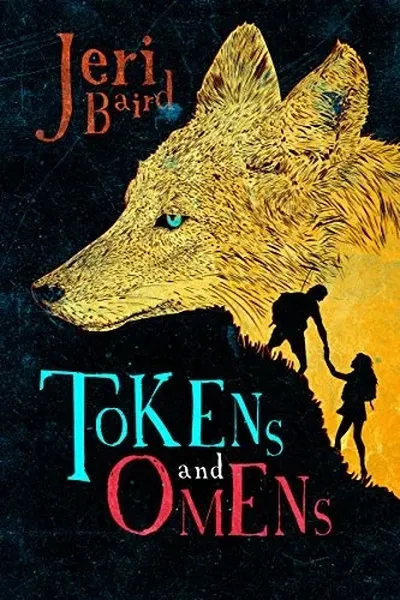
More Free Magic & Ritual Books
View all →