The myth of ritual murder

 71
71

The myth of ritual murder
R. Po-chia Hsia’s ‘The Myth of Ritual Murder’ offers a starkly academic, yet deeply unsettling, examination of the blood libel. Rather than focusing on the lurid details of alleged rituals, Hsia dissects the *idea* of ritual murder as a persistent trope in Christian European societies, particularly against Jews. He meticulously traces how these accusations, often baseless, served to solidify communal identities and demonize outsiders. The strength of the work lies in its comprehensive historical scope and rigorous analysis of archival material, demonstrating the slow, insidious spread of this calumny. A notable limitation is the academic tone, which, while precise, can occasionally feel detached from the human suffering these myths caused. Hsia’s detailed exploration of the Council of Trent’s indirect role in shaping later accusations, despite its focus on doctrinal purity, is particularly compelling. It’s a vital, if sometimes dry, dissection of historical prejudice.
📝 Description
71
First published in 1988, R. Po-chia Hsia's work examines the historical construction of ritual murder accusations.
R. Po-chia Hsia's 1988 study, 'The Myth of Ritual Murder,' analyzes the historical development and spread of accusations of ritual murder, particularly those directed at Jewish communities. The book moves beyond merely refuting these claims to investigate the social, religious, and political conditions that allowed these libels to persist for centuries. Hsia traces how these accusations evolved over time, serving particular purposes within diverse societies.
The research spans European history from the medieval period to the early modern era. These accusations, commonly known as the blood libel, became prominent in the 12th century and continued for hundreds of years. This era was marked by considerable social unrest, religious disputes, and the growing authority of both church and state, all factors that facilitated such allegations. The study connects with existing scholarship on medieval heresy and popular religious movements, using specific historical examples to illustrate its points.
While not strictly esoteric in the occult sense, Hsia's work investigates the pervasive power of deeply ingrained myths and collective delusions that shape societal understanding and actions. It examines how fabricated narratives, fueled by religious and political anxieties, can become deeply embedded in cultural consciousness, influencing legal systems and public perception for centuries. The book's focus on the mechanisms of demonization and the construction of 'otherness' aligns with broader scholarly interest in the historical roots of prejudice and the manipulation of belief systems, often explored in critical studies of religious and social history.
💡 Why Read This Book?
• Understand the historical roots and evolution of the blood libel myth, a persistent antisemitic trope first documented in significant cases around the 12th century, which shaped centuries of persecution. • Analyze the social and religious mechanisms of scapegoating by examining how accusations of ritual murder functioned to consolidate in-group identities and demonize perceived 'others' in medieval and early modern Europe. • Grasp the academic methodology for dissecting historical propaganda, learning how to trace the construction and dissemination of baseless allegations, as exemplified in Hsia's examination of legal and popular discourse.
⭐ Reader Reviews
Honest opinions from readers who have explored this book.
❓ Frequently Asked Questions
What is the historical origin of the blood libel accusations explored in 'The Myth of Ritual Murder'?
The book traces the origins of the blood libel, with significant early cases appearing in the 12th century. These accusations often targeted Jewish communities, falsely claiming the use of Christian blood for ritualistic purposes.
Does R. Po-chia Hsia present evidence for any actual ritual murders occurring?
No, R. Po-chia Hsia's work is dedicated to deconstructing the *myth* of ritual murder. He meticulously analyzes the historical context and social dynamics that led to the fabrication and spread of these accusations, rather than validating them.
What historical periods does 'The Myth of Ritual Murder' primarily cover?
The book covers a broad historical span, focusing heavily on the medieval period when the blood libel gained significant traction, and extending into the early modern era, examining the persistence and transformation of these myths.
How did accusations of ritual murder impact Jewish communities in Europe?
These accusations, as explored in the book, led to widespread persecution, violence, expulsions, and executions of Jewish individuals and communities across Europe for centuries, serving as a potent tool of antisemitism.
What academic disciplines would find 'The Myth of Ritual Murder' most relevant?
The work is highly relevant to historians of religion, scholars of antisemitism, medieval studies, social history, and those studying the psychology of prejudice and collective delusion.
What is the 'social function' of ritual murder accusations according to Hsia?
Hsia argues that these accusations served to solidify Christian communal identity, demonize an 'other' (often Jews), and provide a scapegoat for societal problems or anxieties during periods of instability.
🔮 Key Themes & Symbolism
The Blood Libel Trope
This theme centers on the persistent accusation that Jews murdered Christian children to use their blood in religious rituals. Hsia demonstrates how this myth, appearing prominently from the 12th century onwards, was not rooted in reality but was a constructed narrative. He examines its variations across different European regions and time periods, highlighting its function as a powerful tool for demonization and persecution, impacting communities for centuries and fueling violent pogroms.
Mechanisms of Scapegoating
Hsia analyzes how the ritual murder accusation served as a mechanism for societal scapegoating. In times of crisis, plague, or social unrest, an identifiable 'other' was needed to bear the blame. The accusation provided a ready-made explanation, allowing dominant groups to deflect responsibility and reinforce their own identity by contrasting it with the monstrous image of the accused. This theme explores the psychological and social utility of creating enemies.
Construction of 'Otherness'
A core concept is how the myth of ritual murder contributed to the construction of Jewish 'otherness' in Christian Europe. By portraying Jews as inherently bloodthirsty and ritually deviant, the accusation set them apart as fundamentally different and dangerous. Hsia illustrates how this 'othering' process justified discrimination, segregation, and violence, making it easier for populations to accept or participate in the persecution of Jewish communities.
Persistence of False Narratives
The work addresses the remarkable persistence of the blood libel myth, even in the face of contradictory evidence and official condemnations. Hsia explores the factors contributing to this endurance, including the role of folklore, popular preaching, and the way accusations could be revived and adapted to new social or political contexts. This theme examines the resilience of deeply ingrained prejudices and the difficulty of eradicating false narratives.
💬 Memorable Quotes
Direct passages from the work, attributed to the author.
“The accusation of ritual murder was a powerful tool for defining and demonizing an out-group.”
— This interpretation highlights the social function of the blood libel. It wasn't just about a specific crime, but about creating a perceived enemy, solidifying group identity among accusers, and justifying persecution.
“Early cases of the blood libel often emerged during periods of significant social or religious tension.”
— This highlights the contextual nature of the accusations. The work suggests these libels were not random but often arose during times of crisis, serving as a way to channel societal anxieties and assign blame to a vulnerable minority.
“The fabrication of evidence was frequently a key component in ritual murder accusations.”
— This interpretation points to the deliberate nature of the libels. Hsia's analysis suggests these were not simply misunderstandings but often involved the systematic creation of false testimonies and 'proof' to condemn the accused.
“Ritual murder accusations served to reinforce the boundaries of Christian society.”
— This signifies how the myth helped delineate who belonged within the Christian community by defining a starkly 'other' group deemed outside of and hostile to it. The accusation solidified the in-group by demonizing the out-group.
💡 Key Ideas
Editorial paraphrase of the work's core concepts — not direct quotes.
The myth's endurance speaks to the deep-seated nature of prejudice and the ease of its manipulation.
This paraphrased concept emphasizes how the continued belief in ritual murder, despite lack of evidence, demonstrates the power of ingrained biases and how these can be exploited by those seeking to foment hatred or achieve political aims.
🌙 Esoteric Significance
Tradition
While not strictly an esoteric text itself, 'The Myth of Ritual Murder' is vital for understanding the historical underpinnings of certain esoteric antisemitic tropes that emerged in later occult traditions. It provides the historical and social context for how Jewish figures and practices were demonized, which some later esoteric movements, particularly those influenced by racial ideologies, would appropriate or distort. It serves as a critical counterpoint to esoteric narratives that unproblematically accept or perpetuate historical libels.
Symbolism
The primary symbolic motif explored is the false representation of Jewish ritual. The 'symbol' of the innocent Christian child sacrificed by Jews operates as a potent, albeit fabricated, icon of ultimate evil within the Christian imaginary. This serves to invert and corrupt genuine religious symbolism, transforming it into a vehicle for hatred. The book deconstructs this symbolic inversion, revealing its constructed nature rather than exploring inherent esoteric meaning.
Modern Relevance
Contemporary thinkers and practitioners in fields like critical race theory, religious studies, and historical antisemitism studies continue to draw upon Hsia's rigorous methodology. It remains a foundational text for understanding how religious and social anxieties can be projected onto minority groups, a phenomenon still relevant in contemporary discourse. Esoteric students seeking to understand the historical roots of antisemitism within occult traditions find this work indispensable for critical analysis and ethical engagement.
👥 Who Should Read This Book
• Historians of religion and medieval/early modern Europe seeking to understand the social construction and impact of persistent libels. • Scholars of antisemitism and prejudice needing a foundational text on the historical fabrication and function of the blood libel. • Students of comparative religion and cultural studies interested in the mechanisms of demonization and scapegoating in Western societies.
📜 Historical Context
Published in 1988, R. Po-chia Hsia’s ‘The Myth of Ritual Murder’ entered scholarly discourse at a time when historical analysis of antisemitism was deepening, building on works like those of scholars such as Joshua Trachtenberg. The book emerged within a broader intellectual current examining the construction of religious and ethnic identities in late medieval and early modern Europe. It addressed the enduring legacy of the blood libel, a set of accusations that gained significant traction from the 12th century onwards, often leading to horrific violence against Jewish communities. Hsia’s work critically engaged with earlier, more descriptive accounts, by providing a rigorous social and cultural analysis of how these myths were created, disseminated, and sustained. It situated the blood libel within the context of both ecclesiastical and popular religious practices and anxieties, offering a nuanced understanding of its function in Christian societies, particularly in the lead-up to and during the Reformation era.
📔 Journal Prompts
The social function of the blood libel as a tool for defining 'otherness'.
How the 12th century marked a significant period for the emergence of ritual murder accusations.
The persistence of false narratives, as exemplified by the blood libel myth.
The role of fabricated evidence in historical accusations.
Analyzing the impact of the blood libel on Jewish communities throughout history.
🗂️ Glossary
Blood Libel
A false accusation, particularly against Jewish communities, claiming that they murdered Christian children to use their blood for ritual purposes. This myth emerged prominently in medieval Europe and persisted for centuries.
Scapegoating
The practice of blaming an individual or group for the wrongdoings, mistakes, or faults of others. In the context of ritual murder accusations, it served to deflect societal problems onto a vulnerable minority.
Demonization
The process of portraying a person or group as evil or wicked. Ritual murder accusations were a form of demonization used to dehumanize Jewish people and justify persecution.
Otherness
The quality of being different or alien. The concept of 'otherness' is central to understanding how groups are marginalized and persecuted by constructing them as fundamentally distinct and threatening.
Fabrication
The act of inventing or concocting something, especially with deceitful intent. In this context, it refers to the creation of false evidence and stories to support ritual murder accusations.
Medieval Europe
The period in European history roughly from the 5th to the 15th century. This era saw the rise of many significant blood libel accusations against Jewish communities.
Early Modern Period
The period in European history roughly from the late 15th to the late 18th century. Accusations of ritual murder continued and evolved during this time, overlapping with major religious and political shifts.
🔮 Readers Also Liked
Browse all →







More by R. Po-chia Hsia
All books →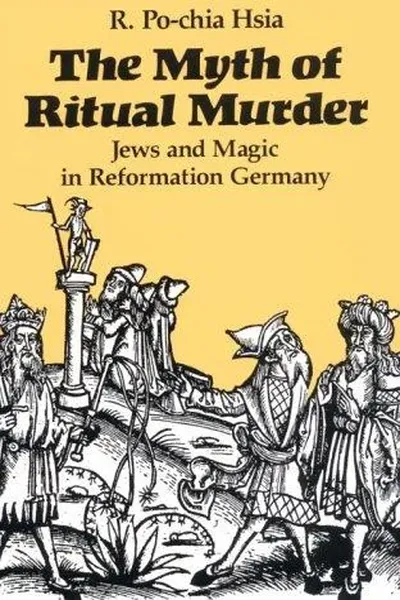
More Free Magic & Ritual Books
View all →