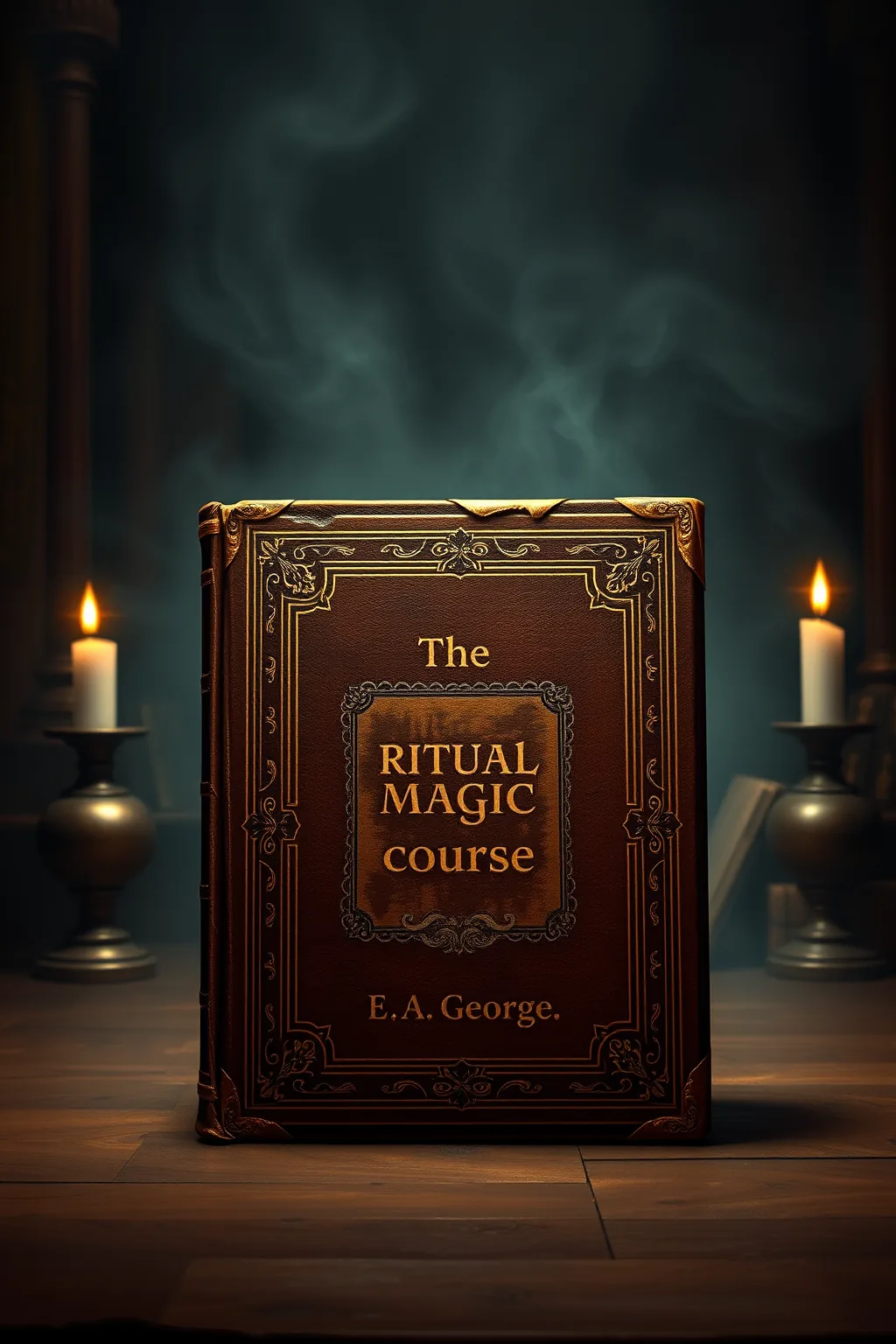
The ritual magic course
 61
61

The ritual magic course

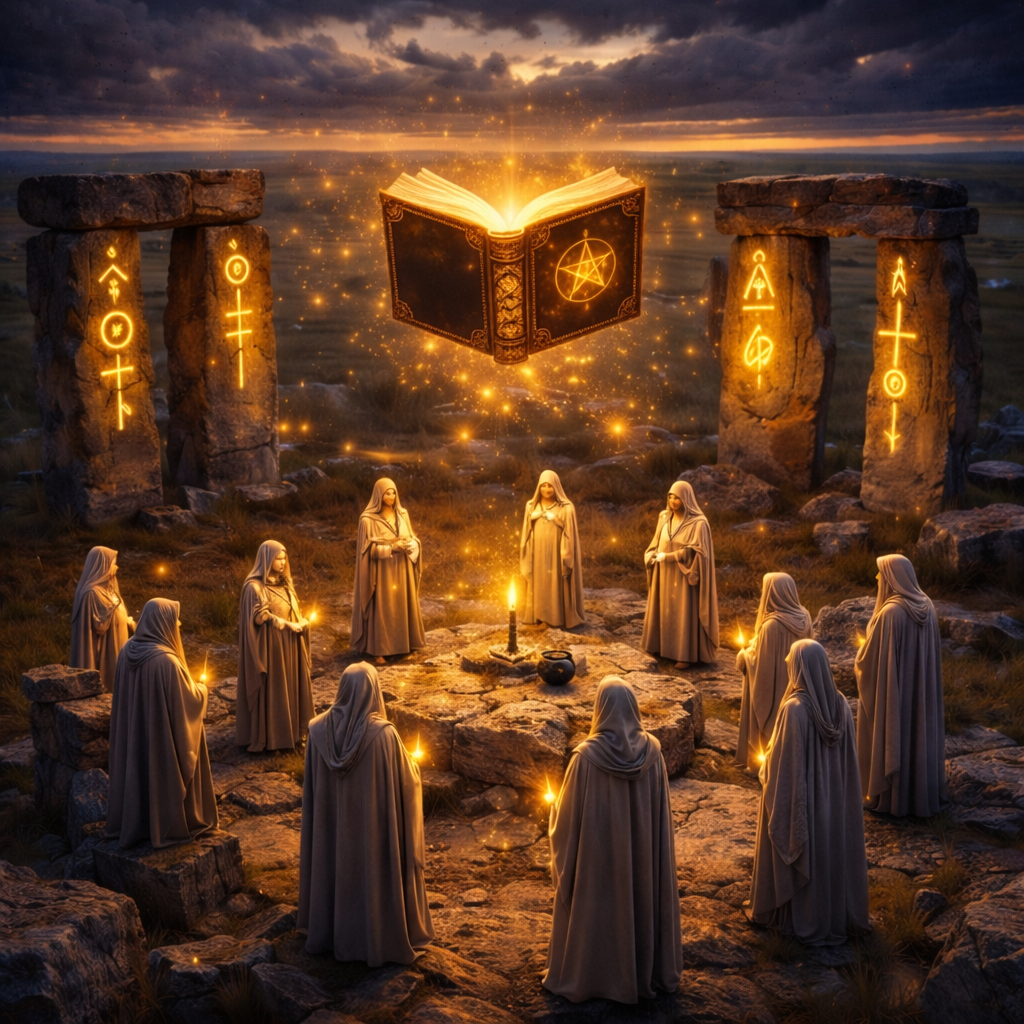

Ophelia Vance, Mystical Literature Reviewer— E. A. St. George's 'The Ritual Magic Course' stands as a cornerstone for serious students of the occult. St. George masterfully decodes the esoteric principles behind effective ceremonial magic, offering clarity without dilution. This is not a book for the dabbler; it demands intellectual rigor and a sincere desire for spiritual growth. The author's strength lies in his ability to weave together historical context, philosophical depth, and practical instruction. Readers will find invaluable insights into the nature of divine will, the architecture of the astral plane, and the disciplined application of magical energies. It is an indispensable guide for those committed to understanding and enacting the Great Work.
📝 Description
61
E. A. St. George's 'The Ritual Magic Course' was published in 1937, detailing ceremonial magic.
Published in 1937, E. A. St. George's 'The Ritual Magic Course' provides a systematic approach to ceremonial magic. The book breaks down the core principles and practices involved, examining the philosophical basis for ritual work. It covers topics such as sacred geometry, the meaning behind ancient rites, and methods for developing personal magical power.
St. George aims to bridge the gap between theory and practice, guiding the reader toward an understanding of how consciousness can influence perceived reality. The text emphasizes a disciplined approach, suitable for those seriously interested in magical studies. It seeks to clarify complex magical ideas without oversimplifying them, retaining their depth.
This work belongs to the Western esoteric tradition, specifically focusing on ceremonial magic as practiced in the early 20th century. It draws upon established magical frameworks, likely influenced by figures and orders active at the time. The book's approach to ritual, symbolism, and the development of the practitioner's will places it within a lineage concerned with the practical application of occult philosophy for spiritual or personal transformation.
💡 Why Read This Book?
Unravel the foundational principles of ceremonial magic and unlock your latent potential. This course is ideal for sincere seekers of hidden knowledge, aspiring practitioners seeking a structured path, and scholars interested in the history and philosophy of esoteric traditions. Discover the transformative power of ritual and cultivate a deeper understanding of the cosmos.
⭐ Reader Reviews
Honest opinions from readers who have explored this book.
❓ Frequently Asked Questions
What is the primary focus of 'The Ritual Magic Course'?
The primary focus is on the theoretical and practical aspects of ceremonial magic, guiding the reader through the foundational principles, symbolism, and techniques required for effective ritualistic practice.
Is this book suitable for absolute beginners?
While it delves into complex subjects, St. George presents the material in a structured manner, making it accessible to dedicated beginners willing to engage with its depth.
What kind of knowledge will I gain from this book?
You will gain knowledge of magical theory, symbolic language, the construction of ritual, the nature of spiritual forces, and the development of personal will and psychic abilities.
Does the book include specific rituals?
The book emphasizes understanding the principles behind ritual construction, providing frameworks and examples rather than a rigid collection of spellwork.
What is the author's approach to magic?
E. A. St. George approaches magic from a disciplined, philosophical, and deeply spiritual perspective, focusing on inner transformation and the responsible application of arcane forces.
🔮 Key Themes & Symbolism
The Art of Ceremonial Magic
This theme explores the core tenets of ceremonial magic, moving beyond simplistic notions to reveal its intricate structure and profound purpose. It studies the deliberate and symbolic manipulation of energies, the importance of sacred space, and the invocation of higher forces. The course emphasizes that true magic is not mere spellcasting but a disciplined art form aimed at spiritual evolution and the manifestation of divine will in the material realm. It highlights the psychological and spiritual preparation required for potent ritual work, underscoring the magician's role as a conduit and co-creator.
Symbolism and the Language of the Universe
St. George masterfully deciphers the collection of symbols that form the bedrock of magical practice. This theme illuminates how symbols act as keys to unlock deeper levels of consciousness and communicate with archetypal forces. From geometric patterns and celestial alignments to the potent imagery within ancient texts, each symbol is presented not as arbitrary decoration but as a precise tool for magical operation. Understanding this symbolic language is crucial for interpreting the universe's subtle messages and for effectively directing magical intent, allowing the practitioner to speak the unspoken language of creation.
The Cultivation of Inner Power
Beyond external practices, 'The Ritual Magic Course' places immense emphasis on the internal development of the practitioner. This theme focuses on the disciplines necessary to harness one's own latent energies and mental faculties. It explores techniques for strengthening willpower, enhancing psychic perception, and achieving states of focused consciousness essential for magical efficacy. The course posits that true magical power originates from within, and that ritual is a means to amplify and direct this inner force with precision and purpose, fostering self-mastery and spiritual maturity.
💬 Memorable Quotes
Direct passages from the work, attributed to the author.
“Will, directed by knowledge and tempered by wisdom, is the ultimate engine of magical manifestation.”
— This highlights the critical triad of intention, understanding, and ethical consideration that underpins effective and responsible magical practice.
“Every symbol is a door, and every ritual a key.”
— This emphasizes the symbolic nature of magical tools and practices, suggesting that their true power lies in their ability to unlock hidden potentials and states of consciousness.
“The outer temple is but a reflection of the inner sanctuary.”
— This points to the paramount importance of internal preparation and spiritual development as the foundation for any external magical work.
“To know, to dare, to will, and to keep silent – the fourfold path of the magician.”
— This iconic dictum expresses the essential virtues and disciplines required for mastery in the esoteric arts, stressing knowledge, courage, volition, and discretion.
💡 Key Ideas
Editorial paraphrase of the work's core concepts — not direct quotes.
The universe is a vast, interconnected web of energy, and magic is the art of attuning oneself to its currents.
This quote expresses the fundamental esoteric belief in the unified nature of existence and magic's role as a bridge between the individual and the cosmic flow of power.
🌙 Esoteric Significance
Tradition
This work is deeply rooted in the Western Esoteric Tradition, drawing heavily from Hermeticism, Kabbalah, and ceremonial magic as practiced by influential orders. It represents a comprehensive synthesis of philosophical inquiry and practical application, aiming to guide the practitioner toward spiritual illumination and self-realization through disciplined ritual work.
Symbolism
The book extensively utilizes the rich symbolic language inherent in magical traditions. Key symbols, such as the pentagram, hexagram, the elements, and planetary correspondences, are not merely decorative but are presented as potent tools for understanding cosmic principles and directing magical energies. These symbols serve as a universal language, bridging the gap between the mundane and the divine.
Modern Relevance
In an age often characterized by materialism and spiritual disconnection, 'The Ritual Magic Course' offers a profound pathway to reconnect with deeper realities. Its emphasis on disciplined practice, self-awareness, and the power of focused intention remains highly relevant for individuals seeking personal growth, spiritual understanding, and a more meaningful engagement with the universe.
👥 Who Should Read This Book
This course is essential for the serious student of magic, whether a nascent beginner seeking a foundational understanding or an experienced practitioner looking to refine their craft. Scholars of Western Esotericism will find it an invaluable resource for understanding the historical development and philosophical underpinnings of ceremonial magic. Those on a spiritual quest for deeper meaning and connection to the cosmos will discover a potent framework for exploration and self-discovery. Ultimately, anyone drawn to the mysteries of consciousness, symbolism, and the power of focused intent will benefit immensely.
📜 Historical Context
E. A. St. George's 'The Ritual Magic Course' emerged during a period of burgeoning interest in esoteric studies, particularly in the late 19th and early 20th centuries. This era saw a significant revival of occultism, influenced by movements such as Theosophy, Hermeticism, and the Hermetic Order of the Golden Dawn. Many scholars and mystics sought to rediscover and codify ancient magical traditions, often reinterpreting them through a lens of psychological and spiritual evolution. St. George's work fits within this context, offering a structured and accessible approach to ceremonial magic that aimed to clarify its practices and present it as a viable path for personal transformation and philosophical inquiry, contributing to the intellectual range of Western Esotericism.
📔 Journal Prompts
Reflect on a personal symbol that holds significant meaning for you. How can you incorporate its essence into a personal ritual?
Describe a recent experience where you felt a strong connection to a force beyond the ordinary. What were the circumstances?
What does 'willpower' mean to you in the context of personal growth and magical practice?
Consider the concept of 'sacred space.' How can you create and maintain such a space in your daily life?
What ethical considerations are paramount when engaging with magical energies and intentions?
🗂️ Glossary
Invocation
A ritualistic act of calling upon a divine or spiritual entity to be present, to grant assistance, or to imbue the practitioner with its qualities.
Astral Plane
A non-physical dimension or field of existence, often considered to be the field of emotions, thoughts, and psychic energies, accessible through altered states of consciousness.
Correspondences
The system of relationships and associations between different elements, symbols, planets, colors, and other magical forces, used to construct rituals and understand cosmic connections.
Will
In a magical context, the directed force of consciousness and intention, believed to be capable of influencing both the inner and outer worlds.
Kabbalah
A complex system of Jewish mysticism that explores the divine nature and the creation of the universe through symbolic interpretations of scripture and a structured cosmological model.
This book appears in 2 collections
🔮 Readers Also Liked
Browse all →





More by St. George, E. A.
All books →
From the “Ritual Magic” Collection
View all →




More Free Magic & Ritual Books
View all →