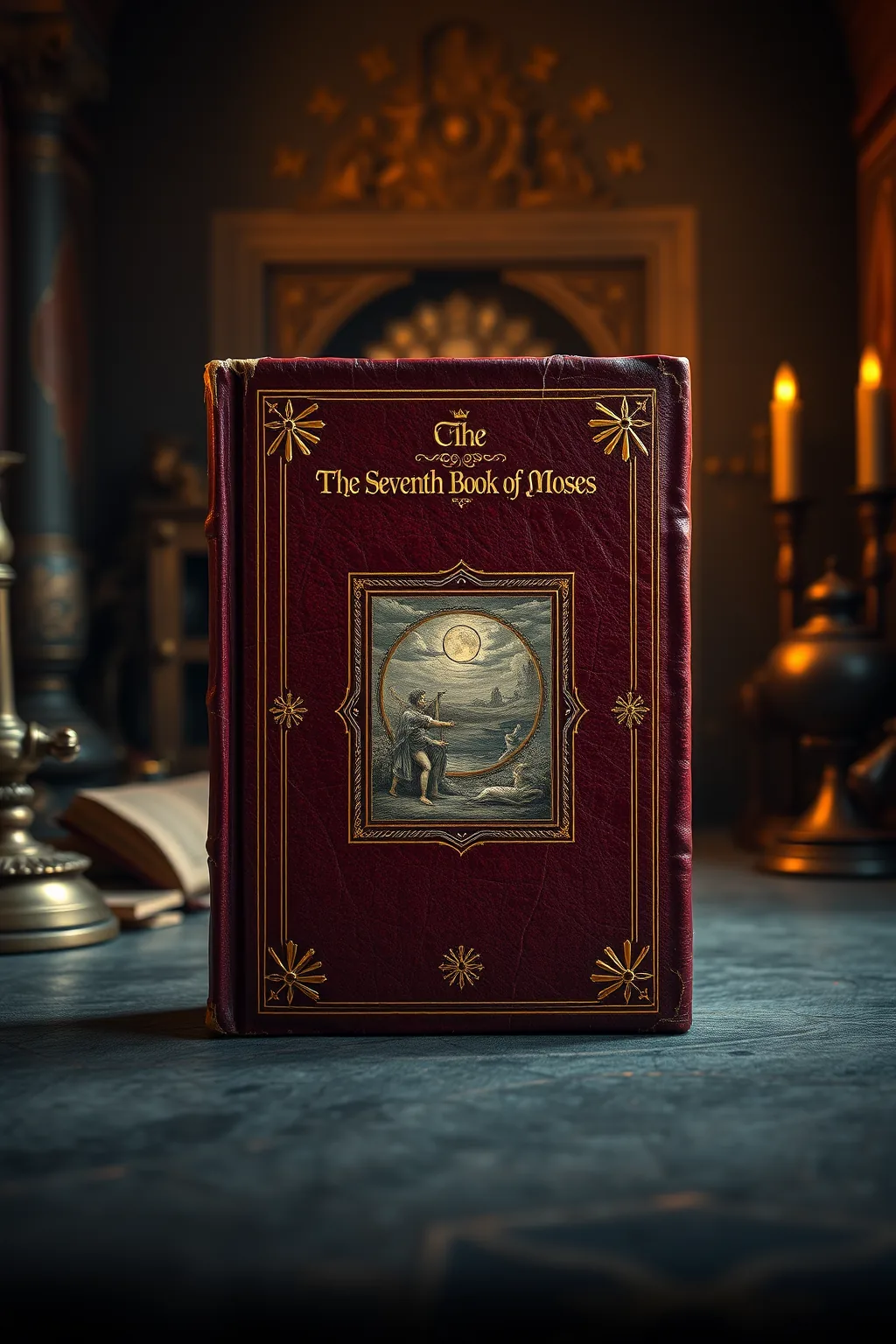
The Seventh Book of Moses
 84
84

The Seventh Book of Moses

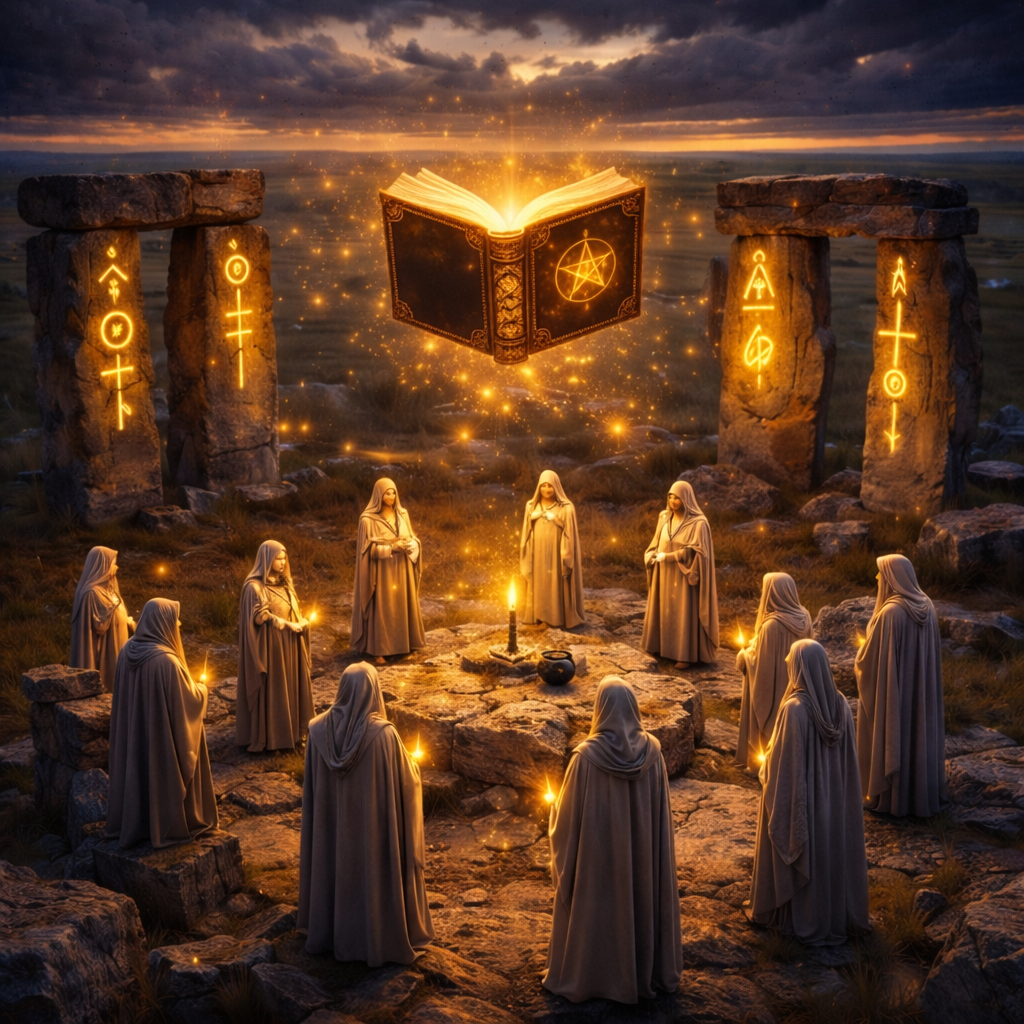

By Aurelia Blackwood (Occult Philosophy Critic) — 'The Seventh Book of Moses' stands as a cornerstone in the edifice of Western occultism, offering an unvarnished glimpse into pre-modern magical systems. Scheibel's compilation, rich with sigils and invocations, provides a direct conduit to the practical applications of Kabbalistic principles. Its strength lies in its raw, unadulterated presentation, demanding serious study from its readers. While not for the faint of heart or the casual dabbler, it is an indispensable resource for serious practitioners and scholars seeking to understand the historical evolution of magical thought and its enduring influence.
📝 Description
84
Johann Scheibel's 1786 publication, 'The Seventh Book of Moses,' claims to reveal secrets of celestial influence and earthly dominion.
This work, attributed to Johann Scheibel, was published in 1786. It purports to be a translation from an ancient Samaritan text and contains Kabbalistic lore and ritualistic practices. The book focuses on understanding cosmic forces through methods like sigil magic and divine names. It addresses the connections between the material and spiritual worlds.
Its content is aimed at those seeking esoteric knowledge, practitioners wishing to advance their magical studies, and scholars interested in the history of Western esotericism. The text invites contemplation on existence's mysteries and the power of human will. It presents gnosis as a state where the separation between worlds is lessened, revealing the language of creation.
Published in 1786, 'The Seventh Book of Moses' emerged during a period of renewed interest in occult traditions and grimoires. It draws upon Kabbalistic concepts, a mystical system originating in Jewish mysticism, and aligns with the broader European grimoire tradition that cataloged magical rituals and correspondences. The book's focus on celestial influence and earthly dominion reflects common themes in ceremonial magic, where practitioners sought to channel supernatural powers for practical ends.
💡 Why Read This Book?
Uncover forgotten magical arts and sacred geometries. Explore the foundational texts of Kabbalistic magic and divine invocation. This book is essential for serious students of esotericism, occult practitioners seeking ancient methods, and historians of magical traditions who wish to delve into the raw source material of Western occultism.
⭐ Reader Reviews
Honest opinions from readers who have explored this book.
❓ Frequently Asked Questions
What is the historical origin of 'The Seventh Book of Moses'?
While attributed to Johann Scheibel (1736-1809), the text itself draws from older traditions, with its origins tracing back to medieval grimoires and Kabbalistic texts, purportedly translated from ancient Samaritan and Hebrew sources.
Is this book a literal translation of a biblical text?
No, 'The Seventh Book of Moses' is not part of the canonical biblical texts. It is a grimoire that draws inspiration from biblical figures and concepts, presenting them within a magical and occult framework.
What kind of magic is described in this book?
The book details various forms of ceremonial magic, including the use of divine names, sigils, talismans, invocations, and conjurations, often aimed at spiritual understanding, protection, and manipulation of natural forces.
Who is the intended audience for this text?
This book is primarily intended for serious practitioners of magic, occult scholars, and individuals deeply interested in the history and practice of Western esotericism and Kabbalah.
Are the sigils and rituals presented safe to use?
As with any esoteric practice, caution and thorough understanding are paramount. The efficacy and safety of the rituals depend heavily on the practitioner's knowledge, intent, and spiritual preparation. Esoteric Library advises responsible engagement.
🔮 Key Themes & Symbolism
The Art of Sigil Craft
This volume is a rich repository of sigils, intricate symbolic representations believed to hold immense power. These glyphs are not mere drawings but potent keys, designed to channel specific energies and communicate with unseen forces. The book meticulously details their construction and application, emphasizing the importance of intent and visualization in their activation. Understanding the language of these symbols is presented as a primary pathway to influencing the material world and accessing higher planes of consciousness, making sigil craft a central tenet of the magical system presented.
Divine Names and Invocations
A profound emphasis is placed on the power inherent in the divine names of God and angelic beings. The text presents these names as conduits to celestial power, capable of granting protection, wisdom, and authority. Through carefully crafted invocations and prayers, practitioners are guided to establish a connection with these higher intelligences, seeking their aid in spiritual and material endeavors. This theme underscores the belief that the universe operates on a principle of divine order, and by aligning oneself with these sacred names, one can tap into that cosmic power.
Kabbalistic Correspondences and Theurgy
The Seventh Book of Moses is deeply interwoven with Kabbalistic principles, exploring the intricate web of correspondences between the macrocosm and the microcosm. It looks at the understanding of the Tree of Life and its influence on human existence, presenting magical practices as a form of theurgy – the art of divine work. The goal is not merely to manipulate external forces, but to achieve spiritual perfection and a reunion with the divine source through ritualistic means, transforming the practitioner from within.
💬 Memorable Quotes
Direct passages from the work, attributed to the author.
“Ex Verbis Revelatis (II) Intellectui Sigillatis Verbis.”
— Through revealed words, to the understanding sealed by words.
“NUNC APOSTOLICA CONSECRATIONE DR NOVO CONFIRMATO.”
— Now consecrated anew by apostolic authority.
“Script. de Ellbio. ANNO MCCCLXXXIII.”
— Written concerning the Elixir. In the year 1383.
“The Key to the Hidden is the Word.”
— Emphasizes the power of language and divine names in unlocking esoteric knowledge and cosmic secrets.
“As Above, So Below; As Within, So Without.”
— A fundamental Hermetic principle highlighting the interconnectedness of the spiritual and material realms.
🌙 Esoteric Significance
Tradition
This text is a key artifact of Western Esotericism, heavily influenced by Kabbalistic traditions, Hermeticism, and Christian occultism. It represents a significant current within grimoire literature, aiming to provide a practical framework for theurgy, or divine work, bridging the gap between the human and the divine through the mastery of sacred names, symbols, and rituals.
Symbolism
The core symbolism revolves around divine names, angelic hierarchies, and potent sigils. These elements are seen as microcosmic representations of macrocosmic forces, designed to evoke specific spiritual or elemental energies. The book utilizes a symbolic language where each glyph and utterance carries profound meaning, acting as a key to unlock hidden potentials and influence the fabric of reality.
Modern Relevance
Despite its ancient origins, 'The Seventh Book of Moses' continues to resonate with modern practitioners and scholars. Its exploration of sigil magic, divine correspondences, and the power of intention remains relevant in contemporary occult and spiritual practices. The text serves as a valuable historical document, offering insights into the evolution of magical thought and providing a rich source of inspiration for those seeking to connect with ancient wisdom.
👥 Who Should Read This Book
Beginners in occult studies will find this text a challenging but rewarding introduction to foundational magical concepts, particularly sigil craft and divine invocation. Scholars of religious history and esotericism will appreciate its combination of biblical allusion and magical practice, offering critical insights into the development of Western occultism. Spiritual seekers and practitioners of magic will discover a potent sourcebook for ritual work, aiming to deepen their connection with the divine and hone their abilities in channeling spiritual energies for personal growth and transformation.
📜 Historical Context
Originating from the fertile ground of 18th-century European occultism, 'The Seventh Book of Moses' emerged during a period of intense interest in Kabbalah, alchemy, and esoteric lore. Johann Scheibel, its purported compiler, was a minister who, paradoxically, became a significant figure in the dissemination of forbidden magical texts. This era saw a resurgence of interest in ancient wisdom, often filtered through Christianized Kabbalah and Gnosticism. The text reflects a desire to reclaim and codify magical practices that were believed to have been passed down from biblical figures, offering a system of spiritual and practical empowerment in a world grappling with scientific advancements and religious upheaval. Its influence spread through clandestine circles, shaping the trajectory of Western occultism.
📔 Journal Prompts
Reflect on a sigil from the book that speaks to you. What properties do you believe it embodies, and how might you integrate its essence into your life?
How does the concept of 'divine names' in this text align with or challenge your understanding of prayer and invocation?
Consider the historical context of this book. How might societal beliefs and scientific understanding of the 18th century have influenced its creation and dissemination?
Explore the relationship between the macrocosm (divine order) and the microcosm (human experience) as presented in the book. How does this influence your view of personal agency?
If you were to create a personal talisman based on the principles in this book, what would be its core intention and symbolic elements?
🗂️ Glossary
Sigil
A symbol or emblem believed to possess magical powers, often created by condensing intent and symbolic meaning into a unique glyph, used for invocation or manifestation.
Theurgy
A system of ritualistic magic aimed at invoking divine presence or achieving spiritual union, often translated as 'divine work' or 'working with the gods'.
Kabbalah
A complex system of Jewish mysticism that explores the nature of God, creation, and the spiritual universe through esoteric interpretation of the Torah and symbolic representations.
Grimoire
A textbook of magic, typically containing instructions on how to create magical tools, cast spells, perform rituals, and invoke spirits.
Invocation
The act of calling upon a deity, spirit, or higher power, often through prayer, chant, or ritual, to seek assistance, guidance, or presence.
This book appears in 4 collections
🔮 Readers Also Liked
Browse all →







From the “Transcendental Meditation” Collection
View all →







More Free Magic & Ritual Books
View all →