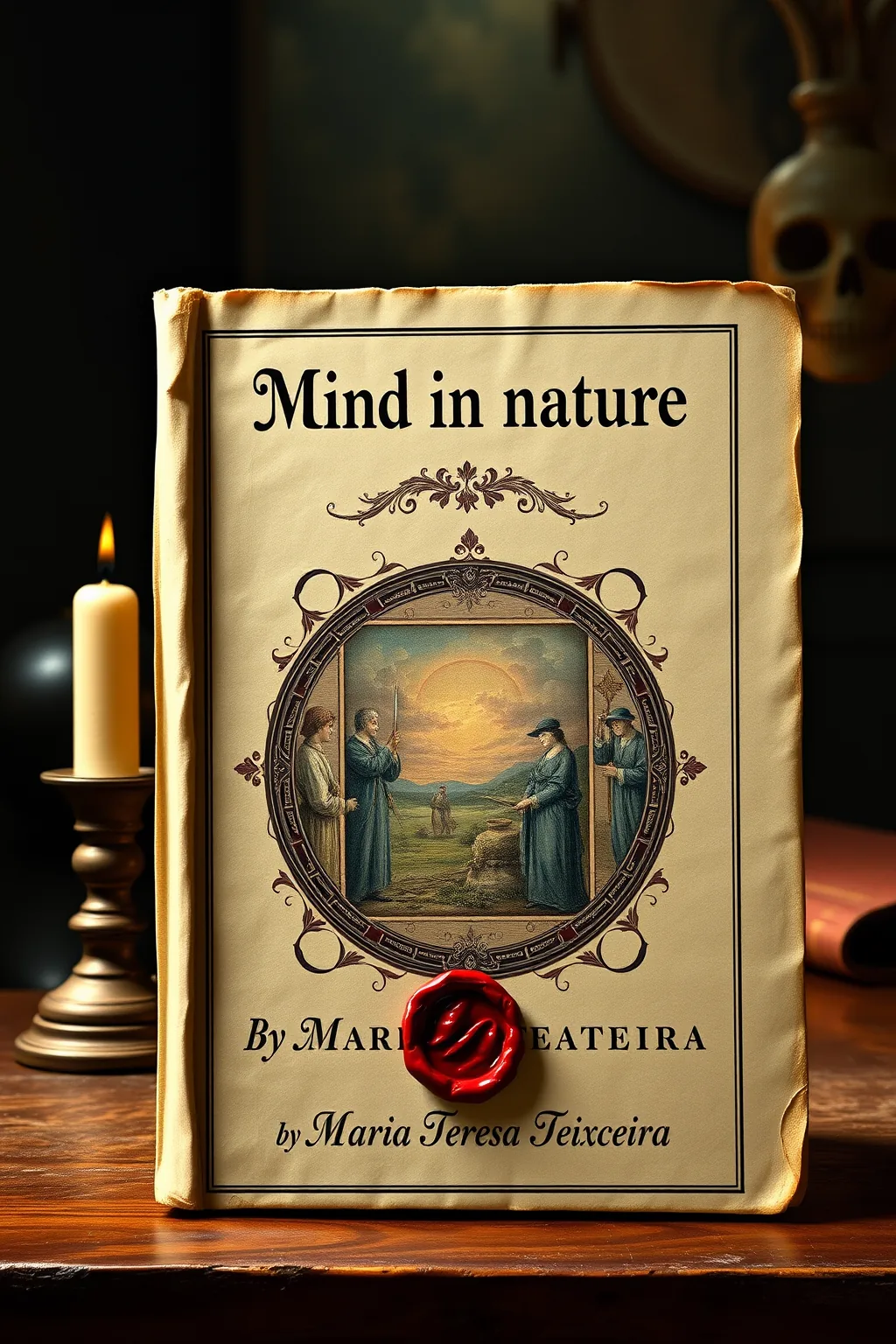
Mind in Nature
 71
71

Mind in Nature
The collection Mind in Nature, published in 2021, presents a compelling, albeit dense, argument for the philosophical kinship between Neo-Platonism and Process Philosophy. The scholars assembled here successfully illuminate shared conceptual ground on topics like holism and temporality. A particular strength lies in the detailed analysis of Whitehead's metaphysics through the lens of Plotinian thought, revealing surprising parallels. However, the academic rigor, while admirable, occasionally renders the prose inaccessible to a non-specialist. The essay discussing the implications of 'creativity' across both traditions, for instance, is exceptionally insightful but demands significant prior philosophical knowledge. The work's primary limitation is its niche audience; it is less an introduction and more a deep dive for those already versed in these complex systems. Ultimately, Mind in Nature offers a valuable, if demanding, re-evaluation of historical philosophical continuities for the dedicated student of metaphysics.
📝 Description
71
Mind in Nature, published in 2021, connects Neo-Platonism with modern Process Philosophy.
This 2021 collection of essays investigates the philosophical connections between ancient Neo-Platonism and 20th-century Process Philosophy. Leading academics contribute to the volume, identifying shared concepts across these different intellectual traditions. The work aims to show a continuity of thought concerning fundamental aspects of reality.
The essays draw upon philosophical traditions separated by many centuries. Neo-Platonism saw significant developments with figures like Plotinus in the 3rd century CE, while Process Philosophy is largely associated with Alfred North Whitehead in the 20th century. The book's publication in 2021 places it within contemporary philosophical discussions about naturalism, organismic philosophy, and the nature of existence.
Central to the collection are concepts found in both Neo-Platonism and Process Philosophy. These include the nature of creativity and potentiality, the structure of temporality and becoming, the principles of holism and organismic unity, and the dynamics of causality and evolution. The book advocates for an integral worldview where complexity and indivisibility are fundamental to existence.
While not explicitly occult, this work engages with philosophical systems that have influenced esoteric thought. Neo-Platonism, particularly its emanational cosmology and ideas about the One, has been a significant current in Western esotericism for centuries. Process Philosophy, with its emphasis on becoming, relationality, and an immanent divine principle, offers a modern metaphysical framework that resonates with certain mystical and process-oriented spiritual traditions. The book's examination of these traditions highlights how concepts of nature's inherent dynamism and interconnectedness have persisted and evolved.
💡 Why Read This Book?
• Gain a unique perspective on the continuity of Western metaphysical thought by exploring the conceptual bridges between 3rd-century Neo-Platonism and 20th-century Process Philosophy, specifically Alfred North Whitehead's ideas. • Understand core philosophical concepts such as creativity, temporality, and holism as they are interpreted across distinct historical periods and thinkers. • Discover how scholars in 2021 are re-examining ancient philosophical frameworks to inform contemporary discussions on naturalism and organismic philosophy.
⭐ Reader Reviews
Honest opinions from readers who have explored this book.
❓ Frequently Asked Questions
What is the primary philosophical connection explored in Mind in Nature?
The book's central aim is to bridge Neo-Platonism and Process Philosophy, demonstrating shared concepts like creativity, temporality, and holism between these historically distant philosophical movements.
Who are the main philosophical figures associated with the traditions discussed?
Key figures include Plotinus for Neo-Platonism and Alfred North Whitehead for Process Philosophy, whose ideas are central to the comparative analyses presented in the essays.
What publication year does Mind in Nature belong to?
Mind in Nature was first published on January 27, 2021, placing it within contemporary philosophical scholarship.
Which specific concepts are examined in Mind in Nature?
The collection focuses on concepts such as creativity, temporality, holism, potentiality, causality, evolution, organism, and multiplicities, found in both Neo-Platonism and Process Philosophy.
Is Mind in Nature suitable for beginners in philosophy?
Due to its advanced academic nature and focus on specific philosophical movements, it is best suited for advanced students and scholars rather than complete beginners.
What is the relationship between the authors and the book's subject matter?
The authors, Maria-Teresa Teixeira, Aljoscha Berve, and Moirika Reker, are presented as leading scholars contributing essays that analyze and connect Neo-Platonism with Process Philosophy.
🔮 Key Themes & Symbolism
Bridging Ancient and Modern Metaphysics
This collection meticulously connects the philosophical systems of Neo-Platonism, exemplified by Plotinus's 3rd-century CE thought, with the 20th-century emergence of Process Philosophy, championed by Alfred North Whitehead. It argues that concepts such as the inherent creativity of the universe and the interconnectedness of all things (holism) are not merely contemporary concerns but have deep roots in ancient metaphysical speculation, offering a unified perspective on reality across millennia.
The Nature of Becoming and Temporality
Mind in Nature offers a nuanced exploration of how both Neo-Platonism and Process Philosophy conceptualize time and change. It examines the idea of potentiality and the dynamic unfolding of existence, challenging static views of reality. The essays analyze how temporal processes and the constant emergence of novelty are fundamental to understanding both the divine (in Neo-Platonism) and the actual occasions of experience (in Process Philosophy).
Organismic Holism and Causality
A central theme is the understanding of the universe as an interconnected, living organism rather than a mere mechanism. The book examines how both traditions view causality not as a simple push-pull but as a complex, relational process inherent within the very fabric of existence. It explores how multiplicities of events or entities contribute to a greater, indivisible whole, reflecting an integral and natural worldview.
Creativity as a Fundamental Principle
The essays investigate creativity as a primary force in both Neo-Platonic emanation and Whitehead's concept of 'creativity'. This theme highlights the active, generative nature of reality, positing that existence is not a static given but a continuous process of becoming. The book argues that understanding this inherent dynamism is crucial for a comprehensive metaphysical outlook.
💬 Memorable Quotes
Direct passages from the work, attributed to the author.
“Essays bridge Neo-Platonism and Process Philosophy focusing on creativity, temporality, and holism.”
— This concise summary highlights the core intellectual project of the collection, emphasizing the specific philosophical concepts that serve as connective tissue between these two seemingly disparate schools of thought.
“The collection examines concepts found in both theories, including creativity, temporality, holism, potentiality, causality, evolution, organism, and multiplicities.”
— This statement itemizes the key metaphysical and ontological categories that the contributing scholars use as points of comparison, revealing the depth and breadth of the philosophical dialogue.
“Published in 2021, the essays analyze shared principles in ancient and modern philosophical movements.”
— This contextualizes the book's contribution within contemporary scholarship, indicating that it revisits historical ideas to engage with current philosophical debates and offer fresh perspectives.
“The authors explore how Neo-Platonism and Process Philosophy concur on an integral, natural worldview.”
— This interpretation underscores the book's argument for a unified philosophical vision, suggesting that ancient and modern thought can converge on a holistic and naturalistic understanding of existence.
💡 Key Ideas
Editorial paraphrase of the work's core concepts — not direct quotes.
The work explores an integral, natural worldview where wholeness, complexity, and indivisibility are prevalent.
This passage captures the book's overarching thesis: that both Neo-Platonism and Process Philosophy offer frameworks for understanding reality as fundamentally interconnected and dynamic, rather than fragmented or static.
🌙 Esoteric Significance
Tradition
While primarily philosophical, the book touches upon themes resonant with esoteric traditions by examining Neo-Platonism, which has historically informed Hermeticism, Gnosticism, and Neoplatonic magic. It explores concepts like the One, emanation, and the soul's journey, which are foundational in many Western esoteric lineages. By linking these to Process Philosophy's emphasis on becoming and interconnectedness, it offers a modern, philosophical interpretation of ideas often found in mystical contexts.
Symbolism
The concept of the 'organism' itself serves as a potent symbol, representing a universe that is alive, interconnected, and self-generating, moving away from a mechanistic worldview. 'Multiplicities' can symbolize the complex interplay of individual experiences and universal forces, echoing esoteric notions of the many arising from the One. The theme of 'creativity' functions symbolically as the primordial, inexhaustible source from which all existence flows, akin to divine principles in esoteric cosmology.
Modern Relevance
Contemporary thinkers exploring ecological philosophy, complexity theory, and panpsychism find resonance in Mind in Nature's synthesis. Scholars and practitioners interested in reinterpreting classical metaphysical ideas through a modern scientific or philosophical lens will find value. Furthermore, those within esoteric communities seeking philosophical underpinnings for concepts of universal consciousness, emergent reality, and the interconnectedness of all beings can draw upon the arguments presented.
👥 Who Should Read This Book
• Advanced students of metaphysics and comparative philosophy seeking to understand the dialogue between historical Neo-Platonism and contemporary Process Philosophy. • Scholars specializing in Alfred North Whitehead or Plotinus who wish to explore specific conceptual overlaps like temporality, holism, and causality across these traditions. • Researchers in the history of ideas interested in tracing the evolution of metaphysical concepts from antiquity to the 21st century and their implications for a natural worldview.
📜 Historical Context
Published in 2021, Mind in Nature arrives amidst a resurgence of interest in process-oriented metaphysics and a continuing scholarly engagement with ancient philosophies. The book directly addresses the philosophical currents of Neo-Platonism, a significant movement in late antiquity heavily influenced by figures like Plotinus in the 3rd century CE, and Process Philosophy, a distinct 20th-century development associated with Alfred North Whitehead. It positions itself as a bridge, countering the tendency to view these traditions in isolation. The collection’s relevance is amplified by contemporary philosophical dialogues that grapple with issues of emergence, complexity, and the nature of consciousness, areas where both Neo-Platonism and Process Philosophy offer unique insights. Its publication in 2021 situates it within a landscape where scholars like Isabelle Stengers have also engaged with Whiteheadian thought, albeit from different critical angles, highlighting the ongoing vitality of these philosophical lineages.
📔 Journal Prompts
The concept of 'creativity' as explored across Neo-Platonism and Process Philosophy.
Reflect on the implications of 'holism' for understanding organismic unity in nature.
Analyze the differences and similarities in the treatment of 'temporality' within the two philosophical movements.
Consider the philosophical significance of 'potentiality' in the context of evolution as discussed.
How does the idea of 'multiplicities' contribute to an integral worldview?
🗂️ Glossary
Neo-Platonism
A philosophical and religious system originating in the 3rd century CE with Plotinus, emphasizing a mystical ascent to the ineffable One, from which all reality emanates.
Process Philosophy
A school of thought, notably developed by Alfred North Whitehead, that views reality primarily in terms of processes, change, and becoming, rather than static substances.
Holism
The principle that the whole is greater than the sum of its parts, emphasizing the interconnectedness and interdependence of all elements within a system.
Temporality
The philosophical concept concerning the nature of time, its passage, and its relationship to existence and experience.
Potentiality
The inherent capacity or possibility for something to develop or come into being; a concept central to both Aristotelian and process metaphysics.
Organism
In a philosophical context, refers to a complex, integrated system viewed as a living entity, emphasizing organic unity and interconnectedness over mechanical composition.
Multiplicities
Refers to the complex interplay and aggregation of numerous distinct entities or events that constitute reality, often considered in relation to a unifying principle.