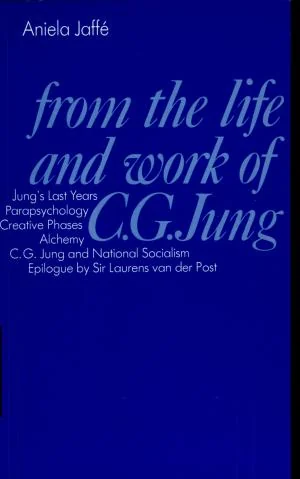
From the Life and Work of C.G. Jung
 71
71

From the Life and Work of C.G. Jung
Aniela Jaffé's "From the Life and Work of C.G. Jung" provides a rare glimpse into the private world of a titan of 20th-century thought. Its primary strength lies in Jaffé's privileged access to Jung's "Red Book," allowing for direct engagement with the raw material that fueled his most profound ideas. The section addressing the National Socialism accusations is commendably thorough, offering a necessary corrective to simplistic interpretations of Jung's wartime stance. However, the prose, while informative, occasionally leans towards academic dryness, which may deter readers seeking a more narrative biographical account. The inclusion of Sir Laurens van der Post's epilogue, while adding a layer of personal reflection, feels somewhat appended rather than fully integrated. Nevertheless, Jaffé’s meticulous scholarship and unique access make this an indispensable resource for serious students of Jungian psychology. It is a critical, albeit dense, examination of Jung's inner and outer life.
📝 Description
71
Aniela Jaffé’s 1989 biography draws on C.G. Jung’s personal papers and his own Red Book.
Aniela Jaffé, a colleague of Carl Gustav Jung, wrote "From the Life and Work of C.G. Jung" based on her close relationship with him and access to his private documents. Originally published in 1989, the book includes key excerpts from Jung's "Red Book," a personal manuscript he kept private for many years. Jaffé concentrates on Jung's early life and periods of intense creativity, explaining how his most important ideas developed.
The updated edition addresses accusations of National Socialism made against Jung in the 1930s and 1940s. Jaffé examines the evidence, using Jung’s own writings and letters to offer a defense. This section helps clarify Jung's public image and the controversies surrounding his work in German psychology during that time.
The "Red Book," also known as Liber Novus, is a significant part of this biography. Jung created this symbolic work between 1913 and 1930 after his split with Freud, using it to process his unconscious experiences. Jaffé connects these personal visions to Jung's theories on archetypes, the collective unconscious, and individuation.
This biography situates C.G. Jung's psychological theories within the broader currents of Western esotericism. Jung's engagement with alchemy, Gnosticism, and Eastern philosophies, particularly as reflected in his "Red Book," demonstrates a deep interest in spiritual and symbolic systems often considered esoteric. Jaffé's work highlights how Jung saw these traditions not merely as historical curiosities but as vital expressions of the human psyche's inner life and the search for meaning. The book connects Jung's analytical psychology to these older traditions, suggesting a continuity in the human quest for understanding the soul and its relationship to the cosmos.
💡 Why Read This Book?
• Gain direct insight into C.G. Jung's "Red Book" (Liber Novus), a foundational text of his personal mythology, through authorized excerpts and Jaffé's commentary, offering a unique window into his post-Freudian crisis. • Understand the historical context surrounding the accusations of National Socialism leveled against Jung in the 1930s, supported by Jaffé's updated essay that addresses these controversies with specific historical details. • Appreciate the influence of Jung's creative phases on his psychological theories, as analyzed by Jaffé, providing concrete examples of how his personal visions informed concepts like archetypes and the collective unconscious.
⭐ Reader Reviews
Honest opinions from readers who have explored this book.
❓ Frequently Asked Questions
When was Aniela Jaffé's "From the Life and Work of C.G. Jung" first published?
The book was first published in 1989. This edition includes updates and expansions by the author, particularly concerning historical controversies surrounding Jung.
What is the significance of the "Red Book" mentioned in the book?
The "Red Book" (Liber Novus) is C.G. Jung's intensely personal, visionary journal created between 1913 and 1930. Jaffé's work provides authorized excerpts and analysis of this crucial text for understanding Jung's inner development.
Does the book discuss Jung's relationship with National Socialism?
Yes, Aniela Jaffé's essay, updated for this edition, directly addresses and refutes accusations of National Socialism leveled against Jung, examining the historical context of his work in Germany during that period.
Who is Sir Laurens van der Post and what is his contribution?
Sir Laurens van der Post was a noted author and confidant of C.G. Jung. He wrote an epilogue specifically for this edition, offering his reflections on Jung's life and work from a later perspective.
What is the author's relationship to C.G. Jung?
Aniela Jaffé was a close associate and collaborator of C.G. Jung, who granted her permission to quote from his private papers, including the "Red Book."
What specific psychological concepts are explored in relation to Jung's life?
The book explores concepts such as archetypes, the collective unconscious, and the process of individuation, linking their development to Jung's personal experiences and creative phases documented in his "Red Book."
🔮 Key Themes & Symbolism
The Red Book's Visionary Landscape
Aniela Jaffé provides crucial context for C.G. Jung's "Red Book" (Liber Novus), a highly personal and symbolic record of his confrontation with the unconscious following his break with Freud. The book details Jung's own illustrations and fragmented narratives, which he created between 1913 and 1930. Jaffé explains how these deeply personal visions, filled with archetypal figures and mythological imagery, were not mere psychological experiments but formative experiences that directly informed Jung's later theoretical work on the collective unconscious, archetypes, and the process of individuation.
Jung and National Socialism: A Historical Reckoning
This work directly tackles the controversial accusations of National Socialism leveled against C.G. Jung, particularly concerning his engagement with German psychology during the 1930s. Aniela Jaffé updates and expands her essay on this sensitive topic, presenting evidence from Jung's correspondence and writings to counter simplistic or politically motivated interpretations. The book situates Jung's actions within the complex political climate of the era, aiming to provide a more nuanced understanding of his position and the misrepresentations he faced.
Creative Phases and Psychological Development
Jaffé meticulously traces Jung's creative phases, demonstrating how his personal psychological journey directly influenced the evolution of his analytical psychology. By quoting from the "Red Book" and other personal documents, she illustrates the dynamic interplay between Jung's inner life and his intellectual output. The book emphasizes that Jung's theories were not abstract constructs but emerged from a rigorous engagement with his own psyche, particularly during the period of intense introspection following World War I.
The Legacy Through Contemporary Eyes
The inclusion of an epilogue by Sir Laurens van der Post offers a perspective from a prominent Jungian figure and confidant of Jung. This essay provides a contemporary echo to Jaffé's biographical and analytical work, reflecting on Jung's enduring impact and relevance. Van der Post's contribution underscores the book's aim to present a comprehensive portrait of Jung, acknowledging both his groundbreaking theoretical contributions and the personal struggles that shaped his unique worldview.
💬 Memorable Quotes
Direct passages from the work, attributed to the author.
“The author addresses the accusations of National Socialism against Jung.”
— This statement points to a key section where Jaffé tackles historical controversies, offering a defense based on Jung's own documented views and actions.
“Jaffé quotes from Jung's highly personal Red Book.”
— This highlights the unique access and permission Jaffé had to Jung's private writings, making her insights particularly valuable for understanding his inner world.
“The book explores Jung's creative phases.”
— This indicates a focus on the developmental aspects of Jung's thought, linking his personal life experiences to the formulation of his psychological theories.
“Sir Laurens van der Post provides an epilogue.”
— This points to a contemporary reflection on Jung's legacy, adding another voice and perspective to the biographical and analytical content.
💡 Key Ideas
Editorial paraphrase of the work's core concepts — not direct quotes.
Jung's "Red Book" was a confrontation with the unconscious.
This paraphrased concept highlights the central role of Jung's intensely personal, visionary work in his psychological development, marking a critical period of self-exploration.
🌙 Esoteric Significance
Tradition
This work is deeply rooted in the tradition of depth psychology, specifically the analytical psychology founded by C.G. Jung. While not strictly adhering to older esoteric lineages like Hermeticism or Kabbalah, Jung's work extensively drew upon and synthesized elements from these traditions, viewing them as expressions of universal psychological patterns. Jaffé's book fits within this framework by informative how Jung interpreted ancient symbols and myths as direct manifestations of the collective unconscious, bridging empirical psychology with esoteric symbolism.
Symbolism
The "Red Book" (Liber Novus) is central to the symbolism discussed. Within it, figures like the serpent, the wise old man, and various mythological creatures appear, representing archetypal energies and complexes within the psyche. Jaffé's work interprets these symbols not merely as personal fantasies but as embodiments of universal psychic structures that Jung identified. The act of creation itself, particularly Jung's meticulous calligraphy and painting, symbolizes the alchemical process of transformation and individuation.
Modern Relevance
Contemporary thinkers in fields ranging from transpersonal psychology to depth psychotherapy continue to engage with Jung's ideas, as presented through works like Jaffé's. Modern archetypal psychology, Jungian analysis, and even certain strands of cultural studies and literary criticism draw heavily on Jung's concepts of the collective unconscious and archetypes. Practices involving dream analysis, active imagination, and the study of mythology often reference Jung's framework, making Jaffé's insights relevant to current explorations of consciousness and the human psyche.
👥 Who Should Read This Book
• Students of C.G. Jung's analytical psychology seeking primary source context and scholarly interpretation of his "Red Book" and theoretical development. • Researchers of 20th-century intellectual history interested in the controversies surrounding Jung, particularly the accusations of National Socialism and their historical refutation. • Individuals exploring the intersection of personal psychology, mythology, and esoteric traditions, looking for connections between Jung's inner life and broader symbolic systems.
📜 Historical Context
Published in 1989, Aniela Jaffé's work emerged in an era of renewed scholarly interest in Carl Gustav Jung, following his death in 1961. The post-war period saw a gradual rehabilitation of Jung's image, particularly after decades where his engagement with German psychology during the 1930s and the Nazi era led to significant controversy and accusations of antisemitism and Nazi sympathies. Jaffé's updated essay directly confronts these issues, providing a detailed examination that sought to clarify Jung's position against the backdrop of rising fascism and the subsequent Cold War intellectual climate. This work engaged with contemporary critiques, notably those from figures within psychoanalytic circles who often viewed Jung's theories on archetypes and the collective unconscious with skepticism, contrasting them with the more deterministic models of Freud and later ego psychology. The intellectual currents of the time included growing interest in Gnosticism, alchemy, and comparative mythology, areas where Jung's work found fertile ground and which Jaffé’s analysis helped contextualize.
📔 Journal Prompts
The confrontation with the unconscious depicted in the "Red Book".
Aniela Jaffé's refutation of National Socialism accusations.
Jung's creative phases and their influence on his theories.
The role of Sir Laurens van der Post's epilogue.
The significance of archetypal figures as presented by Jaffé.
🗂️ Glossary
Red Book (Liber Novus)
C.G. Jung's personal, visionary manuscript created between 1913 and 1930, containing writing, paintings, and symbolic imagery representing his exploration of the unconscious.
Collective Unconscious
In Jungian psychology, a universal layer of the unconscious psyche inherited from our ancestors, containing archetypes and instinctual patterns shared by all humanity.
Archetype
Universal, archaic patterns and images that derive from the collective unconscious and are the psychic counterpart of instinct.
Individuation
The psychological process by which a person becomes an individual; a process of integration of the conscious and unconscious aspects of the personality.
Analytical Psychology
The school of psychology founded by C.G. Jung, emphasizing the importance of the unconscious, archetypes, and individuation.
National Socialism Accusations
Historical allegations made against C.G. Jung concerning his perceived sympathy or collaboration with the Nazi regime during the 1930s and World War II.
Creative Phases
Periods in an individual's life marked by intense psychological exploration and the generation of new ideas or works, particularly relevant to Jung's theoretical development.
🔮 Readers Also Liked
Browse all →









More Free Occult Philosophy Books
View all →