Tai Chi Chuan
 80
80

Tai Chi Chuan
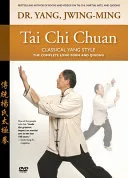
Jwing-Ming Yang’s *Tai Chi Chuan* approaches the subject with an educator’s precision. It avoids the spiritual hyperbole often found in contemporary writings on the subject, focusing instead on a clear, anatomical, and biomechanical understanding of the form. The book’s strength lies in its step-by-step instruction, which is genuinely helpful for the uninitiated. Yang’s detailed explanations of posture and weight distribution, particularly in the initial sections, are invaluable for building a correct foundation. However, the sheer volume of movements presented can feel daunting, and the esoteric underpinnings, while present, are sometimes overshadowed by the mechanical breakdown. The section detailing the 'Ward Off' (Peng) movement, for instance, is excellent in its clarity on physical application but offers less on its energetic implications. For those seeking a purely technical manual, this is a solid resource; for those drawn to Tai Chi primarily for its philosophical or spiritual dimensions, supplementary material might be necessary. It serves well as a practical primer.
📝 Description
80
Jwing-Ming Yang's Tai Chi Chuan was first published in 2010.
This book serves as a practical guide to Tai Chi Chuan, focusing on the fundamental principles and techniques necessary for correct practice. Yang breaks down the complete form into manageable steps, aiming to build a solid understanding of basic movements and internal concepts. The instruction prioritizes the core mechanics of the art over advanced applications, making it suitable for those new to Tai Chi. Readers with no prior experience in martial arts or internal energy work will find its systematic approach easy to follow. It is also helpful for individuals who have practiced Tai Chi but find themselves struggling with its fundamental mechanics or maintaining proper posture and flow. The text assumes no prior knowledge, positioning it as a starting point for anyone interested in learning the art correctly from the beginning.
Yang's work traces the practice of Tai Chi Chuan, which has origins in Taoist monasteries like those in the Wudang Mountains. This martial art developed alongside other Chinese internal health practices. Its introduction to the West grew significantly in the early 20th century through figures such as Yang Chengfu, leading to various interpretations and schools. Yang's book adds to this tradition by clearly transmitting the form and its underlying principles in a pedagogical manner.
Tai Chi Chuan's practice is rooted in Taoist traditions, particularly those associated with Wudang Mountain monasteries. It is an internal martial art that emphasizes the cultivation and circulation of internal energy, known as Qi. This approach contrasts with external martial arts that rely primarily on muscular strength. The practice involves slow, deliberate movements designed to harmonize the body, mind, and spirit, promoting health and longevity alongside self-defense capabilities. Yang's work transmits these core principles, connecting the physical form to its deeper energetic and philosophical underpinnings.
💡 Why Read This Book?
• Learn the precise physical mechanics of the complete Tai Chi Chuan form, enabling correct posture and movement from the outset, as detailed in the step-by-step guides. • Understand fundamental principles like rooting and yielding, crucial for effective practice, by studying Yang's explanations of these concepts. • Gain a clear, accessible introduction to internal energy cultivation through movement, drawing on the foundational instructions provided in the book's early chapters.
⭐ Reader Reviews
Honest opinions from readers who have explored this book.
❓ Frequently Asked Questions
What is the primary focus of Jwing-Ming Yang's Tai Chi Chuan book for beginners?
The book focuses on providing beginners with a comprehensive, step-by-step guide to learning the complete Tai Chi Chuan form and its fundamental principles for correct practice.
Does this book explain the historical origins of Tai Chi Chuan?
Yes, the work touches upon the historical context, mentioning its roots in Taoist traditions and its development over centuries, providing a backdrop for the practice.
Is Jwing-Ming Yang's Tai Chi Chuan book suitable for someone with no prior martial arts experience?
Absolutely. The book is designed for absolute beginners, assuming no prior knowledge and offering clear, foundational instruction from the ground up.
What are some key concepts explained in the book?
Key concepts include rooting, yielding, and the cultivation of 'jin' (internal power), explained through detailed movement breakdowns and posture corrections.
When was Jwing-Ming Yang's Tai Chi Chuan book first published?
The book was first published in 2010, offering a contemporary pedagogical approach to this ancient art.
Does the book cover the entire Tai Chi form?
Yes, it guides readers through the complete form, often presented in 108 movements, breaking down each sequence for easier learning.
🔮 Key Themes & Symbolism
Foundational Movement Principles
This work meticulously breaks down the core physical and energetic principles essential for practicing Tai Chi Chuan. It emphasizes concepts like rooting, which ensures stability by maintaining a connection to the earth, and yielding, the art of redirecting an opponent's force rather than meeting it directly. Yang explains how these seemingly simple ideas are cultivated through the precise execution of each posture within the complete form, offering a practical methodology for developing internal strength and balance from the ground up.
The Complete Form Explained
A central element is the detailed exposition of the entire Tai Chi Chuan form, often presented as a sequence of 108 movements. The book serves as a pedagogical tool, guiding practitioners through each phase with clear instructions on hand and foot placement, body alignment, and the smooth transitions between postures. This systematic approach aims to build muscle memory and an intuitive understanding of the form's flow, ensuring that beginners can learn the sequence correctly and consistently.
Internal Energy Cultivation (Qi)
While focusing on physical technique, the book also addresses the cultivation of internal energy, or Qi. Yang explains how correct posture, mindful breathing, and flowing movements synchronize physical action with the subtle energetic currents within the body. The practice is presented not merely as exercise but as a method for harmonizing mind and body, fostering a sense of integrated vitality and awareness that extends beyond the practice session itself.
Correct Practice Methodology
The emphasis throughout is on 'correct practice.' Yang stresses the importance of foundational accuracy over speed or power, especially in the initial stages of learning. This includes maintaining proper alignment, understanding weight distribution, and executing movements with intention and relaxation. The book provides a structured framework for developing good habits, which is crucial for long-term progress and for avoiding the physical strain that can result from incorrect technique.
💬 Memorable Quotes
Direct passages from the work, attributed to the author.
“The fundamentals necessary for correct practice.”
— This phrase highlights the book's core objective: to equip new practitioners with the essential building blocks required for a sound and effective understanding of Tai Chi Chuan's techniques and principles.
“A step-by-step guide to learning the complete form.”
— This underscores the book's pedagogical structure, emphasizing its sequential approach to teaching the entire Tai Chi Chuan routine, making it accessible for novices.
“Rooting, yielding, and internal power.”
— These represent key concepts within Tai Chi Chuan practice that Yang explains, focusing on stability, deflecting force, and developing internal energy through movement.
“Beginners need a solid foundation.”
— This reflects the author's pedagogical philosophy, stressing the critical importance of mastering basic techniques and principles before advancing in the practice.
“Tai Chi Chuan as moving meditation.”
— This conceptual framing positions the practice not just as a martial art or exercise, but as a means to cultivate mental focus and inner calm through synchronized physical and mental action.
🌙 Esoteric Significance
Tradition
While Tai Chi Chuan originates from Taoist traditions emphasizing harmony with the natural order and cultivation of internal energy (Qi), Yang's work presents these principles through a lens of martial arts pedagogy and biomechanics. It bridges the gap between esoteric Taoist concepts and practical physical application, making the internal aspects of the art more tangible for practitioners without requiring deep prior knowledge of Taoist philosophy or cosmology.
Symbolism
Key symbols within Tai Chi Chuan, though not always explicitly detailed in this specific text, include the Yin-Yang symbol, representing the dynamic interplay of complementary forces inherent in all things, including movement and stillness. The slow, circular movements themselves symbolize the cyclical nature of existence and the flow of Qi. Specific postures within the form often evoke animal movements or natural phenomena, serving as microcosmic representations of larger universal principles.
Modern Relevance
Contemporary thinkers and practitioners in fields like somatic psychology, sports science, and mind-body medicine draw upon Tai Chi Chuan principles for their focus on embodied awareness, stress reduction, and gentle physical conditioning. Yang's methodical approach provides a clear entry point for these diverse groups seeking to understand the practical benefits of this ancient practice, demonstrating its continued relevance beyond its martial origins.
👥 Who Should Read This Book
• Absolute beginners to Tai Chi Chuan seeking a clear, structured introduction to the complete form and foundational principles. • Individuals interested in mind-body practices who want to understand the physical mechanics and energetic cultivation involved in internal martial arts. • Practitioners of other martial arts or movement disciplines looking to supplement their training with a system emphasizing balance, coordination, and internal awareness.
📜 Historical Context
Published in 2010, Jwing-Ming Yang's *Tai Chi Chuan* enters a long tradition of disseminating this internal martial art. Its genesis lies in the Taoist practices of the Wudang Mountains, evolving over centuries. By the early 20th century, figures like Yang Chengfu were instrumental in popularizing Tai Chi Chuan globally, leading to numerous schools and interpretations. Yang's work contrasts with styles that might prioritize combat application over form completeness or focus heavily on the philosophical aspects without detailed technical instruction. While not a direct engagement, its clear pedagogical method offers a distinct approach compared to earlier, less structured transmissions of the art. The book reflects a modern scholarly yet practical approach to preserving and teaching traditional martial arts, making it accessible to a broad audience seeking disciplined instruction.
📔 Journal Prompts
The initial stance and rooting: how does grounding feel?
Reflection on the 'Ward Off' movement's yielding principle.
How can the concept of 'breathing with the movement' be applied off the mat?
Identify one posture that feels challenging and explore its basic mechanics.
The connection between physical relaxation and 'jin' (internal power).
🗂️ Glossary
Tai Chi Chuan (Taijiquan)
An ancient Chinese internal martial art practiced for both its defensive applications and its health benefits. Known for its slow, flowing movements and emphasis on internal energy cultivation.
Form
The sequence of choreographed movements in Tai Chi Chuan, designed to cultivate specific physical, energetic, and mental skills.
Rooting
A fundamental principle in Tai Chi Chuan involving maintaining a stable connection to the ground, essential for balance and power generation.
Yielding
The practice of redirecting an opponent's force rather than opposing it directly, a key defensive strategy in Tai Chi Chuan.
Jin
Often translated as 'internal power' or 'explosive force,' Jin is cultivated through specific training methods in internal martial arts like Tai Chi Chuan.
Qi (Chi)
The vital life force or energy believed to flow through the body, cultivated and directed through practices like Tai Chi Chuan.
Posture
A specific physical position or arrangement of the body, particularly important in Tai Chi Chuan for alignment, balance, and energy flow.