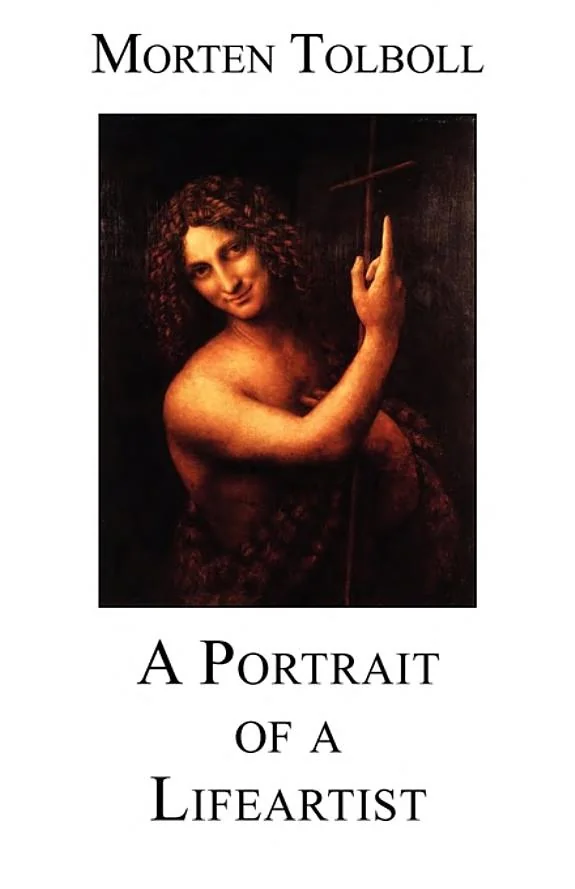
A Portrait of a Lifeartist
 84
84

A Portrait of a Lifeartist
Morten Tolboll’s "A Portrait of a Lifeartist" concludes his examination of "Meditation as an Art of Life," pushing beyond basic instruction and dream exploration into a more applied existential philosophy. The book’s strength lies in its persistent call to treat meditation not as a passive escape, but as an active, critical engagement with existence itself. Tolboll challenges the reader to employ philosophical inquiry, reminiscent of Søren Kierkegaard's existentialism, within the contemplative space. A limitation, however, is the implied prerequisite knowledge from the previous two volumes, "Meditation as an Art of Life - a basic reader" and "Dream Yoga," which might leave newcomers feeling adrift. The exploration of navigating the "dream-labyrinth" offers a unique perspective, suggesting that lucidity in dreams can be a training ground for waking consciousness. Ultimately, the work serves as a dense, philosophical manual for those committed to a deeply integrated practice of awareness.
📝 Description
84
Morten Tolboll published 'A Portrait of a Lifeartist' in 2010, the final volume of his trilogy on Meditation as an Art of Life.
This book is the concluding part of Morten Tolboll's series on his unique teaching, "Meditation as an Art of Life." It follows earlier works, "Meditation as an Art of Life - a basic reader" and "Dream Yoga." The book examines meditation not just as a relaxation technique, but as a fundamental way of approaching existence. It is for people interested in existential philosophy and critical thinking, who want to apply contemplative practices to their daily lives. The work discusses how to manage subjective experiences and the state of dreaming.
Tolboll's trilogy appeared when meditation was becoming more common, often presented in secular or therapeutic ways. His approach is different because it grounds meditation in philosophy and existential inquiry. He connects it to traditions that focus on self examination and developing awareness. The book's publication in 2010 also placed it at a time when digital distractions were growing, making its emphasis on inner growth significant.
Tolboll's work places meditation within an existential philosophical framework, a departure from many contemporary secular or therapeutic presentations. It draws parallels to traditions emphasizing self-inquiry and the conscious cultivation of awareness, suggesting that meditative practice is a path to understanding and transforming one's lived experience. The focus on the 'dream-labyrinth' and subjective reality connects it to contemplative practices that explore consciousness beyond ordinary waking states.
💡 Why Read This Book?
• Gain practical methods for integrating existential philosophy into your daily awareness practice, directly referencing the "Art of Life" framework presented in the book's foundational volume. • Develop critical thinking skills applicable to understanding subjective experience, as detailed in the "dream-labyrinth" concept explored in "A Portrait of a Lifeartist." • Engage with a contemplative tradition that emphasizes rigorous self-inquiry, building upon the systematic instruction and exercises introduced in the 2010 publication.
⭐ Reader Reviews
Honest opinions from readers who have explored this book.
❓ Frequently Asked Questions
What is the core philosophy behind Morten Tolboll's "Meditation as an Art of Life" series?
The series, culminating in "A Portrait of a Lifeartist" (2010), posits meditation as an existential and philosophical practice. It emphasizes conscious, critical inquiry into life's experiences, transforming awareness into an art form rather than a mere relaxation technique.
How does "A Portrait of a Lifeartist" differ from the previous books in the series?
While the first book, "Meditation as an Art of Life - a basic reader," provided foundational instruction, and the second, "Dream Yoga," explored the dream state, "A Portrait of a Lifeartist" delves into the application of these principles to the broader existential landscape of waking life.
What is the "dream-labyrinth" concept mentioned in the book?
The "dream-labyrinth" refers to the complex, often confusing nature of subjective experience and dreams. The book suggests that through critical thinking and meditative awareness, one can learn to navigate this inner landscape with greater clarity and purpose.
Is "A Portrait of a Lifeartist" suitable for beginners in meditation?
The book is the third in a series and builds upon concepts introduced in its predecessors. While it offers profound insights, readers new to Tolboll's specific approach might benefit from starting with "Meditation as an Art of Life - a basic reader."
What kind of philosophical inquiry does the book encourage?
It promotes an existential and critical form of self-inquiry. Instead of accepting experiences passively, readers are guided to question their nature and implications, integrating this philosophical stance into their meditative practice.
When was "A Portrait of a Lifeartist" first published?
The book was first published in August 2010, concluding Morten Tolboll's trilogy on his distinctive meditation teachings.
🔮 Key Themes & Symbolism
Meditation as Existential Inquiry
This work posits meditation not as a passive escape, but as an active, philosophical engagement with existence. It advocates for the integration of critical thinking and existential questioning into the contemplative practice, moving beyond simple mindfulness to a deeper self-understanding. The book challenges readers to confront the fundamental questions of being through the lens of awareness cultivated in meditation, drawing parallels to existentialist thought.
Working through the Dream-Labyrinth
A central theme is the exploration of the subjective experience, particularly the often-chaotic area of dreams. Tolboll frames this not as an uncontrolled phenomenon but as a landscape that can be consciously navigated. By applying the principles of "Meditation as an Art of Life," practitioners can develop lucidity and critical discernment within their dream states, which in turn informs their waking consciousness and perception of reality.
The Lifeartist Persona
The title itself suggests a core concept: the cultivation of a "lifeartist." This refers to an individual who approaches their existence with the intention, skill, and creativity of an artist. Meditation and existential inquiry are presented as the tools and disciplines through which one learns to shape and imbue their life with meaning and conscious direction, transforming the mundane into an art form.
Integration of Practice and Philosophy
The trilogy, and this volume in particular, emphasizes the inseparable nature of theoretical understanding and practical application. It moves away from compartmentalizing spiritual or meditative practices from philosophical thought. Tolboll demonstrates how a rigorous philosophical framework, especially existentialism, can deepen and inform meditative practice, creating a holistic approach to self-cultivation and conscious living.
💬 Memorable Quotes
Direct passages from the work, attributed to the author.
“Meditation is not about emptying the mind, but about critically examining its contents.”
— This interpretation highlights the book's departure from common perceptions of meditation as a purely passive state. It emphasizes an active, analytical approach, where awareness is used to dissect and understand one's thoughts and experiences.
“To live as an art requires constant, conscious composition.”
— This interpretation captures the essence of the 'lifeartist' concept, suggesting that living with intention and creativity is an ongoing process. It implies that awareness and deliberate choice are key to shaping one's existence.
“The practice is the philosophy, and the philosophy is the practice.”
— This interpretation emphasizes the core tenet of the trilogy: the inseparable unity of contemplative practice and philosophical understanding. It suggests that true insight arises from the direct, lived experience informed by critical thought.
💡 Key Ideas
Editorial paraphrase of the work's core concepts — not direct quotes.
The dream-labyrinth offers a unique theatre for existential exploration.
This paraphrased concept underscores the book's view of dreams as more than random neurological events. They are presented as a vital space for self-discovery and philosophical inquiry, accessible through conscious, critical awareness.
Existential questioning is the compass within the inner landscape.
This paraphrased concept frames philosophical self-inquiry as an essential tool for navigating one's subjective world. It suggests that asking fundamental questions provides direction and clarity in the often-unseen areas of consciousness.
🌙 Esoteric Significance
Tradition
While not explicitly aligned with a single historical esoteric lineage like Kabbalah or Theosophy, Tolboll's work draws heavily on the contemplative and self-inquiry traditions found within Western esotericism. It shares a kinship with Hermetic principles of "as above, so below," applying them to the inner landscape, and echoes Gnostic emphasis on gnosis (knowledge) through self-awareness. The focus on transforming ordinary life into a practice aligns with certain Renaissance magical philosophies that sought to immanentize the sacred.
Symbolism
The "dream-labyrinth" serves as a potent symbol for the complexities of the subconscious and subjective reality. It represents the often-disorienting yet potentially clear inner world that requires conscious navigation. The concept of the "lifeartist" itself functions symbolically, representing the ideal practitioner who consciously sculpts their existence with intention, skill, and aesthetic awareness, transforming the raw material of experience into a work of art.
Modern Relevance
Contemporary thinkers and practitioners in fields ranging from existential psychology to consciousness studies find resonance in Tolboll's integration of philosophical rigor and contemplative practice. His work is relevant to modern mindfulness movements seeking deeper philosophical grounding and to those exploring lucid dreaming and consciousness exploration beyond purely psychological frameworks. The emphasis on critical engagement with subjective experience is particularly pertinent in an age saturated with information and virtual realities.
👥 Who Should Read This Book
['• Students of existential philosophy interested in applying critical inquiry to their inner lives, seeking a bridge between abstract thought and lived experience.', '• Experienced meditators looking to deepen their practice beyond relaxation techniques, desiring a more intellectually challenging and philosophically robust approach.', '• Individuals exploring the nature of consciousness and subjective reality, particularly those interested in understanding and navigating dream states with greater awareness.']
📜 Historical Context
Morten Tolboll's "A Portrait of a Lifeartist" (2010) emerged during a period of burgeoning interest in mindfulness and meditation, often presented through secularized, therapeutic lenses. Tolboll's approach, however, situated itself within a more rigorous philosophical tradition, echoing the existential inquiries of thinkers like Jean-Paul Sartre and Albert Camus, though with a distinct contemplative focus. Unlike the popularization of meditation in self-help circles, Tolboll's trilogy, including this final volume, insists on integrating critical philosophical questioning directly into the practice. The 2010 publication date also coincided with the increasing dominance of digital media, making the book's emphasis on cultivating deep inner awareness a counterpoint to pervasive external distraction. While not directly engaging with specific contemporary figures in the esoteric scene, the work implicitly challenges a more superficial understanding of consciousness often found in New Age literature, demanding intellectual engagement alongside experiential practice.
📔 Journal Prompts
The 'lifeartist's' composition: What element of your daily existence can you consciously reshape this week?
The dream-labyrinth's pathways: Identify one recurring theme or symbol from your dreams and analyze its existential implications.
Meditation as critical examination: Choose a persistent thought pattern and apply existential questioning to its underlying assumptions.
The art of living: How does the practice of conscious composition extend beyond formal meditation into your waking interactions?
Existential inquiry's compass: What fundamental question about your life's direction are you currently avoiding?
🗂️ Glossary
Meditation as an Art of Life
A philosophical framework positing that meditation is not merely a technique but a way of living, involving conscious, existential inquiry and critical self-awareness applied to all aspects of existence.
Lifeartist
An individual who approaches their existence with the intention, skill, and creativity of an artist, consciously shaping their life through awareness and deliberate action.
Dream-labyrinth
A metaphor for the complex, often confusing, and multi-layered subjective reality experienced during dreams, which can be consciously navigated through developed awareness.
Existential Inquiry
A mode of philosophical questioning focused on fundamental aspects of human existence, such as freedom, responsibility, meaning, and mortality, applied here within a meditative context.
Critical Thinking (in meditation)
The application of analytical and discerning thought processes to one's internal experiences during meditation, rather than passive acceptance.
Composition (of life)
The act of intentionally structuring and creating one's life experiences and actions, akin to an artist composing a work, guided by awareness and philosophical insight.
Basic Reader
Refers to the first book in the trilogy, 'Meditation as an Art of Life - a basic reader,' which lays the groundwork for the series' core concepts and exercises.
This book appears in 1 collection
🔮 Readers Also Liked
Browse all →









From the “Dream Yoga” Collection
View all →







More Free Occult Philosophy Books
View all →