Theory And Practice of Yoga
 72
72

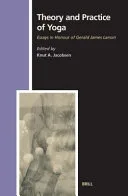
Theory And Practice of Yoga
The 2005 collection honoring Gerald James Larson offers a welcome departure from hagiographic collections, presenting instead a series of critical essays on the historical and pluralistic nature of Yoga in India. The strength lies in its scholarly depth, moving beyond devotional narratives to unpack Yoga's integration within diverse philosophical and religious currents. For instance, the exploration of how Yoga interacted with Tantric traditions provides a nuanced perspective often missing in popular accounts. A limitation, however, is the work's academic density; it is not a casual read and requires familiarity with Indian philosophical terminology. The essays collectively underscore Yoga's evolution as a dynamic phenomenon, rather than a static set of practices. Ultimately, this volume serves as a valuable resource for those committed to understanding Yoga's complex historical trajectory.
📝 Description
72
Published in 2005, this collection examines Yoga as a pluralistic phenomenon across India.
This book gathers original essays dedicated to Professor Gerald James Larson, exploring the diverse traditions of Yoga within India. It presents Yoga not as a single practice but as a varied phenomenon that developed across different religious and philosophical systems. The essays investigate historical changes and the many forms Yoga took, moving past simple ideas to show its complex place in Indian thought and spiritual life.
Scholars, advanced students, and dedicated Yoga practitioners will find this collection particularly useful. It offers detailed academic analysis rather than basic introductions. Those interested in how Yoga evolved historically, its core philosophies, and its connections to traditions like Vedanta and Buddhism will discover much here. The book is also a resource for researchers studying comparative religion and South Asian studies.
The essays place Yoga within the larger history of Indian philosophy and religion. They trace its development from early forms, possibly linked to Patanjali, through its interactions with devotional and ascetic groups. The work shows how Yoga's methods and ideas were changed and understood by different schools, highlighting its flexibility and lasting importance in Indian intellectual history.
This volume approaches Yoga from a historical and philosophical perspective, analyzing its integration into Indian intellectual life. It views Yoga's practices and theories not as isolated techniques but as integral components of a system aimed at liberation (*moksa*). By examining concepts like *asana*, *pranayama*, *dhyana*, and *samadhi* within their broader philosophical frameworks, the essays reveal the depth of yogic thought. The book's focus on the pluralistic nature of Yoga, its adaptation across centuries, and its connection to traditions like Vedanta and Buddhism situates it within the study of Indian spiritual traditions.
💡 Why Read This Book?
• Gain a scholarly understanding of Yoga's historical evolution, moving beyond modern interpretations to appreciate its pluralistic roots within Indian religious traditions, as detailed in essays reflecting on its pre-2005 academic study. • Examine the philosophical underpinnings of yogic practices like *asana* and *pranayama* by exploring their integration into diverse Indian schools of thought, providing context beyond mere physical exercise. • Appreciate Yoga as a dynamic phenomenon through essays that contrast its various manifestations across different historical periods and religious contexts, offering a more complex picture than single-school approaches.
⭐ Reader Reviews
Honest opinions from readers who have explored this book.
❓ Frequently Asked Questions
What is the primary focus of the essays in 'Theory and Practice of Yoga'?
The primary focus is on the historical and pluralistic nature of Yoga traditions in India. The essays explore how Yoga manifested across various religious and philosophical contexts, offering new insights into its development as a phenomenon.
Who is Gerald James Larson and why is this book in his honor?
Gerald James Larson was a prominent scholar of Indian religions and philosophy. This book is a collection of original essays by various contributors, presented in honor of his significant contributions to the field of Yoga studies.
Does this book offer practical 'how-to' yoga instructions?
No, this book is primarily an academic and scholarly exploration of Yoga's theory and practice within historical and philosophical contexts. It is not a manual for learning physical yoga postures or techniques.
What distinguishes this collection from other books on Yoga?
This collection distinguishes itself through its academic rigor and its emphasis on Yoga as a diverse, evolving phenomenon rather than a singular, fixed tradition. It presents original research from multiple scholars.
When was 'Theory and Practice of Yoga' first published?
The first publication date for this collection of essays was in 2005. This allows the essays to engage with scholarship and historical understanding available up to that point.
What kind of insights can readers expect regarding Yoga's philosophical contexts?
Readers can expect insights into how Yoga's theories and practices were intertwined with other Indian philosophical systems, such as Vedanta and Tantra, demonstrating its adaptability and integration into broader intellectual currents.
🔮 Key Themes & Symbolism
Yoga's Pluralistic Nature
This theme examines how Yoga is not a singular, uniform practice but a complex phenomenon that has historically taken diverse forms. The essays investigate its presence across various religious traditions in India, from ascetic orders to devotional movements. It highlights how different schools reinterpreted Yoga's core tenets, demonstrating its adaptability and integration into distinct philosophical frameworks. This approach moves beyond popular notions of Yoga to reveal a richer, more variegated historical reality.
Historical Development of Yogic Thought
The collection traces the evolution of Yoga's philosophical concepts and practical methods through different epochs of Indian history. It explores the textual lineages and intellectual currents that shaped Yogic thought, potentially referencing early Upanishadic ideas or later Tantric elaborations. By situating Yoga within specific historical periods, the essays illuminate how its understanding and application changed in response to prevailing social, religious, and intellectual landscapes.
Yoga and Indian Religious Contexts
This theme focuses on the deep interconnections between Yoga and the broader spectrum of Indian religious life. Essays explore how Yogic practices and philosophies were adopted, adapted, or contrasted by traditions like Hinduism, Buddhism, and Jainism. It examines the synthesis of Yoga with devotional practices (*bhakti*) or asceticism, showing its role in shaping the spiritual range of the subcontinent and its influence on various paths to liberation (*moksha*).
Philosophical Underpinnings of Practice
The work dissects the philosophical frameworks that inform Yogic practices. It goes beyond the physical aspects (*asana*) to explore the theoretical bases of meditation (*dhyana*), breath control (*pranayama*), and ecstatic states (*samadhi*). The essays analyze how concepts such as consciousness, the nature of reality, and the path to spiritual realization (*moksha*) are articulated within different Yogic schools, providing a robust intellectual foundation for understanding its aims.
💬 Memorable Quotes
Direct passages from the work, attributed to the author.
“Yoga traditions of India as a historical and pluralistic phenomenon”
— This phrase captures the core thesis of the collection, emphasizing that Yoga is not monolithic but has evolved diversely across history and within varied religious and philosophical settings.
“flourishing in a variety of religious and philosophical contexts”
— This highlights Yoga's dynamic engagement with its surrounding intellectual and spiritual environment, showing how it integrated with and influenced different schools of thought throughout India.
“original essays on Yoga in honour of Professor Gerald James Larson”
— This indicates the nature of the publication: a scholarly compilation of new research by various authors, specifically acknowledging the academic contributions of Professor Larson to the study of Yoga.
“fascinating new insights”
— Suggests that the collected essays present novel perspectives and research findings that contribute significantly to the existing body of knowledge on Yoga studies.
“collection of original essays”
— Defines the format of the book as a curated set of previously unpublished scholarly articles, rather than a single author's work or a compilation of existing texts.
🌙 Esoteric Significance
Tradition
While not strictly belonging to a single esoteric lineage like Hermeticism or Kabbalah, this work engages deeply with the esoteric dimensions inherent in the philosophical and contemplative traditions of India. It examines practices aimed at altering consciousness and achieving liberation (*moksha*), which are central to many esoteric systems. The book's scholarly approach to these traditions allows for an understanding of their internal logic and historical development, providing a foundation for comparative esoteric study.
Symbolism
The work likely explores symbols such as the lotus, representing purity and spiritual unfolding; the Om symbol, signifying primordial sound and cosmic consciousness; and imagery associated with deities like Shiva, often depicted as the archetypal Yogi. These symbols are not merely decorative but function as focal points for meditation and as encapsulations of profound philosophical concepts related to creation, dissolution, and ultimate reality within the yogic worldview.
Modern Relevance
Contemporary thinkers and practitioners in fields ranging from consciousness studies to contemplative science draw upon the historical and philosophical insights presented in works analyzing Yoga. Schools focusing on somatic psychology and embodied cognition often reference the sophisticated understanding of mind-body integration found in classical Yoga texts. Furthermore, academic programs in religious studies and philosophy continue to utilize such collections to inform their curriculum on non-Western contemplative traditions.
👥 Who Should Read This Book
• Scholars and graduate students of comparative religion, Indian philosophy, and South Asian studies seeking rigorous, research-based analyses of Yoga's historical and textual traditions. • Advanced practitioners of Yoga who wish to deepen their theoretical understanding by exploring the philosophical contexts and historical evolution of the practices they engage with. • Researchers interested in the intersection of religion, philosophy, and practice in non-Western traditions, particularly those focusing on contemplative disciplines and their historical manifestations.
📜 Historical Context
Published in 2005, 'Theory and Practice of Yoga' emerged during a period of intense academic interest in South Asian religions and philosophies. The field had moved beyond earlier, often romanticized, Western interpretations of Yoga to embrace critical historical and sociological analyses. This collection reflects that scholarly shift, presenting nuanced research on Yoga's integration within diverse Indian traditions. Key contemporaries like Wendy Doniger and David Gordon White were already establishing rigorous methods for studying Indian religious texts and practices. While not facing overt censorship, the academic study of Yoga in the late 20th and early 21st centuries often contended with popular misconceptions and the commercialization of yogic practices, necessitating scholarly works that provided historical grounding and critical distance. The book's focus on pluralism directly countered monolithic views, engaging with ongoing scholarly debates about the definition and historical trajectory of Yoga.
📔 Journal Prompts
The concept of Yoga as a pluralistic phenomenon: how does this challenge common perceptions?
Patanjali's *Yoga Sutras* and their historical reception.
The relationship between *asana*, *pranayama*, and *dhyana* in different philosophical schools.
Yoga's integration into devotional (*bhakti*) movements.
The pursuit of *moksha* through Yogic disciplines.
🗂️ Glossary
Asana
Literally 'seat' or 'posture.' In Yoga, it refers to the physical postures practiced, initially intended as a stable and comfortable position for meditation.
Pranayama
The practice of breath control and regulation. It is considered a crucial element of Yoga, believed to influence vital energy (*prana*) and mental states.
Dhyana
Meditation or contemplation. It represents a state of sustained, focused attention, often considered a precursor to deeper states of absorption.
Samadhi
A state of profound meditative absorption or union. It is often described as the goal of yogic practice, signifying a transcendence of ordinary consciousness.
Moksha
Liberation or release from the cycle of birth and death (*samsara*). It is the ultimate spiritual goal in many Indian religions, including traditions that incorporate Yoga.
Patanjali
A sage traditionally credited with compiling the *Yoga Sutras*, a foundational text of classical Yoga philosophy, likely dating from the 2nd to 4th century CE.
Vedanta
One of the six orthodox schools of Hindu philosophy, focusing on the Upanishads. It explores themes of Brahman (ultimate reality) and Atman (the self).