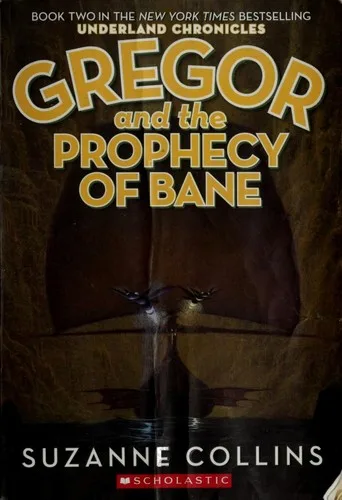
Gregor and the Prophecy of Bane
 76
76

Gregor and the Prophecy of Bane
Suzanne Collins' "Gregor and the Prophecy of Bane" offers a surprisingly mature take on the "chosen one" trope, grounding its fantastical elements in the gritty realities of war and its impact on young lives. The world-building of the Underworld is a significant strength, presenting a unique subterranean ecosystem with distinct species and political structures. Gregor's reluctant heroism, driven by a desire to protect his family and friends rather than inherent bravery, feels earned. However, the pacing occasionally falters, particularly in the middle sections where the narrative seems to tread water before its climactic push. The depiction of the "Bane" itself, while conceptually potent, remains somewhat abstract, leaving the true nature of the threat open to interpretation rather than concrete menace. Ultimately, the book succeeds in posing difficult questions about sacrifice and necessity within conflict, making it a compelling, if not always perfectly executed, addition to the young adult genre.
📝 Description
76
Suzanne Collins published Gregor and the Prophecy of Bane in 2016, a story about a boy from New York City drawn into a subterranean conflict.
The novel is set in the Underworld, a hidden civilization beneath New York City populated by intelligent humans, bats, rats, and spiders. Gregor, an ordinary boy, is pulled into this world and finds himself entangled in a brewing war and complex political machinations. The Underworld's society is shaped by ancient prophecies, and Gregor becomes central to one known as the Prophecy of Bane. This prophecy foretells a coming conflict and the rise of a hero, dictating the actions of various factions. Gregor must confront his own role within this destiny, facing challenges that test his courage and understanding of responsibility.
The narrative examines the consequences of war and the burdens of leadership. It touches on themes of sacrifice, the nature of heroism, and the often blurry lines between good and evil. Collins builds a world with its own distinct history and social structures, presenting a fantasy setting that is both alien and relatable. The story follows Gregor as he grapples with the weight of expectations placed upon him by the prophecy and the inhabitants of the Underworld.
Published in 2016, Gregor and the Prophecy of Bane fits within a tradition of young adult fantasy that uses archetypal narratives to explore complex societal issues. The concept of a prophesied hero is a common trope in mythology and folklore, harkening back to ancient tales of chosen ones who must fulfill a specific destiny. The book frames these older ideas within a contemporary adventure story, examining how individuals respond to predetermined paths and the moral quandaries that arise when fate clashes with personal choice. Its focus on hidden worlds and ancient pronouncements aligns with an interest in uncovering unseen forces that shape human events.
💡 Why Read This Book?
• You will gain an understanding of how prophecy can be both a guiding force and a burden, as seen in Gregor's struggle with the "Prophecy of Bane," offering a nuanced perspective on destiny. • You will experience the harsh realities of interspecies conflict and its toll, exemplified by the ongoing war between the humans and the humans, forcing a confrontation with the cost of survival. • You will learn about the delicate balance of subterranean ecosystems, as depicted in the Underworld's environment, highlighting the interconnectedness of all living things and the consequences of disruption.
⭐ Reader Reviews
Honest opinions from readers who have explored this book.
❓ Frequently Asked Questions
What is the main conflict in Gregor and the Prophecy of Bane?
The primary conflict revolves around a prophecy foretelling a great war and a hero who will either save or destroy the Underworld. This prophecy fuels tensions between various factions, leading to an impending war between species and a struggle for survival.
Who are the main characters Gregor interacts with in the Underworld?
Gregor interacts with a diverse cast, including Boots, his younger sister; Luxa, the princess of the Underlanders; Henry, Luxa's cousin; and various bats, rats, and spider inhabitants of the Underworld.
What year was Gregor and the Prophecy of Bane published?
Gregor and the Prophecy of Bane was published in 2016, as part of Suzanne Collins' "The Underland Chronicles" series.
What does the 'Prophecy of Bane' specifically foretell?
The "Prophecy of Bane" is a complex prophecy that speaks of a great war, a hero from the 'Overlander' world, and the potential for destruction or salvation within the Underworld.
Does Gregor have any special abilities in the Underworld?
Gregor does not possess inherent magical abilities. His strength lies in his human perspective, his strategic thinking, and his ability to connect with and lead various species, often through his role as the prophesied hero.
What is the significance of the Underworld's setting?
The Underworld serves as a unique, self-contained ecosystem where different species have evolved complex societies and political structures. Its fragile environment and resource scarcity are central to the plot's conflicts and themes.
🔮 Key Themes & Symbolism
The Weight of Prophecy
The narrative heavily features the "Prophecy of Bane," presenting it not as an unchangeable fate but as a source of immense pressure and expectation. Gregor, an "Overlander," finds himself thrust into a role he never sought, forcing him to grapple with the implications of a predetermined destiny. This theme explores how belief in prophecy can shape actions, foster conflict, and ultimately challenge the notion of free will within a society reliant on ancient pronouncements. The characters' interpretations and manipulations of the prophecy are as significant as the prophecy itself.
Inter-Species Conflict and Diplomacy
The Underworld is a microcosm of societal division, populated by distinct species like humans, bats, and rats, each with their own cultures, grievances, and political agendas. The story meticulously details the tensions and alliances that arise from these differences, highlighting the complexities of diplomacy in the face of deep-seated animosity. The "Bane" prophecy exacerbates these divisions, pushing the inhabitants towards a devastating war and forcing Gregor to navigate treacherous political waters to seek peace.
Ecological Fragility
The subterranean world depicted in the book is a delicate ecosystem where resources are scarce and the balance of nature is easily disrupted. The inhabitants' reliance on this environment, coupled with their conflicts, threatens its stability. This theme serves as a subtle commentary on humanity's own relationship with its environment, showcasing how unsustainable practices and warfare can lead to ecological collapse, impacting all life within the system.
The Nature of Heroism
Gregor's journey challenges conventional ideas of heroism. He is not a warrior by choice but is compelled by circumstance and a desire to protect his family. His heroism is often born out of necessity and moral struggle, rather than innate courage or power. The book examines the sacrifices required of those who are thrust into leadership, questioning whether heroism is an inherent quality or a role adopted under duress, and what the true cost of such a role might be.
💬 Memorable Quotes
Direct passages from the work, attributed to the author.
“Gregor, you have to understand. The prophecy has to happen. It's the only way.”
— This statement captures the characters' deep-seated belief in the "Prophecy of Bane" and the immense pressure it places on Gregor. It highlights how ingrained the prophecy is in the Underworld's culture, dictating their hopes and fears.
“We are all just trying to survive.”
— A powerful sentiment that underscores the underlying motivations of the various species in the Underworld. It suggests that despite their differences and conflicts, a primal drive for survival unites them, especially in the face of the prophecy's potential devastation.
“Sometimes the hardest choices are the ones that save the most.”
— This interpretation speaks to the moral dilemmas faced by Gregor and the leaders of the Underworld. It suggests that difficult decisions, often involving sacrifice, are necessary for the greater good, a recurring theme in the narrative.
💡 Key Ideas
Editorial paraphrase of the work's core concepts — not direct quotes.
War is coming, Gregor. And you are at the center of it.
This quote directly confronts Gregor with the reality of the escalating conflict and his central, albeit unwilling, role within it. It emphasizes the inescapable nature of the "Bane" prophecy and the looming war.
The Underlanders have their own rules, Gregor. You have to learn them.
This paraphrased concept highlights the cultural and political differences Gregor must navigate. It points to the intricate societal structures of the Underworld and the challenges of bridging understanding between different peoples.
🌙 Esoteric Significance
Tradition
While not explicitly aligned with a single esoteric tradition, Gregor and the Prophecy of Bane draws heavily on archetypal themes found across Hermeticism, Gnosticism, and Western mystery traditions. The concept of a "chosen one" from an "Overlander" world entering a hidden, subterranean realm echoes Gnostic myths of a spiritual descent into a material world. The prophecy itself functions as a form of oracular pronouncement, guiding the actions of a community, akin to systems found in Kabbalistic interpretation or Hermetic divination.
Symbolism
The Underworld itself can be seen as a symbol of the unconscious or the hidden aspects of reality, a place where primal instincts and societal structures collide. Gregor's journey represents an initiation into these hidden realms. The "Prophecy of Bane" acts as a symbolic representation of fate or destiny, a force that characters must confront, interpret, and ultimately contend with. The various species – bats, rats, spiders – can be interpreted as symbolic representations of different facets of society or primal forces that Gregor must understand and integrate.
Modern Relevance
Contemporary thinkers and practitioners in areas like Jungian psychology and archetypal studies might find resonance in Gregor's descent into the Underworld and his confrontation with shadow aspects of society and self. The book's exploration of ecological fragility and the consequences of conflict also speaks to modern environmental movements and peace advocacy. Furthermore, its examination of how prophecies are interpreted and wielded by different factions offers insights into contemporary political discourse and the power of narrative.
👥 Who Should Read This Book
• Young adult readers seeking fantasy narratives with depth, exploring themes of war, destiny, and ecological balance beyond simple adventure stories. • Students of comparative mythology and archetypal psychology interested in modern interpretations of the "chosen one" trope and the descent into the underworld. • Readers who appreciate intricate world-building and complex inter-species politics, looking for a unique fantasy setting that challenges conventional tropes.
📜 Historical Context
The publication of Gregor and the Prophecy of Bane in 2016 occurred during a vibrant period for young adult literature, following the immense success of series like Harry Potter and The Hunger Games. This era saw a surge in stories exploring dystopian societies, complex moral landscapes, and the coming-of-age narratives of young protagonists facing overwhelming odds. Suzanne Collins' work, while distinct, tapped into this trend by offering a unique subterranean world with its own intricate social and political structures. Contemporary authors like Veronica Roth (Divergent) were also exploring similar themes of societal control and rebellion. The narrative's focus on prophecy and chosen heroes echoes older literary traditions but is presented with a modern sensibility, making it accessible to a wide readership. Reception was generally positive, with praise for its world-building and thematic depth, though it also faced the common challenge of standing out in a crowded genre.
📔 Journal Prompts
Gregor's reluctant acceptance of the "Prophecy of Bane."
The inter-species tensions between humans and rats.
Luxa's leadership style as princess of the Underlanders.
The ecological balance of the Underworld.
The concept of "Bane" as a destructive force.
🗂️ Glossary
Underlanders
The primary human inhabitants of the Underworld, distinct from Gregor and his family who are "Overlanders." They have their own complex society, culture, and political structure, often at odds with other species.
Overlander
Refers to humans from the surface world, like Gregor and his family. Their arrival in the Underworld is unexpected and often viewed with suspicion or as the fulfillment of prophecy.
Prophecy of Bane
A central prophecy within the Underworld that foretells a great war and the arrival of a hero. Its interpretation and fulfillment drive much of the plot and character motivations.
Bane
In the context of the prophecy, "Bane" refers to a destructive force or entity that threatens the Underworld. Its exact nature is often debated and feared.
Underworld
The subterranean world beneath New York City, populated by various intelligent species including humans, bats, rats, and spiders, each with their own unique societies and ecological niches.
Regalia
The ceremonial items and symbols of power associated with the rulers of the Underlanders, particularly the princess. They represent authority and lineage.
Sniffers
A term used to describe the bats of the Underworld, likely referring to their echolocation abilities used for navigation and hunting.
🔮 Readers Also Liked
Browse all →









More by Suzanne Collins
All books →





More Free Occult Philosophy Books
View all →