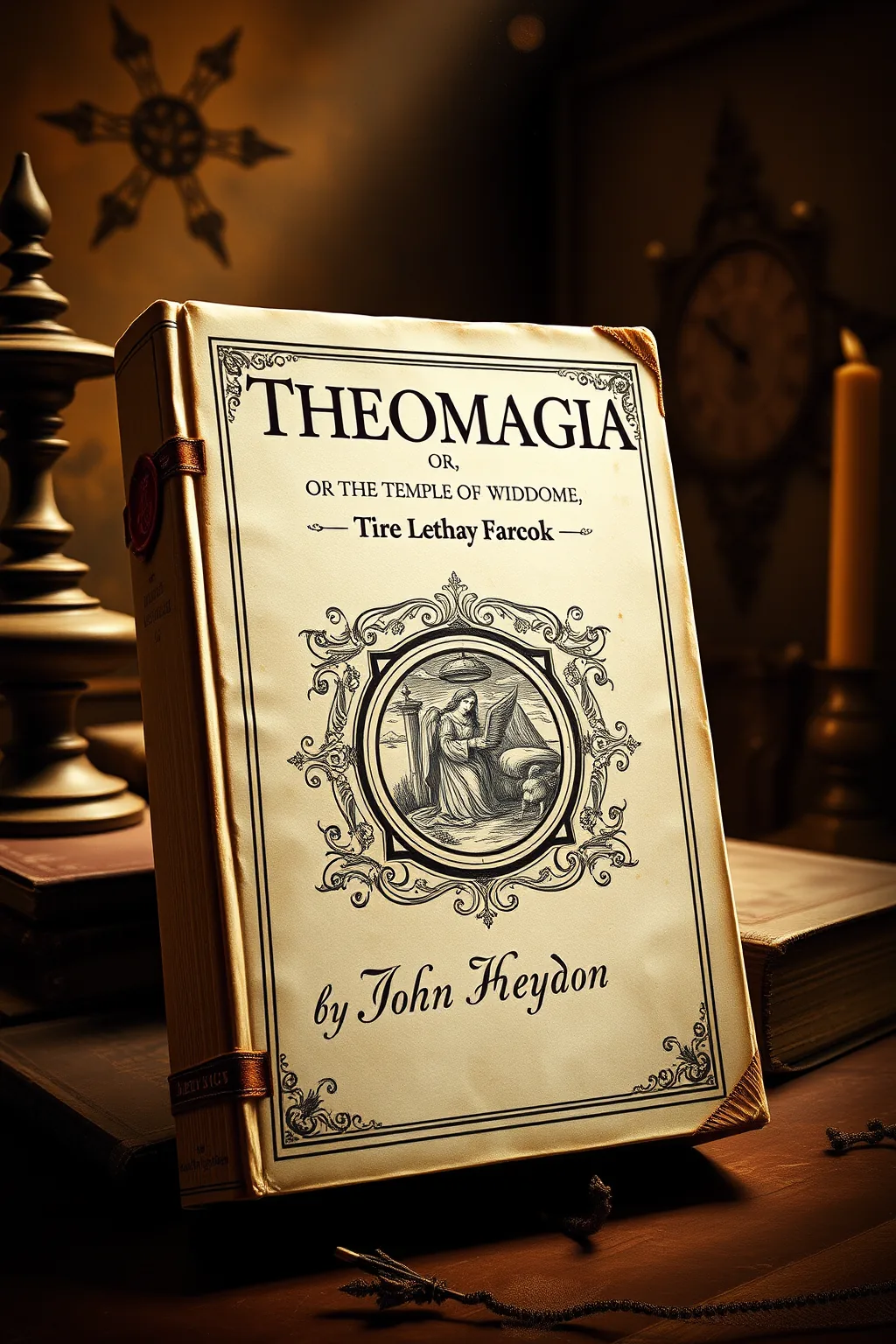
Theomagia, or, The temple of wisdome
 63
63

Theomagia, or, The temple of wisdome



Marcus Thorne (Esoteric Sciences Reviewer) — John Heydon's 'Theomagia' stands as a monumental pillar in the edifice of Western esotericism. This comprehensive treatise masterfully synthesizes Neoplatonism, Hermeticism, and Rosicrucian ideals, offering a profound exploration of celestial mechanics, theurgy, and the art of spagiric medicine. Heydon's intricate system of correspondences, particularly his detailed astrological and alchemical doctrines, provides unparalleled insights for practitioners seeking to align with cosmic forces. The work’s strength lies in its systematic approach, rendering complex metaphysical concepts accessible to the dedicated student. 'Theomagia' is an indispensable resource for serious scholars of occult history and advanced practitioners of magical arts, demanding diligent study but rewarding the endeavor with profound spiritual and intellectual illumination.
📝 Description
63
John Heydon published 'Theomagia, or, The Temple of Wisdome' in 1662, a comprehensive guide to esoteric philosophy.
This 1662 text by John Heydon presents a detailed system of esoteric thought, blending alchemical principles with astrological and divinatory practices. Heydon, writing in the tradition of English Rosicrucianism, lays out a complex worldview where celestial mechanics and spiritual forces interrelate. The book explains correspondences between the heavens and the earth, suggesting that understanding these links is key to spiritual advancement. It covers topics such as spagirics, a form of herbal alchemy, and various methods of divination.
The work is structured to guide the reader through a specific understanding of the cosmos, emphasizing the concept of the microcosm reflecting the macrocosm. Heydon's writing style, while dense, aims to initiate the serious student into a particular form of gnosis. It is presented not just as a theoretical work, but as a practical manual for those seeking deeper knowledge of hidden natural laws and divine order. The book demands careful study from its readers.
Published in 1662, 'Theomagia' emerged from the fertile ground of 17th-century English esotericism, a period marked by intense interest in alchemy, astrology, and Christian Cabala. John Heydon positioned himself within the Rosicrucian movement, a tradition known for its secretive nature and its syncretic approach to spiritual knowledge. This era saw figures attempting to synthesize Hermeticism, Neoplatonism, and various forms of natural magic into cohesive systems. Heydon's work reflects this tendency by connecting celestial patterns, alchemical processes, and prophetic insights, aiming to reveal a divinely ordered universe accessible through disciplined study and practice.
💡 Why Read This Book?
Unveil the intricate tapestry of celestial influences and their dominion over earthly affairs. 'Theomagia' offers a rare glimpse into the comprehensive esoteric worldview of the 17th century, blending astrology, alchemy, and divine magic. Ideal for serious seekers, scholars of Hermeticism and Rosicrucianism, and practitioners aiming to deepen their understanding of cosmic order and spiritual transformation. Discover a holistic system for perceiving the universe's hidden mechanisms.
⭐ Reader Reviews
Honest opinions from readers who have explored this book.
❓ Frequently Asked Questions
What is the primary focus of 'Theomagia'?
The book primarily focuses on the interconnectedness of the celestial and terrestrial realms, exploring divine magic, astrological influences, alchemical principles, and spagiric arts as pathways to wisdom and spiritual enlightenment.
Who was John Heydon?
John Heydon (1629-1667) was a prominent English Rosicrucian and astrological writer, known for his prolific output on occult philosophy, divinity, and medicine, deeply rooted in Hermetic and alchemical traditions.
Is this book suitable for beginners?
While 'Theomagia' is a comprehensive and profound work, its depth and esoteric language make it more suitable for individuals with a foundational understanding of occultism, alchemy, or astrology. Dedicated beginners may find it challenging but ultimately rewarding.
What is 'spagiric' medicine?
Spagiric medicine is a branch of alchemy focused on extracting the essential virtues of plants and minerals for healing purposes, emphasizing the spiritual and energetic properties alongside the physical.
What is the significance of the 'Temple of Wisdome' in the title?
The title signifies the book as a sanctuary of sacred knowledge, a structured approach to understanding the divine order and unlocking profound truths about the cosmos and the human soul.
🔮 Key Themes & Symbolism
Celestial Mechanics and Divine Influence
Heydon posits a universe governed by intricate celestial mechanics, where the movements and conjunctions of planets and stars exert a profound, often unseen, influence on all aspects of earthly existence, from individual destinies to global events. This theme examines the Neoplatonic concept of the macrocosm reflecting the microcosm, suggesting that understanding the heavens is key to understanding oneself and the divine plan. The book explores the mechanisms of this divine governance, offering insights into how adepts could potentially harmonize with or even influence these cosmic forces through ritual, astrology, and aligned action, thereby participating in the sacred dance of creation.
The Art of Spagiric and Alchemical Transformation
Central to 'Theomagia' is the practice of spagiric arts, an alchemical discipline focused on the separation, purification, and recombination of natural substances to extract their essential virtues, particularly for medicinal and spiritual purposes. Heydon presents alchemy not merely as a pursuit of material gold but as a profound metaphor for spiritual purification and transformation. The text details the processes and principles involved, linking the alchemical manipulation of matter to the refinement of the human soul, aiming for a reintegration with the divine essence. It highlights the belief that through the careful study and application of these arts, one could achieve physical health and spiritual enlightenment.
Rosicrucian Philosophy and Theurgic Practice
Heydon's work is deeply embedded in the Rosicrucian tradition, advocating for a hidden fraternity dedicated to the restoration of true wisdom and spiritual illumination. 'Theomagia' serves as a proof of this lineage, presenting a system of knowledge that aligns with Rosicrucian ideals of secrecy, spiritual awakening, and the pursuit of divine gnosis. The text discusses theurgic practices – the art of invoking divine beings and energies – as a means to facilitate spiritual growth and to align human will with divine will. It emphasizes the importance of purity of intention and the disciplined application of esoteric knowledge for successful and benevolent magical operations.
💬 Memorable Quotes
Direct passages from the work, attributed to the author.
“As above, so below; as within, so without.”
— This quintessential Hermetic axiom, often attributed to the Emerald Tablet, expresses the principle of correspondence, suggesting that the principles governing the celestial realm are mirrored in the terrestrial, and that internal states directly influence external realities.
💡 Key Ideas
Editorial paraphrase of the work's core concepts — not direct quotes.
The World is a great Book, and they that do not travel read only one Page.
This quote emphasizes the importance of experience and diverse knowledge acquisition, suggesting that a limited perspective (reading only one page) prevents a full understanding of the complex and many-sided nature of existence, much like exploring the universe itself.
The heavens declare the glory of God, and the firmament sheweth his handywork.
Echoing Psalm 19, this quote highlights the theological underpinnings of astrology and esoteric philosophy, viewing the celestial bodies not just as physical objects but as divine manifestations that reveal the Creator's power and design.
Seek and ye shall find; knock and it shall be opened unto you.
A direct biblical allusion (Matthew 7:7), this quote underscores the core principle of diligent, persistent spiritual seeking and effort in the pursuit of esoteric knowledge and divine truth.
The true alchemist doth not seek for gold, but for the soul of gold.
This quote clarifies the deeper, spiritual purpose of alchemy as understood by Heydon and the Rosicrucians. It's not about material wealth but about purifying and perfecting the spiritual essence, achieving inner transformation rather than external riches.
🌙 Esoteric Significance
Tradition
This work is a central to the Western Esoteric Tradition, particularly deeply rooted in Hermeticism, Neoplatonism, and the Rosicrucian movement. It synthesizes astrological cosmology, alchemical philosophy, and theurgic practices, presenting a unified worldview that seeks to understand the divine architecture of the universe and humanity's spiritual potential. Heydon's approach exemplifies the alchemical pursuit of both material and spiritual perfection, viewing the cosmos as a living, interconnected system governed by divine laws.
Symbolism
The symbolism in 'Theomagia' is rich and layered, drawing heavily from astrological archetypes, alchemical processes, and biblical allegory. Celestial bodies represent divine intelligences and forces, while alchemical operations symbolize spiritual purification and transformation. The 'Temple of Wisdome' itself is a potent symbol of the sacred inner space and the structured pursuit of knowledge. Heydon meticulously employs correspondences between the macrocosm (universe) and microcosm (human being), suggesting that understanding these symbolic links is crucial for unlocking deeper truths and achieving spiritual union.
Modern Relevance
In an age often characterized by materialism and fragmented knowledge, 'Theomagia' offers a compelling counter-narrative, presenting a holistic and interconnected view of reality. Its emphasis on celestial influences and the power of intention speaks to contemporary interest in consciousness, energy work, and the subtle forces of nature. For modern seekers, practitioners, and scholars, Heydon’s work provides a profound historical and philosophical framework for exploring the timeless quest for wisdom, spiritual growth, and the deeper meaning of existence, encouraging a more integrated understanding of the self and the cosmos.
👥 Who Should Read This Book
This profound treatise is essential for dedicated scholars of Western Esotericism, particularly those specializing in Hermeticism, Rosicrucianism, and 17th-century occult philosophy. Astrologers and alchemists seeking a historical and systematic perspective will find immense value in Heydon's intricate doctrines. Serious spiritual seekers and practitioners aiming to deepen their understanding of cosmic order, divine magic, and the principles of transformation will be richly rewarded. While its depth may present a challenge for absolute beginners, those with a foundational interest in the occult arts and a hunger for profound, interconnected knowledge will find 'Theomagia' an indispensable, albeit demanding, guide.
📜 Historical Context
John Heydon's 'Theomagia' emerged from the fervent intellectual and spiritual milieu of 17th-century England, a period marked by profound upheaval and intense interest in the esoteric. The era witnessed the lingering influence of Renaissance Hermeticism and Neoplatonism, alongside the burgeoning Rosicrucian movement, which promised a revival of ancient wisdom. This was also a time of significant scientific advancement, yet it coexisted with deeply held beliefs in astrology, alchemy, and magic as legitimate fields of inquiry. The English Civil War and the subsequent political and religious instability may have further fueled a desire for hidden knowledge and spiritual certainty. Heydon, writing amidst these currents, synthesized these diverse traditions into a complex, systematic worldview, aiming to provide a comprehensive guide to understanding the divine order and humanity's place within it, appealing to those seeking meaning beyond the visible world.
📔 Journal Prompts
Reflect on a personal experience where you felt a strong connection between celestial events and your life's circumstances. How did this make you feel, and what did you learn?
Consider the alchemical process of separation, purification, and recombination. How can this process be applied metaphorically to your own personal growth and emotional healing?
Heydon links the macrocosm (universe) to the microcosm (human being). Identify one aspect of the natural world or celestial realm and explore its symbolic representation within yourself.
The 'Temple of Wisdome' is a metaphor for sacred knowledge. What does 'wisdom' mean to you, and what 'temples' or sources do you turn to for its attainment?
If you were to practice a form of 'theurgy' in your daily life, what divine principle or energy would you seek to invoke, and how would you align yourself with it?
🗂️ Glossary
Spagiric
A branch of alchemy focused on the separation, purification, and recombination of natural substances, particularly plants and minerals, to extract their essential virtues for healing and spiritual purposes.
Theurgy
A system of religious rituals and practices aiming to invoke divine beings or forces, often to achieve spiritual enlightenment, communion with the divine, or benevolent influence on the material world.
Macrocosm
The universe considered as a great whole, in contrast to the microcosm, which refers to the individual human being or a smaller system that reflects the larger one.
Microcosm
The human being or a smaller system considered as a miniature representation of the universe (macrocosm), embodying similar principles and structures.
Rosicrucianism
A mystical and esoteric movement that emerged in Europe in the early 17th century, claiming to possess secret knowledge and wisdom regarding the nature of the universe, humanity, and spiritual enlightenment.
This book appears in 8 collections
🔮 Readers Also Liked
Browse all →







More by John Heydon
All books →
From the “Occultism” Collection
View all →





More Free Divination & Tarot Books
View all →