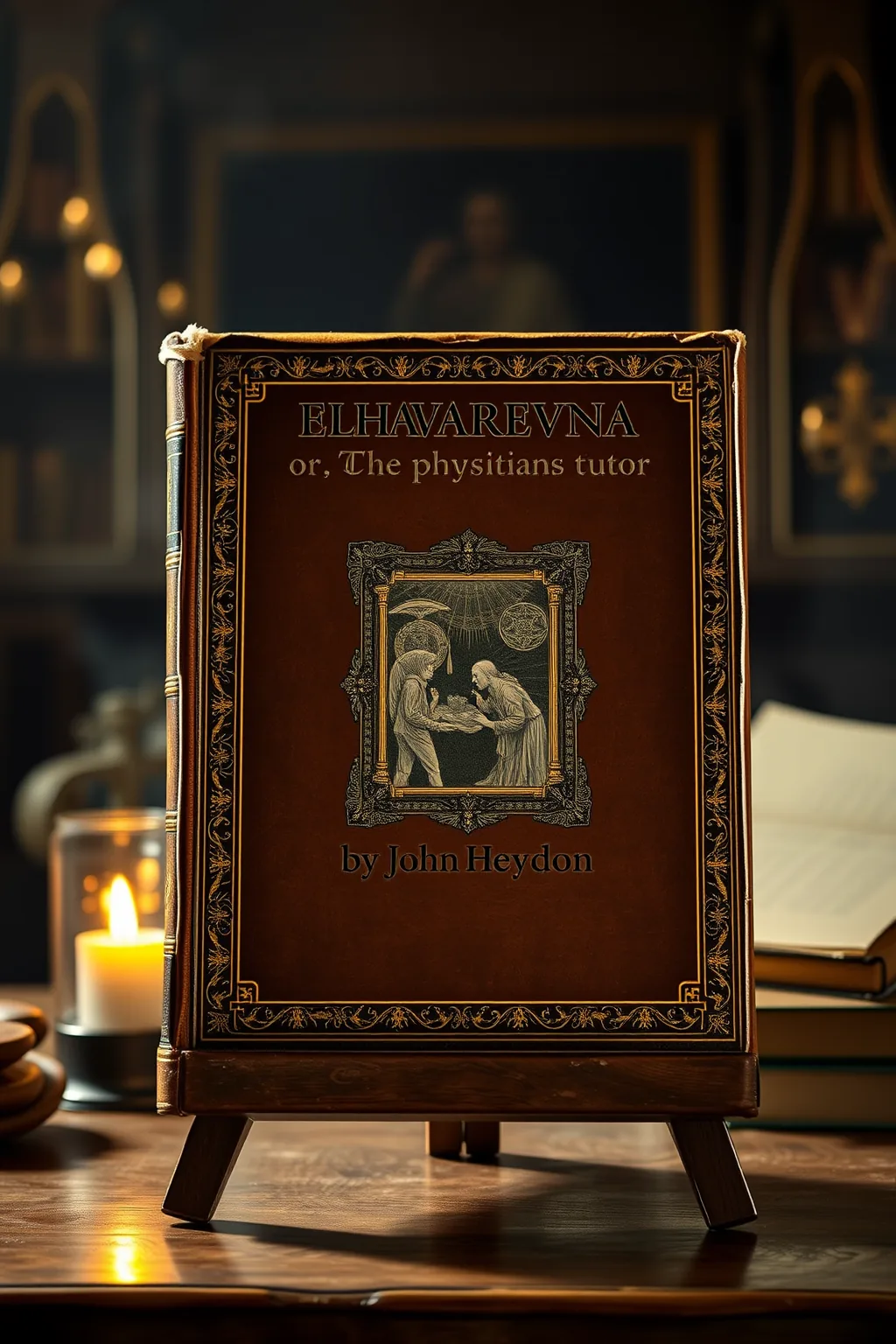
Elhavarevna, or, The English physitians tutor
 61
61

Elhavarevna, or, The English physitians tutor



Sophia Crane (Associate Editor) — "Elhavarevna" is a cornerstone of early modern occult literature, offering a rich tapestry of alchemical, astrological, and Rosicrucian thought. John Heydon masterfully weaves complex philosophical concepts into accessible allegorical narratives, making this text a valuable resource for scholars and practitioners alike. Its strength lies in its comprehensive approach to the Great Work, encompassing both theoretical understanding and practical contemplation. While its language demands a dedicated reader, the insights into divine correspondences and the subtle energies of the cosmos are unparalleled for its era. A must-have for serious students of Western esotericism.
📝 Description
61
John Heydon published "Elhavarevna, or, The English Physitians Tutor" in 1660, presenting a unique alchemical system.
John Heydon's "Elhavarevna, or, The English Physitians Tutor," first published in 1660, is a Rosicrucian text that details an alchemical system. Heydon, who identified with hermetic philosophy, aimed to instruct readers in the principles of alchemy and spiritual understanding. The book discusses the correspondence between the heavens and the earth, suggesting that observing celestial bodies can reveal secrets about terrestrial matters.
Heydon uses symbolic language and allegorical tales to convey his ideas, which include concepts of spiritual transformation and the pursuit of the Great Work. His prose is dense, reflecting the complex nature of the subject matter and the mystical traditions from which it draws. The work is intended for those interested in esoteric knowledge and the philosophical underpinnings of alchemy.
Published in 1660, "Elhavarevna" emerged during a period of intense interest in hermeticism and alchemy across Europe, following the earlier flowering of Rosicrucian thought. John Heydon was part of a tradition that sought to reconcile Christian theology with ancient philosophical and magical systems. This book stands within a lineage of texts that claimed to reveal hidden knowledge about nature and the divine, often using complex symbolism and allegorical narratives to communicate ideas that were sometimes considered controversial or secret.
💡 Why Read This Book?
Unlock the secrets of the Great Work and the Rosicrucian tradition. "Elhavarevna" offers a rare glimpse into 17th-century alchemical philosophy and mystical cosmology. Ideal for scholars of esotericism, seekers of hidden knowledge, and practitioners interested in the symbolic language of transformation. Discover profound insights into the divine order and the interconnectedness of all things.
⭐ Reader Reviews
Honest opinions from readers who have explored this book.
❓ Frequently Asked Questions
What is the primary focus of "Elhavarevna"?
The primary focus is on alchemical philosophy, Rosicrucian wisdom, and the symbolic interpretation of the cosmos. It aims to guide the reader towards spiritual transformation and understanding the Great Work.
Who was John Heydon?
John Heydon was a prominent 17th-century English alchemist, astrologer, and Rosicrucian writer, known for his esoteric works that blended philosophical depth with mystical insight.
Is this book suitable for beginners in esotericism?
While dense and requiring dedicated study, "Elhavarevna" can be approached by motivated beginners. Its allegorical nature offers pathways to understanding, though prior familiarity with related concepts may enhance comprehension.
What makes this book significant in occult history?
Its significance lies in its comprehensive portrayal of 17th-century Rosicrucianism and alchemical thought, providing a window into the esoteric worldview of the era and influencing later occult traditions.
Does the book contain practical alchemical recipes?
While rich in allegory and symbolism, "Elhavarevna" is primarily a philosophical and spiritual guide rather than a manual of practical chemical procedures. Its 'recipes' are often metaphorical for inner transformation.
🔮 Key Themes & Symbolism
The Great Work and Alchemical Transformation
Central to "Elhavarevna" is the concept of the Great Work, understood not just as material transmutation but as a profound spiritual journey of purification and enlightenment. Heydon looks at the symbolic stages of alchemy, illustrating how the process of refining base metals mirrors the soul's ascent towards divine perfection. This theme explores the intricate correspondence between the outer processes of the laboratory and the inner transformation of the alchemist, emphasizing the alchemical marriage of opposites and the ultimate realization of the Philosopher's Stone as a state of spiritual attainment.
Rosicrucian Philosophy and Cosmic Harmony
Heydon positions "Elhavarevna" firmly within the Rosicrucian tradition, emphasizing a worldview governed by divine order and cosmic harmony. The text explores the intricate web of correspondences between the macrocosm (the universe) and the microcosm (humanity), positing that understanding celestial patterns and divine laws is key to unlocking terrestrial mysteries. This theme highlights the Rosicrucian ideal of secret societies dedicated to the pursuit of wisdom and the betterment of humanity through the application of hermetic principles and spiritual enlightenment.
The Language of Symbolism and Allegory
"Elhavarevna" is a deep study in the use of symbolism and allegory to convey profound esoteric truths. Heydon employs a rich lexicon of alchemical imagery, mythological references, and astrological signs to communicate knowledge that transcends ordinary language. This theme underscores the belief that true wisdom is often veiled, requiring the initiate to decipher layers of meaning. The book invites the reader to engage actively with its symbolic language, fostering a deeper, intuitive understanding of the hidden forces that shape reality and the spiritual path.
💬 Memorable Quotes
Direct passages from the work, attributed to the author.
“Nature is the best physician.”
— Highlighting a belief in natural healing and the inherent wisdom of the natural world, this aphorism points to an understanding of life forces and organic processes.
“The Art of Alchemy is the Art of God.”
— This elevates alchemy from a mere chemical pursuit to a sacred science, deeply intertwined with divine will and cosmic creation.
💡 Key Ideas
Editorial paraphrase of the work's core concepts — not direct quotes.
The world is a looking-glass of God.
This quote captures the pantheistic and divinely ordered view of the universe central to Heydon's philosophy, suggesting that all of creation reflects the divine essence.
As above, so below.
A foundational hermetic principle, this quote emphasizes the interconnectedness of the spiritual and material realms, and the mirroring of universal laws in all aspects of existence.
Seek and ye shall find.
A timeless call to earnest inquiry and spiritual seeking, this quote encourages the reader to actively pursue knowledge and enlightenment through dedicated effort.
🌙 Esoteric Significance
Tradition
"Elhavarevna" is deeply rooted in the Rosicrucian tradition, a mystical movement that emerged in early 17th-century Europe. It also draws heavily from Hermeticism, Neoplatonism, and speculative alchemy. The text emphasizes hidden spiritual knowledge, cosmic correspondences, and the pursuit of the Great Work, all hallmarks of these esoteric streams.
Symbolism
The book is replete with alchemical symbols representing purification, transformation, and spiritual union. Key symbols include the lion, serpent, sun, moon, and various metallic essences, each carrying profound allegorical meaning related to the stages of the alchemical process and the soul's journey towards divine realization.
Modern Relevance
In contemporary times, "Elhavarevna" continues to resonate with seekers of spiritual wisdom and practitioners of esoteric arts. Its exploration of inner transformation, cosmic interconnectedness, and symbolic language offers timeless insights into human consciousness and the perennial quest for meaning and enlightenment.
👥 Who Should Read This Book
This text is essential for serious students of Western Esotericism, particularly those interested in the 17th-century Rosicrucian movement and speculative alchemy. Scholars of occult history and philosophy will find it an invaluable primary source. Mystical practitioners and seekers drawn to the symbolic language of transformation will discover rich allegorical landscapes for contemplation. While its dense prose demands dedication, those with a passion for uncovering hidden knowledge and understanding the deeper currents of spiritual tradition will find "Elhavarevna" profoundly rewarding.
📜 Historical Context
Published in the latter half of the 17th century, "Elhavarevna" emerges from a period of intense intellectual and spiritual ferment in Europe. The era was marked by the Scientific Revolution, yet simultaneously saw a flourishing of esoteric traditions, including alchemy, astrology, and Rosicrucianism. Figures like John Dee and Robert Fludd had laid groundwork for a mystical understanding of the universe, and authors like Heydon continued this lineage, often operating within clandestine circles. The work reflects a desire to reconcile empirical observation with spiritual insight, seeking divine order in both the natural world and celestial movements. This was a time when the boundaries between science, philosophy, and religion were more fluid, allowing for the exploration of complex metaphysical ideas within the framework of practical (though often allegorical) arts.
📔 Journal Prompts
Reflect on the concept of the 'Great Work' as presented in "Elhavarevna." How does it relate to your personal journey of growth and transformation?
Identify a key symbol from the text. Research its potential meanings and consider how it might apply to your current life circumstances.
Heydon speaks of cosmic harmony. How do you perceive the interconnectedness of the universe and humanity in your daily life?
Consider the idea of 'hidden knowledge.' What forms does this take in your own understanding, and how do you approach its discovery?
What does the 'alchemical marriage of opposites' mean to you, and how can this principle be applied to resolving inner conflicts?
🗂️ Glossary
Great Work
In alchemy, refers to the process of creating the Philosopher's Stone, but more profoundly, it signifies the spiritual transformation and enlightenment of the alchemist.
Rosicrucianism
A mystical and esoteric tradition that emerged in 17th-century Europe, often associated with secret societies and the pursuit of spiritual wisdom and enlightenment.
Allegory
A story, poem, or picture that can be interpreted to reveal a hidden meaning, typically a moral or political one. In "Elhavarevna," it is used to convey spiritual and alchemical truths.
Hermeticism
A philosophical and religious tradition based on the purported teachings of Hermes Trismegistus, emphasizing divine wisdom, the interconnectedness of all things, and the pursuit of spiritual knowledge.
Microcosm/Macrocosm
The principle that the human being (microcosm) is a reflection of the universe (macrocosm), and vice versa. Understanding one can lead to understanding the other.
This book appears in 8 collections
🔮 Readers Also Liked
Browse all →








More by John Heydon
All books →
From the “Occultism” Collection
View all →




More Free Divination & Tarot Books
View all →