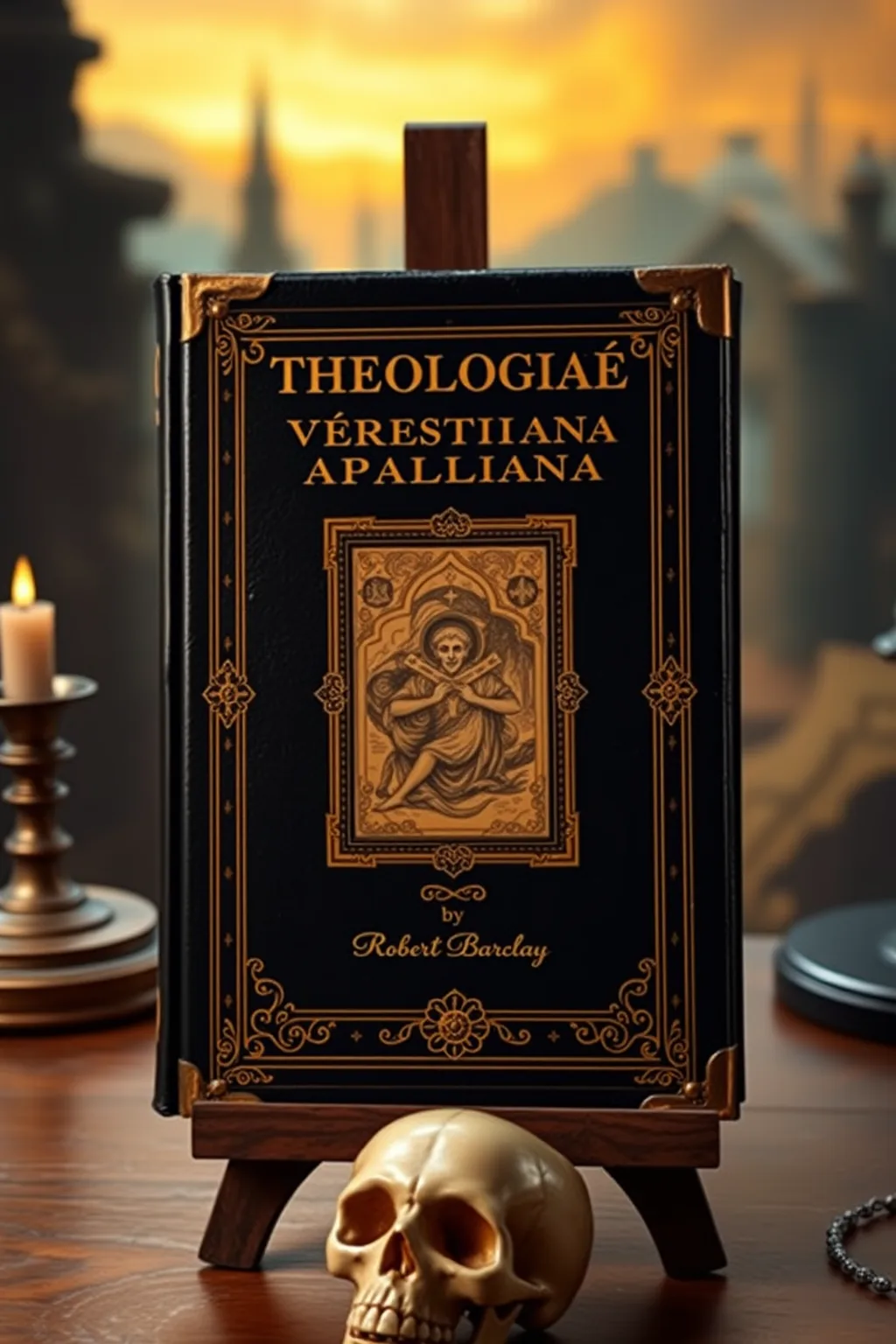
Theologiae verè Christianae apologia
 70
70

Theologiae verè Christianae apologia



By Balthazar Finch (Senior Critic, Occult Philosophy) — Robert Barclay's 'Theologiae verè Christianae apologia' is a cornerstone for any serious student of practical mysticism and devotional philosophy. Far from a dry apologetic, it is a vibrant exposition of the 'inner light' doctrine, a concept deeply resonant with esoteric traditions worldwide. Barclay articulates with crystalline clarity the Quaker emphasis on direct, unmediated spiritual experience, a potent counterpoint to the ritualistic and hierarchical structures often found in more mainstream faiths. His arguments possess an almost alchemical power, transforming abstract theological concepts into tangible pathways for spiritual realization. This work is essential for understanding the roots of a radical, introspective form of Christianity, and its insights into the nature of divine revelation remain profoundly relevant to contemporary seekers navigating the complexities of faith and inner truth.
📝 Description
70
Robert Barclay's 1676 "An Apology for the True Christian Divinity" defends Quaker beliefs with an emphasis on inner revelation.
Published in 1676, Robert Barclay's "An Apology for the True Christian Divinity" functions as a thorough defense of the Religious Society of Friends' core tenets. Barclay, a prominent Quaker minister, articulates a theology centered on the "inner light" or "seed of God" within every person. This inward divine presence, he argues, is the primary source of spiritual understanding and salvation, superseding the need for formal religious structures or outward ceremonies. The book addresses common criticisms leveled against the Quakers, such as their perceived rejection of sacraments and traditional church authority.
Barclay contends that true Christianity is an immediate, experiential reality, not a matter of inherited dogma or intellectual assent. He details how this inner light guides individuals directly, fostering a spontaneous, unmediated relationship with the divine. The work aims to clarify Quaker mysticism for a broader audience, showing it not as radical separatism but as a return to the original, uncorrupted spirit of early Christianity. Barclay's arguments are presented systematically, making a case for the practical and transformative power of faith grounded in direct spiritual experience.
Barclay's "Apology" is a significant text within early modern Christian esotericism, particularly within the Quaker movement. It articulates a form of inward mysticism that resonated with broader currents of heterodox spirituality in 17th-century Europe. The emphasis on the direct, unmediated experience of the divine, accessible to all through the inner light, aligns with mystical traditions that prioritize inner knowing over established hierarchies and dogma. This perspective positioned Quakerism as a distinct spiritual path, seeking a deeper, more authentic connection to God that bypassed the conventional religious frameworks of the time.
💡 Why Read This Book?
Embark on a profound exploration of the 'inner light' and direct divine revelation. 'Theologiae verè Christianae apologia' offers a unique mystical perspective on Christian doctrine, appealing to seekers of authentic spiritual experience, scholars of religious history, and practitioners interested in the practical application of inner guidance. Discover a path to unmediated communion with the Divine.
⭐ Reader Reviews
Honest opinions from readers who have explored this book.
❓ Frequently Asked Questions
What is the central tenet of Barclay's "inner light" doctrine?
Barclay's "inner light" doctrine posits that each individual possesses an inherent divine spark or seed of God within them, capable of guiding them directly to spiritual truth and salvation without the necessity of external intermediaries or prescribed rituals.
Who were the 'Quakers' and what was their historical context?
The 'Quakers,' officially known as the Religious Society of Friends, emerged in 17th-century England during a period of religious upheaval. They advocated for radical simplicity, pacifism, and a profound belief in the equality of all people before God, emphasizing direct spiritual experience over established church hierarchies.
How does this book relate to esoteric or mystical traditions?
The book is deeply rooted in mystical traditions by emphasizing direct, personal revelation and the immanence of the divine within the human soul, a concept echoed in various Gnostic, Sufi, and Neoplatonic thought, focusing on inner illumination over dogma.
Is this book suitable for beginners interested in mysticism?
Yes, while it is a theological defense, Barclay's clear prose and focus on lived spiritual experience make it accessible to beginners eager to understand foundational concepts of inner spirituality and the Quaker path.
What distinguishes Barclay's apologetic from other Christian defenses?
Barclay's apologetic is distinguished by its radical emphasis on the sufficiency of the inner divine light, prioritizing direct spiritual experience and intuition over scriptural interpretation alone or institutional authority, a departure from many contemporary defenses.
🔮 Key Themes & Symbolism
The Inherent Divine Spark (Inner Light)
This theme explores the core Quaker tenet of the 'inner light,' the belief that a divine presence resides within every human being, serving as a direct conduit to God's truth and guidance. Barclay argues that this internal illumination is the ultimate authority in matters of faith, superseding external doctrines or pronouncements. It emphasizes a radical, personal relationship with the Divine, accessible to all regardless of their societal standing or formal religious education. This concept offers a potent antidote to spiritual alienation, suggesting that the sacred is not distant but intimately present within the human soul, waiting to be recognized and cultivated.
Direct Revelation and Experiential Faith
Central to Barclay's work is the concept of direct revelation – the idea that God communicates directly with individuals through the inner light, bypassing the need for priestly mediation or rigid scriptural interpretation as the sole source of divine knowledge. This theme champions an experiential approach to faith, where personal spiritual encounters and intuitive understanding hold paramount importance. It challenges the notion of faith as mere intellectual assent, instead presenting it as a living, evolving relationship built upon direct communion. This perspective resonates deeply with mystical traditions that value gnosis and inner knowing over dogma.
The Rejection of External Authority and Ritual
Barclay's apologia is also a powerful critique of religious institutions and their reliance on external forms, rituals, and established hierarchies. He argues that these often obscure, rather than reveal, the true nature of God and spiritual practice. This theme advocates for a stripped-down, unadorned form of worship and spiritual engagement, focused on the internal transformation of the individual. By de-emphasizing outward ceremony, Barclay points towards a more authentic and potent form of devotion, one that prioritizes the purity of the spirit and the direct, unadulterated experience of the Divine presence within.
💬 Memorable Quotes
Direct passages from the work, attributed to the author.
“For the light of Christ is not a mere speculative notion, but a living, active principle.”
— Barclay emphasizes that the 'inner light' is not an abstract idea but a dynamic, transformative force that actively guides and empowers believers in their spiritual journey.
“True Christianity is not of the outward, but of the inward man.”
— This highlights the book's central theme: that genuine faith and spiritual understanding are found within the individual's inner being, not in external religious observances or societal conformity.
“The scripture is a declaration of the mind of God, but the Spirit is the mind of God itself.”
— Barclay distinguishes between the written word and the living Spirit, positing that direct spiritual experience and divine inspiration are the ultimate sources of truth, while scripture serves as a witness.
💡 Key Ideas
Editorial paraphrase of the work's core concepts — not direct quotes.
The eternal, immutable truth is that God hath in mercy given to all men a measure of the divine light.
This quote captures the core Quaker belief in the universal presence of divine guidance within each soul, serving as the fundamental basis for their theology and spiritual practice.
For as the Father is in the Son, and the Son in the Father, so are we in them, and they in us.
This quote speaks to the profound unity and indwelling presence of the Divine, suggesting a mystical union between the believer and the Godhead through the inner light.
🌙 Esoteric Significance
Tradition
This work is deeply embedded within the Christian mystical tradition, specifically the radical Reformation and Dissenting movements. It shares common ground with Gnosticism, Neoplatonism, and Sufism in its emphasis on the immanence of the Divine, the direct experience of God, and the search for inner gnosis. Barclay's concept of the 'inner light' can be seen as a uniquely Christian interpretation of universal spiritual principles that recognize an inherent divine spark within humanity, capable of useful the path to spiritual enlightenment.
Symbolism
The primary symbol is the 'inner light' itself, representing the divine presence, conscience, and direct guidance available to every individual. It symbolizes an internal compass, an unmediated connection to the sacred that transcends external dogma. Other symbolic elements include the rejection of outward sacraments (like water baptism or the Lord's Supper) in favor of the 'spiritual baptism' and 'spiritual supper' of the soul's direct communion with God, symbolizing a purification and nourishment of the spirit rather than reliance on material forms.
Modern Relevance
In an age often characterized by spiritual searching, disconnection, and a questioning of traditional authorities, Barclay's emphasis on the inner light and direct divine experience remains profoundly relevant. His work offers a compelling antidote to spiritual apathy and externalism, encouraging individuals to cultivate their own inner spiritual authority and seek authentic, personal communion with the Divine. It appeals to contemporary movements seeking spiritual depth, self-discovery, and a more integrated approach to faith that honors both personal intuition and universal truths.
👥 Who Should Read This Book
This key work is essential for a diverse audience. **Beginners** seeking to understand the foundations of Christian mysticism and the Quaker path will find a clear, accessible introduction to the concept of the 'inner light.' **Scholars** of religious history, philosophy of religion, and the history of dissent will appreciate its historical context and theological arguments. **Seekers** of authentic spiritual experience, regardless of their religious background, will be drawn to its powerful message of direct divine communion and inner authority. **Practitioners** of contemplative or mystical disciplines will find Barclay's insights into inner guidance and spiritual transformation deeply resonant and applicable to their own journeys.
📜 Historical Context
Written during the tumultuous 17th century in England, a period rife with religious persecution and the fragmentation of established faiths, Robert Barclay's 'Theologiae verè Christianae apologia' emerged as a powerful articulation of Quaker beliefs. This era saw intense theological debate and a yearning for more direct, personal spiritual experiences amidst the rigid structures of the time. Barclay, a prominent Quaker minister and apologist, sought to defend his movement's radical doctrines against widespread criticism and misunderstanding. His work provided a coherent philosophical and theological framework for the Society of Friends, emphasizing their commitment to the 'inner light' and the abolition of outward forms of worship. It became a foundational text, influencing not only Quakerism but also broader currents of mystical thought and dissent within Western Christianity, offering a compelling alternative to the prevailing religious paradigms.
📔 Journal Prompts
Reflect on a time you felt a strong inner guidance or intuition. How did it manifest, and how did you respond?
What does the concept of an 'inner light' mean to you personally? How might you cultivate or acknowledge this inner presence in your daily life?
Consider the role of external religious practices versus internal spiritual experience in your own spiritual journey. Where do you find the greatest resonance?
Barclay suggests the divine is directly accessible. What are the perceived barriers to this direct access in your life, and how might they be overcome?
How can the principle of the 'inner light' inform your interactions with others, fostering understanding and compassion?
🗂️ Glossary
Inner Light
The Quaker concept of an inherent, divine spark or principle within every individual, believed to be the direct source of divine guidance, truth, and salvation, superseding the need for external intermediaries.
Apology
In this context, an apology refers to a reasoned defense or justification of a belief system, doctrine, or practice, particularly against criticism or opposition.
Direct Revelation
The belief that God communicates directly with individuals, providing spiritual insight and knowledge without the need for mediated interpretation through scripture or religious authorities alone.
Spiritual Baptism
Within Quaker theology, this refers to the internal, spiritual cleansing and regeneration of the soul by the Holy Spirit, as opposed to the outward ritual of water baptism.
Society of Friends
The formal name for the religious group commonly known as Quakers, founded in 17th-century England, emphasizing pacifism, equality, and direct experience of God.
This book appears in 3 collections
🔮 Readers Also Liked
Browse all →





From the “Tarot” Collection
View all →









More Free Divination & Tarot Books
View all →