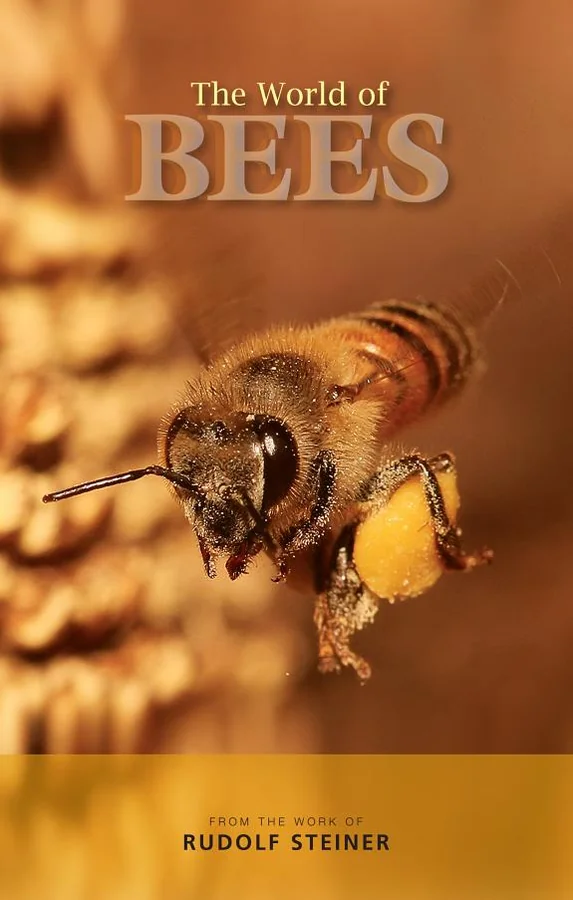
THE WORLD OF BEES
 82
82

THE WORLD OF BEES
Rudolf Steiner’s 'The World of Bees' ventures into the hive, not with a biologist’s scalpel, but with a philosopher’s gaze fixed on the ethereal. The assertion that the entire hive is ‘pervaded by the life of love,’ with individual bees relinquishing personal affection for a collective outpouring, is striking. This anthropomorphic framing, while potentially challenging for a strict empiricist, offers a compelling lens through which to consider the intricate cooperation within a colony. Steiner’s exploration of the bee as a conduit for cosmic forces, particularly its sun-connection, provides a unique esoteric interpretation that diverges sharply from standard entomology. A limitation, however, lies in the frequent reliance on abstract spiritual concepts without concrete, verifiable mechanisms, which can leave the reader yearning for more tangible connections to the observed phenomena of bee behavior. The strength of the work is its audacious attempt to bridge the material and spiritual, suggesting that the bee's existence holds profound lessons about consciousness and community. Ultimately, 'The World of Bees' offers a rich, albeit challenging, esoteric perspective on a familiar creature.
📝 Description
82
Rudolf Steiner's 1923 lectures form the core of 'The World of Bees', a work that views the hive as a spiritual organism.
Rudolf Steiner's 'The World of Bees' examines insect colonies not just through biological lenses but also through spiritual and energetic perspectives. First published in its collected form in 2017, the book compiles lectures and writings from Steiner, a key figure in esoteric philosophy. He presents the bee as more than a biological entity; it is seen as a manifestation of collective consciousness and cosmic influences.
The central idea is that the hive exists within an 'atmosphere' of love. Steiner suggests that individual bees subordinate their personal affection for the good of the entire colony organism. This approach contrasts with standard scientific viewpoints by incorporating spiritual science into the understanding of natural events. The work is directed toward readers interested in Anthroposophy, spiritual ecology, and unconventional views of the natural world.
Delivered in the early 20th century, the lectures in 'The World of Bees' emerged during a time of growing interest in spiritual movements, including Theosophy, which Steiner was initially involved with before founding Anthroposophy. This period saw intellectuals questioning purely materialistic science and seeking to restore a sense of wonder to the natural world. Steiner's work appeared alongside other thinkers exploring esoteric interpretations of nature, aiming to connect the material and spiritual aspects of existence.
💡 Why Read This Book?
• Gain an understanding of the Anthroposophical concept of the 'love-filled atmosphere' of the hive, providing a spiritual framework for interpreting collective insect behavior. • Explore Rudolf Steiner's 20th-century ideas connecting bee activity to cosmic forces and the sun, offering a perspective distinct from purely materialistic biology. • Discover the esoteric symbolism of the bee and its products, like honey and wax, as presented in Steiner's unique philosophical system, for a deeper appreciation of nature's hidden qualities.
⭐ Reader Reviews
Honest opinions from readers who have explored this book.
❓ Frequently Asked Questions
What is Rudolf Steiner's core idea about the bee's existence?
Steiner's central idea is that the bee colony functions as a collective organism permeated by a 'life of love,' where individual bees subsume their personal affection for the good of the hive's entire being.
When were the lectures that form 'The World of Bees' originally given?
The lectures compiled in 'The World of Bees' were delivered by Rudolf Steiner in the early 20th century, before the widespread acceptance of modern ecological science.
Does this book offer practical advice for beekeepers?
No, 'The World of Bees' is not a practical guide for beekeeping. It focuses on the spiritual and esoteric dimensions of bee existence, rather than the material management of hives.
What esoteric tradition does Rudolf Steiner's work belong to?
Rudolf Steiner's work is foundational to Anthroposophy, a spiritual philosophy that emerged from his earlier involvement with Theosophy and explores the spiritual nature of humanity and the cosmos.
How does Steiner's view of the bee differ from scientific entomology?
Steiner's view emphasizes the spiritual and energetic aspects of the hive and the bee's 'love-filled atmosphere,' whereas scientific entomology focuses on observable biological and behavioral mechanisms.
Is 'The World of Bees' considered a primary source for Anthroposophy?
Yes, as it contains lectures and writings directly from Rudolf Steiner, it is considered a primary source for understanding Anthroposophical perspectives on nature and consciousness.
🔮 Key Themes & Symbolism
Collective Consciousness and Love
The work posits the hive as a singular, conscious entity, animated by a pervasive 'life of love.' Individual bees, in Steiner's view, act as selfless components, sacrificing personal affection to sustain this collective spiritual atmosphere. This concept challenges notions of individualistic consciousness, suggesting a higher, unified intelligence within the bee colony that orchestrates its existence and actions, particularly its famous dance communication and organized labor.
The Bee as a Cosmic Being
Steiner interprets the bee not merely as an earthly insect but as a being connected to cosmic forces, particularly solar energies. The bee's activity, its metabolism, and its role in pollination are seen as expressions of a divine, life-giving principle emanating from the cosmos. This perspective elevates the bee's significance, framing its work as participation in a grander, spiritual-energetic order that sustains the planet's vitality.
Spiritual Value of Honey and Wax
Beyond their material utility, honey and wax are presented as carriers of spiritual essence. Honey is viewed as a concentrated form of solar life force and the product of the hive's collective love, imbued with healing and preserving qualities on multiple levels. Wax, similarly, embodies the constructive, form-giving energies of the colony. Their value extends beyond the physical, encompassing their role in esoteric practices and spiritual understanding.
Nature Spirits and the Hive
The book touches upon the idea of nature spirits or elementals associated with the bee and the hive. These are understood as non-human spiritual intelligences that work through the physical processes of the colony. Steiner suggests that by understanding the bee's work esoterically, one can gain insight into these hidden forces that shape the natural world, revealing a layer of reality unseen by ordinary perception.
💬 Memorable Quotes
Direct passages from the work, attributed to the author.
“The individual bees relinquish love but develop it instead throughout the hive.”
— This highlights the concept of sacrifice for the collective. Individual desires or affections are subsumed and transformed into a universal 'love' that sustains the entire hive organism, emphasizing community over individuality.
“And so we start to understand bee existence if we recognize that the bee lives in an air, an atmosphere, that is entirely impregnated with love.”
— This emphasizes the non-physical, energetic environment in which the bee operates. It suggests that understanding bees requires perceiving this invisible 'atmosphere' of love, a spiritual reality underlying their physical actions.
“The bee is a being of a special kind, which has the task of working on the earth in a spiritual manner.”
— This interpretation elevates the bee's role beyond mere biological function, positioning it as an agent of spiritual work on Earth, transforming earthly substance through its unique connection to cosmic forces.
“We must recognize that the bee is not merely an animal, but a being that carries the spirit.”
— This directly challenges a purely materialistic view of the bee, asserting its spiritual nature and its capacity to embody and transmit spiritual qualities, linking its physical existence to a higher, non-material reality.
💡 Key Ideas
Editorial paraphrase of the work's core concepts — not direct quotes.
The whole hive is really pervaded by the life of love.
This quote expresses Steiner's central thesis: the bee colony functions not as a collection of individuals, but as a unified being driven by a selfless, collective affection that permeates its entire existence.
🌙 Esoteric Significance
Tradition
Steiner's work on bees falls squarely within the tradition of Anthroposophy, which he founded. Anthroposophy draws from various esoteric streams, including Gnosticism, Hermeticism, and Theosophy, but synthesizes them into a unique philosophical and spiritual system. It seeks to understand the spiritual nature of the human being and the cosmos through a method of inner development and meditative cognition, viewing nature as a manifestation of spiritual beings and processes.
Symbolism
The bee itself is a potent symbol in Steiner's work, representing collective consciousness, selfless service, and the transformation of earthly substances into spiritualized forms (honey). The hive symbolizes the ideal community, a perfectly ordered organism governed by spiritual laws. The 'love-filled atmosphere' is a symbolic representation of the energetic and spiritual milieu in which the bees operate, connecting them to higher cosmic forces and divine principles.
Modern Relevance
Contemporary movements in 'spiritual ecology,' biodynamic farming (which Steiner heavily influenced), and alternative approaches to consciousness studies often draw upon Steiner's insights. Thinkers exploring the interconnectedness of life, the intelligence of nature, and the limitations of purely mechanistic science find resonance in his work. His ideas continue to inform practices that seek to integrate spiritual understanding with ecological stewardship and a holistic view of living systems.
👥 Who Should Read This Book
• Students of Anthroposophy seeking to deepen their understanding of Rudolf Steiner's cosmology and his specific views on the spiritual nature of insects. • Practitioners of biodynamic agriculture and those interested in the esoteric underpinnings of sustainable farming methods, particularly concerning pollinators. • Individuals curious about non-materialistic interpretations of nature and consciousness, looking for alternative perspectives on the intelligence and spiritual significance of the natural world.
📜 Historical Context
Rudolf Steiner's lectures on bees, forming the basis of 'The World of Bees,' were primarily delivered in the early 20th century, a period characterized by a widespread spiritual awakening and a search for meaning beyond the perceived limitations of materialistic science. Steiner, having broken from the Theosophical Society to found Anthroposophy in 1913, was deeply engaged in developing his 'spiritual science.' This era saw contemporary figures like Marie Steiner (his wife and translator) and others within the nascent Anthroposophical movement exploring similar connections between nature and the spirit. While mainstream biology was solidifying its Darwinian foundations, Steiner offered a distinct perspective, seeking to reveal the spiritual forces animating the natural world. His approach was part of a broader esoteric current that included figures like Rudolf Koch, who also explored symbolic forms in nature, though Steiner's focus was on a comprehensive cosmology. The reception of such works was often polarized, embraced by those seeking spiritual understanding but viewed with skepticism by the scientific establishment.
📔 Journal Prompts
The hive's 'atmosphere entirely impregnated with love'—how might this concept inform human community dynamics?
Reflect on the bee's perceived sacrifice of individual love for the collective: what parallels or contrasts exist in human social structures?
Rudolf Steiner's connection of the bee to solar forces: explore the symbolic relationship between light, life, and insect activity.
Consider the 'spiritual work' Steiner attributes to the bee: what might this imply about the purpose of other natural phenomena?
The esoteric value of honey and wax: how do these substances embody spiritual qualities beyond their physical properties?
🗂️ Glossary
Anthroposophy
A spiritual philosophy founded by Rudolf Steiner, aiming to explore the spiritual dimensions of the human being and the cosmos through a combination of meditative practices and spiritual perception.
Spiritual Science
Rudolf Steiner's term for his methodology and findings, which seeks to investigate the spiritual world with the same rigor as natural science investigates the physical world.
Love-filled atmosphere
A concept described by Steiner where the entire bee colony exists within and is sustained by a collective energy of love, transcending individual bee affections.
Nature Spirits
In Anthroposophy, these are non-human spiritual beings that work within natural processes, influencing phenomena like weather, plant growth, and the behavior of animals.
Cosmic Forces
Spiritual energies or influences originating from the celestial bodies and the wider universe, which Steiner believed actively shape earthly life and consciousness.
Theosophy
An esoteric movement from which Anthroposophy partly emerged, seeking wisdom about the fundamental truths of existence, often drawing from Eastern and Western mystical traditions.
Biodynamic Agriculture
A system of farming and gardening developed by Rudolf Steiner, which treats the farm as a living organism and incorporates spiritual insights and specific preparations.
This book appears in 1 collection
🔮 Readers Also Liked
Browse all →






From the “Anthroposophy” Collection
View all →



More Free Theosophy & Anthroposophy Books
View all →