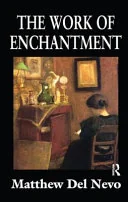
The Work of Enchantment
 82
82

The Work of Enchantment
Matthew Del Nevo's "The Work of Enchantment" offers a refreshing antidote to the pervasive spiritual malaise he diagnoses in contemporary Western society. The core argument—that a lack of "enchantment," particularly experienced through art, fuels mental illness—is both intuitive and urgently relevant. Del Nevo compellingly contrasts the vibrant imaginative life of childhood with the arid rationalism of adulthood, positioning art as a critical, often overlooked, pathway back to wholeness. A particular strength lies in his critique of industrial society's devaluation of activities like reading and gazing, reframing them as essential spiritual practices. However, the book could benefit from a more robust engagement with specific artistic movements or practitioners to concretely illustrate his points. While the concept of "enchantment" is persuasively described, its practical cultivation for the jaded adult sometimes feels aspirational rather than fully actionable. Despite this limitation, Del Nevo provides a vital perspective for anyone feeling the hollowness of modern existence. It is a necessary re-examination of what truly nourishes the human spirit.
📝 Description
82
Matthew Del Nevo's 2017 book argues Western malaise stems from a lack of enchantment.
Matthew Del Nevo's "The Work of Enchantment" (2017) proposes that a widespread absence of enchantment in developed nations fuels individual mental and physical ailments. This enchantment, often a childhood experience, can be revived in adulthood, particularly through art. The book contests the common view of activities like reading and gazing as passive, asserting their vital role in spiritual and psychological health. It is for readers experiencing spiritual emptiness or a sense of disconnection from their surroundings. Those who feel modern life's focus on productivity and material gain has diminished a crucial part of human experience will find resonance here. The work is also for individuals interested in philosophy, art criticism, psychology, and esoteric thought, who seek to understand how a deficit in wonder and imaginative engagement can manifest as illness and how art might offer a remedy.
Published in 2017, the book emerged amidst growing discussions on mental health challenges and the perceived spiritual void in Western societies. Del Nevo's ideas align with concerns raised by thinkers such as Walter Benjamin, who examined art's aura in the age of mechanical reproduction, and Carl Jung, who highlighted the significance of myth and symbolism for psychological integration. The book provides an alternative to purely clinical or materialist explanations for human suffering. It advocates for a more holistic, imaginative approach to life and culture, a perspective that may have been overlooked by the scientific rationalism prevalent in much of modern thought.
This work engages with a tradition that seeks the renewal of the human spirit through imaginative engagement with culture and the natural world. It echoes Romantic and post-Romantic ideas concerning the vital importance of myth, imagination, and aesthetic experience for psychological wholeness, a thread found in figures from Novalis to Carl Jung. Del Nevo's focus on 'enchantment' can be seen as a modern articulation of a perennial concern within esoteric thought: the recovery of a lost sense of wonder and participation in a living cosmos, often contrasted with a desacralized, mechanistic worldview.
💡 Why Read This Book?
• You will gain a new framework for understanding modern alienation by exploring Matthew Del Nevo's concept of "disenchantment" as a direct cause of psychological distress, a perspective distinct from standard psychological diagnoses. • You will learn how art, specifically through activities like reading, listening, and gazing, can be actively cultivated as a potent antidote to soul-starvation, challenging the industrial view of these as passive pastimes. • You will discover how the "enchantment" typically associated with childhood can be consciously re-accessed in adulthood, offering a practical path toward spiritual and mental well-being, as detailed in the book's exploration of adult engagement with art.
⭐ Reader Reviews
Honest opinions from readers who have explored this book.
❓ Frequently Asked Questions
What is the central thesis of Matthew Del Nevo's 'The Work of Enchantment'?
The book's central thesis is that a deficit of "enchantment" in developed Western countries leads to the mental and physical illnesses prevalent today. Del Nevo argues that this enchantment is primarily experienced in childhood but can be regained in adulthood through engagement with art.
How does 'The Work of Enchantment' define 'enchantment'?
Del Nevo defines "enchantment" not as superstition, but as a deep, imaginative connection with the world. It's a sense of wonder and active engagement often found in childhood, which modern industrial societies tend to suppress.
What role does art play in Del Nevo's theory?
Art is presented as a crucial vehicle for rediscovering "enchantment" in adulthood. Activities like reading, listening to music, and appreciating visual art are framed as essential spiritual practices, not mere leisure.
Who is Matthew Del Nevo?
Matthew Del Nevo is the author of 'The Work of Enchantment.' While the book doesn't extensively detail his biography, it engages with philosophical and psychological concepts, suggesting he is a thinker concerned with culture and human well-being.
When was 'The Work of Enchantment' first published?
'The Work of Enchantment' was first published on September 28, 2017. This publication date places it within contemporary discussions about societal well-being and the impact of modern life.
What kind of reader would benefit most from 'The Work of Enchantment'?
Readers experiencing feelings of spiritual emptiness, those interested in the philosophical underpinnings of mental health, art enthusiasts, and individuals seeking to understand the impact of modern industrial society on the human psyche would find this book beneficial.
🔮 Key Themes & Symbolism
The Disenchantment of Modernity
This theme explores how industrialized Western societies, with their emphasis on rationalism and utility, have systematically stripped away a vital sense of wonder and imaginative engagement. Del Nevo argues that this "disenchantment" creates a void, a "soul-starved" condition that manifests as widespread mental and even physical illness. The book critiques the modern tendency to devalue activities like contemplation and appreciation of art, viewing them as unproductive rather than essential for human flourishing and spiritual health.
Childhood Enchantment as Archetype
Del Nevo posits that the vibrant, imaginative world of childhood represents a peak experience of "enchantment." This innate human capacity for wonder, play, and myth-making is often suppressed or forgotten in adulthood as individuals conform to societal expectations. The book suggests that understanding and reconnecting with this childhood state is crucial for adults seeking to recover a sense of meaning and vitality, serving as a psychological and spiritual blueprint.
Art as a Vehicle for Re-Enchantment
The work champions art – encompassing literature, music, and visual arts – as the primary means by which adults can actively cultivate and regain a sense of "enchantment." Del Nevo challenges the perception of artistic engagement as passive consumption, framing reading, listening, and gazing as active practices of spiritual and psychological restoration. By engaging deeply with artistic creations, individuals can rediscover imagination, wonder, and a profound connection to life, thereby counteracting the debilitating effects of modern disenchantment.
The Soul-Starved Westerner
This theme addresses the psychological and spiritual condition attributed to individuals in affluent Western nations. Del Nevo describes this "soul-starved" state as a consequence of living in a disenchanted world, where material progress has not translated into deeper fulfillment. The lack of imaginative engagement and connection to the transcendent, fostered by industrial society, leads to a pervasive sense of emptiness, anxiety, and illness, which the book seeks to explain and offer remedies for through the concept of enchantment.
💬 Memorable Quotes
Direct passages from the work, attributed to the author.
“The soul-starved Westerner finds illness where a lack of enchantment should be.”
— This statement expresses the book's core argument: that modern malaise stems not from external circumstances alone, but from an internal deficit of imaginative engagement and wonder, termed 'enchantment'.
“Childhood offers enchantment, but adulthood must cultivate it through art.”
— This highlights the book's developmental perspective, suggesting that while enchantment is natural in youth, adults must consciously practice engagement with art to recapture this vital human capacity.
“Reading, listening, and gazing are active spiritual practices.”
— This re-frames common activities, challenging the industrial mindset that dismisses them as passive. Del Nevo elevates them to essential acts for spiritual nourishment and psychological health.
“Industrial societies breed a lack of enchantment.”
— This points to the societal structures and values of modern, developed nations as the root cause of the "disenchantment" that plagues individuals, linking societal trends to personal well-being.
“Art provides a path to reclaiming wonder.”
— This concisely states the book's proposed solution: that engaging with artistic endeavors offers a tangible way for individuals to reconnect with the sense of wonder lost in modern life.
🌙 Esoteric Significance
Tradition
While not explicitly aligned with a single esoteric lineage like Hermeticism or Kabbalah, "The Work of Enchantment" draws upon a broad current of thought concerned with the spiritual and psychological health of the individual within modern society. It echoes Gnostic concerns about the soul's alienation in a material world and speaks to Jungian psychology's emphasis on imagination and archetypes. The book's focus on art as a transformative force aligns with aesthetic spiritualities found in various traditions that view beauty and creative expression as pathways to the divine or the unconscious.
Symbolism
The primary symbolic concept is "enchantment" itself, representing a state of active wonder, imagination, and connection to the numinous, often lost in adulthood. The act of "reading, listening, and gazing" functions symbolically as the disciplined practice required to access this state, serving as modern rituals for spiritual reconnection. Childhood is also symbolic, representing an archetypal state of pure enchantment that adults strive to recapture, not literally, but through conscious engagement with art.
Modern Relevance
Del Nevo's work finds resonance today with contemporary movements focusing on mindfulness, creative expression as therapy, and the critique of hyper-consumerism and technological detachment. Thinkers and practitioners in fields like ecopsychology, art therapy, and certain strands of New Age spirituality that emphasize reclaiming wonder and intuitive knowing can see "The Work of Enchantment" as a foundational text. It speaks to a growing desire to integrate subjective experience and imaginative life into a balanced, meaningful existence beyond purely rational or material pursuits.
👥 Who Should Read This Book
• Individuals feeling spiritually adrift in modern Western society: You will find a compelling diagnosis of your condition as "soul-starvation" and a proposed remedy through art. • Art enthusiasts and creators: You will gain a philosophical justification for the profound importance of artistic engagement, beyond mere aesthetics or entertainment. • Students of psychology and philosophy: You will encounter a unique perspective linking mental well-being directly to the presence or absence of "enchantment" and imaginative life.
📜 Historical Context
Published in 2017, "The Work of Enchantment" emerged at a time when Western societies were increasingly grappling with widespread mental health issues and a perceived lack of spiritual fulfillment. Matthew Del Nevo's work engaged with intellectual currents that questioned the adequacy of purely materialist or scientific explanations for human suffering. His argument for the necessity of "enchantment," particularly through art, offered a counterpoint to the prevailing rationalism and utilitarianism that characterized much of 20th-century thought, echoing concerns raised by figures like Carl Jung regarding the importance of myth and symbolism. While not directly engaging with a specific contemporary movement in its text, the book implicitly critiques the cultural legacy of thinkers who emphasized secularization and disenchantment. Its reception likely resonated with readers disillusioned by the perceived spiritual vacuum of late-stage capitalism, offering a philosophical framework that prioritized imaginative experience over material progress, a perspective that stood apart from dominant sociological and psychological paradigms of the era.
📔 Journal Prompts
The childhood experience of enchantment: what images or activities first come to mind?
Art's role in adult re-enchantment: identify one piece of art that stirred deep wonder.
The concept of "disenchantment": how does it manifest in your daily routines?
Cultivating enchantment: what specific artistic practice will you prioritize this week?
The "soul-starved" condition: reflect on moments of perceived spiritual emptiness.
🗂️ Glossary
Enchantment
A state of profound imaginative engagement with the world, characterized by wonder, vitality, and a sense of connection. Often experienced in childhood, it can be actively cultivated in adulthood through art.
Disenchantment
The condition of modern Western societies, marked by a lack of wonder, imagination, and spiritual connection, largely due to rationalism and industrialization. This state is linked to widespread psychological and physical illness.
Soul-starved
A description of individuals in developed nations suffering from a deficit of enchantment and imaginative engagement, leading to feelings of emptiness, alienation, and illness.
Industrial society
Refers to developed, technologically advanced nations where productivity, rationalism, and utility often dominate cultural values, leading to a suppression of imaginative and spiritual life.
Reading, listening, gazing
Activities presented in the book not as passive pastimes, but as active, crucial practices for adults to cultivate enchantment and spiritual well-being through engagement with art.
Childhood enchantment
The innate sense of wonder, play, and imaginative capacity characteristic of childhood, seen as a fundamental human state that adults can seek to reconnect with.
Art as antidote
The concept that engaging with literature, music, and visual arts serves as a direct remedy for the "disenchantment" and "soul-starvation" prevalent in modern life.
This book appears in 1 collection
🔮 Readers Also Liked
Browse all →









From the “Enchantment” Collection
View all →




More Free Occult Philosophy Books
View all →