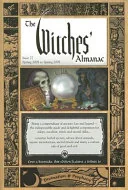
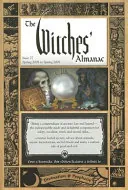
The Witches Almanac
 73
73

The Witches Almanac
The Witches Almanac by Theitic presents a unique approach, eschewing the familiar format of seasonal advice for a deeper dive into the philosophical underpinnings of witchcraft. Its strength lies in its intellectual rigor, offering a year's worth of contemplation on esoteric principles rather than mere practical tips. The section discussing the nature of the magical will, for instance, provides a clear articulation of intent and focus essential for any serious practitioner. However, the almanac's dense, often abstract, nature might prove a barrier for beginners seeking more direct guidance. The lack of overt, step-by-step ritual instructions, while intentional, could leave some readers feeling ungrounded. Theitic's work is best approached as a philosophical companion to practice, not a standalone grimoire. It is a valuable resource for those ready to engage with witchcraft on a more cerebral and contemplative level.
📝 Description
73
The Witches Almanac, published in 2016, is not a typical guide to astrological predictions.
This almanac offers a year-long immersion into witchcraft, magic, and occult philosophy, intended for practitioners seeking a deeper intellectual engagement with their path. It moves beyond introductory concepts to examine the historical, philosophical, and theoretical underpinnings of magical practice. Theitic's work provides a framework for understanding diverse traditions and practices within contemporary witchcraft. It is designed for those interested in comparative mythology, folk magic, and the evolution of modern paganism, offering substantial value for serious students of the occult. The text focuses on detailed explorations of witchcraft's theoretical aspects, distinguishing itself from earlier, more ritualistic or devotional approaches.
The almanac addresses core concepts in witchcraft and esoteric thought. It investigates the nature of divinity, considering both immanent and transcendent aspects of deities. The book also explores the symbolic systems that inform magical practice and ritual. It aims to foster a more scholarly approach to understanding witchcraft, encouraging readers to engage critically with its history and philosophy. This work serves as a companion for practitioners throughout their spiritual and magical studies, encouraging a comprehensive view of the craft.
The Witches Almanac emerged in 2016 amidst a growing and diversifying modern pagan and witchcraft landscape. Following seminal figures like Gerald Gardner and subsequent feminist influences on Wicca, the early 21st century saw a rise in authors adopting more scholarly and philosophical approaches to witchcraft. Theitic's work belongs to this later wave, which emphasizes the theoretical and symbolic systems behind magical practice rather than focusing solely on ritual instruction. This period also coincided with increased academic interest in esotericism, creating a receptive environment for detailed explorations of witchcraft's intellectual dimensions.
💡 Why Read This Book?
• Understand the nuanced concept of the 'magical will' as articulated by Theitic, learning how to refine intent and focus energy beyond basic affirmations, a key element in advanced magical practice. • Gain insight into the cyclical nature of time and its esoteric significance as explored in the almanac, offering a framework for personal spiritual progression tied to cosmic rhythms. • Explore the philosophical underpinnings of deity within witchcraft, moving beyond simplistic portrayals to grasp the complex immanent and transcendent aspects discussed throughout the year's themes.
⭐ Reader Reviews
Honest opinions from readers who have explored this book.
❓ Frequently Asked Questions
What distinguishes The Witches Almanac from a traditional almanac?
Unlike conventional almanacs focused on astrology or agriculture, The Witches Almanac by Theitic offers a year-long philosophical and esoteric exploration of witchcraft. It prioritizes conceptual understanding and spiritual development over predictive horoscopes or practical farming advice.
Is The Witches Almanac suitable for absolute beginners?
The almanac is geared towards practitioners with some foundational knowledge of witchcraft or esoteric studies. Its depth and theoretical focus may be challenging for those completely new to the subject matter, who might benefit from introductory texts first.
What kind of esoteric traditions does The Witches Almanac reference?
The work draws upon and explores a broad spectrum of esoteric thought relevant to witchcraft. It touches upon concepts found in Western Hermeticism, Neopaganism, and various folk magic traditions, examining their philosophical and practical implications.
Does The Witches Almanac provide specific spells or rituals?
While it discusses magical principles and intent, The Witches Almanac is not primarily a spellbook. Its focus is on the deeper philosophical and conceptual framework of witchcraft, encouraging personal application of principles rather than providing ready-made rituals.
When was The Witches Almanac first published?
The Witches Almanac was first published in 2016 by Theitic, marking its appearance in the contemporary landscape of esoteric literature.
What is the primary goal of engaging with The Witches Almanac?
The primary goal is to foster a deeper, more intellectual, and contemplative understanding of witchcraft and magic. It aims to guide practitioners in developing their personal practice through philosophical inquiry and an exploration of esoteric concepts.
🔮 Key Themes & Symbolism
The Nature of Divine Immanence
The work explores the concept of divinity not as an external force, but as an inherent aspect of existence and the self. This perspective challenges traditional dualistic views, positioning the divine as immanent within nature, within rituals, and within the practitioner's own consciousness. It encourages a recognition of sacredness in the mundane, fostering a more integrated approach to magical practice where the divine is not merely invoked but embodied and experienced.
The Cultivation of Magical Will
A central theme is the deliberate formation and direction of magical will. Theitic emphasizes that true magical efficacy stems from a focused, disciplined will, honed through introspection and understanding. This involves not just desiring an outcome, but aligning one's internal state and energy with the intended manifestation. The almanac provides a framework for developing this inner fortitude, distinguishing it from mere wishful thinking and framing it as a core component of advanced witchcraft.
Symbolic Language and Archetypes
The text studies the profound significance of symbols and archetypes in witchcraft and esoteric traditions. It posits that these elements are not arbitrary but are fundamental tools for communicating with the subconscious and the wider energetic universe. By understanding and working with archetypal patterns, practitioners can access deeper layers of meaning, facilitate transformation, and engage with universal forces in a structured and potent manner.
Cyclical Time and Spiritual Evolution
The Witches Almanac frames spiritual growth and magical practice within the context of cyclical time, moving beyond linear progression. It examines how natural cycles—lunar, solar, seasonal—mirror internal processes of transformation and renewal. This perspective encourages practitioners to align their work with these rhythms, understanding that development is often a spiral, involving phases of growth, integration, rest, and rebirth, mirroring the patterns observed in nature.
💬 Memorable Quotes
Direct passages from the work, attributed to the author.
“The divine is not a distant king, but the lifeblood of the universe.”
— This interpretation highlights the book's emphasis on immanence, suggesting that divinity is not an external, hierarchical power but an intrinsic, animating force present within all things.
“Will is not force, but directed awareness.”
— This concept clarifies the nature of magical will as presented in the text, differentiating it from brute strength or forceful imposition. It underscores the importance of conscious intent and focused attention in magical work.
“Each turning of the year is a mirror to our inner seasons.”
— This highlights the theme of cyclical time, linking external natural cycles to the internal field of personal growth, transformation, and spiritual development.
“To practice magic is to become a conscious architect of reality.”
— This notion emphasizes the active, intentional role of the practitioner in shaping their experience and the world around them, moving beyond passive observation to active creation.
💡 Key Ideas
Editorial paraphrase of the work's core concepts — not direct quotes.
Symbols are the language of the soul's deep currents.
This paraphrased idea points to the book's exploration of symbolism as a vital means of communication, bridging the conscious mind with deeper psychological and spiritual realms.
🌙 Esoteric Significance
Tradition
The Witches Almanac operates within the broad currents of modern Western Esotericism, particularly engaging with Neopaganism and witchcraft traditions. It departs from purely devotional or strictly organized coven-based approaches, instead focusing on the philosophical and psychological dimensions that undergird magical practice. It aligns with traditions that emphasize personal gnosis, the immanence of the divine, and the power of the individual will, resonating with Hermetic principles of correspondence and mentalism without being strictly Hermetic.
Symbolism
Key symbols explored include the cycle of the year, representing not just seasonal change but also stages of personal transformation and spiritual evolution. The concept of the divine as immanent, rather than transcendent, is a significant motif, challenging dualistic frameworks. The almanac also studies the power of archetypes, positing them as fundamental structures of consciousness that practitioners can engage with to understand and shape reality.
Modern Relevance
Contemporary practitioners interested in the philosophical and theoretical underpinnings of witchcraft find value in Theitic's work. Thinkers and authors focusing on embodied spirituality, psychological approaches to magic, and the integration of esoteric principles into daily life often draw upon the almanac's contemplative style. It is relevant to modern solitary practitioners and those exploring the intersection of consciousness studies and magical practice.
👥 Who Should Read This Book
• Dedicated practitioners of witchcraft seeking to deepen their philosophical understanding beyond basic ritual mechanics. • Students of comparative religion and esoteric studies interested in the theoretical frameworks of modern magical traditions. • Individuals drawn to contemplative practices and those who appreciate a year-long, structured approach to exploring spiritual concepts.
📜 Historical Context
The Witches Almanac, published in 2016, arrived in an era where witchcraft studies had moved significantly beyond the foundational works of figures like Gerald Gardner in the mid-20th century. The intervening decades had seen the rise of various Wiccan traditions, ecofeminist witchcraft, and a growing interest in historical reconstruction and comparative occultism. Theitic's work fits within a contemporary trend of esoteric literature that prioritizes philosophical depth and theoretical exploration over simple ritualistic instruction. This period also saw the popularization of comparative mythology and symbolic studies, influenced by scholars like Joseph Campbell and Carl Jung, which provided a fertile ground for works examining the symbolic language and archetypal underpinnings of magical practice. Unlike some earlier Neopagan texts that focused heavily on specific pantheons or Wiccan dogma, The Witches Almanac offers a more generalized, yet rigorous, engagement with esoteric principles applicable across diverse magical paths. Its publication occurred during a time when academic interest in esotericism was also growing, fostering a more receptive audience for detailed theoretical treatments of witchcraft.
📔 Journal Prompts
Reflect on the concept of 'directed awareness' as magical will.
Consider the cyclical nature of the year in relation to your personal spiritual evolution.
Explore the immanent divine within your immediate surroundings.
How do symbols in your daily life communicate deeper meanings?
Analyze the relationship between your inner seasons and the external turning of the year.
🗂️ Glossary
Immanence
The philosophical concept that divinity or the sacred is present within the material world and within individuals, rather than existing solely outside of it.
Magical Will
The focused intent and conscious direction of energy and consciousness towards a specific magical outcome, cultivated through discipline and understanding.
Archetype
Universal, archaic patterns and images that derive from the collective unconscious and are the psychic counterpart of the instinct. They are fundamental structures of the psyche that influence thought and behavior.
Cyclical Time
A perception of time as a recurring series of cycles (e.g., seasons, lunar phases) rather than a linear progression, often mirrored in spiritual and personal development.
Esotericism
Systems of thought and practice concerned with hidden knowledge, spiritual enlightenment, and direct experience of the divine, often involving symbolic interpretation and ritual.
Gnosis
Spiritual knowledge or insight, particularly that which is intuitive or revealed, leading to salvation or enlightenment.
Neopaganism
A modern religious movement that seeks to revive or re-interpret pre-Christian, nature-based spiritual traditions.
🔮 Readers Also Liked
Browse all →






More by Theitic
All books →
More Free Magic & Ritual Books
View all →