Desperate voyage
 78
78

Desperate voyage
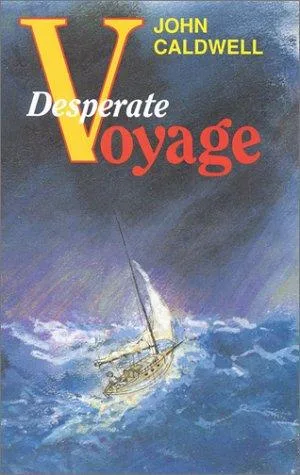
Caldwell's "Desperate Voyage" offers a stark, unembellished account of a sea journey that tests the limits of human endurance. The book shines in its unsparing depiction of the physical and mental rigors of a perilous voyage, eschewing romanticism for grim reality. A particular strength lies in the detailed descriptions of the sea's capricious nature and the practical, often desperate, measures taken by the crew to survive. However, the narrative occasionally falters in its pacing, with stretches that could benefit from more dynamic character exploration beyond the immediate demands of survival. The passages detailing the repair of the damaged vessel, for instance, vividly illustrate the crew's ingenuity and desperation, making the stakes palpable. It is a solid, if sometimes bleak, testament to the human will to persist. The work effectively conveys the raw struggle against the elements.
📝 Description
78
John Caldwell's "Desperate Voyage" documented a harrowing 1952 sea survival.
First published in 1952, John Caldwell's "Desperate Voyage" recounts a challenging sea expedition. The book details the physical and mental struggles Caldwell and his companions endured while crossing dangerous waters. It is a direct account, filled with clear descriptions of the weather, life aboard the vessel, and the immense power of the sea.
The narrative centers on the stark reality of survival against formidable natural forces. Readers will find an honest portrayal of human endurance under isolation and extreme conditions. The book examines the practicalities of staying afloat, including navigation and repairs, alongside the mental strength needed to withstand continuous peril. It also touches on the deep connection between humans and the wild, unpredictable aspects of nature.
Published in 1952, "Desperate Voyage" fits within a tradition of personal accounts that explore the transformative power of extreme experience. While not strictly esoteric in the sense of occult studies, it resonates with a broader spiritual inquiry into human limits and the confrontation with elemental forces. This genre often considers how such trials strip away the superficial, revealing a core resilience or connection to primal aspects of existence. Caldwell's unvarnished reportage aligns with a post-war search for authenticity, where tales of survival offered a stark counterpoint to more abstract philosophical or religious consolations.
💡 Why Read This Book?
• Gain an unvarnished perspective on maritime survival, learning about the practical challenges and psychological strain detailed in Caldwell's firsthand account of his 1952 voyage. • Understand the profound impact of isolation and environmental hostility on the human psyche, a core theme explored through the crew's experiences at sea. • Appreciate the mechanics of seamanship and crisis management as depicted in "Desperate Voyage," focusing on the specific improvisations undertaken to keep the vessel afloat.
⭐ Reader Reviews
Honest opinions from readers who have explored this book.
❓ Frequently Asked Questions
When was "Desperate Voyage" first published?
"Desperate Voyage" was first published in 1952, placing it in the post-war era of adventure and survival literature.
What is the primary focus of "Desperate Voyage"?
The primary focus is a firsthand account of a perilous sea journey, detailing the physical and psychological challenges of survival against harsh natural elements.
Does "Desperate Voyage" offer a romantic view of seafaring?
No, the book is known for its unvarnished and realistic portrayal of the hardships and dangers of sea travel, contrasting with more romanticized accounts.
Who is the author of "Desperate Voyage"?
The author is John Caldwell.
What genre does "Desperate Voyage" belong to?
It belongs to the genre of maritime adventure and survival literature, specifically as a personal narrative.
What historical period does the book reflect?
The book reflects the post-World War II era, with its first publication in 1952.
🔮 Key Themes & Symbolism
Human Endurance
The narrative intensely examines the capacity of the human spirit to withstand prolonged physical and mental strain. Caldwell's account, set against the unforgiving backdrop of the sea, highlights the will to survive when faced with constant danger and deprivation. It explores how individuals react under extreme duress, focusing on practical resilience and the psychological fortitude required to endure isolation and the threat of disaster during the voyage.
Man vs. Nature
A central theme is the confrontation between human endeavor and the overwhelming power of natural forces. The sea in "Desperate Voyage" is portrayed not as a passive setting but as an active, often hostile, entity. The book details the constant struggle to navigate, control, and survive its unpredictable moods, from storms to calms, emphasizing humanity's vulnerability and dependence on environmental conditions for survival.
The Psychology of Isolation
The book explores the mental effects of being cut off from civilization for extended periods. Caldwell's narrative illustrates how isolation can amplify fears, test sanity, and alter perceptions of reality. The confined space of the vessel and the vast emptiness of the ocean create a potent psychological environment where the internal range of the characters becomes as significant as the external journey.
Practical Seafaring
Beyond the psychological drama, "Desperate Voyage" offers a grounded look at the technical aspects of sailing and survival at sea. It details the challenges of navigation, the necessity of ship maintenance, and the practical skills required to overcome onboard emergencies. This focus on the mechanics of survival provides a realistic counterpoint to the more existential themes, grounding the narrative in tangible actions.
💬 Memorable Quotes
Direct passages from the work, attributed to the author.
“Each sunrise brought a new tally of challenges.”
— This captures the relentless nature of the voyage, suggesting that the end of one hardship only heralded the beginning of another, emphasizing the continuous struggle for survival.
“The repairs were less about skill and more about sheer will.”
— This reflects the narrative's emphasis on mental fortitude over technical prowess when facing critical situations, highlighting the desperate measures taken.
“We were at the mercy of wind and wave.”
— This expresses the fundamental vulnerability of the voyagers, underscoring their lack of control over the powerful natural forces dictating their fate.
💡 Key Ideas
Editorial paraphrase of the work's core concepts — not direct quotes.
The sea showed no mercy; it simply was.
This paraphrase captures the book's depiction of the ocean as an indifferent force, neither benevolent nor malevolent, but a powerful entity to be reckoned with.
Silence at sea could be more deafening than any storm.
This paraphrase speaks to the psychological weight of isolation, where the absence of sound amplifies internal anxieties and the vastness of the surroundings.
🌙 Esoteric Significance
Tradition
While "Desperate Voyage" is primarily a secular adventure and survival narrative, its emphasis on confronting elemental forces and the psychological crucible of isolation can be interpreted through certain esoteric lenses. It touches upon themes present in Stoicism and existentialism, which explore human agency and resilience in a seemingly indifferent universe. The raw confrontation with nature can be seen as a symbolic journey, mirroring internal processes of self-discovery through extreme trial, a concept echoed in various initiatory traditions.
Symbolism
The relentless sea serves as a primary symbol, representing the vast, uncontrollable forces of existence and the subconscious. The damaged vessel can symbolize the human body or psyche, strained to its limits and requiring constant repair and vigilance to maintain integrity. The journey itself functions as a metaphor for life's passage, fraught with unforeseen challenges and demanding inner strength for navigation.
Modern Relevance
Contemporary readers and thinkers interested in themes of resilience, mindfulness, and overcoming adversity often find resonance in such stark accounts of survival. The book's unflinching look at psychological endurance under pressure speaks to modern discussions on mental health, stoicism, and the human capacity to adapt. It serves as a grounding text for those exploring the relationship between humanity and the raw power of the natural world, a theme increasingly relevant in ecological and environmental discourse.
👥 Who Should Read This Book
• Readers interested in maritime history and adventure narratives who seek an authentic, non-fictional account of a challenging sea voyage. • Individuals exploring themes of human resilience, psychological endurance, and survival against extreme environmental odds. • Those drawn to personal memoirs that detail the stark realities of confronting nature and the internal struggles that accompany such experiences.
📜 Historical Context
Published in 1952, John Caldwell's "Desperate Voyage" arrived during a period of renewed interest in adventure and exploration narratives following World War II. This era saw authors like Thor Heyerdahl achieve significant acclaim with "Kon-Tiki" (published in English in 1950), showcasing a public appetite for tales of challenging sea voyages and human resilience. Caldwell's work distinguished itself by offering a less romanticized, more stark depiction of maritime hardship. Unlike the more scientific or expeditionary focus of some contemporaries, "Desperate Voyage" centered on the raw, personal struggle for survival. Its publication contributed to a genre that valued authenticity and the exploration of human limits when confronting the natural world, resonating with a society processing global conflict and seeking narratives of endurance.
📔 Journal Prompts
The relentless nature of the sea during the voyage.
Reflections on the psychological impact of isolation described in the book.
The vessel's repairs as a metaphor for personal resilience.
Moments where the crew's will to survive was tested.
The stark portrayal of man versus the elements.
🗂️ Glossary
Maritime Adventure
A genre of literature or film focusing on sea voyages, exploration, and often involving elements of danger, discovery, and survival at sea.
Survival Narrative
An account, often based on true events, detailing an individual's or group's struggle to stay alive in extreme or life-threatening circumstances.
Psychological Endurance
The capacity to withstand prolonged mental stress, hardship, or adversity without significant detriment to one's mental state or functioning.
Seafaring
The practice, skill, or occupation of sailing or navigating ships; life and work at sea.
Elemental Forces
The powerful, fundamental forces of nature, such as wind, water, fire, and earth, often depicted as challenging or indifferent to human endeavors.
Post-War Literature
Literary works produced in the period following major global conflicts, often reflecting themes of trauma, reconstruction, and societal change.
Authenticity
The quality of being genuine, real, and true to its origins; in literature, often refers to unvarnished, realistic portrayals.
🔮 Readers Also Liked
Browse all →


![Histoire de M. Oufle, par abbé Bordelon Cretouchée et réduite par M. G.] et la Description du sabbat. ... 1793: Iss 140](/img/thumb/histoire-de-m-oufle-par-abb-bordelon-cretouch-e-et-r-duite-par-m-g-et-la-description-du-sabbat-1793-iss-140-bordelon-laurent-1653-1730.webp)






More Free Witchcraft & Paganism Books
View all →