The Wisdom of Mental Illness
 72
72

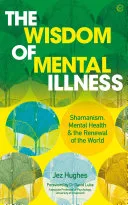
The Wisdom of Mental Illness
Jez Hughes's *The Wisdom of Mental Illness* offers a courageous reframing of psychological distress, positing it as a potential spiritual passage rather than solely a medical condition. The book's strength lies in its consistent application of shamanic principles to understand the dynamics of what society labels as 'mental illness.' Hughes compellingly argues that these crises can be seen as initiations, a perspective that grants agency and meaning to profound suffering. A limitation, however, is the book's sometimes uncritical embrace of the shamanic model, which may not fully satisfy those seeking purely clinical or psychological explanations. The exploration of 'sacred imbalance' as a catalyst for transformation is particularly resonant, suggesting a path toward integration rather than mere symptom suppression. Ultimately, Hughes provides a valuable, albeit specialized, perspective for those questioning the dominant narratives around mental wellbeing.
📝 Description
72
Jez Hughes re-examines mental distress not as pathology, but as a potential portal.
This volume proposes that what is often labeled as psychological breakdown can be understood through an ancient shamanic lens as a challenging initiation. It shifts the perspective from disease to a spiritual or psychological interpretation of difficult experiences.
The book is for individuals experiencing mental health crises, their families, and wellbeing practitioners seeking alternative frameworks. It provides a way to conceptualize and approach significant psychological upheaval, offering a structure for finding meaning. Hughes engages with traditions that view altered states and psychological distress through spiritual or mystical lenses, a perspective often set aside by modern psychiatry. This work draws parallels to earlier eras where such experiences were interpreted as divine calls or spiritual trials, contrasting with the purely biomedical model.
The book draws on shamanic traditions that interpret altered states of consciousness and psychological distress as spiritual trials or initiations. It contrasts with modern psychiatric views, aligning instead with historical perspectives where intense experiences might be seen as calls to deeper awareness or connection. This approach situates mental distress within a framework of personal transformation, rather than solely as a medical condition, connecting it to broader spiritual paths.
💡 Why Read This Book?
• You will learn to reinterpret psychological breakdown not as an endpoint but as a potential shamanic initiation, drawing parallels to ancient spiritual crisis narratives. • You will gain a practical understanding of how concepts like 'sacred imbalance,' as explored in Hughes's work, can offer a framework for personal transformation during periods of intense distress. • You will discover how the shamanic journey, as detailed in the book, provides a metaphorical and practical model for integrating challenging mental states, offering an alternative to purely biomedical approaches.
⭐ Reader Reviews
Honest opinions from readers who have explored this book.
❓ Frequently Asked Questions
What is the central argument of Jez Hughes's 'The Wisdom of Mental Illness'?
The book argues that periods of mental illness can be understood as profound spiritual or psychological initiations, drawing on shamanic traditions to reframe distress as a transformative experience rather than solely a pathology.
Who is the intended audience for 'The Wisdom of Mental Illness'?
It is written for individuals experiencing mental illness, their loved ones, mental wellbeing practitioners, and anyone interested in esoteric perspectives on psychological distress and transformation.
What is the 'shamanic path' mentioned in the book?
The shamanic path refers to ancient practices and worldviews that involve journeying into altered states of consciousness to access spiritual insights and healing, which Hughes applies to understanding mental illness.
When was 'The Wisdom of Mental Illness' first published?
The book was first published on November 9, 2021, by Jez Hughes.
Does the book offer practical advice for dealing with mental illness?
Yes, it offers a new conceptual framework and perspective for approaching mental illness, suggesting how to find meaning and potential growth within these challenging experiences, informed by shamanic principles.
What does Hughes mean by 'sacred imbalance'?
'Sacred imbalance' is Hughes's concept suggesting that periods of psychological crisis can be seen as divinely or spiritually orchestrated opportunities for profound personal growth and a deeper connection to oneself and the world.
🔮 Key Themes & Symbolism
Psychological Breakdown as Initiation
The core thesis posits that experiences commonly labeled as mental illness are not mere malfunctions but can be understood as initiatory passages. Drawing from shamanic traditions, Hughes suggests these periods are not to be simply suppressed but potentially integrated as catalysts for profound personal and spiritual development. This reframing challenges conventional psychiatric models by viewing suffering as a potential pathway to expanded consciousness and a more authentic self.
Shamanism and Mental Wellbeing
The book utilizes shamanic cosmology and practices as a framework for interpreting mental distress. It explores how ancient cultures viewed psychological crises as journeys into the spirit world, often leading to healing and wisdom. Hughes applies these archetypal narratives to modern experiences, suggesting that the 'shamanic journey' can be a metaphor for navigating internal landscapes during intense psychological upheaval.
Sacred Imbalance and Transformation
Hughes introduces the concept of 'sacred imbalance' to describe the state of profound disruption that characterizes mental illness. This imbalance, rather than being purely pathological, is presented as a sacred or divinely permitted state that opens individuals to new realities and deeper self-understanding. It suggests that within the chaos lies the potential for a new, more integrated form of being.
Reclaiming Agency in Distress
By recasting mental illness as an initiation, the book aims to empower individuals experiencing such crises. It moves away from a passive victimhood model towards one where the individual is an active participant in a profound, albeit arduous, life transition. This perspective encourages finding meaning and purpose within the experience, fostering a sense of agency and resilience.
💬 Memorable Quotes
Direct passages from the work, attributed to the author.
“What we label as pathological could actually be an initiation into a better relationship with ourselves and the world.”
— This statement captures the book's central thesis: that conditions deemed illnesses might, in fact, be misunderstood spiritual or psychological journeys offering profound growth and connection.
“The shamanic path offers a way to understand the nature of mental illness.”
— This highlights the book's methodological approach, emphasizing how ancient shamanic perspectives provide a unique and valuable lens through which to interpret and potentially heal psychological distress.
“Psychological breakdown can be a transformational experience.”
— This interpretation underscores the potential for positive outcomes even from severely challenging mental states, suggesting that crisis can be a powerful catalyst for personal evolution.
“Recasting psychological breakdown as a potentially transformational experience.”
— This phrasing directly addresses the book's aim to shift perception, moving away from purely negative connotations of mental illness towards an understanding of its inherent potential for growth.
“An initiation into a better relationship with ourselves and the world.”
— This suggests that the difficult process of mental crisis can ultimately lead to a more authentic connection with one's inner self and a more meaningful engagement with the external environment.
🌙 Esoteric Significance
Tradition
The work aligns with the broad spectrum of esoteric thought that posits a spiritual or energetic dimension to human experience, particularly concerning consciousness and wellbeing. It draws heavily on animistic and shamanic traditions, which are foundational to many esoteric systems. Hughes's approach appeals to the Hermetic principle of 'As Above, So Below,' suggesting that inner psychological states reflect a larger cosmic order or spiritual journey.
Symbolism
A key symbol is the 'shamanic journey' itself, representing the descent into the subconscious or spirit world. This journey symbolizes the process of confronting and integrating shadow aspects of the self, a common theme in esoteric psychology. Another motif is the idea of 'initiation,' framing psychological crisis as a rite of passage, akin to ancient mystery school trials, designed to forge a more spiritually aware individual.
Modern Relevance
Contemporary thinkers and practitioners in transpersonal psychology, depth psychology (influenced by Jungian archetypes), and various neo-shamanic movements find resonance in Hughes's work. His reframing of mental illness offers an alternative to purely clinical diagnoses, appealing to those seeking meaning-centered approaches to healing and personal growth in an era often characterized by existential questioning.
👥 Who Should Read This Book
• Individuals experiencing significant mental distress or those supporting loved ones through such periods, who are seeking alternative frameworks beyond conventional medical explanations. • Mental wellbeing practitioners, therapists, and counselors interested in integrating esoteric or shamanic perspectives into their therapeutic toolkit. • Students and practitioners of esoteric sciences, comparative religion, and anthropology, particularly those exploring the spiritual dimensions of altered states and psychological crises.
📜 Historical Context
Published in 2021, Jez Hughes's work emerged during a period of increasing interest in alternative and holistic approaches to mental health, often as a counterpoint to the dominant biomedical model. This model, heavily influenced by pharmaceutical interventions and diagnostic manuals like the DSM, had largely relegated spiritual interpretations of distress to the fringes by the late 20th century. Hughes's book taps into a much older tradition, echoing views found in various shamanic cultures and historical periods where altered states and intense psychological experiences were seen not as sickness but as spiritual callings or passages, as explored by figures like Mircea Eliade in his studies of religious history. The contemporary landscape also saw thinkers like Stanislav Grof, a pioneer in transpersonal psychology, exploring similar terrain through psychedelic research and holotropic breathwork, suggesting a renewed openness to non-ordinary states of consciousness as pathways to healing and understanding.
📔 Journal Prompts
The concept of 'sacred imbalance' as an initiatory state.
Interpreting personal psychological challenges through a shamanic lens.
The potential for 'transformation' within periods of intense mental distress.
Reflecting on the 'shamanic journey' as a metaphor for inner exploration.
Connecting the breakdown experience to a 'better relationship with ourselves and the world.'
🗂️ Glossary
Shamanism
A range of indigenous spiritual and healing practices characterized by the shaman's ability to journey into altered states of consciousness to interact with the spirit world for healing and guidance.
Initiation
A ritual or process of entering into a new stage of life, knowledge, or spiritual understanding, often involving trials or transformative experiences.
Sacred Imbalance
Hughes's term for periods of intense psychological or spiritual crisis, viewed not as mere pathology but as divinely orchestrated or meaningful disruptions that facilitate growth.
Psychological Breakdown
A state of severe mental distress where an individual's ability to cope with ordinary life is significantly impaired, often involving intense emotional or cognitive disruption.
Pathological
Relating to or caused by disease; characterized by abnormal or disordered behavior or thinking.
Esoteric
Intended for or likely to be understood by only a small number of people with a specialized knowledge or interest; relating to the occult or mystical.
Transformation
A thorough or dramatic change in form or appearance; a marked change in nature, character, or function.