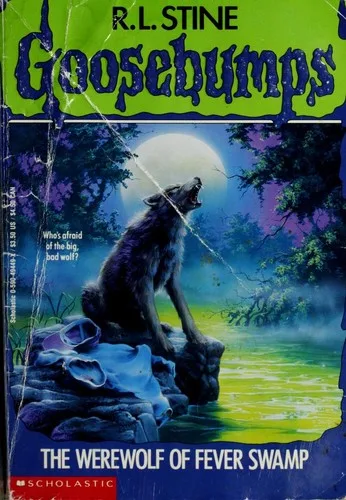
The Werewolf of Fever Swamp
 79
79

The Werewolf of Fever Swamp
Robert Lawrence Stine's The Werewolf of Fever Swamp, first published in 1993, offers a familiar yet effective exploration of werewolf lore. The narrative’s strength lies in its atmospheric build-up, meticulously crafting a sense of dread that permeates the fictional town. Stine excels at portraying the psychological impact of fear on a community, making the ordinary seem menacing. A particular passage where the protagonist observes unsettling behavior in a seemingly normal town resident effectively captures this unease. However, the book's predictability in its plot resolution might leave seasoned horror readers wanting more surprise. Despite this, the work serves as a solid entry in supernatural suspense. It is a competent chiller that delivers on its premise.
📝 Description
79
Robert Lawrence Stine's 1993 novel, The Werewolf of Fever Swamp, centers on a small town terrorized by a mysterious transformation.
Published in 1993, The Werewolf of Fever Swamp plunges readers into a small town gripped by a terrifying mystery. The narrative explores the primal fear of transformation and the hidden beast within. It examines how superstition and folklore can manifest in tangible, horrifying ways, blurring the lines between human and animal, sanity and madness. This book is suited for those who appreciate suspenseful tales with a touch of the uncanny. Readers drawn to narratives of folklore, the supernatural, and the psychological impact of fear will find themselves engrossed. It appeals to individuals interested in how classic horror tropes can be adapted to create a sense of unease and dread, focusing on atmosphere and escalating tension rather than explicit gore. The core concepts revolve around transformation, hidden identities, and the fear of the 'other' within one's own community. The book uses the werewolf mythos to explore the idea that monstrousness can reside in the familiar. It also touches upon the power of suggestion and how fear itself can become a contagious force, driving irrational behavior and suspicion among the inhabitants of Fever Swamp.
While not directly engaging with esoteric traditions, The Werewolf of Fever Swamp taps into ancient archetypes of monstrous transformation found in many mystical systems. The werewolf mythos itself has roots in folklore and beliefs about shape-shifting that echo themes of internal duality and the animalistic nature present in various spiritual paths. The book's exploration of fear as a contagious force within a community also resonates with concepts of collective consciousness and the power of belief in shaping reality, often discussed in occult studies.
💡 Why Read This Book?
• Experience the escalating dread of a small town gripped by a primal fear, as depicted in the unsettling events surrounding Fever Swamp, offering a tangible sense of encroaching danger. • Explore the classic werewolf archetype through Stine's focused narrative, understanding how the myth of the beast within can be used to generate suspense. • Understand the psychological impact of fear and suspicion on a community, mirroring dynamics seen in historical witch trials or moral panics, a recurring theme in folklore.
⭐ Reader Reviews
Honest opinions from readers who have explored this book.
❓ Frequently Asked Questions
What is the original publication year of The Werewolf of Fever Swamp?
The Werewolf of Fever Swamp was first published in 1993, placing it within the popular wave of supernatural fiction that characterized the early 1990s.
Does the book involve actual occult rituals or is it more folklore-based?
The book draws heavily on the folklore surrounding werewolves and the supernatural, rather than detailing specific occult rituals. Its focus is on the fear and mystery of transformation.
Who is the author of The Werewolf of Fever Swamp?
The author is Robert Lawrence Stine, a prolific writer known for his suspenseful and often chilling stories aimed at young adult and middle-grade audiences.
What kind of atmosphere does the book create?
The book cultivates an atmosphere of suspense and dread, focusing on the psychological unease of a community living under the shadow of a mysterious, potentially monstrous threat.
Is The Werewolf of Fever Swamp considered a classic of the horror genre?
While not typically classified among the absolute classics of adult horror literature, it is a well-regarded and popular example of supernatural suspense for younger readers from the 1990s.
🔮 Key Themes & Symbolism
The Beast Within
The narrative persistently explores the duality of human nature, symbolized by the werewolf. It examines the terror that arises when the civilized self succumbs to primal instincts or when the 'monster' is perceived to be hidden within familiar faces. This theme taps into ancient anxieties about uncontrolled urges and the potential for savagery lurking beneath societal norms.
Community Under Siege
Fever Swamp itself becomes a character, a microcosm of a society grappling with an unseen threat. The book illustrates how fear can fracture community bonds, leading to suspicion, paranoia, and irrational accusations. This reflects historical patterns of scapegoating and the breakdown of trust when faced with the unknown or the perceived 'other'.
Folklore and Manifestation
The werewolf legend serves as the central motif, but the book explores how such folklore can begin to manifest in a community's collective consciousness. It questions whether the threat is purely supernatural or if psychological factors and shared belief can create a self-fulfilling prophecy, blurring the lines between myth and reality.
The Nature of Fear
Beyond the specific threat of a werewolf, the work studies the pervasive nature of fear itself. It demonstrates how fear can be contagious, how it distorts perception, and how it can drive individuals to extreme actions. The escalating tension highlights fear as a powerful force shaping behavior and reality.
💬 Memorable Quotes
Direct passages from the work, attributed to the author.
“The shadows in Fever Swamp seemed to hide more than just darkness.”
— This highlights the pervasive sense of unease and unseen threat that permeates the town, suggesting that the danger is not always overt but lies in the atmosphere and hidden places.
“Was the monster something from the woods, or something closer?”
— This poses the central question of the narrative: is the threat an external, supernatural entity, or is it harbored within the community itself, perhaps even within the protagonist?
“Every strange noise made the townsfolk jump.”
— Illustrates the heightened state of paranoia and anxiety gripping Fever Swamp, showing how fear amplifies ordinary occurrences into perceived threats.
“The full moon hung heavy, promising a transformation.”
— Directly references the classic werewolf trope, linking the lunar cycle to the impending change and the unleashing of primal forces.
“He felt a change coming over him, a wildness he couldn't control.”
— Captures the internal struggle of a character potentially undergoing a transformation, emphasizing the loss of control and the emergence of animalistic urges.
🌙 Esoteric Significance
Tradition
While not explicitly an esoteric text, The Werewolf of Fever Swamp engages with archetypes common in many mystical traditions, particularly those concerning transformation and the shadow self. It echoes Gnostic themes of hidden corruption and the potential for the 'lower' nature to dominate the 'higher.' The werewolf myth itself is a potent symbol found across cultures, representing the wild, untamed aspects of existence that esoteric paths often seek to understand or integrate.
Symbolism
The werewolf is the primary symbol, representing the primal, instinctual self and the terrifying potential for uncontrolled change. The full moon acts as a catalyst, a celestial marker that amplifies these hidden forces, a concept that speaks to astrological and lunar symbolism found in various esoteric practices. Fever Swamp itself can be seen as a symbolic range of the psyche, where hidden fears and primal drives manifest.
Modern Relevance
Contemporary explorations of the shadow self in psychology and popular culture, as well as modern werewolf fiction and media, continue to draw on the archetypal power of the werewolf. Thinkers in Jungian psychology, who analyze archetypes and the shadow, find resonance in these narratives. The book's portrayal of community fear also remains relevant in discussions of social psychology and mass hysteria.
👥 Who Should Read This Book
• Young adult readers and fans of R.L. Stine looking for a suspenseful supernatural story with a classic monster theme. • Enthusiasts of folklore and mythology interested in how werewolf legends are adapted into modern narratives. • Those seeking a relatively accessible entry point into themes of transformation and hidden threats within a community setting.
📜 Historical Context
The Werewolf of Fever Swamp, published in 1993, arrived during a period when the young adult horror genre was experiencing significant commercial success, largely propelled by authors like R.L. Stine himself and Christopher Pike. This era saw a cultural appetite for supernatural tales and suspenseful narratives that explored darker themes in accessible ways. While Stine's work is primarily rooted in popular horror and folklore rather than direct engagement with esoteric traditions, it taps into ancient archetypes of transformation and the monstrous present in Gnostic and Hermetic thought. The book's reception was largely positive within its target demographic, contributing to the broader trend of supernatural fiction that dominated bestseller lists in the early 1990s, standing in contrast to more academic or niche occult publications of the time.
📔 Journal Prompts
The perceived transformation of characters in Fever Swamp.
Community suspicion and the fear of the unknown.
Reflect on the symbolic meaning of the full moon in the narrative.
The boundary between folklore and perceived reality.
Internal struggles with control, as mirrored by the potential werewolf.
🗂️ Glossary
Werewolf
A mythological or folkloric human with the ability to shapen-shift into a wolf or, in a form that is a hybrid of human and wolf, either purposely or after being placed under a curse or affliction (often via a bite or scratch from another werewolf).
Folklore
The traditional beliefs, customs, and stories of a community, passed through the generations by word of mouth, often encompassing myths, legends, and superstitions.
Transformation
A marked change in form, nature, or appearance, often implying a profound or supernatural alteration.
Archetype
A symbolic character, theme, or story that recurs in the myths and literature of many cultures, representing fundamental human experiences.
Primal Instincts
Basic, fundamental drives and behaviors considered inherent to an organism, often associated with survival, aggression, or reproduction, existing prior to or beneath rational thought.
Suspense
A state or feeling of excited or anxious uncertainty about what may happen, typically in a story or other narrative.
Myth
A traditional story, especially one concerning the early history of a people or explaining some natural or social phenomenon, and typically involving supernatural beings or events.
🔮 Readers Also Liked
Browse all →









More by Robert Lawrence Stine
All books →





More Free Occult Philosophy Books
View all →