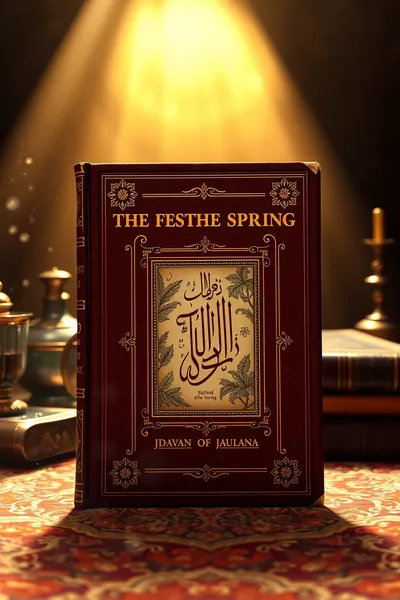
The Wiley-Blackwell Companion to Christian Mysticism

 72
72

The Wiley-Blackwell Companion to Christian Mysticism
Julia A. Lamm's edited volume, *The Wiley-Blackwell Companion to Christian Mysticism*, arrives as a significant contribution, assembling a formidable array of international scholars. Its primary strength lies in the breadth of its coverage, moving from early Christian ascetics to figures like Julian of Norwich and Meister Eckhart, and extending to modern theological discussions. The newly commissioned essays generally maintain a high academic standard. However, the sheer volume of contributors, while a strength in terms of diverse perspectives, occasionally leads to a lack of cohesive voice, making some sections feel more like a collection of disparate articles than a unified companion. One particularly insightful passage discusses the influence of Pseudo-Dionysius the Areopagite on subsequent Western mystical thought, detailing his concept of the 'divine darkness' as a pathway to unknowing. While comprehensive, the book could have benefited from a more explicit engagement with the criticisms or controversies surrounding certain mystical figures, beyond mere historical contextualization. Nevertheless, it serves as an indispensable reference for anyone serious about the academic study of Christian mystical traditions.
📝 Description
72
Julia A. Lamm's 2013 companion surveys Christian mystical traditions with essays by international scholars.
This volume brings together essays from numerous scholars to provide a broad overview of Christian mysticism. It examines key figures, foundational texts, and spiritual movements from early Christianity to the present day. The collection is informed by current academic research, with newly commissioned pieces that engage with recent scholarship on the historical development and theological basis of mystical practices. Contributors analyze diverse interpretations and ongoing debates within the field. The book systematically discusses exemplary mystics, important writings, and the communities they influenced, highlighting the variety of Christian contemplative paths. It also considers how these traditions are understood and practiced today, connecting historical inquiry with contemporary spiritual and academic discussions.
Christian mysticism is one stream within a broader esoteric tradition that seeks direct, unmediated experience of the divine. While distinct in its theological framework, it shares with other esoteric paths an emphasis on inner transformation, symbolic interpretation of scripture, and the cultivation of specific spiritual practices. This companion situates these Christian expressions within their historical and theological context, revealing connections to universal contemplative aims while acknowledging their unique doctrinal commitments. It acknowledges the lineage of knowledge passed through specific teachers and texts, a hallmark of esoteric transmission.
💡 Why Read This Book?
• Gain a structured understanding of Christian mysticism's evolution, from its Patristic origins to contemporary expressions, as detailed in sections covering figures like Gregory of Nyssa and movements like the Rhineland mystics. • Explore specific mystical concepts such as apophatic theology and divine union, benefiting from scholarly analyses that clarify their historical development and theological implications. • Engage with the latest academic discourse on Christian mysticism through newly commissioned essays, offering insights into ongoing scholarly debates and interpretations not readily available elsewhere.
⭐ Reader Reviews
Honest opinions from readers who have explored this book.
❓ Frequently Asked Questions
What historical periods does The Wiley-Blackwell Companion to Christian Mysticism cover?
The companion spans from the early Christian era, including Patristic figures, through the medieval period with mystics like Hildegard of Bingen, and extends to contemporary expressions and debates in the 21st century.
Who are some of the key Christian mystics discussed in the book?
The book features discussions on prominent figures such as Evagrius Ponticus, Julian of Norwich, Meister Eckhart, Teresa of Ávila, and John of the Cross, among many others.
What is the academic approach of this companion?
It adopts a scholarly, critical approach, bringing together international experts to analyze Christian mystical texts, figures, and movements based on current academic research.
Does the book focus only on Western Christian mysticism?
While the primary focus is on Western traditions, the comprehensive nature of the collection allows for discussions that may touch upon broader influences or comparative elements within Christianity.
Is this book suitable for beginners in mysticism studies?
Yes, the companion is designed to be accessible, offering a comprehensive account that serves both as an introductory resource and an advanced scholarly reference.
When was The Wiley-Blackwell Companion to Christian Mysticism first published?
The book was first published on February 6, 2017.
🔮 Key Themes & Symbolism
Apophatic Theology
The work extensively explores apophatic theology, the 'via negativa' or negative way of knowing God. It examines how mystics like Pseudo-Dionysius the Areopagite and Meister Eckhart employed language to point towards divine transcendence by negating finite concepts. This theme highlights the paradoxical nature of mystical language, where silence and negation become pathways to experiencing the divine beyond rational comprehension, a core concept in understanding the limits of human understanding when approaching the absolute.
Mystical Experience and Praxis
Central to the companion is the detailed examination of the nature of mystical experience and the practices that cultivate it. This includes contemplative prayer, asceticism, and meditative techniques employed by figures across centuries. The book analyzes how these practices were intended to foster union with the divine, focusing on the subjective, transformative encounters reported by mystics. It differentiates between various forms of union, from deification in Eastern traditions to affective union in Western ones.
Influence of Key Texts
The companion underscores the wide impact of specific texts on the development of Christian mysticism. Works such as the writings of the Desert Fathers, the treatises of Pseudo-Dionysius, and the mystical poetry of figures like John of the Cross are analyzed for their conceptual contributions and enduring influence. Understanding these foundational texts is presented as crucial for grasping the intellectual and spiritual lineage of mystical thought within Christianity.
Evolution of Mystical Movements
The volume traces the emergence and evolution of distinct mystical movements throughout Christian history. From the early monastic communities and the Rhineland mystics to the Carmelite and Franciscan spiritual currents, the book maps the shifts in emphasis, theological frameworks, and social contexts. It illustrates how these movements adapted and responded to their respective historical and ecclesial environments, shaping the broader field of Christian spirituality.
💬 Memorable Quotes
Direct passages from the work, attributed to the author.
“The divine darkness is not a lack of light, but a light so transcendent that it blinds the intellect.”
— This interpretation of Pseudo-Dionysius highlights the apophatic principle that ultimate divine reality cannot be grasped through positive affirmation or intellectual categories, but rather through a surrender of the intellect into a 'divine darkness' that signifies an overwhelming, supra-rational presence.
“The desert fathers and mothers laid the foundational stones for contemplative life through their emphasis on *hesychia* and spiritual warfare.”
— This interpretation identifies the early monastic figures of the Egyptian desert as pioneers of Christian contemplative practice, highlighting their focus on inner stillness (*hesychia*) and the internal struggle against demonic temptations as integral to spiritual progress.
“Teresa of Ávila's concept of the 'Interior Castle' maps stages of the soul's journey toward union with God.”
— This highlights Teresa of Ávila's influential metaphor for the spiritual life, where the soul is envisioned as a castle with multiple rooms or mansions, representing progressive levels of intimacy and union with the divine.
“Meister Eckhart's concept of the 'birth of God in the soul' speaks to a radical immanence of the divine within the human spirit.”
— This interpretation points to Eckhart's complex theology, suggesting that the divine essence can be experienced as intimately present and 'born' within the deepest ground of the human soul, transcending ordinary notions of separation.
💡 Key Ideas
Editorial paraphrase of the work's core concepts — not direct quotes.
Christian mysticism is characterized by a dynamic interplay between the human soul's yearning for God and the divine initiative of grace.
This paraphrased concept emphasizes the relational aspect of Christian mysticism, framing it not as a purely human endeavor but as a response to and participation in divine action, involving both the individual's active seeking and God's active drawing.
🌙 Esoteric Significance
Tradition
While ostensibly about Christian mysticism, this work engages with themes and figures that are foundational to many Western esoteric traditions. Its detailed examination of Neoplatonic influences, particularly through Pseudo-Dionysius, connects it to Hermeticism and Gnosticism. The exploration of contemplative practices and the direct experience of the divine can be seen as a Christian analogue to the contemplative aims found in Kabbalah or Sufism, offering a bridge between exoteric religious expression and esoteric spiritual attainment.
Symbolism
Key symbols explored include the 'divine darkness' (apophatic theology), representing the ineffable nature of God beyond conceptual understanding, and the 'Interior Castle' (Teresa of Ávila), symbolizing the soul's journey inward towards divine union through distinct stages of spiritual development. The concept of the 'birth of God in the soul' (Meister Eckhart) also functions symbolically, denoting the profound indwelling and experiential realization of the divine presence within the human spirit.
Modern Relevance
Contemporary thinkers and practitioners in fields ranging from depth psychology (Jungian analysis) to mindfulness and contemplative prayer movements often draw implicitly or explicitly on the figures and concepts discussed. The book’s scholarly treatment provides a crucial grounding for understanding the historical roots of these practices, making it relevant for psychotherapists, spiritual directors, and individuals seeking to integrate contemplative elements into modern life, irrespective of their specific religious affiliation.
👥 Who Should Read This Book
• Academic researchers and students of religious studies or theology seeking a comprehensive, up-to-date survey of Christian mystical traditions, supported by scholarly essays. • Individuals interested in comparative spirituality who wish to understand the specific contemplative path within Christianity and its historical development. • Practitioners of contemplative prayer or meditation seeking to deepen their understanding of the historical and theological underpinnings of their practice, with reference to key figures like Meister Eckhart and Teresa of Ávila.
📜 Historical Context
Published in 2017, *The Wiley-Blackwell Companion to Christian Mysticism* emerged during a period of renewed academic and popular interest in contemplative traditions and esoteric spirituality. The late 20th and early 21st centuries saw a significant scholarly re-evaluation of mysticism, moving beyond earlier, often dismissive, critiques. This volume builds upon the foundational work of scholars like Bernard McGinn, whose studies on the history of Western mysticism were highly influential. The book addresses a landscape where comparative mysticism was gaining traction, with scholars increasingly looking at connections between Christian traditions and other contemplative paths. While not focused on censorship directly, the historical sections implicitly address how mystical expression sometimes operated at the edges of orthodox theological discourse, particularly during the medieval inquisitions or later periods of religious upheaval. The work represents the culmination of decades of specialized research, aiming to synthesize this scholarship into a comprehensive overview for a new generation of students and scholars.
📔 Journal Prompts
The concept of the 'divine darkness' as presented by Pseudo-Dionysius: how does this idea challenge conventional notions of knowing?
Reflect on the 'Interior Castle' metaphor by Teresa of Ávila: identify a personal 'mansion' in your spiritual journey.
Analyze the role of *hesychia* (inner stillness) in the practices of the Desert Fathers and Mothers.
Consider Meister Eckhart's notion of the 'birth of God in the soul' and its implications for immanence.
Examine how the writings of John of the Cross describe the 'dark night of the soul' as a process of purification.
🗂️ Glossary
Apophatic Theology
A theological approach that describes God by negation, emphasizing what God is not rather than what God is, due to God's transcendence beyond human concepts and language. Also known as the 'via negativa'.
Contemplative Prayer
A form of prayer characterized by stillness, silence, and direct experience of God's presence, often involving a passive reception of divine grace rather than active petition or meditation on specific thoughts.
Deification (Theosis)
A central concept in Eastern Orthodox theology, referring to the process by which believers, through union with Christ, are transformed into the likeness of God, sharing in the divine nature.
Hesychia
A Greek term meaning 'stillness' or 'quietude,' central to Eastern Orthodox mysticism, referring to a state of inner repose and watchfulness cultivated through prayer and ascetic practice.
Mystical Union
The experience of profound, direct communion or oneness with the divine, as described by mystics across various religious traditions.
Via Negativa
See Apophatic Theology. A path of spiritual understanding that emphasizes what God is not, moving away from positive affirmations towards a recognition of divine ineffability.
Spiritual Warfare
The concept, particularly prominent in early Christian monasticism, of the internal struggle against sinful thoughts, temptations, and demonic influences as a crucial aspect of the spiritual life.
This book appears in 1 collection
🔮 Readers Also Liked
Browse all →








From the “Christian Mysticism” Collection
View all →




More Free Mysticism & Contemplation Books
View all →