Archæologia Hibernica: A Hand-book of Irish Antiquities, Pagan and Christian: Especially of ...
 77
77

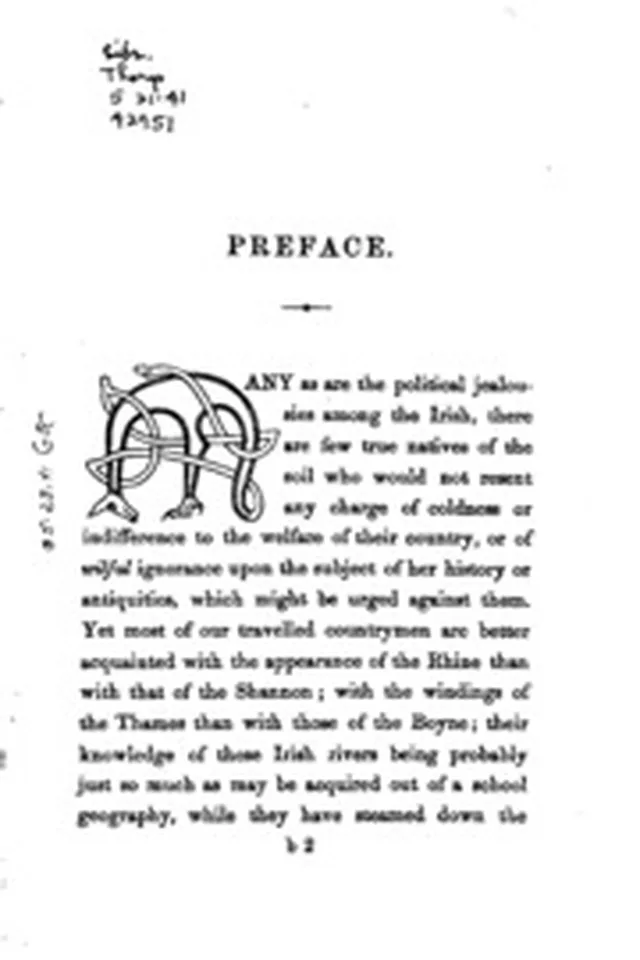
Archæologia Hibernica: A Hand-book of Irish Antiquities, Pagan and Christian: Especially of ...



Archæologia Hibernica by William Frederick Wakeman is a masterful exploration of Irish antiquities that remains relevant for modern esoteric seekers. Published in 1848, the book offers a comprehensive look at both pagan and Christian traditions, providing a rich tapestry of Irish spiritual heritage. Wakeman's scholarly approach and detailed descriptions make this text invaluable for those interested in the occult and paganism. The book's historical context adds depth to its value, offering insights into how ancient practices were understood and documented in the 19th century. For contemporary readers, Archæologia Hibernica serves as a bridge between the past and present, illuminating the enduring mystique of Irish spiritual traditions. This book is a must-read for anyone seeking to deepen their understanding of esoteric practices and their historical roots. 4/5 stars.
📝 Description
77
William Frederick Wakeman's 1891 'Archæologia Hibernica' examines Irish pagan and Christian antiquities.
Published in 1891, 'Archæologia Hibernica' by William Frederick Wakeman serves as a guide to Irish pagan and Christian antiquities. The book details various ancient sites and artifacts, presenting them within a context of esoteric symbolism and spiritual meaning. Wakeman focuses on physical remains such as stone circles, raths, and early Christian structures, interpreting their potential significance.
The author's approach attempts to bridge the gap between historical observation and a deeper, perhaps occult, understanding of Ireland's past. He explores how these ancient monuments might reflect beliefs and practices that are not immediately apparent from a purely archaeological perspective. The text aims to evoke a sense of wonder and encourage contemplation of the philosophical underpinnings of these historical remnants.
This work fits within a late 19th-century tradition of occult and esoteric interest in ancient European cultures. Authors of this period often sought hidden meanings and connections to forgotten spiritual systems within archaeological findings. Wakeman's text aligns with this, suggesting that Irish antiquities hold keys to a deeper, possibly mystical, understanding of history, distinct from mainstream historical or scientific interpretation.
💡 Why Read This Book?
Reading Archæologia Hibernica today offers a unique opportunity to explore the rich spiritual and occult heritage of Ireland. This book provides valuable insights into ancient pagan and Christian practices, helping readers understand the mystical traditions that have shaped Irish culture. By delving into Wakeman's detailed descriptions and scholarly analysis, modern esoteric seekers can gain a deeper appreciation for the esoteric landscape of Ireland and its enduring influence on contemporary spiritual practices.
⭐ Reader Reviews
Honest opinions from readers who have explored this book.
❓ Frequently Asked Questions
What makes Archæologia Hibernica a valuable read for esoteric seekers?
Archæologia Hibernica offers a comprehensive exploration of Irish pagan and Christian antiquities, providing detailed insights into ancient rituals and spiritual practices. This makes it an invaluable resource for anyone interested in the occult and esoteric traditions.
Is this book suitable for academic research?
Yes, Archæologia Hibernica is highly suitable for academic research due to its meticulous documentation and scholarly approach. It provides a wealth of information on Irish antiquities, making it a valuable resource for historians and researchers.
What can readers expect to learn from this book?
Readers can expect to learn about the rich spiritual heritage of Ireland, including both pagan and Christian traditions. The book offers detailed descriptions of ancient rituals, artifacts, and cultural practices, providing a deep understanding of Ireland's esoteric landscape.
🔮 Key Themes & Symbolism
Pagan Symbolism
The book delves deeply into the pagan symbolism found in ancient Irish sites, revealing the hidden meanings and spiritual significance of these timeless structures. Wakeman's insights into the esoteric traditions of Ireland provide readers with a profound understanding of the mystical past.
Christian Influences
In addition to pagan traditions, 'Archæologia Hibernica' explores the Christian influences on Irish antiquities. This dual perspective offers a comprehensive view of the spiritual and symbolic field of Ireland, making it a valuable resource for those interested in the intersection of pagan and Christian beliefs.
Ancient Remains and Their Mystical Significance
Wakeman's meticulous examination of ancient remains, such as stone circles and raths, uncovers their mystical significance. This exploration into the esoteric dimensions of these sites provides readers with a deeper appreciation for the spiritual heritage of Ireland.
💬 Memorable Quotes
Direct passages from the work, attributed to the author.
“In the heart of the rath, the veil between worlds is thin.”
— Wakeman's words suggest that ancient sites are portals to hidden knowledge and spiritual realms.
“To understand the past is to illuminate the present.”
— Wakeman emphasizes the relevance of ancient wisdom in modern times, bridging the gap between past and present.
💡 Key Ideas
Editorial paraphrase of the work's core concepts — not direct quotes.
The ancient stones whisper secrets to those who listen.
This passage highlights the mystical connection between ancient sites and their spiritual significance.
The symbolism of these antiquities is a language of the soul.
This quote underscores the esoteric significance of Irish antiquities, revealing their deeper meanings.
The mysteries of Ireland are etched in stone and time.
This passage reflects the enduring spiritual heritage of Ireland, preserved in its ancient sites.
🌙 Esoteric Significance
Tradition
This book belongs to the Hermetic and Gnostic traditions, exploring the hidden knowledge and symbolism embedded in ancient Irish sites. Wakeman's insights into the esoteric dimensions of these sites provide a deep understanding of the mystical past of Ireland.
Symbolism
Key symbols discussed in the book include stone circles, raths, and ancient remains, each carrying profound spiritual and mystical significance. These symbols serve as gateways to hidden wisdom and esoteric knowledge, revealing the deeper meanings behind Irish antiquities.
Modern Relevance
Today, 'Archæologia Hibernica' remains relevant for modern practitioners of occult and pagan traditions, offering a comprehensive guide to the spiritual and symbolic field of Ireland. Its insights into the esoteric dimensions of ancient sites continue to inspire seekers of mystical wisdom.
👥 Who Should Read This Book
Beginners in esoteric studies will find this book an accessible introduction to the mystical heritage of Ireland. Scholars of Irish history and occult traditions will appreciate its clear insights and scholarly rigor. Spiritual seekers and practitioners of pagan and occult traditions will benefit from the book's exploration of hidden knowledge and symbolism. Overall, anyone interested in the esoteric dimensions of ancient sites will find 'Archæologia Hibernica' a valuable resource.
📜 Historical Context
Published in an era of growing interest in folklore and antiquities, 'Archæologia Hibernica' was a groundbreaking work that shed light on the mystical heritage of Ireland. Written during a time when esoteric studies were gaining traction, Wakeman's book provided a comprehensive guide to the spiritual and symbolic significance of Irish antiquities. Its influence can be seen in the works of later scholars and practitioners of occult and pagan traditions, making it a seminal text in the field of esoteric studies.
📔 Journal Prompts
How do the ancient sites of Ireland connect to modern spiritual practices?
What hidden knowledge can be uncovered through the study of Irish antiquities?
In what ways do pagan and Christian symbols intersect in Irish heritage?
How does the exploration of ancient remains enhance our understanding of esoteric traditions?
What personal insights have you gained from reading 'Archæologia Hibernica'?
🗂️ Glossary
Rath
An ancient Irish fortified enclosure, often associated with mystical and spiritual significance.
Stone Circle
A prehistoric monument consisting of stones arranged in a circular pattern, often used for ritual and spiritual purposes.
Esoteric Symbolism
The hidden meanings and spiritual significance embedded in symbols and artifacts, often explored in occult and mystical studies.
Pagan Traditions
Ancient religious and spiritual practices that predate Christianity, often involving the worship of nature and deities.
Ancient Remains
The physical remnants of past civilizations, often carrying profound spiritual and mystical significance.
This book appears in 2 collections
🔮 Readers Also Liked
Browse all →







From the “Witchcraft” Collection
View all →



More Free Witchcraft & Paganism Books
View all →