How to read palms
 79
79

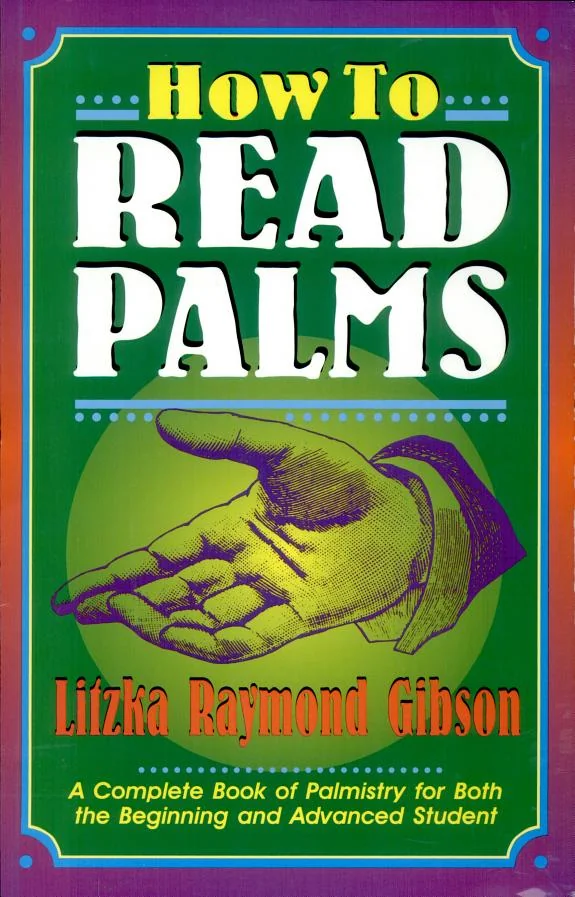
How to read palms
Litzka R. Gibson’s "How to Read Palms" sidesteps the more mystical claims often associated with chiromancy, opting instead for a methodical breakdown of hand analysis. The strength of this 1989 publication lies in its clear, step-by-step approach, making complex interpretations feel accessible. Gibson’s insistence on viewing the hand as a reflection of character rather than a rigid prophecy is commendable. However, the book occasionally feels dated in its specific interpretations, perhaps reflecting the prevailing psychological paradigms of its time. A particularly illustrative section details the nuances of the Heart Line, differentiating between various curves and breaks to signify emotional expression and relationship patterns. While it doesn’t revolutionize the field, Gibson’s work provides a solid, unpretentious foundation for understanding the basics of palm reading.
📝 Description
79
Published in 1989, Litzka R. Gibson's "How to Read Palms" became a direct manual for chiromancy.
Litzka R. Gibson's "How to Read Palms" provides a practical introduction to the art of palmistry. The book breaks down the practice into the interpretation of hand lines, mounts, and finger shapes. Gibson frames palmistry not simply as a method of predicting the future, but as a valuable tool for gaining self-awareness and psychological understanding.
The work is suitable for anyone interested in palm reading, regardless of their prior experience. It guides readers through systematic methods for analyzing the hand. Those interested in personal development or comparing different divination systems will find this book useful.
This 1989 publication arrived during a period of renewed interest in esoteric subjects, fueled by New Age ideas and academic attention to folklore. While thinkers like Carl Jung examined symbolic archetypes, Gibson's book focused on providing accessible, direct instruction in chiromancy. It stands as a manual for those seeking concrete methods in a field often approached through more theoretical or historical lenses.
💡 Why Read This Book?
• Learn the foundational techniques of chiromancy, focusing on the systematic interpretation of the Life Line, Head Line, and Heart Line as detailed in the early chapters, providing a clear entry point into understanding hand analysis. • Gain insight into the psychological significance of hand shape and mounts, such as the Mount of Venus and its relation to passion and vitality, offering a more nuanced view beyond simple prediction. • Understand the practical application of palmistry as a tool for self-discovery, as demonstrated by Gibson's method of correlating hand features to personality traits, enabling personal reflection.
⭐ Reader Reviews
Honest opinions from readers who have explored this book.
❓ Frequently Asked Questions
When was 'How to Read Palms' first published?
'How to Read Palms' by Litzka R. Gibson was first published in 1989, placing it within the late 20th-century resurgence of interest in esoteric subjects.
Does the book focus on fortune-telling or character analysis?
Gibson's work emphasizes character analysis and psychological insight derived from palmistry, rather than strict fortune-telling. It aims to understand personality and potential pathways.
What are the main elements of the hand discussed in the book?
The book covers the primary lines (Life, Head, Heart), secondary lines, the mounts (like Venus and Jupiter), hand shape, and finger characteristics.
Is 'How to Read Palms' suitable for complete beginners?
Yes, the book is designed to be accessible for beginners, offering a systematic and practical guide to the fundamentals of palm reading.
What is the historical background of palmistry mentioned in the book?
While the book focuses on practical application, it acknowledges palmistry's ancient roots, dating back to antiquity, and its evolution through various cultures.
Does the book discuss different hand types?
Yes, Gibson's 'How to Read Palms' categorizes hand shapes into elements like Earth, Air, Fire, and Water hands, explaining the associated personality traits.
🔮 Key Themes & Symbolism
Chiromancy as Self-Knowledge
Gibson frames palmistry not as a deterministic prophecy, but as a sophisticated system for understanding one's own character, strengths, and potential challenges. The hand's markings are presented as a unique blueprint, offering insights into psychological makeup and emotional tendencies. This perspective aligns with modern psychological approaches that seek self-awareness through various analytical tools. The focus is on personal growth and understanding one's inner landscape through the physical map of the hand.
The Language of Lines and Mounts
The work meticulously details the significance of the major and minor lines, such as the Life Line, Head Line, and Heart Line, along with the fleshy mounds at the base of the fingers. Each feature is assigned specific meanings related to temperament, health, intellect, and relationships. For instance, the Mount of Venus is associated with love and sensuality, while the Head Line's length and slope indicate cognitive styles. Understanding the interplay between these elements is crucial for a comprehensive reading.
Hand Shapes and Elemental Correspondences
Gibson categorizes hands based on four elemental types: Earth, Air, Fire, and Water. Each type is linked to distinct personality traits and life approaches. Earth hands are associated with practicality and groundedness, Air hands with intellect and communication, Fire hands with passion and energy, and Water hands with emotion and intuition. This elemental framework provides a foundational understanding of an individual's inherent disposition, as reflected in the overall structure of their hand.
Systematic Interpretation Methodology
A key aspect of Gibson's approach is its emphasis on a structured methodology. Rather than offering random interpretations, the book guides the reader through a process of observation and analysis. It stresses the importance of considering multiple features in conjunction, recognizing that a single line or mount is only one part of a larger, interconnected system. This systematic nature makes the practice of chiromancy more accessible and less prone to arbitrary guesswork.
💬 Memorable Quotes
Direct passages from the work, attributed to the author.
“The hand is a living map of the personality.”
— This concise statement captures the book's core philosophy, positioning the palm not as a static prediction of fate, but as a dynamic indicator of an individual's character, potential, and life journey.
“Each line and mount tells a story about our inner world.”
— This highlights the symbolic nature of palmistry as presented by Gibson, suggesting that physical features of the hand correspond to psychological states and personal experiences.
“Understanding the shape of the hand provides the foundation for interpreting its lines.”
— This emphasizes Gibson's systematic approach, indicating that the overall structure of the hand (its elemental type and shape) must be considered before examining the specifics of individual lines and markings.
“Palmistry offers a unique lens for self-awareness and personal development.”
— This interpretation underscores the book's practical application, positioning chiromancy as a tool for introspection and growth, rather than solely a divinatory art.
“The mounts speak of our innate drives and emotional capacities.”
— This focuses on a specific element of palmistry discussed in the book, the mounts, linking them directly to fundamental aspects of human psychology and motivation.
🌙 Esoteric Significance
Tradition
Gibson's work aligns with the Western esoteric tradition of chiromancy, which has roots in ancient Greece and Rome, and was further developed through medieval and Renaissance European occultism. While not explicitly tied to a specific lineage like Kabbalah or Hermeticism, it draws from a long-standing practice of divination and character assessment that often intersected with these traditions. It represents a more practical, less overtly mystical branch of esoteric knowledge, focused on observable physical correspondences.
Symbolism
Key symbols in Gibson's work include the primary lines (Life, Head, Heart) and the mounts (Venus, Jupiter, Saturn, Apollo, Mercury, Mars, Luna). The Life Line, for instance, symbolizes vitality and major life changes, while the Head Line denotes intellectual capacity and thinking style. The Mount of Venus signifies love, passion, and sensuality, and the Mount of Jupiter is associated with ambition, leadership, and ego. These symbols are interpreted as direct reflections of an individual's psychological and energetic makeup.
Modern Relevance
Contemporary interest in self-improvement, mindfulness, and personalized psychological assessment provides fertile ground for Gibson's approach. Modern practitioners and enthusiasts of palmistry often reference foundational texts like Gibson's for its clear methodology. The book's emphasis on character analysis rather than fatalistic prediction speaks to current trends in coaching and personal development, making its core principles relevant for those exploring holistic approaches to understanding human potential.
👥 Who Should Read This Book
• Aspiring chiromancers seeking a structured introduction to palm reading, as Gibson's book provides a systematic approach to interpreting hand lines, mounts, and shapes. • Individuals interested in psychological self-discovery who are looking for alternative frameworks to understand personality traits and motivations, as the book links hand features to character. • Students of comparative divination practices interested in the historical and practical aspects of palmistry, offering insights into a tradition with ancient roots.
📜 Historical Context
When Litzka R. Gibson’s "How to Read Palms" was released in 1989, the esoteric landscape was vibrant, heavily influenced by the New Age movement. This period saw a public embrace of diverse spiritual practices, from astrology and Tarot to crystals and channeling. Palmistry, with its ancient lineage, found a place within this broader interest in self-discovery and alternative wisdom. Gibson's work emerged in contrast to more academic or historical texts on chiromancy, such as those by Victorian authors or later psychoanalytic interpretations. While figures like psychologist Carl Jung explored symbolic language in dreams and myths, Gibson provided a direct, instructional manual for a popular audience. The book's accessible format distinguished it from more esoteric or ritualistic traditions, making it a practical guide for individuals seeking tangible methods for understanding themselves and others.
📔 Journal Prompts
The shape of your dominant hand's palm and its elemental correspondence.
The distinct characteristics of your Heart Line and its potential meaning.
The prominence and interpretation of the Mount of Venus on your hand.
The length and slope of your Head Line and how it reflects your thinking.
Identifying secondary lines on your palm and their possible significance.
🗂️ Glossary
Chiromancy
The practice of fortune-telling or discerning character by the examination of the palm of the hand. It involves interpreting lines, mounts, shape, and fingers.
Mounts
The fleshy, raised areas on the palm at the base of the fingers and thumb, each associated with a planet and corresponding traits (e.g., Mount of Venus for love, Mount of Jupiter for ambition).
Life Line
The arc of skin extending from below the thumb towards the wrist. It is traditionally interpreted as relating to vitality, physical health, and significant life events.
Head Line
The line running horizontally across the palm, usually below the Heart Line. It is associated with intellect, mental abilities, learning style, and communication.
Heart Line
The uppermost horizontal line on the palm, running across the hand below the fingers. It is associated with emotional capacity, romantic relationships, and heart health.
Elemental Hand Types
A classification system categorizing hands into Earth, Air, Fire, and Water types, each linked to specific personality characteristics and life approaches.
Secondary Lines
Lines on the palm other than the major three (Life, Head, Heart), such as the Fate Line, Sun Line, or Girdle of Venus, which offer additional details about specific aspects of life.
🔮 Readers Also Liked
Browse all →








More by Litzka R. Gibson
All books →

More Free Occult Philosophy Books
View all →