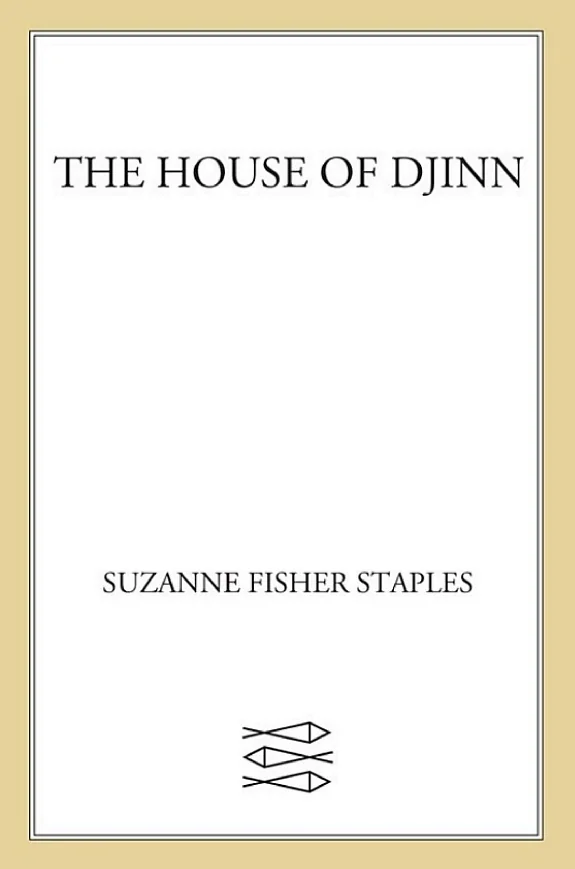
The House of Djinn
 83
83

The House of Djinn
Suzanne Fisher Staples’s return to the world of Shabanu and Haveli with The House of Djinn offers a nuanced, if at times slow-paced, examination of inherited burdens. The novel’s strength lies in its unflinching portrayal of Mumtaz’s internal conflict, caught between the secure but restrictive life her mother envisioned and the burgeoning desires of her own generation. Staples excels at depicting the oppressive weight of patriarchal expectations, particularly through the subtle yet pervasive influence of the family elders and the spectral presence of the djinn, which serves as a potent symbol of inherited trauma and cultural anxieties. A point of friction arises in the pacing; certain plot developments feel protracted, particularly in the middle sections, which might test the patience of readers seeking a more dynamic narrative arc. However, the raw emotional honesty, especially in Mumtaz’s interactions with her formidable grandmother, makes the journey worthwhile. The House of Djinn is a somber reflection on the price of safety and the enduring quest for selfhood.
📝 Description
83
Suzanne Fisher Staples published The House of Djinn in 2008, continuing the story of characters from her earlier novels.
The House of Djinn, published in 2008, revisits characters from Suzanne Fisher Staples' Shabanu and Haveli. The novel focuses on Mumtaz, Shabanu's daughter, a decade after her mother's supposed death. It portrays the conflict between established Islamic traditions and the influence of the modern world, specifically regarding women's autonomy and personal desires within Pakistan's patriarchal society.
The narrative is set in contemporary Pakistan, where evolving social norms are evident. The early 21st century brought increased global interaction, highlighting the contrast between Western ideas and traditional Islamic values in places like Pakistan. This era featured ongoing debates about women's rights, education, and independence in Muslim-majority countries, making the book's examination of these tensions timely. The story considers the sacrifices made for family stability and the fight for selfhood within rigid cultural boundaries.
While primarily a work of fiction, The House of Djinn touches on supernatural beliefs through the presence of djinn. This element can be interpreted metaphorically, representing the unseen forces or deeply ingrained cultural elements that influence characters' lives. The novel acknowledges that these beliefs can coexist with daily life and modern perspectives, suggesting a worldview where the spiritual or unexplained is not entirely separate from the material. This mirrors traditions where folklore and spiritual entities are integrated into the fabric of society and personal experience.
💡 Why Read This Book?
• Gain insight into the specific challenges faced by young women navigating traditional Islamic values in Pakistan, as exemplified by Mumtaz's upbringing after 2008. • Understand the symbolic weight of the 'djinn' as representing cultural anxieties and inherited psychological burdens within the narrative’s setting. • Experience a character-driven exploration of female agency and the complex choices women make to balance personal desires with familial and societal obligations.
⭐ Reader Reviews
Honest opinions from readers who have explored this book.
❓ Frequently Asked Questions
Is The House of Djinn a direct sequel to Shabanu: Daughter of the Wind?
While The House of Djinn features characters from Shabanu and Haveli, it functions as a standalone narrative focusing on Mumtaz, Shabanu's daughter, approximately ten years after the events of the earlier books.
What is the significance of the 'djinn' in the book?
The djinn in The House of Djinn can be interpreted metaphorically, representing the oppressive forces of tradition, inherited psychological burdens, and the cultural anxieties that impact the characters' lives within the Pakistani setting.
Does the book focus on Shabanu?
The primary focus shifts to Shabanu's daughter, Mumtaz. Shabanu's influence is felt through her past actions and the legacy she left, but the narrative centers on Mumtaz's own journey and struggles.
What themes does The House of Djinn explore?
The novel explores themes of tradition versus modernity, female agency, the sacrifices made for family security, the conflict between personal desires and societal expectations, and the psychological impact of cultural pressures.
When was The House of Djinn first published?
The House of Djinn was first published on April 1, 2008.
Is the book set in a real location?
Yes, the book is set in modern-day Pakistan, drawing upon the cultural and social milieu of the region as depicted by Suzanne Fisher Staples.
🔮 Key Themes & Symbolism
Tradition vs. Modernity
The novel meticulously details the persistent tension between deeply entrenched Islamic traditions and the encroaching influence of modern ideals in Pakistan. This conflict is most visible in the lives of the female characters, particularly Mumtaz, who is educated in a manner that prepares her for a more modern world yet remains bound by patriarchal customs and expectations. Staples illustrates how these opposing forces create internal strife and limit individual freedoms, forcing characters to make difficult choices that honor their heritage or pursue personal aspirations.
Female Agency and Sacrifice
A central theme is the struggle for female agency within a society that often restricts women's autonomy. Mumtaz's story highlights the sacrifices made by both mothers and daughters for the sake of perceived security and family honor. Shabanu's earlier decision to stage her death, for instance, was a radical act to protect her child. Mumtaz grapples with her own desires versus the path laid out for her, questioning the extent to which one can truly escape or redefine inherited roles, especially when faced with powerful familial and societal pressures.
Inherited Burdens and Psychological Echoes
The concept of inherited burdens, symbolized by the presence of djinn, permeates the narrative. These are not necessarily literal supernatural entities but can be understood as the psychological weight of past traumas, unresolved conflicts, and the enduring impact of cultural anxieties passed down through generations. The characters are often haunted by the actions and fates of their predecessors, struggling to break free from patterns of behavior or societal expectations that have long dictated their lives.
The Role of Education
Education is presented as a double-edged sword. While it offers Mumtaz the potential for empowerment and a broader perspective, it also exposes her to ideas and possibilities that clash with her traditional upbringing. This intellectual awakening creates internal conflict, making her more aware of the limitations imposed upon her and the potential for a different kind of life. The novel explores how education can both liberate and isolate individuals within their cultural context.
💬 Memorable Quotes
Direct passages from the work, attributed to the author.
“Mumtaz has been raised by her father's family with the education and security her mother desired for her, but with little understanding an”
— This excerpt from the original blurb immediately sets up the central conflict: Mumtaz has received the tools for a modern life (education, security) but lacks the cultural context or emotional preparedness to navigate its complexities within her traditional environment.
“The work explores the juxtaposition of traditional Islamic values with modern ideals of love.”
— This concept highlights the core thematic tension. It suggests that the characters must reconcile deeply ingrained societal norms and religious perspectives with contemporary notions of romantic love and personal choice, often finding them at odds.
“It has been ten years since Shabanu staged her death to secure the safety of her daughter, Mumtaz.”
— This factual detail anchors the narrative in a specific past event (Shabanu's staged death) that directly shapes Mumtaz's present circumstances and her relationship with her mother's legacy and protective intentions.
“The novel revisits the lives of characters introduced in her earlier novels, Shabanu: Daughter of the Wind and Haveli.”
— This statement clarifies the book's relationship to Staples' previous works, indicating that it continues the narrative arc and character development for those familiar with Shabanu and her family's history.
“Suzanne Fisher Staples returns to modern-day Pakistan.”
— This confirms the contemporary setting and the author's established connection to the region, suggesting an authentic portrayal of the social and cultural landscape within which the story unfolds.
🌙 Esoteric Significance
Tradition
While The House of Djinn is primarily a work of social realism, its title and thematic undercurrents touch upon indigenous spiritual beliefs and folklore that often coexist with orthodox Islam in South Asia. These elements can be seen as drawing from a broad, syncretic tradition of folk spirituality rather than a codified esoteric lineage like Hermeticism or Kabbalah. The work acknowledges a worldview where unseen forces, or 'djinn,' are part of the fabric of existence, influencing human affairs, a concept found across many cultures and spiritual practices.
Symbolism
The 'djinn' itself serves as a potent symbol. Beyond their folkloric representation, they can embody the oppressive weight of tradition, ancestral trauma, and the psychological 'hauntings' that characters experience. The house, as a setting, becomes a microcosm of this internal and external confinement, symbolizing the domestic sphere where these cultural battles are often fought. Furthermore, the contrast between traditional Pakistani attire and the implied desires for modern freedoms represents the symbolic tension between outward conformity and inner yearning.
Modern Relevance
Contemporary discussions around intersectionality, intergenerational trauma, and the psychological impacts of cultural conflict find echoes in The House of Djinn. Thinkers and practitioners exploring the nuances of identity formation within diasporic communities or those examining the psychological effects of societal pressures on women, particularly in non-Western contexts, can find valuable case studies in Staples' characters. The novel’s exploration of how deeply ingrained cultural narratives shape individual destinies remains relevant for those studying cultural psychology and comparative sociology.
👥 Who Should Read This Book
• Readers interested in contemporary Pakistani literature and social dynamics: You will gain a nuanced understanding of the challenges women face balancing personal aspirations with strict cultural and familial expectations. • Students of comparative religion and cultural studies: You will find a compelling narrative that explores the intersection of Islamic traditions, folk beliefs, and modern secular influences on individual lives. • Fans of character-driven fiction grappling with ethical dilemmas: You will appreciate the deep psychological exploration of Mumtaz's internal conflicts and the sacrifices made within her community.
📜 Historical Context
Published in 2008, The House of Djinn emerged during a period of heightened global awareness regarding the complexities of Muslim societies and the evolving roles of women within them. The early 21st century saw significant international discourse on issues of cultural identity, religious conservatism, and modernization, particularly in South Asia. Staples' work engaged with these currents, offering a fictional lens on the lived realities of Pakistani women grappling with inherited traditions and aspirations for greater autonomy. This was a time when authors like Mohsin Hamid (The Reluctant Fundamentalist, 2007) were also exploring Pakistani identity and its intersection with global politics and Western influence. While not directly a part of any specific intellectual movement, Staples' novel contributed to a broader literary trend of examining post-colonial societies and the personal consequences of socio-political shifts, resonating with readers interested in nuanced portrayals of cultural negotiation.
📔 Journal Prompts
Mumtaz's inheritance of her mother's desires and her grandmother's strictures.
The symbolic weight of the 'house' as a site of both protection and confinement.
Reading through the clash between inherited beliefs and personal aspirations.
The representation of unseen influences, whether djinn or cultural pressures.
The role of education in shaping Mumtaz's perception of her world.
🗂️ Glossary
Djinn
In Islamic folklore and theology, djinn (or jinn) are supernatural creatures made of smokeless fire. They are often depicted as having free will, capable of being good or evil, and can influence human lives, sometimes acting as metaphors for unseen forces or psychological influences.
Patriarchal Structure
A social system in which males hold primary power and predominate in roles of political leadership, moral authority, social privilege, and control of property. In the context of the book, this describes the male-dominated societal framework within which the female characters must operate.
Islamic Values
Refers to the moral and ethical principles derived from the Quran and the teachings of Prophet Muhammad. These values often emphasize community, family honor, piety, and adherence to religious law, which can sometimes conflict with individualistic or modern ideals.
Folk Spirituality
A broad category of religious beliefs and practices that are often localized, passed down orally, and coexist with or blend into more established religious traditions. In Pakistan, this can include beliefs in spirits, amulets, and traditional healing practices.
Agency
The capacity of individuals to act independently and to make their own free choices. In the novel, the extent of female agency is a central theme, often constrained by social, cultural, and familial expectations.
Juxtaposition
The act or instance of placing two or more things side by side often to compare or contrast them or to create an interesting effect. The book uses this technique to highlight the conflict between traditional and modern ways of life.
Standalone Novel
A novel that can be read and understood independently of other works, even if it shares characters or settings with previous books. The House of Djinn is considered this, despite its connection to Shabanu: Daughter of the Wind.
This book appears in 1 collection
🔮 Readers Also Liked
Browse all →









From the “Djinn” Collection
View all →








More Free Occult Philosophy Books
View all →