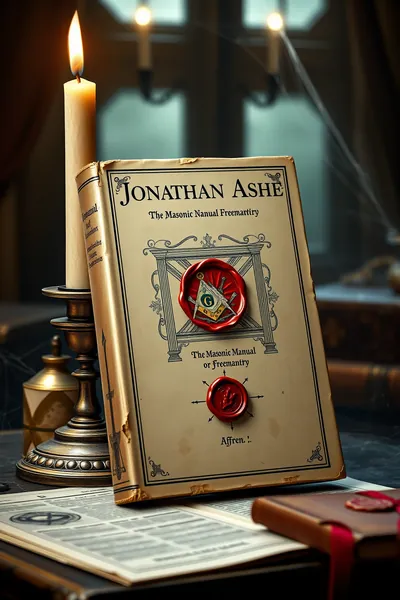
The temple and the lodge

 78
78

The temple and the lodge
Baigent’s exploration of the Templar-Masonic nexus in "The Temple and the Lodge" is ambitious, attempting to bridge the medieval military order with the Enlightenment-era speculative fraternity. The book’s strength lies in its detailed examination of supposed symbolic continuities, particularly the architectural and ritualistic parallels Baigent identifies. However, the work occasionally strains credulity, presenting speculative connections as near-certainties without always rigorously addressing counter-arguments from mainstream historical scholarship. A particularly striking section discusses the alleged influence of Templar architecture on early Masonic meeting places. While the research is extensive, a more cautious approach to inferring direct lineage would have bolstered its academic standing. "The Temple and the Lodge" offers a compelling, if sometimes overzealous, perspective on esoteric historical continuity.
📝 Description
78
Michael Baigent's 1989 book investigates the link between the Knights Templar and Freemasonry.
First published in 1989, "The Temple and the Lodge" by Michael Baigent examines the historical and esoteric connections drawn between the Knights Templar and Freemasonry. The author looks into the alleged transfer of knowledge, rituals, and symbols from the medieval military order to early Masonic lodges. Baigent suggests a continuity of esoteric traditions, proposing that the mysteries held by the Templars were later inherited and adapted by Freemasons.
This work is for readers already interested in secret societies, medieval military orders, and the origins of Freemasonry. Those curious about supposed esoteric lineages connecting historical groups and the possibility of hidden knowledge surviving through centuries will find it engaging. The book assumes a basic familiarity with historical accounts of the Knights Templar and the early development of Freemasonry. Baigent's book entered a public discourse on the Templars that was active in the late 1980s, contributing to ongoing discussions about Masonic origins.
Baigent's book is situated within a tradition of Western esotericism that seeks to uncover hidden historical lineages and secret knowledge systems. It engages with the idea of a continuous stream of mystical or Gnostic wisdom, tracing its supposed preservation by groups like the Knights Templar and its subsequent incorporation into Masonic practices. The work scrutinizes symbolic and ritualistic evidence to support claims of an unbroken chain of esoteric transmission, contrasting with more conventional historical interpretations of Freemasonry's development.
💡 Why Read This Book?
• Learn about the specific architectural motifs and alleged ritualistic parallels Baigent uses to link the Knights Templar to Freemasonry, offering concrete examples beyond general speculation. • Understand the historical debate surrounding Masonic origins in the late 20th century, particularly how Baigent's theories contrasted with established scholarship around 1989. • Gain insight into the concept of esoteric transmission, examining how Baigent argues for the survival of ancient mysteries through the Templar and subsequent Masonic traditions.
⭐ Reader Reviews
Honest opinions from readers who have explored this book.
❓ Frequently Asked Questions
When was Michael Baigent's 'The Temple and the Lodge' first published?
Michael Baigent's "The Temple and the Lodge" was first published in 1989, placing it within a wave of late 20th-century popular interest in historical mysteries and secret societies.
What is the main argument of 'The Temple and the Lodge'?
The book argues for a direct esoteric and historical link between the Knights Templar and Freemasonry, suggesting that Templar knowledge and rituals were passed down to Masonic lodges.
Does the book present factual evidence or speculation?
The work blends historical inquiry with speculative interpretation. Baigent uses perceived symbolic and ritualistic connections as evidence, though mainstream historians often debate the directness of these links.
Who were the Knights Templar?
The Knights Templar were a Catholic military order founded in the early 12th century, active during the Crusades. They were known for their wealth, military prowess, and eventual suppression in the early 14th century.
What is Freemasonry?
Freemasonry is a fraternal organization that emerged in the late 16th to early 17th centuries, evolving from operative stonemasons' guilds into speculative philosophical societies with complex rituals and symbolism.
Does Baigent discuss specific Masonic rituals?
Yes, Baigent examines various Masonic rituals and degrees, seeking to identify elements that he believes have roots in Templar traditions or earlier esoteric systems.
🔮 Key Themes & Symbolism
Templar-Masonic Continuity
The core of Baigent's thesis is the proposed unbroken lineage of esoteric knowledge from the Knights Templar to the development of Freemasonry. The work meticulously examines alleged symbolic and ritualistic parallels, suggesting that the suppression of the Templars in 1312 did not eradicate their mystical traditions but rather led to their covert preservation and transmission into the nascent Masonic brotherhoods. This continuity is presented as the key to understanding the deeper, hidden origins of Freemasonry.
Esoteric Symbolism
Baigent examines specific symbols and motifs believed to have been passed from the Templars to Freemasons. This includes architectural elements, geometric patterns, and ritualistic gestures. The interpretation of these symbols often draws from Gnostic, Hermetic, and Kabbalistic traditions, suggesting they are not mere decorative elements but carriers of profound, ancient wisdom that has been safeguarded through these successive orders.
Hidden History
The book operates on the premise that conventional historical accounts obscure a deeper, hidden narrative concerning the transmission of esoteric wisdom. Baigent suggests that the official suppression of the Knights Templar in the early 14th century was a cover for the preservation of their secret knowledge by surviving members, who then seeded this tradition into other, more discreet organizations, most notably Freemasonry.
The Nature of Initiation
Central to the argument is the concept of initiation as a means of preserving and transmitting esoteric understanding. Baigent implies that Masonic initiations, particularly those with alleged Templar connections, are not simply ceremonial acts but conduits for ancient spiritual and philosophical teachings. The work explores how these initiatory structures function to maintain a secret spiritual lineage across centuries.
💬 Memorable Quotes
Direct passages from the work, attributed to the author.
“The Templars' secrets, far from being destroyed, were preserved and transmitted.”
— This statement captures the book's central premise: that the supposed esoteric knowledge of the Knights Templar did not perish with their public dissolution but found a new vessel in Freemasonry.
“The symbolism found in Masonic lodges reflects the sacred geometry and architectural principles of Templar sites.”
— This highlights Baigent's method of seeking evidence for Templar-Masonic links through comparative analysis of visual and structural elements, implying a shared esoteric blueprint.
“Freemasonry can be seen as the inheritor of a continuous tradition of mystery.”
— This interpretation positions Freemasonry not merely as a fraternal society but as a guardian of ancient wisdom traditions, a role Baigent attributes in part to Templar influence.
“The suppression of the Templars was a catalyst for the hidden transmission of their esoteric legacy.”
— This suggests that the historical persecution of the Templars paradoxically ensured the survival and propagation of their secret teachings, forcing them underground into societies like Freemasonry.
“Ritual provides the framework for understanding the esoteric transmission of knowledge.”
— This emphasizes the importance Baigent places on Masonic rituals as living embodiments of ancient traditions, acting as keys to unlocking the historical and spiritual connections he proposes.
🌙 Esoteric Significance
Tradition
The work engages most directly with Western Esotericism, specifically drawing connections to Hermeticism, Gnosticism, and the mystical traditions associated with medieval chivalric orders. It posits a lineage of secret knowledge that bypasses conventional religious and academic structures, suggesting a continuous stream of initiatory wisdom. Baigent's approach aligns with speculative historical approaches common in esoteric literature, seeking hidden continuities rather than strictly documented historical progression.
Symbolism
Key symbols explored include the Double Triangle (Star of David) and its association with Solomon's Temple, a motif central to both Templar and Masonic lore. The Cross, particularly the eight-pointed cross of the Knights Hospitaller (often conflated with Templar imagery in popular accounts), and various architectural elements like the Temple of Solomon are examined as carriers of esoteric meaning, representing divine geometry and sacred space.
Modern Relevance
Baigent's exploration of Templar-Masonic links continues to inform contemporary discussions within esoteric circles, particularly among those interested in chivalric orders, Masonic degrees, and the idea of an ancient spiritual lineage. While academic acceptance remains limited, the book's influence can be seen in modern speculative history forums and in the continued popular fascination with the Templars as custodians of hidden knowledge.
👥 Who Should Read This Book
• Students of Western Esotericism: Those interested in tracing potential lines of transmission for mystical knowledge from medieval knightly orders to modern fraternal societies. • Masonic Researchers: Individuals seeking to understand speculative theories about the historical and symbolic roots of Freemasonry, particularly those involving the Knights Templar. • Enthusiasts of Secret Societies: Readers fascinated by the historical interplay and alleged hidden connections between influential, often secretive, historical organizations.
📜 Historical Context
Published in 1989, "The Temple and the Lodge" emerged during a period of significant popular interest in the Knights Templar and the origins of Freemasonry, partly spurred by authors like Charles Leadbeater and later, Holywood and Picknett. Baigent's work entered a rich field of speculation, often challenging more traditional Masonic historiography that dated the fraternity's origins to the 17th century. The prevailing academic view tended to emphasize the evolution of operative guilds into speculative Masonry. Baigent’s thesis, suggesting a direct Templar inheritance, placed him in direct contention with these more conservative interpretations, aligning him with a more romantic and mystery-oriented approach to historical origins. While not widely adopted by mainstream historians, the book resonated with a readership eager to explore alternative narratives of secret societies and ancient wisdom.
📔 Journal Prompts
Reflect on the concept of esoteric transmission as presented in the comparison between Templar symbolism and Masonic rituals.
Consider the historical context of 1312, when the Knights Templar were suppressed, and its potential impact on the preservation of their knowledge.
Analyze the significance of Solomon's Temple as a symbolic anchor in both Templar and Masonic traditions.
Explore the role of initiation in maintaining esoteric lineages, as discussed in the book.
How does Baigent's interpretation of Masonic symbolism challenge conventional historical narratives?
🗂️ Glossary
Knights Templar
A Catholic military order founded around 1119, active during the Crusades. Known for their wealth, military prowess, and eventual suppression by King Philip IV of France and Pope Clement V in 1312.
Freemasonry
A fraternal organization that evolved from operative stonemasons' guilds in the late 16th/early 17th century into speculative philosophical societies with complex rituals and symbolism.
Esoteric Transmission
The process by which secret or hidden knowledge, often of a spiritual or mystical nature, is passed down from one generation or group to another, typically through initiatory or symbolic means.
Operative Masons
Craftsmen, specifically stonemasons, who built medieval cathedrals and castles. Their guilds are considered precursors to speculative Freemasonry.
Speculative Masonry
Freemasonry as it developed from the 17th century onwards, focusing on philosophical and symbolic teachings rather than the practical craft of stonemasonry.
Gnosticism
A diverse set of religious ideas and systems prominent in the first few centuries CE, emphasizing spiritual knowledge (gnosis) for salvation and often viewing the material world as flawed or evil.
Hermeticism
A religious, philosophical, and esoteric tradition based on writings attributed to Hermes Trismegistus, emphasizing divine wisdom, alchemy, astrology, and the interconnectedness of the cosmos.
🔮 Readers Also Liked
Browse all →

More by Michael Baigent
All books →



More Free Freemasonry & Secret Societies Books
View all →