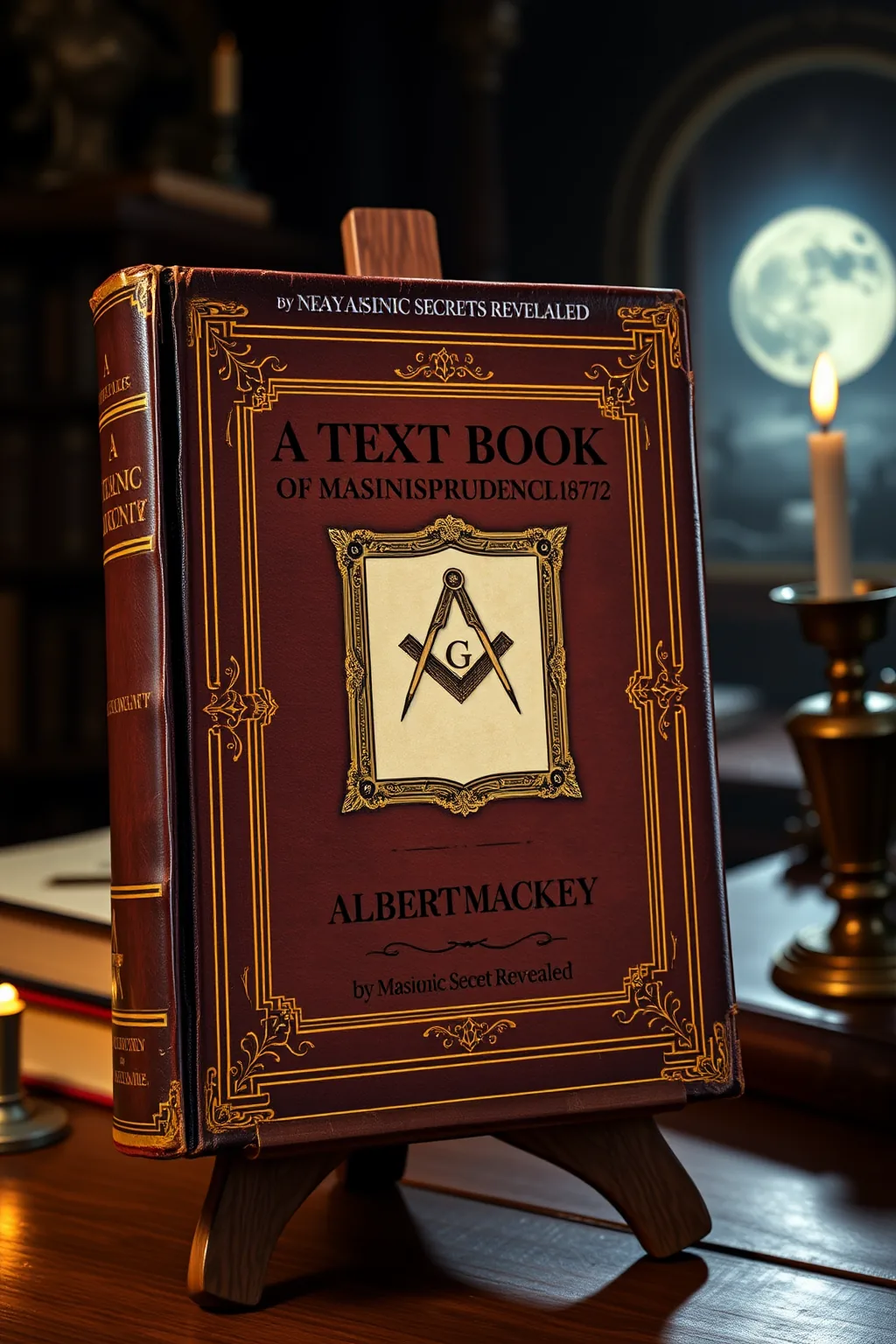
A Text Book Of Masonic Jurisprudence 1872 by Albert Mackey
 79
79

A Text Book Of Masonic Jurisprudence 1872 by Albert Mackey


Albert Mackey's 'A Text Book Of Masonic Jurisprudence 1872' stands as a timeless classic in the study of Freemasonry and occult practices. Written with meticulous attention to detail, Mackey's work provides an unparalleled exploration of the legal and philosophical underpinnings of Masonic rituals and customs. For modern esoteric seekers, this book is an invaluable resource, offering a window into the secretive world of Freemasonry. Mackey's insights into the symbolic meanings and ethical guidelines of the society are particularly enlightening, making this text a must-read for anyone interested in the deeper, more mysterious aspects of Freemasonry. The book's historical context adds another layer of richness, providing readers with a comprehensive understanding of how Masonic practices have evolved over time. Overall, 'A Text Book Of Masonic Jurisprudence 1872' is a five-star read for anyone delving into the esoteric and occult realms.
📝 Description
79
Albert Mackey's 1872 'A Text Book of Masonic Jurisprudence' examines the legal and philosophical structure of Freemasonry.
Published in 1872, Albert Mackey's 'A Text Book of Masonic Jurisprudence' provides a detailed account of the principles and laws governing Freemasonry. Mackey, a prominent Masonic scholar, structured the text around the legal framework of the fraternity, explaining its internal governance and the rights and responsibilities of its members. The book goes beyond simple rules, connecting Masonic practice to broader philosophical and symbolic traditions. It aims to clarify the often complex system of Masonic jurisprudence for those seeking a deeper understanding of its operational and theoretical aspects.
Mackey's work is notable for its methodical approach to Masonic law, treating it as a subject worthy of serious study. He discusses concepts such as the qualifications for membership, the conduct of lodge meetings, and the disciplinary processes within the craft. The text is written with the intention of educating initiates and informing those interested in the structured nature of Masonic organization. It reflects a period when Masonic bodies were solidifying their administrative practices and codifying their jurisprudence.
This book sits within the tradition of Masonic scholarship that seeks to interpret the fraternity's practices and symbols through philosophical and allegorical lenses. Freemasonry, as an esoteric tradition, uses ritual and allegory to convey moral and spiritual lessons. Mackey's work contributes to this by formalizing the legal and jurisdictional aspects, framing them within a coherent system. It aims to demonstrate that Masonic jurisprudence is not merely administrative but is interwoven with the deeper meanings and historical development of the craft, linking its outward form to its inner significance.
💡 Why Read This Book?
Reading 'A Text Book Of Masonic Jurisprudence 1872' today offers a unique opportunity to explore the hidden depths of Freemasonry. This book provides readers with a comprehensive understanding of the legal and philosophical foundations of Masonic practices, making it an essential read for both scholars and curious seekers. By delving into the symbolic meanings and ethical guidelines of Freemasonry, readers gain insights into the esoteric world that have shaped the society for centuries. Whether you are looking to deepen your knowledge of occult practices or simply satisfy your curiosity about Freemasonry, this book is an invaluable resource.
⭐ Reader Reviews
Honest opinions from readers who have explored this book.
❓ Frequently Asked Questions
What is the main focus of 'A Text Book Of Masonic Jurisprudence 1872'?
The main focus of the book is the legal and philosophical foundations of Masonic practices, including the laws, customs, and rituals that govern Freemasonry.
Who should read this book?
This book is ideal for anyone interested in Freemasonry, occult studies, and esoteric practices. It is particularly valuable for Masonic scholars and curious seekers.
What can readers gain from this text?
Readers can gain a deep understanding of the symbolic meanings and ethical guidelines within Freemasonry, as well as the historical context that has shaped the society over time.
🔮 Key Themes & Symbolism
Masonic Law
Mackey's work provides an in-depth exploration of Masonic law, revealing the legal framework that governs the secret society. This theme explores the rules and regulations that guide Masonic rituals and the philosophical principles that underpin them. Readers will gain a deeper understanding of the mystical significance of Masonic law and its role in the broader context of esoteric traditions.
Symbolism and Rituals
The book is rich with symbolism and ancient wisdom, offering readers a glimpse into the arcane rituals and philosophies that govern Freemasonry. This theme explores the hidden meanings behind Masonic symbols and rituals, providing insights into the spiritual and intellectual underpinnings of this mysterious tradition.
Philosophical Foundations
Mackey's text explores the philosophical foundations of Masonic jurisprudence, revealing the spiritual and intellectual principles that guide this secret society. This theme offers readers a unique perspective on the deeper meanings behind Masonic rituals and the philosophical underpinnings of Freemasonry.
💬 Memorable Quotes
Direct passages from the work, attributed to the author.
“The law of Freemasonry is the law of the heart.”
— This phrase highlights the spiritual and ethical dimensions of Masonic jurisprudence.
“The true Mason seeks knowledge not for power, but for enlightenment.”
— This insight reveals the mystical and esoteric goals of Freemasonry.
“The symbols of Freemasonry are the keys to hidden knowledge.”
— This phrase underscores the esoteric nature of Masonic symbols and their role in revealing hidden truths.
💡 Key Ideas
Editorial paraphrase of the work's core concepts — not direct quotes.
The mysteries of Freemasonry are not mere symbols but living principles.
This quote underscores the deep philosophical significance of Masonic rituals and symbols.
In the silence of the lodge, the initiate finds the voice of truth.
This quote emphasizes the transformative power of Masonic rituals and their mystical significance.
🌙 Esoteric Significance
Tradition
This book belongs to the Hermetic tradition, which emphasizes the pursuit of hidden knowledge and spiritual enlightenment. It explores the mystical and philosophical foundations of Freemasonry, revealing the esoteric principles that guide this secret society.
Symbolism
Key symbols in this book include the square and compass, the all-seeing eye, and the pillars of wisdom and strength. These symbols are imbued with deep mystical meanings, representing the spiritual and intellectual principles that govern Freemasonry.
Modern Relevance
This book remains relevant today as it provides valuable insights into the esoteric dimensions of Freemasonry. Modern practitioners and scholars continue to study this text to deepen their understanding of Masonic law and its mystical significance. It is a foundational work for those seeking to explore the hidden knowledge and spiritual principles of Freemasonry.
👥 Who Should Read This Book
Beginners interested in the mystical dimensions of Freemasonry will find this book an invaluable introduction to the esoteric principles that govern this secret society. Scholars of the occult will appreciate the depth of Mackey's analysis and the unique perspective he offers on Masonic jurisprudence. Spiritual seekers will be drawn to the philosophical foundations of Freemasonry and the spiritual enlightenment that can be gained from studying this text. Practitioners of the occult will benefit from the practical applications of the knowledge presented in this book, as it provides a comprehensive overview of Masonic law and its significance within the broader context of esoteric traditions.
📜 Historical Context
Published in 1872, 'A Text Book of Masonic Jurisprudence' by Albert Mackey emerged during a time when Freemasonry was experiencing a resurgence of interest and influence. The late 19th century saw a renewed fascination with secret societies and esoteric traditions, and Mackey's work provided a comprehensive exploration of Masonic law and its mystical significance. This book was important because it offered a detailed analysis of the legal framework that governs Freemasonry, revealing the philosophical principles that underpin this secret society. Its influence can still be felt today, as it remains a foundational text for scholars and practitioners of the occult.
📔 Journal Prompts
Reflect on the mystical significance of Masonic symbols and rituals.
Consider the philosophical principles that underpin Freemasonry and their relevance to your own spiritual journey.
Explore the legal framework that governs Freemasonry and its impact on the secret society.
Examine the esoteric dimensions of Masonic jurisprudence and their significance within the broader context of occult traditions.
Ponder the transformative power of Masonic rituals and their role in spiritual enlightenment.
🗂️ Glossary
Freemasonry
A secret society that focuses on moral and spiritual development through the use of rituals and symbols.
Masonic Jurisprudence
The legal framework that governs Freemasonry, encompassing rules, regulations, and philosophical principles.
Esoteric
Relating to knowledge that is hidden or secret, often involving mystical or spiritual dimensions.
Symbolism
The use of symbols to represent abstract ideas or concepts, often with deep mystical meanings.
Hermetic Tradition
A spiritual and philosophical tradition that emphasizes the pursuit of hidden knowledge and spiritual enlightenment.
This book appears in 2 collections
🔮 Readers Also Liked
Browse all →



More by Masonic Secrets Revealed
All books →
From the “Secret Societies” Collection
View all →





More Free Freemasonry & Secret Societies Books
View all →