The Tarot

 79
79

The Tarot
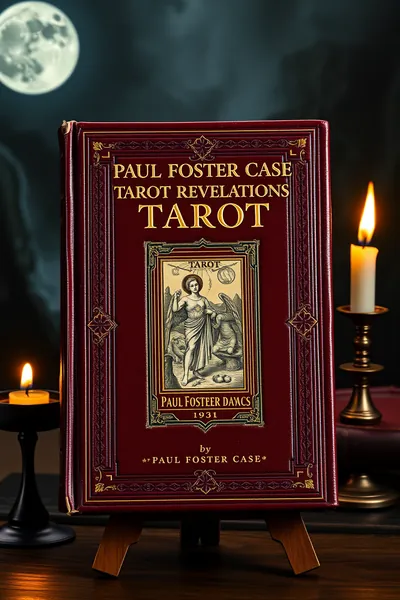
Paul Foster Case’s "The Tarot" offers a dense, academically rigorous examination of the cards, positioning them as a profound symbolic language far removed from parlor tricks. Case, a significant figure in early 20th-century occultism, grounds his interpretations in Hermetic philosophy and Kabbalistic principles, a perspective that lends substantial weight to his analysis. The strength of this work lies in its systematic approach; the detailed breakdown of the Major Arcana, particularly the connections drawn between the cards and the Tree of Life, provides a solid framework for deeper study. However, the very rigor that makes it valuable can also be a barrier. Case’s prose, while precise, can be unyielding, demanding significant prior knowledge of esoteric terminology. A passage discussing the "Fool" as the starting point of cosmic manifestation, embodying both potential and peril, exemplifies the book's deep conceptualization but also its abstract nature. For those willing to engage with its challenging intellectual landscape, "The Tarot" provides an unparalleled foundation for understanding the cards as a sacred science.
📝 Description
79
Paul Foster Case's 1990 book, The Tarot, interprets the cards as a symbolic language and guide to spiritual development.
Published in 1990, The Tarot by Paul Foster Case treats the cards as a system of esoteric symbolism and a means to grasp universal principles. Case moves beyond simple fortune-telling, viewing the Tarot as a symbolic language deeply tied to ancient wisdom traditions. He positions the Tarot not only as a divinatory tool but also as a practical aid for spiritual growth and self-discovery. The book carefully examines the Major Arcana, connecting them to psychological states, cosmic laws, and the path of initiation.
This text is valuable for dedicated students of Western Esotericism, especially those interested in Hermetic traditions and their application to Tarot. It will appeal to readers seeking a methodical, intellectual approach to the cards, going beyond superficial interpretations. Those involved in occult studies, Kabbalistic inquiry, or the study of psychological archetypes will find significant content. It is also suited for practitioners who consider Tarot a contemplative practice and a map of consciousness, rather than just a predictive instrument.
Paul Foster Case's work on the Tarot emerged from the early 20th-century occult revival. His perspective was significantly shaped by the Hermetic Order of the Golden Dawn, a key institution for esoteric education that systematically combined Kabbalah, astrology, and Tarot symbolism. Case later founded the Builders of the Adytum (B.O.T.A.) to teach these principles. His writings helped foster a more structured and philosophical understanding of the Tarot, differentiating it from more popular, less systematic divinatory methods of the time, and engaging with contemporary intellectual efforts to systematize occult knowledge.
💡 Why Read This Book?
• Learn how Paul Foster Case conceptualizes the Tarot as a symbolic map of spiritual evolution, moving beyond simple divination, as detailed in his analysis of the Major Arcana. • Understand the deep connections Case draws between the Tarot and the Kabbalistic Tree of Life, a cornerstone of Western Esotericism, providing a structured esoteric framework. • Gain insight into the psychological archetypes represented by the Tarot figures, as Case interprets them as stages on the path of inner transformation.
⭐ Reader Reviews
Honest opinions from readers who have explored this book.
❓ Frequently Asked Questions
When was Paul Foster Case's "The Tarot" first published?
The foundational work by Paul Foster Case, "The Tarot," was first published in 1990, although Case's teachings and writings on the subject date back to the early 20th century.
What esoteric tradition most influenced Paul Foster Case's "The Tarot"?
Paul Foster Case's "The Tarot" is heavily influenced by the Hermetic tradition, particularly as systematized by the Hermetic Order of the Golden Dawn, integrating Kabbalistic and alchemical symbolism.
Is "The Tarot" by Paul Foster Case suitable for beginners?
While comprehensive, Case's work is intellectually dense and assumes some familiarity with esoteric concepts. It is best suited for intermediate students or those dedicated to a serious study of Tarot's esoteric dimensions.
What distinguishes Paul Foster Case's approach to Tarot from others?
Case's approach emphasizes the Tarot as a symbolic language for spiritual realization and understanding cosmic laws, rather than primarily a tool for fortune-telling, grounding it in Hermetic philosophy.
What is the significance of the Major Arcana in Paul Foster Case's "The Tarot"?
Case views the Major Arcana as representing fundamental principles of manifestation and stages of spiritual development, forming a symbolic pathway for the aspirant's journey.
Does "The Tarot" by Paul Foster Case discuss the Minor Arcana?
While Case's primary focus in "The Tarot" is often on the Major Arcana, his broader teachings and related works often integrate the Minor Arcana into the complete symbolic system.
🔮 Key Themes & Symbolism
Tarot as Symbolic Language
Case presents the Tarot not as a mere divinatory tool but as a profound symbolic language, a "Book of Life" encoding universal principles. He meticulously dissects the 22 Major Arcana, interpreting each card as a hieroglyph representing cosmic forces, psychological states, and stages of spiritual unfoldment. This symbolic approach aims to unlock deeper wisdom, connecting the reader to the archetypal patterns underlying existence and personal growth. The emphasis is on understanding the inherent meaning within the imagery, linking it to ancient traditions and a structured system of knowledge.
Kabbalistic Correspondences
A central tenet of Case's interpretation is the intricate relationship between the Tarot and the Kabbalistic Tree of Life. He maps the Major Arcana onto the paths and Sephiroth of the Tree, demonstrating how the cards illustrate the process of divine emanation and the structure of the cosmos. This connection provides a rigorous framework for understanding the cards' esoteric significance, revealing them as keys to the hidden architecture of reality and the human psyche. The work elucidates how each card represents a specific divine attribute or a stage in the journey from the spiritual realms to the material world.
Spiritual Development and Initiation
Paul Foster Case frames the Tarot as a practical guide for spiritual development and the path of initiation. The sequence of the Major Arcana is interpreted as a symbolic journey, mirroring the aspirant's progress through various challenges, lessons, and transformations. He elucidates how understanding and meditating upon these archetypal images can facilitate inner growth, self-mastery, and the realization of one's divine potential. The Tarot becomes a map for working through the inner landscape and achieving spiritual enlightenment, revealing the 'Great Work' as a personal undertaking.
The Archetypal Journey
Case views the figures of the Major Arcana as potent archetypes, representing fundamental forces and experiences inherent in the human condition and the universal consciousness. The 'Fool,' for instance, embodies primal potential and the beginning of a cosmic cycle, while other cards depict trials, wisdom, and ultimate realization. By studying these archetypes, individuals can gain insight into their own psychological makeup and the universal dynamics that shape life. This perspective elevates the Tarot from a predictive system to a profound psychological and spiritual manual for understanding the self and the world.
💬 Memorable Quotes
Direct passages from the work, attributed to the author.
“The Tarot is a symbolic representation of the universe and the human soul.”
— This statement captures Case's core thesis: the Tarot is not merely a deck of cards but a cosmic diagram and a map of consciousness, revealing the fundamental principles of existence and the path of spiritual awakening.
“The Fool represents the starting point of manifestation.”
— This interpretation highlights the archetypal significance of the Fool card, positioning it as the primordial potential from which all creation and all individual journeys begin, embodying both innocence and boundless possibility.
“Each card of the Major Arcana is a key to understanding a specific divine power or cosmic law.”
— This emphasizes the instructional and philosophical dimension of the Tarot in Case's system, where each trump card is seen as an encoded lesson about the mechanics of the universe and the nature of reality.
“Understanding the Tarot leads to self-knowledge and mastery.”
— This points to the practical application of Case's teachings, suggesting that through dedicated study of Tarot symbolism, one can achieve useful insights into their own nature and gain control over their inner and outer life.
💡 Key Ideas
Editorial paraphrase of the work's core concepts — not direct quotes.
The Tarot provides a structured pathway for spiritual initiation.
This paraphrase suggests that the sequence and symbolism of the Tarot cards offer a progressive curriculum for the occult student, outlining the necessary stages and challenges in the process of spiritual transformation.
🌙 Esoteric Significance
Tradition
Paul Foster Case's work on the Tarot is firmly rooted in the Western Esoteric tradition, particularly Hermeticism and Kabbalah. It draws heavily from the teachings of the Hermetic Order of the Golden Dawn, which sought to synthesize various streams of esoteric thought into a coherent system. Case's approach aligns with the Hermetic principle of "As Above, So Below," applying it to the Tarot as a symbolic representation of both divine cosmic order and the human microcosm. His method emphasizes the Tarot as a tool for spiritual alchemy and the realization of the divine within.
Symbolism
Central to Case's interpretation are the archetypal figures of the Major Arcana, which he viewed as symbolic keys to universal principles and stages of spiritual evolution. For instance, the card 'The High Priestess' is often interpreted as representing divine wisdom, intuition, and the hidden knowledge of the subconscious, intricately linked to the Kabbalistic Sephirah Binah. Similarly, 'The Magician' symbolizes the active manifestation of will and the power to harness cosmic forces, corresponding to Kether or Tiphareth, representing divine will or solar consciousness.
Modern Relevance
Case's systematic and philosophical approach to the Tarot continues to influence contemporary esoteric practitioners and scholars. His emphasis on the cards as a map of consciousness and a tool for psychological and spiritual development is particularly resonant. Modern occult organizations and independent students of Hermeticism frequently reference his interpretations, especially when seeking a structured understanding of Tarot's Kabbalistic and alchemical dimensions. His work remains a foundational text for those interested in the Tarot as a serious spiritual discipline.
👥 Who Should Read This Book
• Students of Western Esotericism seeking a rigorous, philosophical understanding of the Tarot, moving beyond simple divination, particularly those interested in Hermeticism and Kabbalah. • Occult practitioners and ritualists who wish to integrate the Tarot into their magical or meditative practices, using it as a symbolic key to higher consciousness. • Comparative religion scholars and students of mythology interested in the archetypal imagery of the Tarot and its potential connections to ancient wisdom traditions.
📜 Historical Context
Paul Foster Case's "The Tarot" emerged from the fertile ground of early 20th-century occultism, a period marked by a concerted effort to systematize and intellectualize esoteric knowledge. Case was deeply influenced by the Hermetic Order of the Golden Dawn, a British esoteric society founded in 1888, which had developed a complex system of correspondences linking Tarot, Kabbalah, astrology, and ceremonial magic. Following his departure from the Golden Dawn's lineage, Case founded the Builders of the Adytum (B.O.T.A.) in 1922, dedicated to teaching his structured interpretation of these traditions. His work sought to elevate the Tarot from its common use in fortune-telling to a serious philosophical and spiritual discipline, akin to a sacred science. This contrasted with the more popular, less systematic divinatory approaches prevalent at the time. While figures like Aleister Crowley were also reinterpreting Tarot during this era, Case’s focus remained on a more philosophical and Hermetic framework, aiming for a comprehensive understanding of cosmic laws and spiritual development.
📔 Journal Prompts
The initial appearance of 'The Fool' in the Tarot sequence: what does this represent for your personal journey?
Reflect on the symbolic representation of divine wisdom as depicted by 'The High Priestess' in Case's framework.
Consider the Kabbalistic correspondences Case outlines for the Major Arcana; how do they illuminate the Tree of Life?
How does the concept of 'The Magician' as a wielder of will and cosmic forces apply to your life's manifestations?
Explore the Tarot as a map of initiation: what archetypal challenges does a specific Major Arcana card suggest you might face?
🗂️ Glossary
Major Arcana
The set of 22 trump cards in a Tarot deck, each bearing a number and a symbolic illustration, considered by esotericists to represent fundamental spiritual principles and stages of the soul's journey.
Kabbalah
A system of Jewish mysticism and esoteric interpretation that seeks to understand the nature of God and the universe through symbolic readings of scripture and the study of the ten Sephiroth (emanations) on the Tree of Life.
Hermeticism
A philosophical and religious tradition based on the purported teachings of Hermes Trismegistus, emphasizing divine wisdom, the interconnectedness of all things, and the pursuit of spiritual enlightenment through knowledge and practice.
Symbolic Language
A system of communication that uses symbols, images, and archetypes to convey complex ideas, spiritual truths, and esoteric knowledge, often operating on multiple levels of meaning.
Tree of Life
A central diagram in Kabbalistic mysticism, consisting of ten interconnected spheres (Sephiroth) and 22 paths, representing the divine creation, the structure of the cosmos, and the path of spiritual ascent.
Archetype
A universal, archaic pattern or image that recurs in the art, literature, and mythology of cultures across the world, representing fundamental human experiences and psychological structures.
Initiation
A ritual or process of admission into a secret order, society, or a higher level of knowledge or spiritual understanding, often involving symbolic trials and teachings.
🔮 Readers Also Liked
Browse all →









More by Paul Foster Case
All books →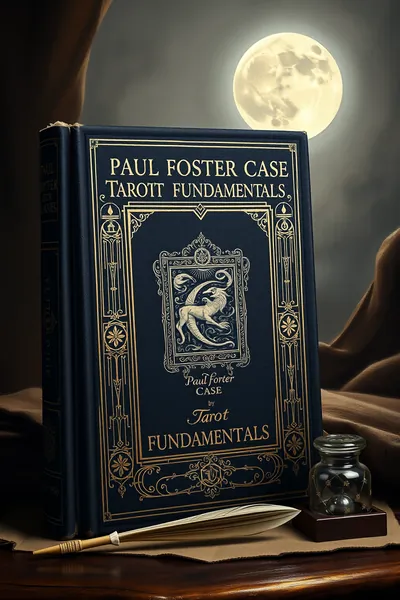
More Free Divination & Tarot Books
View all →