The Tarot Minor Arcana: Learning the cards without memorizing their meaning
 78
78

The Tarot Minor Arcana: Learning the cards without memorizing their meaning
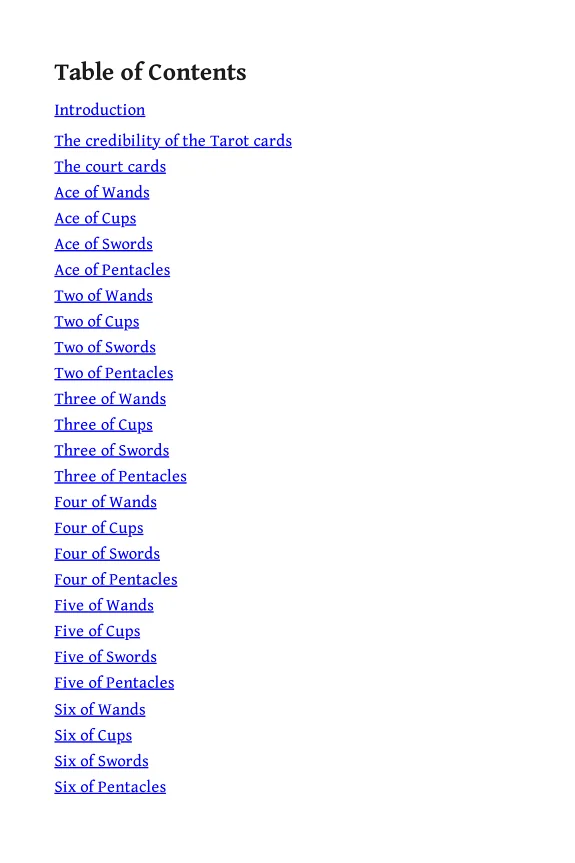
Antares Stanislas’s The Tarot Minor Arcana presents a pragmatic approach to a subject often bogged down by lengthy, prescriptive lists of meanings. Stanislas bypasses the common pitfall of encouraging sheer memorization, instead guiding readers toward an understanding rooted in the visual narratives and sequential logic of the suits. The strength of this book lies in its methodical breakdown of each number and court card, demonstrating how they build upon one another. For instance, the discussion of the Four of Wands offers a clear example of how a card's meaning can be derived from its position within the suit's progression and its elemental nature, rather than a pre-packaged definition. A limitation, however, is that the book assumes a certain level of prior exposure to Tarot's basic structure, as it is presented as a second part of a larger work. While it aims for intuitive learning, a reader entirely new to Tarot might still require foundational explanations not fully elaborated here. Overall, Stanislas offers a valuable, practical alternative to traditional Tarot learning methods for those seeking to grasp the Minor Arcana.
📝 Description
78
Antares Stanislas's 2016 book, The Tarot Minor Arcana, teaches card meanings without rote memorization.
Published in September 2016, The Tarot Minor Arcana by Antares Stanislas focuses on the 56 cards of the Minor Arcana. This book is the second part of a larger system, "The Tarot, the prediction of the future." Stanislas aims to help readers grasp the meanings of these cards through an intuitive approach rather than relying on memorization. The method is designed for anyone interested in Tarot, from newcomers to experienced readers who find traditional study methods unproductive. It also serves those who wish to engage solely with the Minor Arcana section of Stanislas's complete Tarot framework.
This approach contrasts with older methods that often emphasize memorizing definitions. Instead, Stanislas centers the learning process on the narrative and symbolic connections within the Minor Arcana suits. The book is structured to build an understanding of how the numbers progress within each suit, how the four elements relate to Wands, Cups, Swords, and Pentacles, and how the Court Cards represent different character archetypes. The goal is to foster a deeper, more organic comprehension of the cards.
The Tarot Minor Arcana was published in 2016, a period marked by a resurgence of interest in esoteric subjects. Tarot, popularized in Western occultism since the late 19th century, has continued to evolve. Stanislas's emphasis on intuition over memorization sets his work apart from earlier pedagogical styles, such as those found in Arthur Edward Waite's "The Pictorial Key to the Tarot." This book contributes to the ongoing conversation about Tarot interpretation, aiming to make its study more accessible.
💡 Why Read This Book?
• You will learn a method for understanding the Minor Arcana that relies on sequential logic and elemental correspondences, as presented in Stanislas's framework from 2016, rather than rote memorization. • You will gain insight into interpreting the numerical progression from Ace to Ten within each suit, a core concept detailed in the book's chapters on Wands, Cups, Swords, and Pentacles. • You will develop an intuitive grasp of the Court Cards by understanding their role as archetypal figures, a key focus explored within the text's dedicated sections.
⭐ Reader Reviews
Honest opinions from readers who have explored this book.
❓ Frequently Asked Questions
What is the primary goal of Antares Stanislas's "The Tarot Minor Arcana"?
The book's primary goal is to teach readers to understand the Minor Arcana cards intuitively, by recognizing patterns and narrative sequences, rather than through memorizing individual card meanings.
Is this book suitable for complete beginners to Tarot?
While it offers a unique learning method, it is presented as the second part of a larger work. It may be most beneficial for those with some basic familiarity with Tarot structure or who are specifically seeking an alternative to memorization.
When was "The Tarot Minor Arcana" first published?
The book was first published on September 22, 2016.
What distinguishes Stanislas's approach from traditional Tarot learning methods?
Stanislas emphasizes understanding the underlying logic of the suits and numbers, and the visual symbolism, promoting an organic comprehension rather than relying on lists of pre-defined meanings.
Does the book cover the Major Arcana as well?
No, this specific volume, "The Tarot Minor Arcana," focuses exclusively on the 56 cards of the Minor Arcana. It is a component of a larger work that likely addresses the Major Arcana separately.
What are the four suits of the Minor Arcana discussed in the book?
The book covers the traditional four suits: Wands (associated with Fire), Cups (Water), Swords (Air), and Pentacles (Earth), exploring their unique characteristics and progressions.
🔮 Key Themes & Symbolism
Number Progression
The book details how the numbered cards (Ace through Ten) within each suit represent a dynamic unfolding or journey. Stanislas guides readers to see the Ace as a beginning, the Ten as a culmination, and the intermediate cards as stages of development. This sequential understanding allows for a more fluid interpretation, where the context of a card's number within its suit becomes paramount, moving beyond static definitions and encouraging a narrative approach to readings.
Elemental Suit Associations
A central pillar of Stanislas's method is the consistent application of elemental correspondences to each suit: Wands to Fire, Cups to Water, Swords to Air, and Pentacles to Earth. The book explains how these elements infuse the cards with distinct energies and themes. Understanding these associations allows readers to grasp the fundamental character of each suit and how specific numbers interact with these elemental forces, fostering deeper comprehension.
Court Card Archetypes
Stanislas presents the Court Cards (Page, Knight, Queen, King) not merely as characters but as personified archetypes representing distinct facets of human experience and consciousness. The focus is on understanding their roles and interactions within the elemental and numerical framework of the Minor Arcana. This approach encourages readers to see these cards as dynamic forces or psychological states rather than fixed personalities, enriching their interpretive capabilities.
Intuitive Interpretation
The overarching theme is the cultivation of intuitive understanding. By shifting the focus from memorization to recognizing patterns, number sequences, and elemental qualities, Stanislas aims to empower readers to develop their own authentic relationship with the Tarot. The book encourages active engagement with the card imagery and symbolism, fostering a learning process where meaning emerges organically from the cards themselves and the reader's perception.
💬 Memorable Quotes
Direct passages from the work, attributed to the author.
“The progression from Ace to Ten forms a narrative arc for each suit.”
— This highlights Stanislas's core teaching: that the numbered Minor Arcana cards should be understood as parts of a story or journey, rather than isolated symbols with fixed meanings. The number itself dictates a stage in that unfolding narrative.
“Each suit embodies a fundamental element: Wands as Fire, Cups as Water, Swords as Air, Pentacles as Earth.”
— This emphasizes the foundational importance of elemental correspondences in Stanislas's system. Understanding the nature of each element is presented as key to unlocking the inherent meaning and energy of the cards within that suit.
“Court cards represent different stages or expressions of the suit's energy.”
— This interpretation frames the Court Cards not just as people, but as dynamic manifestations of the suit's archetypal themes, suggesting their meanings are tied to their position and role within the overall elemental context.
“Learn to read the cards by understanding their context, not by reciting definitions.”
— This succinctly captures the book's central pedagogical philosophy: prioritizing contextual interpretation and intuitive comprehension over the rote memorization of pre-defined card meanings.
“The Five of Cups signifies a moment of loss, but the underlying structure points towards future recovery.”
— This example illustrates how Stanislas encourages reading a card not just for its immediate implication (loss) but also by considering its place in the numerical sequence, hinting at the potential for resolution or change that follows.
🌙 Esoteric Significance
Tradition
This work fits within the modern popularization of Western esoteric traditions, specifically those engaging with Tarot as a divinatory and psychological tool. While not explicitly aligning with a single lineage like Hermeticism or Kabbalah, it draws upon the established structure of the Tarot deck, particularly the Rider-Waite-Smith imagery and symbolism, which is deeply embedded in 20th-century occultism. Stanislas's departure lies in his pedagogical method, aiming to explain the learning process.
Symbolism
Key symbols include the numerical progression from Ace to Ten, representing cycles of manifestation and experience. The four suits—Wands (Fire), Cups (Water), Swords (Air), and Pentacles (Earth)—are central, embodying elemental energies that influence human affairs. The Court Cards (Page, Knight, Queen, King) symbolize archetypal roles and stages of consciousness within these elemental frameworks, acting as personified expressions of the suit's core themes.
Modern Relevance
Stanislas's emphasis on intuitive learning and contextual interpretation appeals to contemporary approaches to Tarot that prioritize psychological depth and personal empowerment over rigid predictive systems. Modern practitioners, particularly those active in online Tarot communities or exploring self-help and mindfulness, often seek methods that foster personal insight, making this book's approach relevant to current trends in esoteric practice.
👥 Who Should Read This Book
• Aspiring Tarot readers seeking an alternative to memorization who want to build an intuitive understanding of the Minor Arcana. • Individuals interested in the symbolic language of numbers and elements as applied to divination and self-reflection. • Students of Tarot history looking to explore different pedagogical approaches beyond traditional methods, particularly those influenced by 20th-century occultism.
📜 Historical Context
Published in 2016, Antares Stanislas's "The Tarot Minor Arcana" arrived during a period of sustained interest in esoteric practices, particularly among younger demographics influenced by online communities and a resurgence of analog hobbies. This work situates itself within the broad Western esoteric tradition, which saw significant popularization following the occult revival of the late 19th and early 20th centuries, heavily influenced by figures like Aleister Crowley and A.E. Waite. Stanislas's approach, eschewing memorization for intuitive learning, offers a counterpoint to more didactic methods prevalent in earlier eras, such as those found in Waite's influential "The Pictorial Key to the Tarot" (1910). While not directly engaging with specific academic debates of its time, the book contributes to the ongoing popular discourse on Tarot interpretation, seeking to make the Minor Arcana accessible through a logic-based, rather than purely intuitive or dogmatic, framework.
📔 Journal Prompts
The narrative arc of the Three of Swords: trace its progression.
Reflect on the elemental energy of Wands as depicted in the Seven of Wands.
How do the Court Cards' archetypes manifest in the suit of Cups?
Consider the journey from the Ace of Pentacles to the Ten of Pentacles.
Analyze the symbolic meaning of the number Nine across different suits.
🗂️ Glossary
Minor Arcana
The 56 cards in a standard Tarot deck, divided into four suits (Wands, Cups, Swords, Pentacles), typically representing the mundane events and challenges of daily life.
Suits
The four divisions of the Minor Arcana: Wands (Fire), Cups (Water), Swords (Air), and Pentacles (Earth), each associated with specific energies, themes, and life areas.
Elemental Correspondences
The assignment of the four classical elements (Fire, Water, Air, Earth) to the four Tarot suits, influencing their interpretation and symbolic meaning.
Court Cards
The four face cards within each suit: Page, Knight, Queen, and King, often representing people, personality types, or specific roles and stages of development.
Numerical Progression
The sequence of numbered cards from Ace (or One) to Ten within each suit, understood as representing a journey, cycle, or unfolding of events.
Intuitive Interpretation
A method of reading Tarot cards that relies on inner feeling, pattern recognition, and symbolic association rather than strict adherence to memorized meanings.
Rote Memorization
The learning of facts or meanings through repetition, without necessarily understanding the underlying principles or context. This book advocates against this method for Tarot.
This book appears in 1 collection
🔮 Readers Also Liked
Browse all →




![Dead sea scrolls and the Qumran community [사해사본과 쿰란 공동체]](/img/thumb/dead-sea-scrolls-and-the-qumran-community-사해사본과-쿰란-공동체-samuel-cheon-106897.webp)



From the “Minor Arcana” Collection
View all →





More Free Occult Philosophy Books
View all →