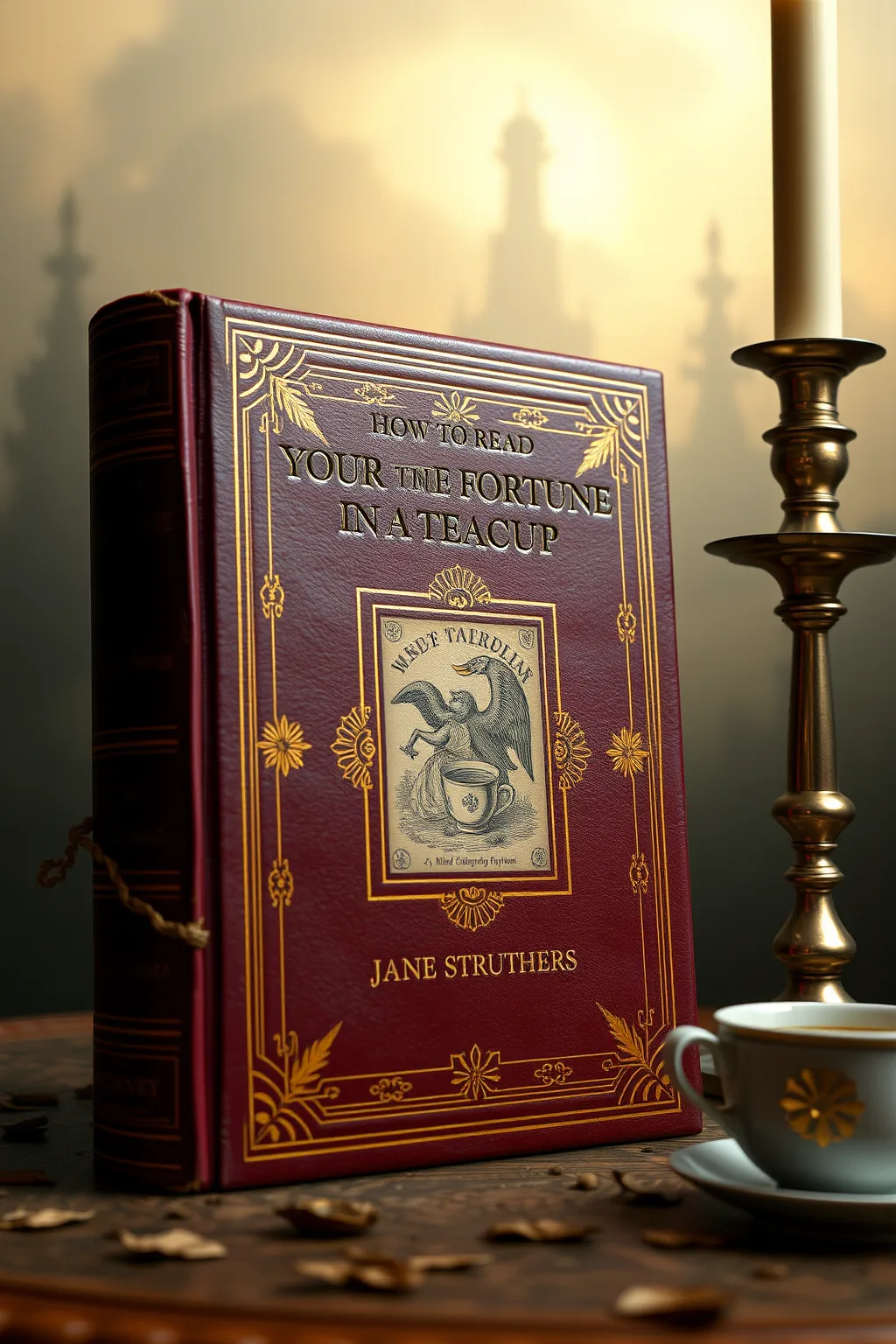
How to Read Your Fortune in a Teacup
 61
61

How to Read Your Fortune in a Teacup



Ophelia Vance, Mystical Literature Reviewer — Jane Struthers' "How to Read Your Fortune in a Teacup" is an indispensable compendium for anyone drawn to the subtle arts of divination. Struthers offers a rare blend of clarity and mystical depth, demystifying tasseography without sacrificing its inherent magic. Her authoritative yet accessible prose guides readers through the intricate symbolism, providing practical techniques grounded in esoteric tradition. This book excels in its ability to empower beginners while offering nuanced insights for seasoned practitioners. It's a treasure for those seeking to divine wisdom from the ordinary, fostering a deeper connection to the unseen forces that shape our lives.
📝 Description
61
Jane Struthers' 1999 book teaches the art of reading tea leaves for divination.
Jane Struthers' "How to Read Your Fortune in a Teacup" is a guide to tasseography, the practice of interpreting tea leaf patterns for divination. Published in 1999, the book aims to demystify this ancient art, showing how the everyday act of drinking tea can become a means of gaining insight. It details the specific symbols formed by tea leaves and their meanings, acting as a lexicon for aspiring diviners. Struthers explains how to interpret these symbols to understand hidden truths and potential future events.
The book is structured to assist individuals at various levels of interest, from those new to divination to experienced practitioners. It emphasizes the connection between intuition and the symbols found in a teacup, suggesting a way to engage with subtle universal communications. The text encourages a contemplative approach, helping readers develop their inner perception and find meaning in ordinary experiences.
Tasseography, the practice detailed in "How to Read Your Fortune in a Teacup," belongs to a long tradition of divination by observing natural phenomena and everyday objects. For centuries, cultures have used methods like reading entrails, water scrying, and interpreting random marks to seek guidance. Tea leaf reading gained popularity in the 18th century, particularly in Europe, as tea became a common beverage. This practice aligns with broader esoteric interests in finding hidden meanings and connecting with subtle energies or fate.
💡 Why Read This Book?
Unlock the ancient art of tasseography and discover profound insights into your life's journey. This book offers a unique, accessible method for divination, transforming a simple cup of tea into a mirror of your destiny. Ideal for spiritual seekers, those interested in esoteric symbolism, and practitioners of divination arts looking to expand their repertoire. Learn to interpret the ephemeral language of tea leaves and connect with your intuition on a deeper level.
⭐ Reader Reviews
Honest opinions from readers who have explored this book.
❓ Frequently Asked Questions
What is tasseography?
Tasseography, or tasseomancy, is the ancient art of divination by interpreting the patterns left by tea leaves, coffee grounds, or wine sediment in a cup. It's a practice steeped in history and symbolism, offering glimpses into the past, present, and future.
Do I need special tea or equipment?
No, standard loose-leaf tea is perfectly suitable. The primary 'equipment' is your intention, a cup, and the leaves left behind. The magic lies in your perception and the symbolic language of the patterns.
How long does it take to learn?
While basic interpretation can be grasped quickly, true mastery requires practice and intuition. This book provides the foundational knowledge and encourages ongoing engagement to hone your skills over time.
Is this book suitable for beginners?
Absolutely. Jane Struthers has a gift for making complex esoteric subjects accessible. The book is structured to guide newcomers step-by-step, building confidence and understanding.
Can I use this method for others?
Yes, once you are comfortable reading for yourself, you can extend your practice to interpret tea leaf readings for friends, family, or clients, always with respect and ethical consideration.
🔮 Key Themes & Symbolism
The Language of Symbols
This theme explores the collection of symbols that emerge from tea leaves, from the celestial to the mundane. It studies the esoteric meanings attributed to shapes, figures, and formations, revealing how these ephemeral patterns act as a conduit for subconscious messages and universal archetypes. Readers learn to decipher the nuanced vocabulary of the tea cup, understanding that each swirl and residue tells a story, offering guidance, warnings, and affirmations rooted in ancient interpretive traditions. The emphasis is on cultivating a visual literacy that transcends the ordinary.
Intuition and Inner Sight
Fundamentally, tasseography is a practice of cultivating and trusting one's intuition. This theme highlights how the act of reading tea leaves serves as a powerful exercise in developing inner sight, sharpening one's perceptive abilities beyond the rational mind. The book guides readers to quiet the mental chatter and attune to the subtle energetic whispers conveyed through the tea leaf patterns. It emphasizes that the most profound interpretations arise not just from memorizing meanings, but from a deep, intuitive connection with the querent and the symbolic landscape presented in the cup.
The Ritual of Divination
This theme examines the profound significance of ritual in the practice of tasseography. It goes beyond a mere technique, presenting the act of preparing and reading tea as a sacred ceremony that bridges the material and spiritual realms. The book details how intention, mindfulness, and the sacred space created around the reading enhance its efficacy. By engaging in this ritual, practitioners enter a liminal state, fostering a deeper connection to the present moment and the unfolding mysteries of existence. It transforms a simple beverage into a tool for spiritual communion.
💬 Memorable Quotes
Direct passages from the work, attributed to the author.
“Each swirl in the cup is a verse in the ancient poem of your life.”
— This poetic line suggests that the intricate patterns formed by tea leaves are not random but are symbolic narratives, akin to stanzas in a sacred text, offering a unique and personal story of the individual's existence.
“The true oracle is not the leaves, but the stillness within you that perceives them.”
— This highlights the internal nature of divination, asserting that the power to interpret and gain wisdom lies not in an external object, but in the cultivated inner awareness and intuitive capacity of the reader.
“Embrace the ephemeral; for in its fleeting forms, eternal truths reside.”
— This encourages the reader to find profound meaning and lasting wisdom in transient, changing phenomena, suggesting that the transient nature of tea leaves paradoxically holds enduring insights.
“The teacup is a mirror, reflecting the unseen currents of your soul's journey.”
— This metaphor illustrates how the act of reading tea leaves serves as a reflective practice, revealing the inner landscape and the subtle energetic movements guiding an individual's life path.
💡 Key Ideas
Editorial paraphrase of the work's core concepts — not direct quotes.
The whispers of fate are not lost, but merely waiting to be heard in the patterns left behind.
This quote emphasizes that destiny is not an abstract concept but is subtly communicated through everyday occurrences, such as the residue of tea leaves, waiting for the attuned observer to perceive its message.
🌙 Esoteric Significance
Tradition
Tasseography is deeply rooted in folk magic and divination traditions that span centuries, drawing parallels with other forms of scrying and pattern interpretation. It aligns with hermetic principles of correspondence, where the microcosm (the tea leaf patterns) reflects the macrocosm (universal energies and destiny). Its practice fosters a connection to the intuitive stream, often associated with lunar energies and the feminine divine, encouraging a holistic understanding of self and the cosmos.
Symbolism
The symbolism in tasseography is vast, drawing from archetypal imagery, natural elements, and common human experiences. Shapes like birds might represent messages, rings could signify commitment or cycles, and animals often carry connotations of their natural behaviors. Each symbol’s meaning is further nuanced by its placement in the cup and its relationship to other symbols, creating a rich, layered narrative that speaks to the querent’s specific situation and subconscious.
Modern Relevance
In an age often dominated by logic and technology, tasseography offers a vital counterbalance, reconnecting individuals with their intuition and the symbolic language of the universe. It provides a tangible, accessible method for introspection and self-awareness, empowering people to navigate life's complexities with greater insight and mindfulness. The practice encourages a slower, more deliberate engagement with the present moment, fostering a sense of wonder and a deeper appreciation for the subtle energies that surround us.
👥 Who Should Read This Book
This book is a valuable collection for a diverse audience. For the **beginner seeker**, it provides a clear, inviting entry point into the fascinating world of divination, explaining tasseography with practical guidance. **Scholars of esoteric traditions** will appreciate its historical context and detailed exploration of symbolism. **Spiritual practitioners** looking to deepen their intuitive abilities and expand their divinatory toolkit will find invaluable techniques and insights. Even the **curious skeptic** may find themselves captivated by the nuanced approach and the potential for self-reflection that this art offers, transforming a common ritual into a profound exploration.
📜 Historical Context
Tasseography, or the art of reading tea leaves, emerged in the late 18th century, blossoming in popularity across Europe and Britain during the Victorian era. This period was characterized by a fervent interest in spiritualism, occultism, and esoteric practices, as people sought solace and answers in the face of rapid societal change and burgeoning scientific inquiry. The rise of the middle class and increased leisure time contributed to the popularity of parlor games and divinatory arts, with tea leaves becoming a readily available and accessible medium. These practices were often intertwined with folk traditions and ancient methods of scrying, offering a sense of continuity and hidden knowledge in a world undergoing transformation. The mystique surrounding tea, often imported from exotic lands, lent itself to interpretations steeped in symbolism and prophecy.
📔 Journal Prompts
What recurring symbols have you noticed in your tea leaf readings, and what intuitive connections do they spark?
Describe a time when a tea leaf reading provided unexpected clarity or guidance. How did it manifest in your life?
How does the ritual of preparing and reading tea affect your state of mind and your connection to the present moment?
If you could ask the tea leaves one question about your current life path, what would it be and why?
Explore the concept of 'seeing' versus 'observing' in tasseography. How does your perception shift when you move from one to the other?
🗂️ Glossary
Tasseography
The art and practice of divination by interpreting the patterns formed by tea leaves, coffee grounds, or sediment in a cup. It is also known as tasseomancy.
Querent
The person for whom a divination reading, such as a tea leaf reading, is being performed. It is the individual seeking insight or guidance.
Symbolism
The use of images and signs to represent ideas and qualities. In tasseography, symbols are the shapes and figures formed by the tea leaves, each carrying potential meaning.
Intuition
The ability to understand something immediately, without the need for conscious reasoning. It is a key faculty for interpreting the subtle messages in tea leaf readings.
Scrying
A divinatory practice involving the use of a reflective surface, such as a mirror, crystal ball, or water, to receive visions or insights. Tasseography shares similarities with scrying.
This book appears in 1 collection
🔮 Readers Also Liked
Browse all →








More by Jane Struthers
All books →




From the “Tea Leaf Reading” Collection
View all →


More Free Divination & Tarot Books
View all →