Beginners Guide to Tarot Card Reading
 61
61

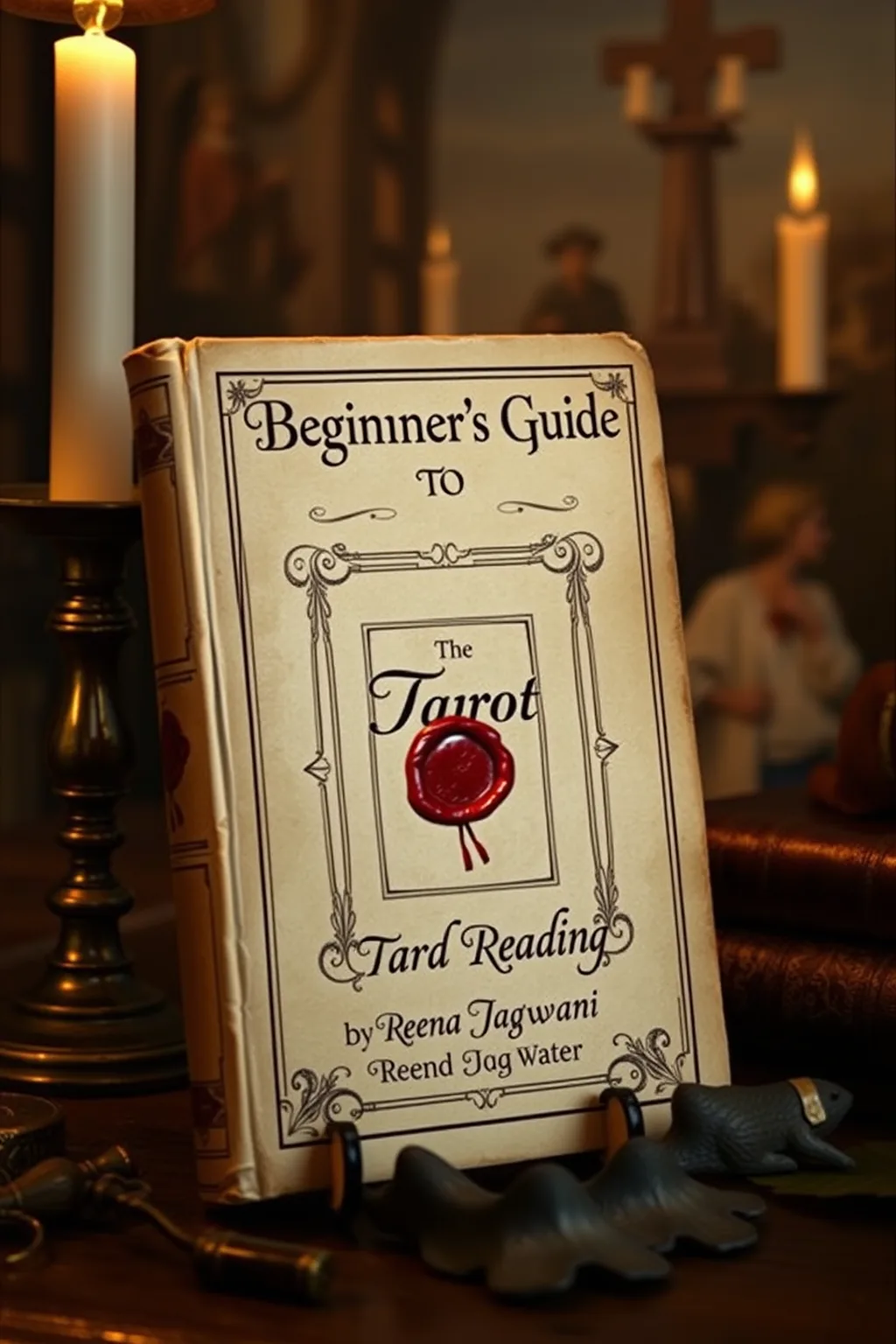
Beginners Guide to Tarot Card Reading



Reena Jagwani's 'Beginner's Guide to Tarot Card Reading' stands as a beacon for nascent practitioners seeking genuine esoteric understanding. Jagwani eschews superficial interpretations, instead delving into the potent symbolism and archetypal energies that imbue the Tarot. Her approach is both accessible and deeply insightful, offering a foundational grasp of this ancient divinatory system. The book fosters not just mechanical reading, but a profound connection with the cards as tools for self-discovery and spiritual guidance. Highly recommended for anyone serious about exploring the Tarot's transformative potential beyond parlor tricks.
📝 Description
61
Reena Jagwani's 'Beginner's Guide to Tarot Card Reading' explains the traditional meanings of each card.
This book introduces the fundamentals of Tarot card reading for those new to the practice. Jagwani breaks down the symbolism found in both the Major and Minor Arcana, explaining how each card contributes to a reading. The text aims to help readers interpret the deck's imagery and understand its application in personal reflection. It covers the basic structure of a Tarot spread and offers guidance on developing intuitive connections with the cards. The goal is to equip beginners with the knowledge to begin their own Tarot practice. The book encourages a thoughtful approach to interpreting the cards for self-discovery. It focuses on the practical aspects of learning Tarot. Readers will find explanations of the archetypes and elemental associations that form the core of Tarot symbolism. The writing is clear and direct, designed for easy comprehension by newcomers to the esoteric arts.
Tarot reading is part of a broader esoteric tradition that uses symbolic systems for divination and self-understanding. This practice often intersects with Western esotericism, including aspects of Hermeticism and Kabbalah, though its origins are debated. The deck itself, particularly the Major Arcana, is seen as a visual representation of universal archetypes and spiritual principles. Many practitioners use Tarot not just for fortune telling but as a tool for introspection, psychological insight, and spiritual development. This book approaches Tarot within that framework, treating the cards as keys to understanding inner states and external circumstances.
💡 Why Read This Book?
Unlock the veiled language of the cosmos and awaken your innate intuitive power. This guide demystifies Tarot, revealing its profound symbolic depth and practical application for self-awareness and spiritual growth. Ideal for absolute beginners and those seeking a richer, more philosophical understanding of divination, it empowers you to read the cards not just as fortune-telling tools, but as mirrors to the soul.
⭐ Reader Reviews
Honest opinions from readers who have explored this book.
❓ Frequently Asked Questions
What is the primary purpose of Tarot in this guide?
This guide presents Tarot as a sacred tool for self-exploration, intuitive development, and understanding life's intricate patterns, rather than solely a method of fortune-telling.
Do I need prior knowledge of occultism to read this book?
No, 'Beginner's Guide to Tarot Card Reading' is specifically designed for those with no prior experience, offering a clear and accessible introduction to its esoteric principles.
How does this book approach card interpretation?
It emphasizes understanding the core symbolism, archetypes, and energetic flow of each card, encouraging an intuitive connection rather than rote memorization.
What kind of spreads are introduced?
The book likely introduces fundamental spreads that are easy for beginners to grasp, such as the three-card spread and perhaps a simple Celtic Cross variation.
Can I use this guide for spiritual growth?
Absolutely. The guide encourages introspection and self-discovery through Tarot, fostering a deeper connection with one's inner wisdom and spiritual path.
🔮 Key Themes & Symbolism
The Language of Archetypes
Explore how the Tarot deck serves as a rich repository of universal archetypes, mirroring the human psyche and its journey through life's trials and triumphs. Each card, from the Fool's leap of faith to the Hermit's introspective quest, represents fundamental aspects of the human experience and spiritual development. Understanding these archetypes is the key to unlocking deeper meaning and personal resonance within your readings.
Symbolism as a Cosmic Key
Study the profound symbolic language that forms the bedrock of Tarot. This book illuminates how colors, numbers, figures, and even the arrangement of elements within a card are not arbitrary but deliberate conduits of esoteric knowledge. Learning to 'read' this visual lexicon allows for a nuanced interpretation, connecting the querent to hidden truths and the subtle energies that shape reality.
Intuition: The Inner Oracle
Discover how Tarot reading is an act of co-creation between the cards and your own inner wisdom. This guide fosters the development of intuition, teaching you to move beyond rigid interpretations and embrace the fluid, personal dialogue with the Tarot. It's about attuning your psychic senses to the energetic whispers of the cards, transforming them into a powerful tool for self-discovery and guidance.
💬 Memorable Quotes
Direct passages from the work, attributed to the author.
“Each card is a chapter in the grand book of existence.”
— This highlights the interconnectedness of the Tarot cards and their collective narrative, framing them as essential components of a universal story.
“Unlock the symbols, and you unlock the universe within.”
— This emphasizes the power of symbolic understanding in Tarot, suggesting that deciphering its visual language leads to profound self-knowledge and cosmic awareness.
“The cards do not dictate fate, they illuminate pathways.”
— This reframes Tarot's role from deterministic prophecy to a guide, offering insights into potential directions and choices available to the querent.
💡 Key Ideas
Editorial paraphrase of the work's core concepts — not direct quotes.
The Tarot is a mirror held up to the soul's journey.
This quote suggests that Tarot's primary function is not external prediction, but internal reflection, revealing our inner landscape and spiritual path.
Intuition is the bridge between the seen and the unseen.
This quote positions intuition as the essential faculty for connecting with the subtle energies and hidden meanings that Tarot reveals.
🌙 Esoteric Significance
Tradition
This guide is firmly rooted in the Western Esoteric Tradition, drawing upon Hermeticism, Kabbalah, and Neoplatonism. It views Tarot as a potent symbolic language that maps the journey of the soul, the microcosm reflecting the macrocosm. It aligns with traditions that see the universe as a divinely ordered, interconnected web of energies and consciousness, with Tarot acting as a key to understanding these hidden principles.
Symbolism
The core of Tarot's esoteric significance lies in its detailed symbolism. The Major Arcana represent archetypal stages of human consciousness and spiritual evolution, while the Minor Arcana detail the unfolding of life's experiences through the four elements: Wands (fire, passion), Cups (water, emotion), Swords (air, intellect), and Pentacles (earth, material reality). Each card's imagery, numerology, and elemental associations form a complex system of correspondences, offering useful insights into the querent's situation.
Modern Relevance
In an age often characterized by disconnection and superficiality, Tarot offers a powerful anchor to introspection and deeper meaning. Its symbolic language transcends cultural and temporal barriers, providing a framework for understanding personal challenges, fostering emotional intelligence, and cultivating intuitive awareness. The ability to engage with Tarot's wisdom empowers individuals to navigate complexity, make conscious choices, and connect with their inner guidance, making it an enduringly relevant tool for self-mastery and spiritual growth.
👥 Who Should Read This Book
This essential guide is crafted for the earnest seeker starting their spiritual path, the curious novice eager to understand the language of the Tarot, and the seasoned practitioner looking to deepen their connection with its esoteric underpinnings. Whether you are drawn to Tarot for self-discovery, intuitive development, or a richer understanding of life's mysteries, this book provides a solid, mystical foundation. It is equally valuable for those exploring divination as a philosophical pursuit or seeking practical tools for personal growth and empowerment.
📜 Historical Context
The art of Tarot, while shrouded in a mystique that often places its origins in ancient Egypt or Atlantis, gained significant traction in Europe during the 18th century. It emerged from the world of playing cards, with decks like the Marseille Tarot laying groundwork for its divinatory and symbolic use. The 19th century saw a surge in occult interest, with figures like Eliphas Lévi and Arthur Edward Waite further embedding Tarot within esoteric traditions, linking it to Kabbalah, astrology, and Hermetic philosophy. The Rider-Waite-Smith deck, in particular, revolutionized Tarot interpretation with its richly illustrated Minor Arcana, making the cards more accessible and symbolic. This period of intense occult revival and exploration created fertile ground for the widespread adoption and continued evolution of Tarot as a profound tool for spiritual seeking and personal insight.
📔 Journal Prompts
Reflect on the 'Fool's Journey' within your own life. Where have you taken leaps of faith, and what lessons did you learn?
Choose a card that speaks to your current challenges and write a dialogue with it, exploring its advice and symbolism.
How does the interplay of the four elements (Wands, Cups, Swords, Pentacles) manifest in your daily life?
Consider a recurring symbol or image in your dreams. How might it relate to the archetypes found in the Tarot?
Meditate on the concept of 'as above, so below' and how it applies to your personal readings and understanding of the world.
🗂️ Glossary
Arcana
Refers to the two main divisions of a Tarot deck: the Major Arcana (22 cards representing significant life lessons and archetypes) and the Minor Arcana (56 cards detailing daily experiences and challenges).
Divination
The practice of seeking knowledge of the future or the unknown by supernatural means, often through symbolic systems like Tarot, astrology, or runes.
Archetype
Universal, archaic patterns and images that derive from the collective unconscious and are the psychic counterpart of instinct. In Tarot, these are embodied by the Major Arcana figures.
Querent
The person for whom a Tarot reading is performed; the individual seeking insight or guidance from the cards.
Intuition
The ability to understand something immediately, without the need for conscious reasoning. In Tarot, it's the vital connection to the cards' deeper meanings.
This book appears in 3 collections
🔮 Readers Also Liked
Browse all →

From the “Tarot” Collection
View all →
More Free Divination & Tarot Books
View all →