The tarot book
 63
63

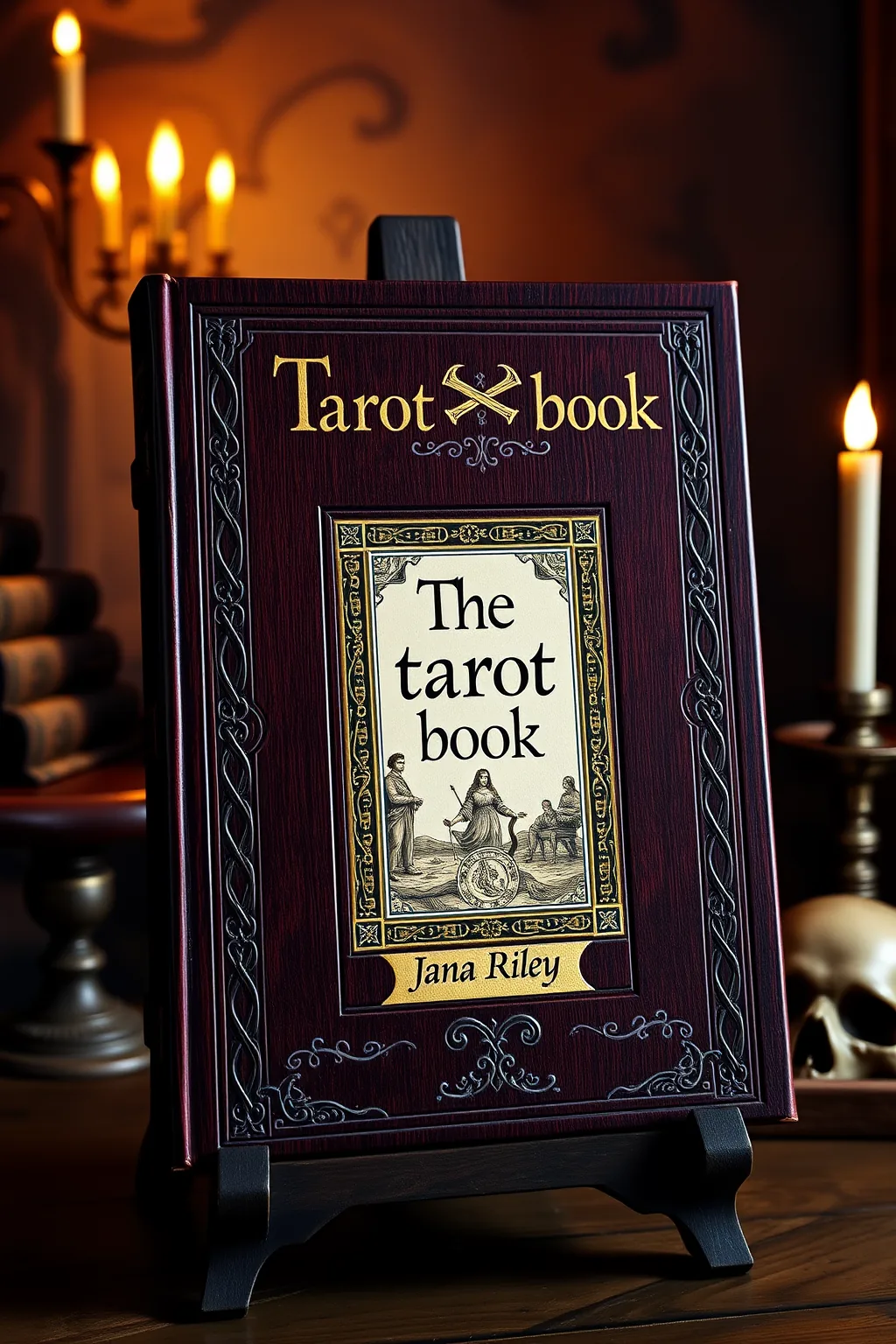
The tarot book



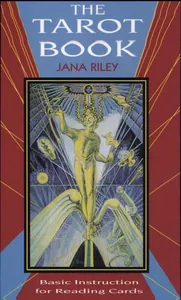
Jana Riley's "The Tarot Book" is a masterfully crafted exposition on the archetypal language of the Tarot. Riley articulates the profound esoteric insights embedded within the 78-card system with remarkable clarity and depth. This work transcends mere card interpretation, offering a philosophical framework for understanding the Tarot as a map of consciousness. Its strength lies in its ability to distill complex symbolism into accessible wisdom, making it an invaluable resource for both neophyte diviners and seasoned practitioners seeking to deepen their connection to this ancient art. A truly essential read for anyone on a path of self-discovery and esoteric inquiry.
📝 Description
63
Jana Riley's "The Tarot Book" was published in 2010, presenting a system of 78 archetypal keys.
Jana Riley's "The Tarot Book" examines the 78 cards of the Tarot as a symbolic language. The book details the Major Arcana's narrative structure and the Minor Arcana's practical applications. Riley interprets each illustration as a symbolic representation of deeper meanings. The text aims to help readers understand the forces that influence our lives. It functions as a guide for those interested in divination and understanding unseen influences. The book connects esoteric philosophy with practical methods for gaining insight and personal awareness.
This book sits within the Western esoteric tradition that views the Tarot not just as a fortune-telling tool, but as a symbolic map of consciousness and the universe. It aligns with interpretations that see the cards as keys to spiritual understanding, drawing on systems like Kabbalah or Hermeticism, though Riley's specific approach focuses on the inherent symbolism within the deck itself. The emphasis is on the Tarot as a mirror to inner states and external circumstances, a practice common in occult studies since the late 19th century.
💡 Why Read This Book?
Uncover the profound archetypal language of the Tarot, transforming a deck of cards into a powerful tool for self-discovery and spiritual guidance. "The Tarot Book" offers a gateway to understanding hidden wisdom, empowering seekers, scholars, and practitioners alike to unlock profound insights into their lives and the cosmos. It’s your essential companion for navigating the mystical currents of existence.
⭐ Reader Reviews
Honest opinions from readers who have explored this book.
❓ Frequently Asked Questions
What is the primary purpose of the Tarot?
The Tarot serves as a symbolic language and a divinatory tool, acting as a mirror to the subconscious mind and the unfolding patterns of life. It offers guidance, insight, and a means to explore potential futures.
How many cards are in a standard Tarot deck?
A standard Tarot deck comprises 78 cards, divided into the Major Arcana (22 cards representing significant life lessons and archetypal journeys) and the Minor Arcana (56 cards detailing daily experiences and challenges).
Can anyone learn to read the Tarot?
Absolutely. While some possess innate intuition, the Tarot is a learnable system. "The Tarot Book" provides the foundational knowledge and interpretive frameworks to embark on this enriching practice.
What is the significance of archetypes in the Tarot?
Archetypes are universal patterns of human experience and personality represented by the Tarot cards. Understanding them allows for deeper interpretation, revealing profound truths about ourselves and our journey.
Is this book suitable for beginners?
Yes, "The Tarot Book" is designed to be accessible to beginners, offering clear explanations and practical guidance while also providing depth for those with prior experience.
🔮 Key Themes & Symbolism
The Archetypal Journey
This book explores the concept of archetypes as the fundamental building blocks of human consciousness and experience, as depicted in the Tarot. It explores how the 78 cards represent universal patterns, from the Fool's innocent leap into the unknown to the World's ultimate completion. Understanding these archetypes allows readers to recognize their presence in their own lives, providing a framework for personal growth, understanding life's challenges, and navigating transformative phases. The Tarot becomes a map of the soul's unfolding narrative.
Symbolism as a Sacred Language
"The Tarot Book" emphasizes the Tarot as a wide range of symbolic imagery, a sacred language designed to communicate with the subconscious and the higher self. Each card, from its colors and figures to its cosmic alignments, holds layers of meaning. Riley guides readers to decipher this visual lexicon, revealing how symbols can unlock hidden knowledge, illuminate intuitive perceptions, and provide clear insights into complex situations. It’s an invitation to learn to 'read' the universe's subtle messages.
Divination as Self-Illumination
Beyond mere fortune-telling, this book frames divination through the Tarot as a profound practice of self-illumination and empowerment. Riley posits that the cards do not dictate fate but rather reflect present energies and potential outcomes, offering guidance for conscious decision-making. By understanding the interplay of forces presented by a Tarot spread, individuals can gain clarity on their path, identify obstacles, and actively shape their destiny. It's about using the Tarot to foster wisdom, foresight, and personal agency.
💬 Memorable Quotes
Direct passages from the work, attributed to the author.
“Each card whispers a story of the soul.”
— This highlights the narrative and deeply personal nature of Tarot readings, emphasizing its connection to our inner journey and spiritual essence.
“Archetypes are the threads of destiny woven into the fabric of existence.”
— This profound statement frames archetypes as fundamental, interconnected forces that shape our lives and the universal order.
“To read the Tarot is to listen to the silent language of the universe.”
— This emphasizes the intuitive and subtle communication inherent in Tarot, suggesting it's a way to perceive truths beyond ordinary sensory input.
“The deck is a map of the human psyche.”
— This metaphor positions the Tarot as a comprehensive guide to understanding the complexities, motivations, and potentials of the human mind and spirit.
💡 Key Ideas
Editorial paraphrase of the work's core concepts — not direct quotes.
The Tarot is not a crystal ball, but a mirror.
This quote suggests the Tarot's primary function is introspection, reflecting the user's inner state and potential rather than predicting a fixed future.
🌙 Esoteric Significance
Tradition
The Tarot is deeply intertwined with Western Esotericism, drawing upon Hermeticism, Kabbalah, Alchemy, and Astrology. Its archetypal imagery appeals to the Tree of Life, the four elements, and planetary correspondences. It serves as a visual representation of spiritual journeys, psychological archetypes, and the cyclical nature of existence, offering a framework for understanding the macrocosm and microcosm.
Symbolism
Each Tarot card is a potent symbol, rich with layered meanings. The Major Arcana depict universal life lessons and spiritual stages, while the Minor Arcana illustrate the flow of energy through the four elements (Wands/Fire, Cups/Water, Swords/Air, Pentacles/Earth) and their associated human experiences. Colors, numbers, figures, and divine or mythological references all contribute to a complex symbolic language that unlocks clear insights.
Modern Relevance
In the contemporary world, the Tarot continues to be a vital tool for psychological exploration, spiritual guidance, and personal empowerment. Its archetypal narratives offer a timeless perspective on human challenges and triumphs, helping individuals work through the complexities of modern life. As a system of self-reflection and intuition development, the Tarot provides a grounding practice amidst rapid change, fostering resilience, clarity, and a deeper connection to one's inner wisdom.
👥 Who Should Read This Book
This comprehensive exploration of the Tarot is an indispensable guide for a wide spectrum of individuals. For the **beginner**, it offers a clear and accessible entry point into the world of cartomancy, explaining the cards and providing foundational knowledge. **Aspiring practitioners** will find practical advice on interpretation and spread usage, enhancing their skills. **Spiritual seekers** and those on a path of self-discovery will appreciate the book’s depth in revealing archetypal truths and guiding inner exploration. **Scholars of esotericism** will find valuable insights into the historical and symbolic underpinnings of the Tarot, enriching their understanding of mystical traditions.
📜 Historical Context
The origins of the Tarot deck are shrouded in a mist of centuries, with its precise inception often debated by scholars. Emerging in mid-15th century Europe, likely in Northern Italy, the earliest known decks were not initially intended for divination but as playing cards, often referred to as 'Tarocchi.' Over time, however, the deck’s rich imagery, particularly the addition of the 22 trump cards (Major Arcana) alongside the four suits, lent itself to esoteric interpretations. By the 18th century, occultists and mystics began to seriously explore the Tarot's potential as a divinatory tool and a repository of hidden wisdom. Figures like Antoine Court de Gébelin and Eliphas Lévi linked the cards to ancient Egyptian mysteries, Kabbalah, and hermetic philosophy, solidifying its reputation as a profound esoteric system that continues to captivate seekers today.
📔 Journal Prompts
Reflect on the Fool's journey – where are you on your path of starting something new?
Identify a recurring symbol in your life and explore its connection to a Tarot archetype.
How can the energy of The Magician be consciously integrated into your daily actions?
Consider the reversed meaning of a card you drew recently. What hidden message might it hold?
What aspect of The High Priestess’s wisdom do you need to cultivate more of in your life right now?
🗂️ Glossary
Archetype
A universal, archaic pattern or image that derives from the collective unconscious and is believed to influence human behavior and perception. In Tarot, these are the foundational figures and concepts represented by the cards.
Major Arcana
The 22 trump cards of a Tarot deck, representing significant life events, spiritual lessons, and archetypal journeys that shape our destiny.
Minor Arcana
The 56 cards of a Tarot deck, divided into four suits (Wands, Cups, Swords, Pentacles), which represent daily experiences, challenges, and circumstances.
Divination
The practice of seeking knowledge of the future or the unknown by supernatural means. In Tarot, it's about gaining insight and guidance through symbolic interpretation.
Spread
A specific arrangement of Tarot cards laid out for interpretation. Different spreads are designed to address particular questions or areas of life.
This book appears in 3 collections
🔮 Readers Also Liked
Browse all →
More by Jana Riley
All books →
From the “Tarot” Collection
View all →
More Free Divination & Tarot Books
View all →