Tarot dictionary and compendium
 69
69

Tarot dictionary and compendium



Ophelia Vance, Mystical Literature Reviewer — Jana Riley’s 'Tarot Dictionary and Compendium' stands as a beacon for those seeking genuine esoteric knowledge within the Tarot. Riley’s masterful exposition moves beyond rote memorization, delving into the profound symbolic language and philosophical underpinnings of each card. The compendium offers a rich, layered understanding, particularly for practitioners aiming to deepen their intuitive connection and interpretive prowess. Its strength lies in its ability to bridge the gap between historical context and practical application, making it an invaluable resource for both novice seekers and seasoned occult scholars. This work is essential for anyone serious about engaging with the Tarot as a tool for spiritual evolution and self-illumination.
📝 Description
69
Jana Riley published 'Tarot Dictionary and Compendium' to demystify the 78 cards and their symbolism.
Jana Riley's 'Tarot Dictionary and Compendium' examines the 78 cards of the Tarot. The book breaks down the symbolism found in each arcana and court card. Riley connects these symbols to broader philosophical ideas and archetypal forces. The text aims to clarify the practice of divination and its historical context. It presents the Tarot not merely as a fortune-telling tool but as a system for self-understanding. The author intends for the book to serve as a guide for those interested in esoteric studies and personal growth.
This volume functions as a reference for the Tarot's visual language. It explains how individual cards and their combinations can be interpreted. The work addresses the historical and philosophical underpinnings that have shaped Tarot study over time. Riley's approach seeks to illuminate the connections between the cards, human psychology, and universal principles. The book encourages a deeper engagement with the Tarot's potential for insight and spiritual development.
This compendium fits within the Western esoteric tradition that views the Tarot as a symbolic language with deeper metaphysical implications. It relates to traditions that see the cards as keys to understanding consciousness, the cosmos, and the human condition, drawing on interpretations that link Tarot imagery to Kabbalah, astrology, and alchemical symbolism. The book positions itself as a tool for practitioners seeking to move beyond superficial readings towards a more profound engagement with the Tarot's philosophical and psychological dimensions.
💡 Why Read This Book?
Unravel the ancient mysteries encoded within the Tarot's 78 cards. This compendium offers profound insights into symbolism, archetypes, and divination, serving as a vital tool for spiritual seekers, academic scholars of esotericism, and dedicated Tarot practitioners. Discover a deeper understanding of yourself and the universe through the profound wisdom of the Tarot, transforming your practice and your perception.
⭐ Reader Reviews
Honest opinions from readers who have explored this book.
❓ Frequently Asked Questions
What is the fundamental nature of the Tarot?
The Tarot is a deck of 78 richly symbolic cards, traditionally used for divination and spiritual exploration. Each card represents archetypal energies, cosmic principles, and stages of the human journey, acting as a mirror to the subconscious and a guide to hidden truths.
Who is the intended audience for this book?
This compendium is designed for a broad spectrum of individuals, from beginners eager to learn the fundamentals of Tarot to advanced practitioners and scholars seeking a deeper, more nuanced understanding of its esoteric dimensions.
How does this book differ from other Tarot guides?
Unlike superficial guides, this compendium delves into the profound philosophical and mystical underpinnings of the Tarot, offering detailed explorations of symbolism and historical esoteric connections, fostering a truly integrated understanding.
Can this book be used for daily practice?
Absolutely. The 'Tarot Dictionary and Compendium' is structured to support both in-depth study and daily engagement, offering clear interpretations and prompts that can enrich personal reflection and divinatory work.
What esoteric traditions influence the Tarot as presented here?
The book draws upon a rich tapestry of Western esoteric traditions, including Hermeticism, Kabbalah, alchemy, and Jungian archetypal psychology, weaving them into a coherent and profound interpretation of the Tarot's wisdom.
🔮 Key Themes & Symbolism
The Language of Archetypes
This theme explores how the 78 Tarot cards serve as a visual lexicon of universal human experiences and cosmic forces. It explores the archetypal figures and narratives that resonate across cultures and time, such as the Hero's Journey, the Shadow, and the Anima/Animus. Understanding these archetypes allows practitioners to tap into a deeper layer of consciousness, recognizing their presence not only in the cards but within their own lives and the collective unconscious.
Symbolic Alchemy and Transformation
Here, the focus shifts to the alchemical process inherent in the Tarot. Each card is examined as a stage or element within a transformative journey, mirroring the alchemical Great Work of spiritual purification and enlightenment. The interplay of symbols, colors, and numerology is dissected to reveal how the Tarot acts as a map for personal metamorphosis, guiding the seeker through dissolution, purification, and reintegration towards a higher state of being.
Divination as Cosmic Resonance
This section investigates the practice of Tarot divination not merely as fortune-telling, but as a sophisticated method of attuning to the subtle energies and synchronistic patterns of the universe. It explores how the cards can act as a conduit for intuitive perception, revealing hidden influences, potential futures, and the energetic currents shaping events. The emphasis is on understanding divination as a dialogue with the cosmos, fostering insight and empowering conscious choice.
💬 Memorable Quotes
Direct passages from the work, attributed to the author.
“Each card, a glyph of destiny and choice.”
— This highlights the dual nature of the Tarot: its ability to show potential paths and predetermined influences (destiny) while also emphasizing the power of human agency and decision-making (choice).
“The Fool steps forth, unafraid of the unseen.”
— This refers to the archetype of the Fool, symbolizing new beginnings, innocence, and the courage to begin a spiritual or personal journey without knowing the outcome.
“The High Priestess guards the veil of mystery.”
— This points to the intuitive and hidden knowledge associated with the High Priestess, representing the subconscious, intuition, and the secrets guarded by the veil between worlds.
“The World card: completion and the eternal cycle.”
— This signifies the culmination of a journey, wholeness, and the understanding of life as an ongoing, cyclical process of creation and dissolution.
💡 Key Ideas
Editorial paraphrase of the work's core concepts — not direct quotes.
The Tarot is a mirror reflecting the universe within.
This quote suggests the Tarot's power to externalize and illuminate the inner workings of the cosmos and the individual psyche, revealing connections and truths.
🌙 Esoteric Significance
Tradition
The Tarot, as explored in this compendium, is deeply rooted in Western esoteric traditions. It draws heavily from Hermeticism, particularly the concept of 'As Above, So Below,' reflecting the interconnectedness of the macrocosm and microcosm. Kabbalistic principles, such as the Tree of Life and its pathways, are often mapped onto the Major Arcana, providing a framework for understanding spiritual ascent and divine emanation. Alchemical symbolism also plays a crucial role, depicting stages of transformation and purification.
Symbolism
The visual language of the Tarot is a dense network of potent symbols. The Major Arcana represent archetypal forces and significant life lessons, while the Minor Arcana detail the practical manifestations of these energies in the four elements: Wands (fire, spirit), Cups (water, emotion), Swords (air, intellect), and Pentacles (earth, material). Colors, numbers, astrological correspondences, and mythological figures all contribute to a rich symbolic range, inviting deep contemplation and intuitive understanding.
Modern Relevance
In our rapidly evolving world, the Tarot offers a timeless anchor for introspection and spiritual growth. It provides a framework for navigating complex emotions, understanding personal challenges, and seeking guidance in decision-making. Its archetypal narratives resonate with modern psychological theories, offering tools for self-discovery and conscious evolution. The Tarot's enduring appeal lies in its ability to connect individuals with a deeper sense of purpose, intuition, and the universal patterns that govern existence, fostering resilience and inner wisdom.
👥 Who Should Read This Book
This 'Tarot Dictionary and Compendium' is an indispensable resource for a diverse audience. For the **beginner**, it offers a clear, foundational understanding of each card's meaning and symbolism, paving the way for confident practice. **Scholars of esotericism** will find a valuable collection of historical context, symbolic analysis, and connections to various mystical traditions. **Spiritual seekers** will discover a profound tool for self-reflection, intuition development, and uncovering life's deeper meanings. **Dedicated Tarot practitioners** will appreciate the nuanced interpretations and the comprehensive approach that elevates their readings from simple predictions to useful insights into the human condition.
📜 Historical Context
The Tarot emerged from the esoteric milieu of Renaissance Europe, a period characterized by a resurgence of interest in ancient wisdom, Neoplatonism, Hermeticism, and Kabbalah. Initially developed as a card game, its potential for divinatory and symbolic interpretation was recognized by occultists in the 18th and 19th centuries, particularly through figures like Antoine Court de Gébelin and Eliphas Lévi. These interpretations linked the Tarot to ancient Egyptian mysteries, Hebrew mysticism, and alchemical principles. The Rider-Waite-Smith deck, published in 1909, profoundly influenced modern Tarot, making its symbolic language more accessible. Jana Riley’s work builds upon this long history, synthesizing centuries of esoteric thought into a comprehensive guide for contemporary seekers.
📔 Journal Prompts
Reflect on the journey of The Fool. What 'leap of faith' are you currently contemplating in your life?
Consider The High Priestess. What hidden knowledge or intuitive whispers are you being called to acknowledge and explore?
Examine the symbolism of the element represented by your birthdate's Tarot card. How does this element manifest in your daily life?
How does the concept of 'As Above, So Below' resonate with a recent challenge or success you've experienced?
If The World card represents completion, what is one cycle in your life that feels ready to conclude, and what new beginning might follow?
🗂️ Glossary
Arcana
Refers to the two main divisions of the Tarot deck: the Major Arcana (22 cards) representing significant life lessons and archetypal journeys, and the Minor Arcana (56 cards) detailing the practical energies of daily life.
Archetype
A universal, archaic pattern of behavior or image that is part of the collective unconscious. In Tarot, each card embodies one or more archetypal energies.
Divination
The practice of seeking knowledge of the future or the unknown by supernatural means, often through the use of tools like the Tarot, which are believed to tap into intuitive or cosmic insights.
Esotericism
A broad category of mystical or occult beliefs and practices that are concerned with knowledge or wisdom that is not available to the general public, often involving hidden meanings and spiritual disciplines.
Symbolism
The use of symbols to represent ideas or qualities. In the Tarot, every element – images, colors, numbers – carries layers of symbolic meaning that contribute to its profound interpretative power.
This book appears in 3 collections
🔮 Readers Also Liked
Browse all →
More by Jana Riley
All books →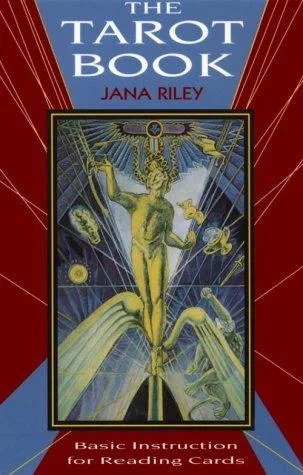
From the “Tarot” Collection
View all →

More Free Divination & Tarot Books
View all →