I-ming Liu
Liu Yichang was a pioneering Hong Kong writer and editor, recognized for his stream of consciousness novel and influence on cinema.
Born in Shanghai in 1918, Liu Yichang became a significant figure in Hong Kong's literary landscape, often credited as the founder of its modern literature. After graduating from St. John's University, he worked as an editor in Chongqing during the war and returned to Shanghai post-surrender, even establishing his own publishing house. Facing instability in China, he relocated to Hong Kong in 1948, later spending time in Singapore and Malaysia before settling back in Hong Kong. Throughout his career, he was a prolific writer and editor, contributing to numerous newspapers and establishing the journal Hong Kong Literature. His work significantly impacted filmmaking, with his novels inspiring acclaimed movies.
Liu's literary output includes over 30 books, with "The Drunkard" (1963) being particularly noted as an early stream of consciousness novel in Chinese literature. Another key work, "Intersection" (1993), comprises two interconnected stories and was later adapted into a film. Beyond his creative writing, Liu was a dedicated editor, nurturing emerging literary talents and maintaining a rigorous daily writing schedule, producing an average of 13,000 characters daily. He received several honors from the Hong Kong government and academic institutions for his contributions to arts and literature before his passing in 2018 at the age of 99.
Early Life and Wartime Experiences
Liu Yichang, born Liu Tongyi in Shanghai on December 7, 1918, hailed from Zhenhai, Ningbo. He completed his education at St. John's University in Shanghai in the summer of 1941. Following the outbreak of the Pacific War and the Japanese occupation of the Shanghai International Settlement, he was sent by his father to Chongqing, the wartime capital. He arrived in the spring of 1942 and began working as an editor for major newspapers, Sao Dang Bao and Guomin Gongbao. While in Chongqing, he was the first to report the death of Japanese admiral Isoroku Yamamoto. After Japan's surrender in 1945, Liu returned to Shanghai. He declined an opportunity to cover the surrender ceremony on the USS Missouri, opting instead to return home. He continued his work with Sao Dang Bao, which was then renamed Peace Daily.
Publishing and Relocation to Hong Kong
In 1946, Liu established the Huaizheng Cultural Society, named in honor of his father who had passed away during the Japanese occupation. Despite being a new venture, the publishing house successfully acquired the rights to publish works by notable authors such as Shi Zhecun, Dai Wangshu, and Yao Xueyin. As the Chinese Civil War intensified and hyperinflation affected China's economy, Liu moved to Hong Kong in 1948. He intended to continue his publishing endeavors and brought many manuscripts with him. However, he found that Hong Kong's literary market was not receptive to serious works. Consequently, he shifted his focus to editing for newspapers like the Hong Kong Times, Sing Tao Weekly, and West Point.
Career in Southeast Asia and Hong Kong's Literary Scene
Liu relocated to Singapore in 1952 to work as an editor for Yi Shi Bao. He later moved to Kuala Lumpur, Malaysia, where he served as editor-in-chief for Federation Daily. It was during this period that he met dancer Lo Pai-wun, whom he married in 1957. In 1957, Liu returned to Hong Kong permanently with his wife. He took on roles as editor-in-chief for the newspaper supplements of the Hong Kong Times and the Sing Tao Daily. In 1985, he founded the monthly journal Hong Kong Literature, serving as its chief editor until 2000. Over his extensive career as an editor, he played a crucial role in mentoring and promoting emerging writers, including the poet Yesi and the author Xi Xi.
Literary Contributions and Influence
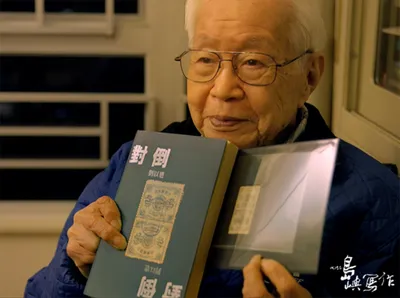
Liu Yichang is widely regarded as the originator of modern literature in Hong Kong, having published over 30 books across a career spanning six decades. His 1963 novel, "The Drunkard" (Jiutu), is considered one of the earliest Chinese novels to employ modernist techniques and is often cited as China's first stream of consciousness novel. Initially written for his own amusement, the novel gained significant recognition and influence. "Intersection" (Duidao), published in 1993, features two interconnected narratives, structured similarly to tête-bêche postage stamps. Both "The Drunkard" and "Intersection" served as inspirations for acclaimed films by director Wong Kar-wai: "2046" and "In the Mood for Love," respectively. Liu was also a highly productive columnist, contributing daily to the 13 newspapers he edited, writing approximately 13,000 Chinese characters each day.
Books by I-ming Liu
0 free public domain books · Read online or download