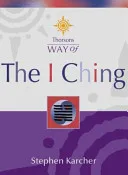
The I Ching
 75
75

The I Ching
Stephen Karcher's adaptation of the I Ching, first published in 1995, attempts a commendable feat: rendering the notoriously dense "Book of Changes" into a concise and digestible format for a Western audience. The strength of this version lies in its clarity; Karcher strips away some of the more archaic language and convoluted commentary, presenting the hexagrams and their core meanings with admirable directness. For instance, his interpretation of Hexagram 26, "The Taming Power of the Great," focuses effectively on the potential for powerful, yet controlled, forces. However, this conciseness comes at a cost. In its effort to be accessible, the adaptation sometimes smooths over the profound ambiguities and philosophical layers that make the original I Ching such a deep wellspring of contemplation. The resulting text, while easier to approach, may lack the challenging depths that seasoned practitioners might seek. Karcher’s "Way of the I Ching" is a useful entry point, but not the definitive oracle.
📝 Description
75
Stephen Karcher's 1995 adaptation of the I Ching offers a clear path to this ancient divination text.
Stephen Karcher's 1995 edition of the I Ching aims to make the ancient Chinese oracle accessible for contemporary use. The book breaks down the 64 hexagrams and their interpretations into a format designed for modern understanding. Karcher focuses on drawing practical wisdom from the core texts, simplifying a complex system without losing its inherent depth. This version is intended as a guide for individuals seeking advice on personal decisions and professional challenges.
This edition is especially helpful for those new to the I Ching or who have found prior encounters with the text difficult. It speaks to readers interested in practical divination and self-reflection, providing a clear method for consulting the oracle. Those looking for actionable advice and a structured approach to understanding the hexagrams will find this edition useful. It is for anyone wanting to connect ancient principles with modern decision-making.
The I Ching, originating over three millennia ago, is one of the world's oldest continuously used texts. Its philosophical roots lie in Taoist and Confucian thought, shaping Chinese culture, governance, and spirituality. Karcher's 1995 adaptation appeared during a late 20th-century global interest in Eastern philosophies and divination. This period saw many Western scholars and practitioners engaging with classical texts, and Karcher's accessible version fits within this broader trend of reinterpreting ancient wisdom for a new audience.
💡 Why Read This Book?
• Gain a practical framework for consulting the I Ching, learning how to generate and interpret the 64 hexagrams as presented in Karcher's accessible 1995 adaptation, aiding in decision-making. • Understand the core symbolism of yin and yang lines, and how their combinations create hexagrams, providing a foundational grasp of this ancient Chinese oracle's structure. • Explore the concept of "changing lines" within hexagrams, as detailed in Karcher's work, to better comprehend transitional phases and evolving circumstances in your life.
⭐ Reader Reviews
Honest opinions from readers who have explored this book.
❓ Frequently Asked Questions
When was Stephen Karcher's "The I Ching" first published?
Stephen Karcher's "The I Ching" was first published in January 1995. This edition aimed to provide a clear and accessible guide to the ancient Chinese oracle for a modern audience.
What makes Karcher's "The I Ching" different from other versions?
Karcher's version is noted for its concise adaptation, aiming for accuracy to the ancient texts while remaining remarkably easy to understand. It focuses on practical application and clarity for contemporary readers.
Is "The I Ching" a divination tool or a philosophical text?
It functions as both. Traditionally, the I Ching is used as an oracle for divination, offering guidance through hexagrams. It also contains profound philosophical insights rooted in Taoist and Confucian traditions, exploring change and balance.
How many hexagrams are there in the I Ching?
The I Ching is structured around 64 hexagrams. Each hexagram is formed by six lines, which can be either solid (yang) or broken (yin), representing fundamental archetypes and situations.
What is the significance of 'changing lines' in the I Ching?
Changing lines indicate a transition or development within a hexagram's situation. They suggest how the current state might evolve, offering more nuanced advice beyond the primary hexagram's meaning.
Is Stephen Karcher's "The I Ching" suitable for beginners?
Yes, the book is specifically designed to be clear and accessible, making it a good starting point for those new to the I Ching or who have found other versions daunting.
🔮 Key Themes & Symbolism
Hexagrams as Archetypes
The 64 hexagrams in "The I Ching" are presented not just as random symbols but as fundamental archetypal situations that reflect the patterns of existence. Each combination of yin and yang lines, as interpreted by Karcher, maps onto core human experiences and universal dynamics. Understanding these archetypes allows the reader to identify the underlying forces at play in their own circumstances, fostering a deeper self-awareness and a more nuanced approach to problem-solving.
The Dynamics of Change
Central to the I Ching is the principle that all things are in flux. Karcher's edition emphasizes this by explaining the "changing lines" within hexagrams. These lines act as indicators of transition, suggesting how a situation is evolving or can be influenced. This focus on impermanence encourages adaptability and foresight, moving beyond static predictions to a more dynamic understanding of cause and effect in one's life.
Practical Oracle Consultation
Karcher's approach aims to explain the process of consulting the I Ching. The book guides readers on how to formulate questions and interpret the resulting hexagrams, making the oracle a practical tool for everyday guidance. The emphasis is on using the text's wisdom to make informed decisions, gain clarity on challenges, and align actions with the natural flow of events, rather than seeking simple fortune-telling.
Yin and Yang Balance
The fundamental duality of yin (broken lines) and yang (solid lines) permeates the I Ching. Karcher's work illustrates how the interplay and balance between these forces shape all phenomena. Recognizing the presence and dominance of yin or yang in a given hexagram provides insight into the prevailing energies of a situation, helping the reader to understand conflict, harmony, and the path toward equilibrium.
💬 Memorable Quotes
Direct passages from the work, attributed to the author.
“The I Ching is the oldest and most powerful Chinese oracle.”
— This statement sets the stage for the book's purpose, highlighting the text's immense historical weight and its potential as a source of profound guidance and foresight for contemporary users.
“This clear and accessible guide explains how you can take advantage of its wisdom to create happiness and success in your life.”
— This blurb interpretation emphasizes the practical, benefit-oriented nature of Karcher's adaptation, positioning the I Ching not just as an ancient text but as a tool for tangible personal improvement and well-being.
“for the first time, we have a concise adaptation of the I Ching that is both an accurate interpretation of the ancient original texts and remarkably easy to understand.”
— This highlights the perceived innovation of Karcher's 1995 work, suggesting it bridges the gap between scholarly fidelity to classical Chinese texts and user-friendliness for a broader audience.
“What makes 'Way of the I Ching' so special is that, for the first time, we have a concise adaptation...”
— This promotional phrasing points to the perceived unique selling proposition of Karcher's edition: its conciseness and accessibility, aiming to make the complex "Book of Changes" approachable without significant loss of interpretive accuracy.
“Another benefit to this edition is Dr. Karcher's [approach]”
— Though incomplete in the original blurb, this suggests that the author's specific expertise or method of presentation is a key feature contributing to the value and clarity of this particular I Ching adaptation.
🌙 Esoteric Significance
Tradition
The I Ching belongs to the ancient Chinese philosophical and divinatory tradition, predating many Western esoteric systems. While not strictly Hermetic, Kabbalistic, or Gnostic, its emphasis on cosmic patterns, balance (yin/yang), and the interconnectedness of all things aligns with universal esoteric principles found across traditions. Karcher's adaptation fits within the modern esoteric movement's interest in cross-cultural wisdom, presenting the I Ching as a profound system for understanding universal laws of change and cyclical processes.
Symbolism
The core symbols are the yin (broken line, receptive, feminine) and yang (solid line, active, masculine) which combine to form the 64 hexagrams. These hexagrams, such as 'The Creative' (Qian) or 'The Receptive' (Kun), represent fundamental archetypes of existence. Karcher's work interprets these symbols not just as abstract concepts but as dynamic forces influencing situations, offering a symbolic language to decode the underlying energies at play in human experience.
Modern Relevance
Contemporary thinkers and practitioners in fields ranging from psychology (particularly transpersonal) to systems theory and even business strategy draw upon the I Ching's principles. Its focus on cyclical change, adaptability, and understanding underlying patterns speaks to modern complexity science. Karcher's accessible version makes these ancient insights available to a broad audience interested in self-development, mindfulness, and holistic approaches to problem-solving, bridging classical Chinese thought with contemporary Western concerns.
👥 Who Should Read This Book
• Individuals new to divination seeking a structured and understandable entry point into the principles of the I Ching, benefiting from Karcher's clear explanations of hexagrams and consultation methods. • Students of comparative philosophy and religion interested in exploring the foundational texts of Chinese thought, appreciating Karcher's 1995 adaptation for its accessible presentation of complex ideas. • Personal development enthusiasts looking for tools to enhance self-awareness and decision-making, finding value in the I Ching's focus on understanding change and aligning actions with natural patterns.
📜 Historical Context
Stephen Karcher's "The I Ching" (first published 1995) arrived during a period of intensified Western engagement with Eastern esoteric traditions. Following the cultural shifts of the 1960s and 70s, and building on earlier translations by figures like Richard Wilhelm (whose German translation was famously introduced by Carl Jung in 1950), the late 20th century saw a proliferation of popularizations and adaptations of classical Chinese texts. Karcher's work is part of this wave, seeking to make the complex "Book of Changes" more palatable than dense academic renderings. While not directly engaging with a named contemporary rival in its blurb, it implicitly competes with numerous other translations and interpretations of the I Ching that were circulating, each offering a different balance between fidelity to the original text and accessibility for a Western readership. The reception of such works often varied, with some scholars praising clarity and others lamenting oversimplification.
📔 Journal Prompts
The relationship between Hexagram 1 (Qian) and Hexagram 2 (Kun).
Interpreting the 'changing lines' in a recent consultation.
The balance of yin and yang in daily life.
Applying the wisdom of Hexagram 11 (T'ai) to current challenges.
Reflecting on the concept of 'The Book of Changes' itself.
🗂️ Glossary
I Ching
Also known as the "Book of Changes," this is an ancient Chinese divination text and one of the oldest Chinese classics. It consists of hexagrams, their interpretations, and associated texts, used for understanding cosmic patterns and making decisions.
Hexagram
A figure composed of six stacked horizontal lines, each line being either solid (yang) or broken (yin). There are 64 possible hexagrams, representing fundamental archetypes and situations.
Yin
In the I Ching, yin represents the passive, receptive, dark, feminine, and yielding principle, symbolized by a broken line ( - - ).
Yang
In the I Ching, yang represents the active, creative, light, masculine, and firm principle, symbolized by a solid line ( — ).
Changing Lines
Specific lines within a hexagram that are in the process of transformation. They indicate a shift or development in the situation, offering more nuanced guidance beyond the primary hexagram.
Oracle
A source of wise counsel or prophetic predictions, often consulted through specific rituals or texts. The I Ching serves as a primary example of an oracle in Chinese tradition.
Taoism
A philosophical and religious tradition originating in China that emphasizes living in harmony with the Tao (the "Way"), characterized by simplicity, spontaneity, and non-interference (wu wei).