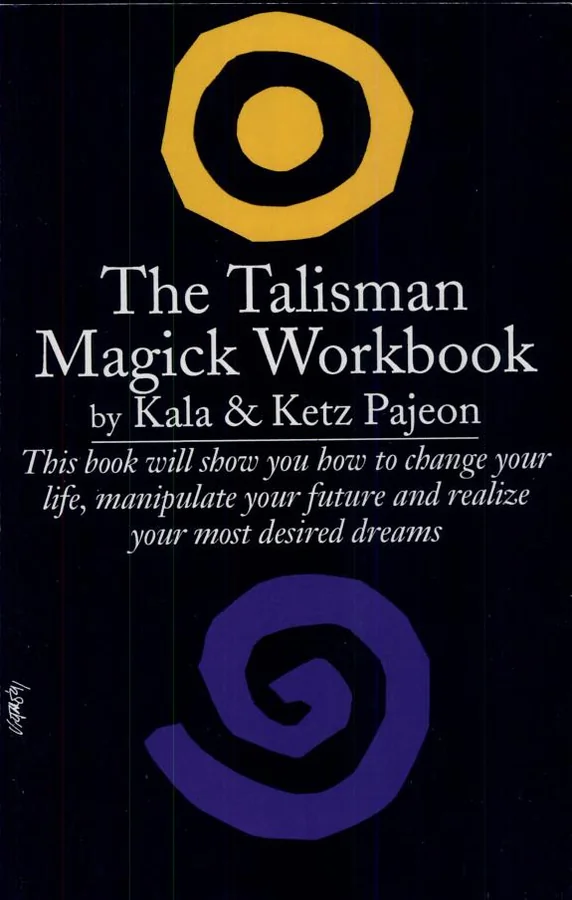
The Talisman Magick Workbook
 71
71

The Talisman Magick Workbook
The Pajeons’ workbook provides a refreshingly direct manual for talisman construction, eschewing abstract philosophy for concrete steps. Its strength lies in its methodical breakdown of the process, from material selection to invocation. A particularly effective section details the energetic attunement of the practitioner before the talisman's creation, a crucial but often overlooked element. However, the text could benefit from a more extensive glossary for those less familiar with specific astrological timings or planetary rulerships, which are assumed knowledge in places. The passage on charging a talisman under a specific planetary hour, detailing the precise sequence of gestures and visualizations, exemplifies the book's practical efficacy. It is a functional guide for the serious student of applied ceremonial magic.
📝 Description
71
Published in 1992, The Talisman Magick Workbook offers a practical method for creating and activating talismans.
This workbook by Kala and Ketz Pajeon provides direct instruction for making and charging talismans. It moves beyond theory to focus on the actual mechanics of sympathetic magic and the use of esoteric symbols. The text is for practitioners who want to imbue objects with specific energies and intentions through detailed exercises.
The book is structured for those beyond introductory occult material, aiming for applied magical work. It suits solitary practitioners or small groups seeking a systematic approach to talisman construction. Readers interested in planetary correspondences, sigil creation, and amulet charging will find the contents directly applicable.
Its method centers on the systematic construction and consecration of talismans. This involves selecting materials based on their energetic qualities, timing operations with astrological considerations, and inscribing symbols. The Pajeons highlight the magician's will and focused intent as key to the process, detailing both physical crafting and energetic activation.
Emerging in 1992, The Talisman Magick Workbook appeared during a resurgence of practical occultism. It differs from purely academic studies by offering an actionable framework for contemporary magical creation. The book reflects a late 20th century desire for tangible magical results and personal empowerment through the creation of ritual objects. Its approach provides a method for practitioners to engage directly with magical principles rather than just studying them.
💡 Why Read This Book?
• Learn a structured, step-by-step methodology for creating effective talismans, a core practice in Western esotericism, that goes beyond mere theory. • Understand the practical application of planetary correspondences and astrological timing in magical operations, as detailed in the chapter on 'Choosing the Right Time'. • Develop practical skills in sigil crafting and energetic charging of objects, enabling personal empowerment through tangible magical tools.
⭐ Reader Reviews
Honest opinions from readers who have explored this book.
❓ Frequently Asked Questions
What is the primary focus of The Talisman Magick Workbook?
The book concentrates on the practical, step-by-step creation and activation of talismans. It guides readers through selecting materials, understanding timings, inscribing symbols, and energetically charging objects for specific magical purposes.
Who are the authors, Kala and Ketz Pajeon?
Kala and Ketz Pajeon are the authors of this practical guide to talisman magic. Their work, first published in 1992, emphasizes hands-on application of esoteric principles.
What kind of magical traditions does this workbook draw from?
The workbook integrates principles from Western Hermeticism and ceremonial magic, focusing on planetary correspondences, astrological timing, and symbolic inscription for magical effect.
Is this book suitable for absolute beginners in magic?
While it offers clear instructions, the book assumes some familiarity with basic esoteric concepts like planetary rulerships. It is best suited for practitioners who have moved beyond introductory texts.
What are the key elements of talisman creation discussed in the book?
Key elements include the selection of appropriate materials, precise timing based on astrological factors, the inscription of relevant symbols or sigils, and the energetic charging of the completed talisman.
When was The Talisman Magick Workbook first published?
The Talisman Magick Workbook was first published in 1992, reflecting a surge in practical occultism during the late 20th century.
🔮 Key Themes & Symbolism
Practical Talisman Construction
This workbook distinguishes itself by focusing on the 'how-to' of talisman creation. It moves beyond theoretical discussions of sympathetic magic to provide actionable steps for practitioners. Readers are guided through the entire process, from selecting the correct metals and stones, understanding the opportune astrological timings for operation, to the precise methods of inscription and consecration. The emphasis is on tangible results achieved through diligent practice and correct procedure, making it a valuable resource for those seeking to manifest specific outcomes through enchanted objects.
Astrological Timing and Planetary Magic
A central theme is the strategic use of astrological timings to imbue talismans with specific energies. The Pajeons detail how planetary hours, days, and relevant celestial configurations can be leveraged to enhance the potency and effectiveness of a talisman. This approach grounds the magical work within a cosmic framework, suggesting that aligning operations with natural cycles amplifies their power. Understanding these timings is presented not as an arbitrary ritual, but as a fundamental principle for directing and focusing magical forces accurately.
The Power of Will and Symbolism
The workbook underscores the magician's will as the primary engine driving talismanic effectiveness. Intent, visualization, and focused concentration are presented as crucial components that activate and direct the energies invoked. Furthermore, the book explores the significance of various symbols and sigils, explaining how they act as conduits and focal points for magical power. The careful selection and inscription of these signs are vital for communicating the desired intent to the universe and the talisman itself.
Energetic Charging and Activation
Beyond mere construction, the book dedicates significant attention to the process of energetic charging and activation. This involves rituals and techniques designed to imbue the created object with a distinct magical charge. The Pajeons outline methods for the practitioner to transfer their focused will and the desired energies into the talisman, effectively awakening its potential. This final stage is critical for transforming a mundane object into a potent magical tool ready for use.
💬 Memorable Quotes
Direct passages from the work, attributed to the author.
“The effectiveness of a talisman is directly proportional to the clarity of the magician's intent and the precision of the operation.”
— This highlights the core principle that magical results stem from focused mental energy and adherence to specific, correct procedures, rather than just the physical object itself.
“Align your work with the celestial currents; do not attempt to force your will against the cosmic tide.”
— This emphasizes the importance of working in harmony with astrological timings and natural energies, suggesting that such alignment amplifies magical efficacy and reduces resistance.
“Every material possesses its own energetic signature; choose wisely to match the intended purpose.”
— This points to the doctrine of signatures and sympathetic magic, where the inherent qualities of substances (metals, stones, herbs) are selected to correspond with the desired magical outcome.
“The symbol is the bridge between the seen and the unseen, the physical and the energetic.”
— This interpretation underscores the function of symbols and sigils as essential tools for channeling and manifesting magical forces across different planes of existence.
“Consecration is not merely a ritual act, but the infusion of life and purpose into inert matter.”
— This suggests that the act of consecration goes beyond symbolic gestures, actively imbuing the talisman with a dynamic, purposeful energy that animates its function.
🌙 Esoteric Significance
Tradition
This workbook firmly resides within the Western Hermetic and ceremonial magic tradition. It draws heavily on principles of sympathetic magic, astrological correspondences, and the power of focused will, all cornerstones of Hermeticism. The Pajeons’ approach is practical, aiming to systematize the creation of magical tools rather than focusing on philosophical speculation or devotional practices. It aligns with the goal of many Hermetic practitioners to consciously engage with and direct subtle energies for specific aims, making the talisman a key instrument in this endeavor.
Symbolism
Central to the book's symbolism is the talisman itself, representing a focal point for concentrated magical energy and intent. Planetary symbols and sigils are crucial, acting as conduits for specific cosmic forces (e.g., Jupiter for expansion, Mars for force). The choice of materials – specific metals, gemstones, and even colors – carries inherent symbolic weight, aligning with traditional esoteric correspondences. The act of inscription is itself symbolic, translating abstract will into a permanent, tangible form that appeals to the desired magical influence.
Modern Relevance
The practical, hands-on methodology presented in The Talisman Magick Workbook remains highly relevant for contemporary practitioners of Western esotericism. In an age saturated with digital information, the book’s emphasis on tangible, crafted magical tools offers a grounding counterpoint. Modern practitioners of ceremonial magic, chaos magic (which often repurposes traditional methods), and even those exploring witchcraft may find its systematic approach to talisman creation a valuable resource for personal magical development and the manifestation of intent.
👥 Who Should Read This Book
• Aspiring ceremonial magicians seeking a structured, practical guide to creating their own magical tools, moving beyond theoretical study. • Practitioners interested in applied Hermeticism and planetary magic who want to learn the specific techniques for imbuing objects with intention. • Solitary occultists looking for actionable methods to engage with sympathetic magic and develop tangible aids for their spiritual or magical work.
📜 Historical Context
Published in 1992, The Talisman Magick Workbook emerged during a resurgence of interest in practical Western esotericism. The preceding decades had seen a revival of occult studies, influenced by figures like Aleister Crowley and Dion Fortune, but also a growing demand for direct, applicable magical techniques. This era saw the proliferation of magical organizations and publications aiming to clarify complex systems and provide actionable frameworks for practitioners. The Pajeons' work tapped into this current by offering a structured approach to talisman creation, a practice with ancient roots but often shrouded in arcane lore. It contrasted with more theoretical or purely historical accounts of magic prevalent at the time. While not engaging directly with academic discourse, the book represented a tangible contribution to the practice of modern ceremonial magic, providing tools for solitary practitioners seeking to engage with planetary forces and symbolic technology.
📔 Journal Prompts
The selection of materials for a talisman: reflect on the energetic signatures of common objects.
Planetary hours and their influence: how might aligning talismanic work with celestial timings affect its outcome?
The role of the sigil: consider the power of abstract symbols in focusing intent.
Consecration rituals: what personal elements can be incorporated to uniquely charge an object?
Bridging intent and form: how does the physical act of creating a talisman solidify magical purpose?
🗂️ Glossary
Talisman
An object inscribed with magical symbols and consecrated to serve as a focus for specific energies or intentions, believed to exert influence on behalf of its owner.
Sympathetic Magic
A type of magic based on the principle that like produces like, or that a cause affects its likeness or that which is connected to it; often involves creating a likeness of the desired outcome.
Planetary Correspondences
The system of assigning specific qualities, colors, metals, stones, and influences to the seven classical planets (Sun, Moon, Mercury, Venus, Mars, Jupiter, Saturn) within esoteric traditions.
Sigil
A symbol created to represent a specific magical intent or concept, often formed by combining letters or abstract shapes, and then charged with energy.
Consecration
The ritual act of dedicating an object or space for sacred purposes, often involving purification and the infusion of spiritual or magical energy.
Astrological Timing
The practice of performing magical operations during specific astrological conditions, such as particular planetary hours, days, or favorable planetary aspects, to enhance effectiveness.
Energetic Charging
The process of infusing an object, symbol, or space with focused magical energy or intent, typically through visualization, invocation, or ritual action.
This book appears in 1 collection
🔮 Readers Also Liked
Browse all →








From the “Talismans” Collection
View all →


More Free Occult Philosophy Books
View all →