The Ancient Science of Geomancy
 79
79

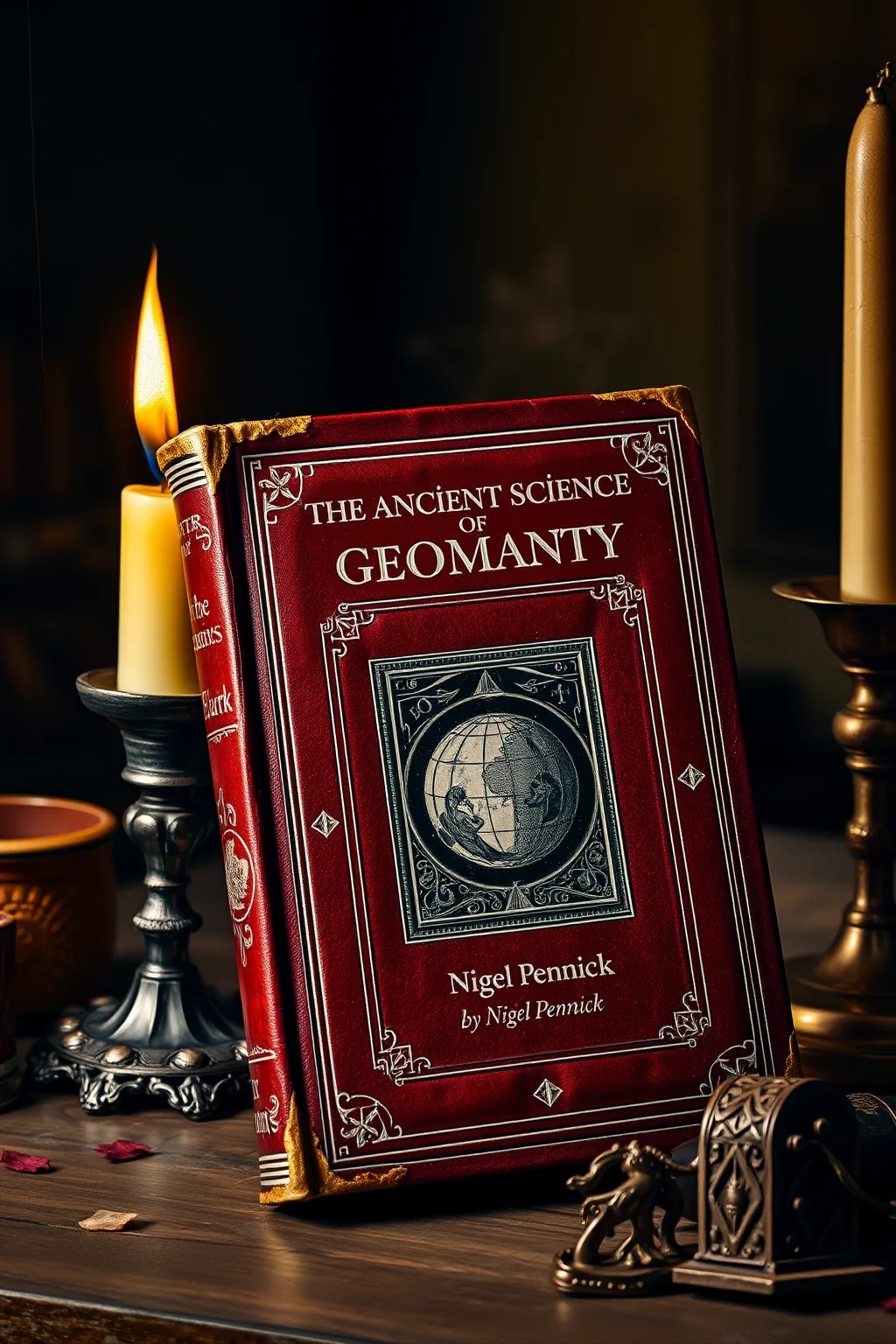
The Ancient Science of Geomancy
Pennick's "The Ancient Science of Geomancy" offers a remarkably thorough grounding in a practice often reduced to superficial interpretations. The author's strength lies in his meticulous cataloging of the geomantic figures and their historical permutations, presenting them with a scholarly rigor that respects the tradition. He avoids the sensationalism that can plague occult literature, instead focusing on the systematic nature of the art. However, the sheer density of information, particularly concerning the historical lineages and regional variations, can make the text feel somewhat academic rather than immediately practical for a novice. A particularly illuminating section details the medieval Arab geomancers' sophisticated charting methods, demonstrating the art's depth. While it demands focused study, the book serves as an indispensable reference for anyone serious about geomancy. It is a foundational text for understanding this intricate divinatory system.
📝 Description
79
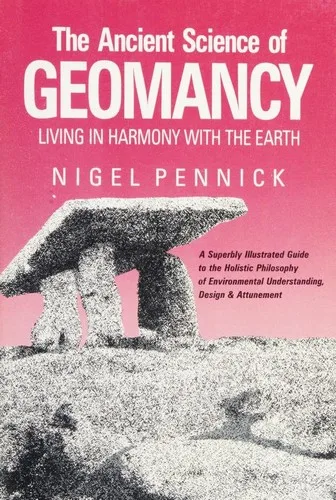
Published in 1987, Nigel Pennick's "The Ancient Science of Geomancy" details an old divinatory art.
This book examines geomancy, a practice that interprets patterns from earth and stone for divination. Nigel Pennick traces the historical development of this art, showing its evolution across different cultures and time periods. He argues that geomancy is more than simple fortune-telling; it is a symbolic language and a way to understand earth energies.
The text is for those serious about esoteric traditions, especially Western esotericism, divination, and earth magic. It will help practitioners who want to understand geomantic figures and their connections better. Scholars of occult history and comparative religion will also find it valuable, as will anyone interested in the links between geography, symbolism, and mystical practices.
Pennick places geomancy within the history of Western esoteric thought, connecting it to alchemy, astrology, and Kabbalah. He shows that learned individuals and mystics used this practice for centuries, even if it was often kept secret. The book draws on many historical sources to show geomancy's lasting impact on European intellectual and magical traditions before its popularity faded.
💡 Why Read This Book?
• Gain a detailed understanding of the 16 geomantic figures, such as Al-Qalam and Al-Nasr, and their specific symbolic meanings, moving beyond simplistic interpretations. • Learn about the historical development of geomancy in medieval Europe, specifically referencing its integration with other esoteric arts around the 15th century. • Discover practical methods for constructing and interpreting geomantic charts, as detailed in Pennick's step-by-step explanations of the figures' formation.
⭐ Reader Reviews
Honest opinions from readers who have explored this book.
❓ Frequently Asked Questions
What are the 16 geomantic figures?
The 16 geomantic figures are symbolic arrangements derived from a binary system, often generated by random methods. Each figure, like 'Fortuna Major' or 'Puer', has unique astrological and elemental associations crucial for interpretation.
When did geomancy originate?
The precise origin is debated, but geomancy was well-established in the Arab world by the 8th century AD and spread to Europe during the medieval period, becoming a significant divinatory art.
How does geomancy differ from astrology?
While both are divinatory arts, geomancy focuses on interpreting earthly patterns and figures, often related to specific questions about terrestrial matters, whereas astrology interprets celestial patterns and planetary influences.
Is 'The Ancient Science of Geomancy' suitable for beginners?
Yes, but it requires dedication. Pennick provides foundational knowledge, but the depth of the subject means beginners should be prepared for detailed study and practice.
What tools are traditionally used in geomancy?
Traditionally, a geomancer might use a square board or paper, a stylus or pen, and a method for generating random marks (like pebbles or coins) to create the initial points for the figures.
Where can I find more information on medieval geomancy?
Nigel Pennick's work is a primary source. Further exploration could involve researching historical manuscripts and scholarly articles on Islamic and European occult traditions from the medieval period.
🔮 Key Themes & Symbolism
The Sixteen Geomantic Figures
The core of geomancy lies in its sixteen distinct figures, each a unique combination of binary points. Pennick meticulously details their forms, names (e.g., 'Populus', 'Via'), and astrological correspondences. These figures are not arbitrary; they represent fundamental archetypes and forces, acting as a symbolic language to interpret the querent's situation. Understanding these figures is paramount to grasping the mechanics and esoteric depth of geomancy as a divinatory tool and a system for understanding terrestrial energies.
Geomantic Chart Construction
Pennick outlines the systematic process of constructing a geomantic chart. This involves generating 16 initial points, which then form four lines, and subsequently calculating the remaining figures through a process of summing points (like odd or even counts). The resulting chart, with its 16 figures arranged in specific houses, provides a complex map for analysis. The book emphasizes the precision required, treating geomancy as a structured 'science' rather than mere guesswork.
Historical Evolution of Geomancy
The work traces geomancy's trajectory from its probable origins in North Africa and the Middle East, where it flourished as 'ilm al-raml' (the science of sand), to its integration into European esoteric traditions. Pennick highlights its presence in medieval grimoires and its association with prominent figures in occult history. This historical perspective underscores geomancy's enduring appeal and adaptability across cultures and centuries.
Earth Divination and Terrestrial Energies
Geomancy is fundamentally an art of earth divination, interpreting patterns that reflect underlying terrestrial forces and influences. Pennick suggests that the geomantic figures can act as a mirror to the patterns of the Earth itself. This perspective elevates geomancy beyond simple fortune-telling, framing it as a method for attuning oneself to the subtle energies of the planet and understanding its energetic landscape.
💬 Memorable Quotes
Direct passages from the work, attributed to the author.
“The geomantic figures are the building blocks of the art, each a symbolic representation of cosmic and terrestrial forces.”
— This highlights the fundamental nature of the 16 figures. Pennick presents them not as abstract symbols but as potent representations that hold keys to understanding the world and answering specific questions.
“Geomancy emerged from a tradition that sought to understand the world through pattern and correspondence.”
— This interpretation emphasizes the intellectual and systematic approach behind geomancy. It was a 'science' for its practitioners, deeply embedded in a worldview that saw interconnectedness and meaningful patterns everywhere.
“Each figure possesses a unique character, influencing the interpretation of a geomantic reading.”
— This underscores the individuality of the 16 figures. Pennick details how figures like 'Acquisitio' (Gain) and 'Amissio' (Loss) carry distinct meanings that shape the outcome of a divinatory query.
“Understanding the planetary and elemental associations of the figures is crucial for a complete reading.”
— This points to the layered symbolism within geomancy. The figures are not just abstract shapes; they are linked to astrological planets and classical elements, adding further dimensions to their interpretation.
💡 Key Ideas
Editorial paraphrase of the work's core concepts — not direct quotes.
The process of generating the figures involves a form of calculated randomness, mirroring the unpredictable yet patterned nature of reality.
This paraphrased concept points to the method of creating geomantic charts. The 'randomness' is structured, reflecting how seemingly chaotic events in life can still be interpreted through established symbolic frameworks.
🌙 Esoteric Significance
Tradition
Geomancy belongs to the Western Esoteric Tradition, with strong ties to Hermeticism and Medieval Islamic occultism. It is a divinatory art that complements practices like astrology and I Ching, offering a method for understanding terrestrial energies and specific queries through symbolic patterns. Pennick's work positions it as a sophisticated system for those seeking knowledge beyond the purely material, aligning with a worldview that perceives hidden correspondences and divine order within the mundane.
Symbolism
Key symbols include the 16 geomantic figures themselves, such as 'Fortuna Major' (often associated with success and good fortune) and 'Rubeus' (associated with conflict and aggression). These figures are imbued with planetary rulerships (e.g., Mars, Jupiter) and elemental associations (Fire, Air, Water, Earth), creating a complex symbolic language. The arrangement of these figures within the 12 'houses' of a geomantic chart further adds layers of meaning, relating to different aspects of life and the cosmos.
Modern Relevance
Contemporary practitioners of Western esotericism, particularly those involved in magical traditions, often draw upon Pennick's detailed exposition. Geomancy continues to be studied by modern occultists, earth mystics, and those interested in non-astrological forms of divination. Its systematic approach and rich symbolic framework offer a valuable tool for personal insight and understanding terrestrial energies in an increasingly disconnected world.
👥 Who Should Read This Book
• Aspiring geomancers seeking a foundational text that details the construction and interpretation of the 16 geomantic figures. • Students of Western esotericism interested in the historical development and symbolic language of medieval divination arts. • Practitioners of earth-based spirituality looking for methods to understand and interact with terrestrial energies and patterns.
📜 Historical Context
Nigel Pennick's "The Ancient Science of Geomancy" arrived in 1987, a period marked by a resurgence of interest in Western esoteric traditions, fueled by authors like Frances Yates and the broader New Age movement. Geomancy, or 'the science of sand,' had a deep historical root, particularly flourishing in the Islamic world from the 8th century and subsequently entering European intellectual circles by the 11th century. It was practiced by scholars and mystics, sometimes alongside alchemy and astrology, and featured in medieval manuscripts. While other divinatory systems like astrology had wider academic recognition, geomancy remained a more specialized, though respected, art. Pennick's work provided a comprehensive, scholarly overview that distinguished itself from more ephemeral popularizations, grounding the practice in its historical development and intricate methodology, drawing from sources that illuminated its medieval European adoption.
📔 Journal Prompts
The formation of the 16 geomantic figures and their assigned planetary dignities.
Interpretation of the 'Via' figure within a specific geomantic chart context.
Historical connections between geomancy and other medieval occult sciences.
Reflecting on the 'Populus' figure's symbolism in relation to collective consciousness.
The practical application of 'Fortuna Minor' in a personal query scenario.
🗂️ Glossary
Geomancy
An ancient divinatory art based on interpreting patterns formed by random marks on the earth or paper, believed to reflect cosmic and terrestrial influences.
Geomantic Figures
The sixteen distinct symbolic patterns generated in geomancy, each with unique names, meanings, and astrological correspondences.
Al-Raml
The Arabic name for geomancy, indicating its significant development and dissemination from the Islamic world.
House (in Geomancy)
One of the twelve divisions within a geomantic chart, each corresponding to a specific area of life or inquiry, similar to astrological houses.
Querent
The person asking a question for which a geomantic reading is performed.
Dignities
The strength or weakness of a geomantic figure based on its relationship to the astrological planet or sign it represents in a chart.
Terrestrial Energies
Subtle forces or influences believed to emanate from the Earth, which geomancy aims to interpret and understand.
🔮 Readers Also Liked
Browse all →
More by Nigel Pennick
All books →
More Free Occult Philosophy Books
View all →