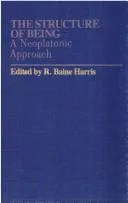
The Structure of being

 71
71

The Structure of being
R. Baine Harris’s The Structure of Being is a dense, demanding exploration of ontology from a distinctly esoteric viewpoint. Its primary strength lies in its systematic attempt to map the unseen architecture of existence, providing a coherent, albeit challenging, model. Harris avoids vague pronouncements, instead opting for a precise, almost scholastic, dissection of metaphysical planes and their inhabitants. One particularly striking passage details the differentiation of consciousness across various levels, illustrating the subtle distinctions between spiritual, psychic, and material awareness. However, the book's considerable limitation is its almost impenetrable prose at times. Harris’s commitment to philosophical rigor can lead to sentences that require multiple readings to unpack, potentially alienating readers not already steeped in the terminology of hermetic philosophy. The work is a valuable, if arduous, contribution to esoteric thought.
📝 Description
71
R. Baine Harris's The Structure of Being, published in 1981, dissects the architecture of reality through esoteric traditions.
First released in 1981, The Structure of Being by R. Baine Harris offers a careful study of metaphysical and ontological principles. The book goes beyond surface-level descriptions of existence to analyze the fundamental structure of reality as understood within various esoteric traditions. Harris builds a systematic framework intended to clarify the relationship between consciousness and matter. This work is aimed at serious students of metaphysics, hermeticism, and comparative religion who desire a structured approach to understanding existence. It requires readers to have a basic grasp of philosophical concepts and a readiness to engage with abstract ideas. Those interested in the philosophical basis of Western esotericism will find it particularly valuable. Harris's work emerged during a time of renewed interest in esoteric philosophy, building upon earlier frameworks from movements like Theosophy and Anthroposophy but seeking a more precise philosophical articulation. It engaged with the intellectual atmosphere of the early 1980s, which also saw discussions on Sufism and esoteric psychology, providing a distinct Western metaphysical viewpoint.
Published in 1981, The Structure of Being appeared as esoteric philosophy saw a resurgence after the countercultural movements of the preceding decades. While traditions like Theosophy and Anthroposophy had previously outlined ontological systems, Harris's aim was a more philosophically rigorous presentation. His work entered intellectual conversations that included figures like Idries Shah, who wrote on Sufism and esoteric psychology. Harris's contribution was a distinct, Western-focused metaphysical perspective that sought to articulate the underlying principles of being.
💡 Why Read This Book?
• Gain a structured understanding of metaphysical planes, as detailed in Harris's exposition on the seven planes of existence, offering a distinct model beyond general spiritual concepts. • Grasp the principle of correspondence as applied to the 'as above, so below' axiom, learning how macrocosmic structures inform microcosmic realities, a core tenet of Hermeticism. • Analyze the concept of the causal body and its role in manifesting experience, providing concrete insights into the relationship between consciousness and form from a 1981 esoteric perspective.
⭐ Reader Reviews
Honest opinions from readers who have explored this book.
❓ Frequently Asked Questions
What specific esoteric traditions influence R. Baine Harris in 'The Structure of Being'?
The work draws heavily from Western Hermeticism and Neoplatonic philosophy, evident in its discussion of emanations, planes of existence, and the principle of correspondence, concepts central to these traditions since antiquity.
Is 'The Structure of Being' suitable for beginners in esoteric studies?
While accessible to those with some background, the book's philosophical depth and specialized terminology make it more challenging for absolute beginners. A foundational understanding of metaphysical concepts is beneficial.
What is the significance of the causal body as discussed in the book?
Harris presents the causal body as the vehicle for higher consciousness and the seat of the 'higher self,' explaining its role in connecting the spiritual planes to the lower, manifest realms.
When was 'The Structure of Being' first published?
The book was first published in 1981, placing it within a period of resurgent interest in esoteric philosophy and metaphysics.
Does the book offer practical exercises or meditations?
The book focuses primarily on theoretical and philosophical exposition. While understanding its concepts can inform practice, it does not directly provide guided exercises or meditations.
How does Harris's work compare to Theosophical texts?
Harris offers a more philosophically rigorous and less narrative-driven approach than many Theosophical works, focusing on ontological structure rather than detailed cosmogenesis or lineage histories.
🔮 Key Themes & Symbolism
Ontological Architecture
The book systematically outlines a multi-layered structure of existence, moving from the absolute to the manifest. Harris details distinct planes of being, from the spiritual to the material, emphasizing their interconnectedness and hierarchical relationship. This framework serves as a map for understanding the fundamental nature of reality, positing that all phenomena arise from this underlying structure. The work explores the concept of divine emanation and the differentiation of consciousness as it descends through these planes.
The Principle of Correspondence
Central to Harris's thesis is the Hermetic principle of 'as above, so below.' The Structure of Being meticulously details how patterns and laws operating on higher, subtler planes are reflected and replicated on lower, denser levels. This concept is applied to understanding the formation of worlds, the nature of consciousness, and the efficacy of esoteric practices, suggesting that manipulating or understanding one level has direct implications for others.
Causal Body and Manifestation
Harris dedicates significant attention to the causal body, defining it as the principle of form or the energetic blueprint that precedes physical manifestation. This body, associated with the higher mind or soul, is presented as the bridge between the spiritual realms and the personality. The book explains how the state and development of the causal body directly influence an individual's experiences and potential for spiritual evolution, offering a framework for understanding karma and destiny.
The Nature of Consciousness
The work investigates consciousness not as a singular entity but as a spectrum of awareness corresponding to the different planes of existence. Harris differentiates between higher, spiritual consciousness, the psychic awareness of the intermediate realms, and the limited consciousness of the physical body. Understanding these distinctions is presented as crucial for spiritual development and for comprehending the process of incarnation and reincarnation.
💬 Memorable Quotes
Direct passages from the work, attributed to the author.
“Existence is a series of graduated states, each reflecting the principles of those above it.”
— This highlights the hierarchical and imitative nature of reality as described in the book. It emphasizes that understanding higher principles is key to comprehending lower manifestations, a core tenet of esoteric philosophy.
“The causal body is the matrix from which the lower vehicles are formed.”
— This succinctly defines the role of the causal body as the originating pattern or energetic template for the subtle and physical bodies, explaining its foundational importance in esoteric cosmology.
“Correspondence ensures that the laws of the higher realms are operative in the lower.”
— This interpretation focuses on the functional aspect of the correspondence principle, illustrating how universal laws are consistently applied across all levels of existence as presented by Harris.
“The descent of consciousness creates the differentiated world we perceive.”
— This concept points to the idea that the material world and individual subjective experience are products of consciousness itself 'projecting' or 'condensing' into lower states.
💡 Key Ideas
Editorial paraphrase of the work's core concepts — not direct quotes.
Planes of existence are not separate realms, but differing densities of the same fundamental substance.
This paraphrase emphasizes the unity underlying the apparent divisions in Harris's model of reality, suggesting that differences are primarily a matter of vibrational frequency or density.
🌙 Esoteric Significance
Tradition
The Structure of Being is firmly rooted in the Western Esoteric Tradition, drawing heavily from Hermeticism, Neoplatonism, and Gnosticism. It attempts to synthesize and articulate the fundamental principles of these traditions regarding cosmology and ontology. Harris departs from some simpler interpretations by presenting a highly structured, almost scientific, model of reality, emphasizing logical coherence and systematic classification of planes and forces.
Symbolism
Key symbols explored include the concept of 'planes' themselves, representing different frequencies or densities of existence. The 'causal body' functions symbolically as the archetypal form or blueprint that determines manifest reality. The axiom 'as above, so below' is not just a phrase but a fundamental symbolic representation of the interconnectedness and mirrored nature of macrocosm and microcosm within the structure Harris delineates.
Modern Relevance
Contemporary practitioners of Hermeticism, ceremonial magic, and certain branches of occult philosophy continue to find value in Harris's systematic approach. His work provides a conceptual scaffold for understanding the layered nature of consciousness and reality, relevant to modern psychological approaches to esotericism and comparative metaphysics. Thinkers exploring consciousness studies from a non-materialist perspective may also find his ontological framework insightful.
👥 Who Should Read This Book
• Students of Hermeticism and Neoplatonism: Those seeking a detailed, philosophical exposition of the core tenets of these traditions, particularly concerning the structure of reality and consciousness. • Metaphysical Researchers: Individuals interested in comparative religion and philosophy who wish to understand a specific, structured esoteric model of existence beyond common spiritual literature. • Advanced Esoteric Students: Readers with a foundational understanding of occult concepts who desire a more rigorous and systematic framework for their studies, moving beyond introductory material.
📜 Historical Context
R. Baine Harris's The Structure of Being, published in 1981, emerged from a fertile ground of esoteric and metaphysical inquiry that gained momentum in the latter half of the 20th century. The era saw a resurgence of interest in Western esotericism, moving beyond the more popular spiritualist movements of earlier decades. While figures like Manly P. Hall had already established extensive bodies of work on hermeticism and occult philosophy, Harris's text aimed for a more systematic, philosophical dissection of ontological principles. It occupied a space distinct from the burgeoning New Age movement, which often favored more experiential or psychological approaches. The book's rigorous, almost academic, tone distinguished it from many contemporary esoteric publications. Its intellectual lineage can be traced through Neoplatonism and traditionalist philosophy, engaging with ideas present in works published by scholars like René Guénon, though Harris's specific focus was on the internal structure of being itself.
📔 Journal Prompts
The differentiation of consciousness across the planes described in Harris's model.
The causal body as the matrix for lower vehicles.
The implications of the principle of correspondence for daily life.
Reflecting on the concept of graduated states of existence.
Mapping personal perceived reality onto the structured planes of being.
🗂️ Glossary
Planes of Existence
Hierarchical levels or dimensions of reality, ranging from the most subtle spiritual to the densest material. Each plane operates under specific laws and principles.
Causal Body
The energetic or spiritual vehicle that embodies the essential nature and potential of an individual, serving as the blueprint for lower bodies and experiences.
Principle of Correspondence
The Hermetic axiom 'as above, so below,' signifying that the laws and patterns of the higher, spiritual realms are reflected in the lower, material worlds.
Ontology
The branch of philosophy concerned with the nature of being, existence, and reality.
Emanation
The concept of reality flowing or radiating outwards from a single divine source or principle, creating subsequent levels of existence.
Microcosm
The individual human being, seen as a reflection or miniature representation of the larger universe (macrocosm).
Macrocosm
The universe as a whole, considered as a great entity containing all existence.
🔮 Readers Also Liked
Browse all →









More by R. Baine Harris
All books →



More Free Occult Philosophy Books
View all →