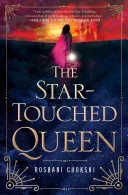
The Star-Touched Queen
 83
83

The Star-Touched Queen
Roshani Chokshi's 2016 debut, The Star-Touched Queen, eschews the typical YA fantasy opener for something more focused on the weight of prophecy. Maya, a princess whose horoscope promises a disastrous marriage, finds her quiet life upended by a political wedding. The strength of the novel lies in its rich mythological setting, drawing heavily from Indian lore, which provides a refreshing backdrop. However, the pacing occasionally falters, particularly in the middle sections where Maya's transition between the mortal and divine realms feels somewhat abrupt. The concept of the celestial court, a place of immense power and ancient pacts, is particularly well-realized. While the romance elements are present, they are overshadowed by Maya’s struggle with her prophesied fate and her growing understanding of the gods, notably the Death God. The work offers a compelling, if sometimes uneven, exploration of destiny and agency within a pantheon-driven narrative.
📝 Description
83
Roshani Chokshi's 2016 novel, The Star-Touched Queen, begins with a princess fated to marry death.
Maya, a princess born under a dire prophecy, is destined to marry Death. This grim foretelling isolates her in her father's court, where she is treated with suspicion. Her life takes an unexpected turn when her father arranges a political marriage to stabilize his kingdom. This union forces Maya from her quiet studies into the demanding role of queen, a position she feels unprepared for.
Upon entering her new life, Maya finds herself in a world of political maneuvering and ancient magic. The story quickly moves beyond her immediate troubles, drawing her into the hidden society of gods and the celestial court. There, she meets powerful deities and begins to understand the true, complex, and dangerous nature of her destiny, which involves far more than just a marriage.
The novel examines fate, personal choice, and the effects of power. Maya's path becomes a journey of self-discovery as she confronts the supernatural forces influencing her existence and the decisions she must make to survive and protect others. The narrative explores the connections between humans and immortal beings, and the sacrifices required by both love and duty.
Inspired by Indian folklore and Hindu cosmology, the novel situates its narrative within a rich mythological framework. Maya's encounters with figures like Yama, the god of death, and other celestial beings are central to her development. These interactions are not simply plot points; they illuminate the esoteric beliefs underpinning her world and her emerging abilities, pushing her to confront her fears and accept her distinct nature.
💡 Why Read This Book?
• Gain insight into the symbolic significance of horoscopes and prophecies as depicted in the novel's depiction of Maya's fate, understanding how ancient astrological beliefs can shape perceived destinies. • Explore the intricate world-building rooted in Hindu cosmology and Indian mythology, encountering specific deities and celestial courts that offer a unique alternative to Western fantasy tropes. • Witness Maya’s transformation from a scorned princess to a queen grappling with supernatural forces, learning about the challenges of embracing one's inherited power and the concept of the celestial marriage.
⭐ Reader Reviews
Honest opinions from readers who have explored this book.
❓ Frequently Asked Questions
What is the primary astrological element that influences Maya's life in The Star-Touched Queen?
Maya's life is heavily influenced by her horoscope, which specifically foretells a marriage marked by 'Death and Destruction.' This prophecy isolates her and leads to her father arranging a politically motivated marriage.
Which mythological tradition heavily inspires the world of The Star-Touched Queen?
The novel draws significant inspiration from Indian folklore and Hindu cosmology, featuring deities and concepts familiar within these traditions, such as the Death God.
What is the significance of the celestial court in the book?
The celestial court represents a realm of gods and powerful beings where Maya is drawn into a destiny far grander and more perilous than her mortal life. It is a central setting for her encounters with supernatural powers.
When was Roshani Chokshi's The Star-Touched Queen first published?
The Star-Touched Queen was first published on April 26, 2016, and quickly became a New York Times Bestseller.
What is the core conflict Maya faces regarding her marriage?
Maya's core conflict stems from her prophesied marriage to Death and Destruction, contrasting with the political marriage arranged by her father. She must navigate these intertwined fates.
Does the book feature romance as a central theme?
While romantic elements are present, the primary focus is on Maya's struggle with her destiny, her encounters with the divine, and her personal growth, often overshadowing the romantic plotlines.
🔮 Key Themes & Symbolism
Prophecy and Free Will
The narrative hinges on Maya’s horoscope, a potent symbol of predetermined fate. The work explores whether individuals are bound by such pronouncements or can forge their own paths. Maya’s journey is a struggle against the destiny foretold, particularly her marriage to the Death God. This theme studies the esoteric concept of karma and astrological influence, questioning the extent to which cosmic alignments dictate mortal lives versus the power of individual choice and action in altering one's path.
The Divine and Mortal Realms
The book intricately details the separation and interaction between the mortal kingdom and the celestial court. Maya’s transition between these realms highlights the permeable boundary between human existence and the domain of gods. This explores esoteric ideas of spiritual hierarchy and the influence of divine beings on human affairs. The divine realm, populated by figures like the Death God, is presented not as abstract divinity but as tangible powers with complex motivations and relationships, affecting mortal lives profoundly.
Sacrifice and Duty
As Maya assumes the role of queen and navigates her fated marriage, she is confronted with the necessity of sacrifice. Her duties extend beyond her kingdom to encompass the affairs of the gods. This theme examines the esoteric principle that great power or spiritual advancement often requires profound personal sacrifice. The narrative questions what one must give up for love, for power, or for the greater cosmic order, presenting these choices as key moments in Maya's spiritual and personal development.
Self-Discovery and Identity
Burdened by a negative prophecy and societal scorn, Maya’s journey is fundamentally one of uncovering her true identity and potential. Her forced marriage and subsequent immersion in the world of gods compel her to confront her fears and embrace her heritage. This mirrors esoteric quests for self-knowledge, where the outer journey reflects an inner transformation. Maya learns that her perceived curse might be a unique gift, leading to a profound understanding of her place in both the mortal and divine spheres.
💬 Memorable Quotes
Direct passages from the work, attributed to the author.
“Her horoscope promised a marriage of Death and Destruction.”
— This concise statement expresses the central conflict and the oppressive weight of prophecy that Maya faces from the outset, setting the stage for her struggle against a fated doom.
“Maya was to become the queen of a kingdom she did not understand.”
— This highlights Maya's unpreparedness and reluctance for the role of queen, emphasizing the sudden, imposed nature of her responsibilities and the vast unknown she must confront.
“The celestial court was a place of ancient pacts and terrifying beauty.”
— This phrase vividly describes the otherworldly and dangerous nature of the divine realm, suggesting a place where powerful, age-old agreements hold sway, posing a significant threat and allure.
“She had earned only the scorn and fear of her father's kingdom.”
— This illustrates the societal ostracization Maya endures due to her foretold destiny, showcasing the lasting impact of prophecy on reputation and interpersonal relationships within her kingdom.
“Content to follow more scholarly pursuits, her whole world was torn apart.”
— This contrasts Maya's desired quiet life of study with the chaotic upheaval caused by her arranged marriage, underscoring the dramatic external forces that disrupt her personal aspirations.
🌙 Esoteric Significance
Tradition
The Star-Touched Queen draws heavily from Hindu cosmology and Indian folklore, embedding esoteric concepts within its narrative. It aligns with traditions that view the universe as a divine play (Lila) and emphasize the interconnectedness of human actions, karma, and celestial influences. While not strictly adhering to a singular Western esoteric school like Hermeticism or Kabbalah, it explores universal themes of destiny, divine intervention, and the spiritual journey, resonating with Gnostic ideas of hidden knowledge and the soul's quest for liberation.
Symbolism
The horoscope itself is a potent symbol of predetermined fate and astrological influence, central to Maya's initial predicament. The celestial court symbolizes the divine realm, a place of immense power, ancient laws, and spiritual consequence, representing a higher plane of existence that interacts with the mortal world. The figure of the Death God, while seemingly terrifying, can be interpreted esoterically as a force of transformation and the inevitable cycle of life and death, a necessary aspect of cosmic balance rather than pure malevolence.
Modern Relevance
Contemporary readers and writers engage with The Star-Touched Queen for its sophisticated integration of mythology and its exploration of agency within fated narratives. It appeals to modern spiritual seekers interested in non-Western esoteric traditions and comparative mythology. The book's themes of self-discovery and reclaiming one's narrative resonate with contemporary discussions on identity and empowerment, making it relevant to discussions within modern paganism and spiritual exploration that seek diverse mythic frameworks.
👥 Who Should Read This Book
• Readers interested in exploring mythologies beyond the Western canon, particularly those fascinated by Hindu cosmology and Indian folklore, will find a rich and imaginative world. • Individuals drawn to stories centered on prophecy, destiny, and the philosophical tension between fate and free will will appreciate Maya's complex journey. • Fans of romantic fantasy who also appreciate strong world-building and supernatural elements will enjoy the blend of political intrigue, divine encounters, and developing relationships.
📜 Historical Context
Published in 2016, The Star-Touched Queen emerged during a period of heightened interest in diverse mythologies within Young Adult fantasy literature, moving beyond traditional European folklore. Roshani Chokshi’s work tapped into a growing demand for stories drawing from non-Western traditions, specifically the rich narratives of Hindu mythology and Indian culture. This contrasted with earlier dominant trends that often featured Greco-Roman or Norse pantheons. The novel's reception as a New York Times Bestseller indicated its broad appeal and the market's readiness for such culturally specific fantasy. While not directly engaging in a public debate or facing censorship, its success alongside authors like Sabaa Tahir and Leigh Bardugo signaled a shift towards more varied cultural influences in the genre.
📔 Journal Prompts
Maya's horoscope: Reflect on how external pronouncements about your future might limit or define your perceived possibilities.
The celestial court's power: Consider the influence of unseen forces or societal expectations on your life's trajectory.
The arranged marriage: Explore the concept of duty versus personal desire in significant life choices.
Encountering the Death God: Reflect on confronting aspects of yourself or your life that feel daunting or final.
The weight of a crown: Consider the responsibilities and transformations that come with assuming a new, challenging role.
🗂️ Glossary
Horoscope
A diagram of the positions of celestial bodies at the moment of a person's birth, used in astrology to predict future events and personality traits. In the book, Maya's horoscope is a central element dictating her perceived destiny.
Celestial Court
A metaphorical or literal realm inhabited by gods, deities, and powerful supernatural beings. It represents a higher plane of existence that influences or interacts with the mortal world, as depicted in various mythologies.
Death God
A deity associated with death, the underworld, or the transition from life to afterlife. In the context of the book, this figure is a significant character with whom Maya's fate is intertwined.
Raja
A Sanskrit title for a king or prince in India. In the novel, Maya's father holds this title, ruling over his kingdom.
Prophecy
A prediction of future events, often delivered by a divine or supernatural source. Maya's horoscope functions as a prophecy that shapes her life and the kingdom's perception of her.
Political Marriage
A marriage arranged for reasons of state or diplomacy, rather than for love or personal compatibility. Maya's marriage is precisely this, intended to quell external rebellions.
Mortal Kingdom
The realm or domain inhabited by humans, as distinct from the divine or supernatural realms. Maya begins her story in this setting before venturing into the celestial.
This book appears in 1 collection
🔮 Readers Also Liked
Browse all →









From the “Reincarnation” Collection
View all →





More Free Occult Philosophy Books
View all →