Yoga asanas
 80
80

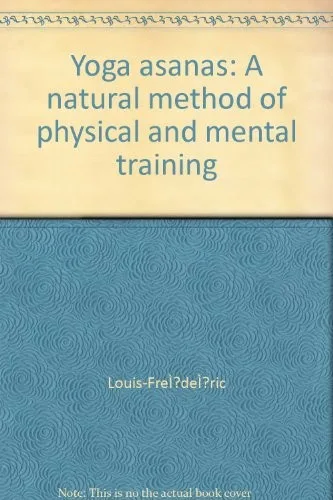
Yoga asanas
Louis-Frédéric Nussbaum's "Yoga Asanas," first appearing in 1973, presents a rigorous, almost archaeological, survey of yogic postures. Unlike contemporary guides, it treats asanas less as a fitness trend and more as components of a complex spiritual discipline, meticulously detailing their forms and historical interpretations. The strength lies in its scholarly detachment and encyclopedic scope, offering a valuable reference for those who wish to understand the historical trajectory of yogic physical practice. However, this very detachment can make the text feel dry for readers seeking inspiration or a direct connection to the living practice of yoga. A particularly illustrative section details the intricacies of the Sarvangasana (Shoulder Stand), not just as a physical pose but as a posture with specific physiological and energetic implications rooted in classical texts, which is where its academic value truly shines. While not a book for casual engagement, it is an essential historical document for serious students of yoga's past.
📝 Description
80
Louis-Frédéric Nussbaum's 1973 book examines yogic postures with scholarly rigor, not as modern fitness.
Originally published in 1973, Louis-Frédéric Nussbaum's "Yoga Asanas" provides a detailed study of yogic postures. This work is not a guide to contemporary yoga practice but rather a historical and technical analysis of the physical forms of yoga. It dissects the mechanics, intended effects, and symbolic meanings of various asanas, drawing on classical yogic texts and traditions. The book functions as a compendium, detailing postures with an emphasis on their execution and their therapeutic or spiritual aims within their original contexts.
This volume is best suited for serious students of yoga history, comparative religious studies, and practitioners interested in the classical foundations of yogic physical culture. It is not for those seeking introductory sequences or modern alignment advice. Scholars, researchers, and practitioners who engage with pre-modern yogic traditions will find it a valuable resource for understanding the evolution and interpretation of asana practice. Those interested in the intersection of physical discipline and spiritual development within ancient Indian thought will also find it relevant.
Emerging in 1973, "Yoga Asanas" offered a scholarly counterpoint to the growing Western fascination with Eastern spiritual traditions. At a time when yoga styles were being adapted globally, often with significant departures from their origins, Nussbaum's work grounded the study of asanas in their historical and textual roots. It predates the widespread digital dissemination of yoga information, positioning it as a key text for academics and dedicated practitioners seeking in-depth knowledge from a scholarly perspective, distinct from popularizations of Hatha Yoga.
💡 Why Read This Book?
• Gain a historical perspective on yogic postures that moves beyond modern interpretations, understanding asanas as described in classical Indian traditions as documented in the 1973 publication. • Explore the technical and symbolic dimensions of specific asanas, learning about their Sanskrit nomenclature and intended energetic effects as detailed by Nussbaum. • Understand the academic context of yoga studies in the early 1970s, recognizing how "Yoga Asanas" contributed to a more scholarly approach to yogic physical culture.
⭐ Reader Reviews
Honest opinions from readers who have explored this book.
❓ Frequently Asked Questions
When was Louis-Frédéric Nussbaum's "Yoga Asanas" first published?
Louis-Frédéric Nussbaum's "Yoga Asanas" was first published in 1973, offering a scholarly examination of yogic postures from a historical perspective.
Is "Yoga Asanas" by Nussbaum suitable for beginners seeking a yoga workout?
No, this book is not designed as a beginner's guide for physical workouts. It is a scholarly text focused on the historical and technical aspects of asanas, best suited for researchers and serious students of yoga history.
What kind of information can I expect regarding yoga postures in this book?
You can expect detailed examinations of individual asanas, including their Sanskrit names, precise physical configurations, intended effects, and their place within classical yogic traditions and texts.
Does the book discuss the spiritual or philosophical aspects of yoga asanas?
Yes, the book explores the philosophical underpinnings of yogic practice, linking the physical discipline of asanas to broader yogic goals such as meditation and spiritual development.
Who is Louis-Frédéric Nussbaum and what is his background?
Louis-Frédéric Nussbaum was an author and scholar whose work focused on Eastern spiritual traditions, particularly yoga. His 1973 publication reflects a deep engagement with historical yogic texts and practices.
How does "Yoga Asanas" (1973) differ from modern yoga books?
Unlike many modern books, Nussbaum's "Yoga Asanas" prioritizes historical accuracy and scholarly analysis over contemporary fitness trends or simplified practice guides, focusing on classical origins.
🔮 Key Themes & Symbolism
Classical Asana Analysis
The core of Nussbaum's work lies in its systematic deconstruction of yogic postures. It moves beyond mere physical description to analyze the Sanskrit terminology, precise anatomical positioning, and the intended energetic flow within each asana. The book treats postures not as isolated exercises but as integral components of a larger yogic system, often referencing classical Indian texts to support its detailed explanations. This analytical approach allows readers to grasp the depth and complexity of asana practice as it was understood in its historical context, far removed from modern adaptations.
Historical Yogic Traditions
"Yoga Asanas" situates the practice of physical postures within the broader field of historical yogic traditions. Published in 1973, it reflects an academic effort to document and understand these practices before their widespread global commercialization. The book serves as a scholarly bridge, connecting contemporary interest in yoga with its ancient roots. It emphasizes the lineage and textual basis of asana, providing a foundation for understanding how these physical forms evolved and what purpose they served in different eras and philosophical schools.
Symbolism and Energetics
Beyond the purely physical, Nussbaum's examination explores the symbolic and energetic dimensions of yogic postures. Each asana is presented not just for its biomechanical benefits but for its capacity to influence subtle energies (prana) and facilitate states of consciousness. The book explores how certain poses were believed to stimulate specific chakras or nadis, and how their form might symbolically represent spiritual concepts. This esoteric layer is crucial for understanding the integral role of asana within the holistic yogic path towards self-realization.
Academic Approach to Yoga
The publication of "Yoga Asanas" in 1973 marked a significant contribution to the academic study of yoga. Nussbaum applies a rigorous, scholarly methodology, drawing on textual analysis and comparative studies to present a dispassionate overview of the subject. This approach distinguishes it from devotional texts or popular manuals. For scholars and dedicated practitioners, it represents a vital resource for understanding the historical development and theoretical underpinnings of yogic physical culture, providing a factual bedrock for further inquiry.
💬 Memorable Quotes
Direct passages from the work, attributed to the author.
“The precise configuration of the body in an asana is often linked to specific energetic pathways.”
— This highlights the book's focus on the subtle body, suggesting that the physical form of a yoga posture is intentionally designed to interact with and influence the flow of vital energies, a concept central to classical yogic philosophy.
“Each posture serves not only a physical function but also a role in cultivating mental discipline.”
— This points to the dual nature of asana practice as presented in the text – it's both a method for physical conditioning and a tool for mental focus, integral to the yogic path of self-mastery.
“Understanding the Sanskrit nomenclature is key to unlocking the deeper meaning of an asana.”
— This emphasizes the importance of language and tradition in the study of yoga. The original Sanskrit names are presented as carrying layers of meaning, offering insights into the posture's purpose and symbolism.
“The historical evolution of asana practice reveals a continuous dialogue with classical yogic texts.”
— This suggests that the book traces the lineage of yogic postures, showing how they have been interpreted and adapted over time, always referencing foundational scriptures as a point of origin or comparison.
“The therapeutic aims of an asana are often intertwined with its meditative applications.”
— This interpretation underscores the holistic approach of classical yoga, where physical well-being and mental tranquility are not separate pursuits but are achieved through integrated practices, including the careful execution of postures.
🌙 Esoteric Significance
Tradition
This work aligns with the scholarly tradition of studying Indian philosophical systems, particularly the various schools of Yoga and Vedanta. While not strictly a 'Hermetic' text in the Western esoteric sense, it engages with the universal esoteric principle of the body as a vehicle for spiritual development. It contributes to the broader esoteric discourse by offering a detailed, empirical breakdown of practices often shrouded in mysticism, allowing for a more grounded, albeit analytical, approach to yogic disciplines.
Symbolism
The book frequently explores the symbolic dimensions of asanas, such as the potential representation of cosmic principles or stages of spiritual awakening within the physical form. For instance, postures like inversions (e.g., Sarvangasana) are analyzed not just for their physical effects but for their symbolic connection to reversing worldly attachments or accessing higher consciousness, aligning with esoteric traditions that view the physical body as a microcosm of the universe.
Modern Relevance
Contemporary scholars of religious studies and yoga history continue to reference Nussbaum's "Yoga Asanas" as a foundational text for understanding the historical development of yogic physical culture. Its detailed analyses are valuable for researchers examining the evolution of practice and its philosophical underpinnings. Modern practitioners seeking to connect with the historical roots of asana, beyond purely fitness-oriented interpretations, also find value in its scholarly approach and textual grounding.
👥 Who Should Read This Book
• Students of Yoga History: Researchers and academics seeking a rigorous, historically grounded examination of yogic postures and their textual origins. • Comparative Religion Scholars: Individuals studying the diverse practices within Indian spiritual traditions and their philosophical contexts. • Dedicated Yoga Practitioners: Those interested in understanding the classical foundations and historical interpretations of asana, beyond contemporary fitness trends.
📜 Historical Context
Published in 1973, Louis-Frédéric Nussbaum's "Yoga Asanas" emerged during a central era for the global understanding of yoga. The mid-20th century saw a significant increase in Western engagement with Eastern spiritual practices, often filtered through various interpretations. This period was characterized by the popularization of Hatha Yoga, with figures like B.K.S. Iyengar gaining international recognition for their systematic approaches to asana. Nussbaum's work, however, offered a distinct, scholarly perspective, focusing on historical textual analysis rather than contemporary pedagogical methods. It provided a crucial counterpoint to the burgeoning Westernized yoga movements, grounding the study of postures in their original Indian philosophical and textual contexts. The book's meticulous detail and academic rigor positioned it as a resource for those seeking a deeper, historically informed understanding, distinct from the more accessible, practice-oriented literature beginning to dominate the market.
📔 Journal Prompts
The historical interpretation of Sarvangasana as detailed by Nussbaum.
The symbolic representation of the body within classical yogic texts explored in the book.
The role of asana in cultivating mental discipline as outlined in the 1973 publication.
The connection between physical form and energetic pathways in yogic postures.
Nussbaum's analysis of the Sanskrit nomenclature for specific asanas.
🗂️ Glossary
Asana
A Sanskrit term referring to a physical posture, particularly those practiced in yoga for physical, mental, and spiritual development. In classical texts, it denotes a steady and comfortable seated posture for meditation.
Hatha Yoga
A branch of yoga that focuses on physical postures (asanas) and breath control (pranayama) to prepare the body and mind for higher states of consciousness or meditation.
Prana
The vital life force or energy that is believed to flow through the body, particularly along energetic channels (nadis). Yogic practices aim to regulate and direct prana.
Sanskrit Nomenclature
The system of naming yoga postures using words from the Sanskrit language, which often conveys symbolic or functional meaning related to the pose.
Chakras
In yogic and Hindu traditions, these are described as energy centers located along the spine, believed to influence physical and mental well-being. Asanas are sometimes understood to stimulate specific chakras.
Nadis
Subtle energetic channels within the body through which prana is believed to flow. Yogic practices, including asana and pranayama, aim to purify and balance these channels.
Vedanta
One of the major schools of Hindu philosophy, focusing on the Upanishads and the nature of reality (Brahman) and the self (Atman). It often informs the philosophical context of yogic practices.
🔮 Readers Also Liked
Browse all →









More by Louis-Frédéric Nussbaum
All books →
More Free Occult Philosophy Books
View all →