Theosophy, Imagination, Tradition
 74
74

Theosophy, Imagination, Tradition
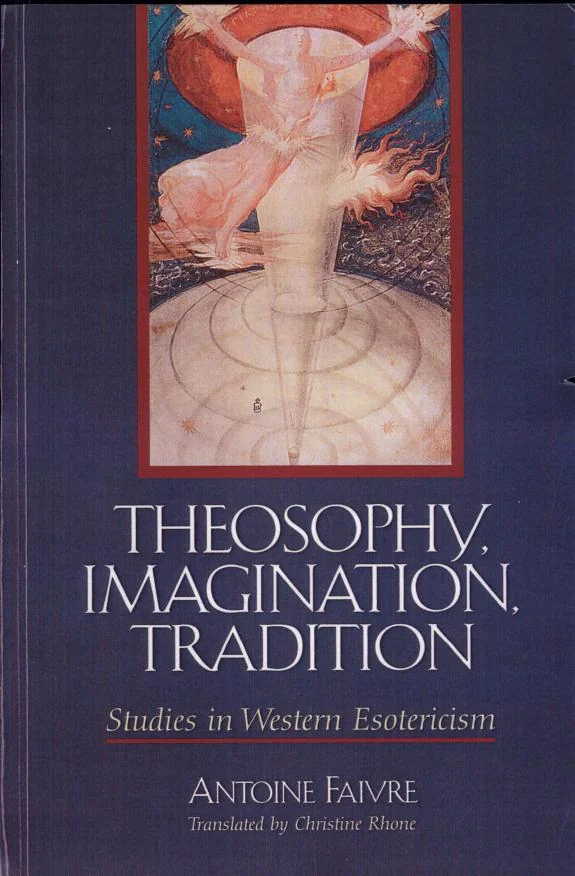
Antoine Faivre's "Theosophy, Imagination, Tradition" presents a formidable intellectual challenge, tracing the currents of Western esotericism with a scholar's precision. Faivre's strength lies in his refusal to oversimplify; he meticulously details how theosophical systems, the often-misunderstood faculty of imagination, and the very notion of tradition were reconfigured from the Renaissance onwards. His examination of how imagination functioned as a tool for esoteric knowledge, rather than mere flights of fancy, is particularly illuminating, especially when he discusses its role in the works of figures like Swedenborg. However, the density of the prose and the assumption of considerable prior knowledge can make this text less accessible than its subject matter might suggest. The section on the transmission of tradition, while crucial, occasionally feels overly abstract. Despite these hurdles, the book offers a vital corrective to superficial treatments of Western esotericism, demanding close attention but rewarding it with a more sophisticated understanding. It is an indispensable, albeit demanding, contribution for dedicated scholars.
📝 Description
74
Antoine Faivre examines Western esotericism from the Renaissance to the 20th century.
Antoine Faivre's "Theosophy, Imagination, Tradition" provides a detailed historical and interpretive study of Western esotericism. The book spans from the Renaissance period through the early twentieth century. It carefully analyzes how theosophical thought, the imaginative faculty, and the concept of tradition functioned as central elements within these spiritual movements.
Faivre's work goes beyond simple description. He engages in critical analysis of how these components influenced esoteric philosophies and practices. The study is aimed at serious students of Western esotericism, scholars of comparative religion, and intellectual historians. It will particularly interest those who seek a deep understanding of esoteric thought's development, especially concerning the philosophical bases of movements like Theosophy and the role imagination plays in spiritual searching.
This book analyzes the intellectual currents of post-Enlightenment Europe, a time when rationalism coexisted with renewed interest in mystical and occult traditions. Faivre addresses the influence of figures like Jakob Böhme and the emergence of organizations such as Helena Blavatsky's Theosophical Society, founded in 1875. His approach is informed by scholarship in comparative religion and the study of the sacred, reflecting a broader academic engagement with esoteric subjects.
💡 Why Read This Book?
• Gain a sophisticated understanding of how 'imagination' functioned as a core esoteric faculty, not just creative fancy, by examining Faivre's analysis of its role in spiritual development from the Renaissance onwards. • Grasp the dynamic nature of 'tradition' within Western esoteric movements, moving beyond static definitions to see how it was actively constructed and contested by figures and schools discussed from the 17th century. • Understand the specific historical trajectory of 'Theosophy' as a distinct intellectual and spiritual current, differentiating it from broader mystical traditions through Faivre's detailed historical and interpretive study.
⭐ Reader Reviews
Honest opinions from readers who have explored this book.
❓ Frequently Asked Questions
What is the primary focus of Antoine Faivre's "Theosophy, Imagination, Tradition"?
The book's primary focus is a historical and interpretive study of Western esotericism from the Renaissance to the 20th century, examining the interconnected roles of theosophical thought, the faculty of imagination, and the concept of tradition.
Which historical periods does Faivre cover in his study of Western esotericism?
Faivre's study spans a significant period, from the Renaissance (roughly 15th-16th centuries) through to the 20th century, encompassing major shifts in intellectual and spiritual thought.
How does Faivre define 'imagination' in the context of esotericism?
Faivre presents imagination not as mere fantasy but as a crucial cognitive and spiritual faculty that esotericists used to access or perceive realities beyond ordinary sensory experience and rational understanding.
What is the significance of 'tradition' as discussed in the book?
The book explores tradition as a complex, living body of knowledge and practice transmitted across generations. Faivre shows how esotericists engaged with, interpreted, and sometimes redefined these traditions to suit their specific spiritual aims.
Who is Antoine Faivre and what is his contribution to the study of esotericism?
Antoine Faivre is a preeminent scholar of Western esotericism, known for his rigorous academic approach. His work, including this book, has been instrumental in establishing esotericism as a legitimate field of historical and philosophical inquiry.
Does the book discuss specific esoteric movements or figures?
Yes, the work engages with various aspects of Western esotericism, referencing historical periods and intellectual currents that informed movements and thinkers relevant to theosophy, imagination, and tradition.
🔮 Key Themes & Symbolism
Theosophical Systems
This theme studies the diverse systems of thought often labeled 'theosophical,' which aim for direct knowledge of divine nature and the cosmos. Faivre examines how these speculative, theological frameworks evolved from Renaissance mystical philosophies through to the more organized movements of the 19th and 20th centuries. The focus is on understanding their intellectual architecture and their place within the broader esoteric landscape, differentiating them from purely philosophical or religious doctrines.
The Faculty of Imagination
Faivre re-evaluates the role of imagination, positioning it as a vital cognitive and spiritual tool within esoteric traditions. It is explored not as simple fantasy or delusion, but as a means of perceiving hidden realities, bridging the material and spiritual worlds. The work analyzes how figures and movements across centuries utilized this faculty for insight, revelation, and the construction of their symbolic universes, moving beyond purely rational apprehension.
The Transmission of Tradition
This theme critically examines how esoteric knowledge and practices are transmitted, preserved, and transformed over time. Faivre investigates the concept of 'tradition' as a dynamic, often contested, inheritance. He explores how esotericists engaged with established lineages, selectively adopted elements, and reinterpreted them, thereby creating distinct schools and currents of thought that maintained a connection to, yet departed from, their historical roots.
Renaissance to 20th Century Esotericism
The book provides a historical arc, tracing the evolution of esoteric thought from the intellectual milieu of the Renaissance, a period of renewed interest in Hermeticism and Neoplatonism, through the subsequent centuries. It maps the changes and continuities in esoteric philosophies, including the rise of figures like Swedenborg and the impact of movements such as Theosophy, culminating in the early 20th century's spiritual landscape.
💬 Memorable Quotes
Direct passages from the work, attributed to the author.
“Imagination is not a mere faculty of representation, but a means of access to spiritual realities.”
— This highlights Faivre's central argument that imagination in esoteric contexts functions as a genuine cognitive organ for perceiving hidden truths, distinct from ordinary sensory input or logical deduction.
“Tradition is not a static deposit, but a living and evolving process.”
— This emphasizes Faivre's view of tradition as something actively maintained and reshaped by practitioners, rather than a fixed set of doctrines or practices inherited without modification.
“Theosophical speculation seeks to synthesize divine knowledge through symbolic interpretation.”
— This captures the essence of theosophy as Faivre presents it: a method of understanding the divine and the cosmos through intricate symbolic systems and speculative reasoning.
“The Renaissance provided fertile ground for the re-emergence of esoteric ideas.”
— This points to the historical context of the book's beginning, noting the period's intellectual climate that allowed for the revival and adaptation of ancient mystical and occult philosophies.
“The development of esoteric thought involves both continuity and radical innovation.”
— This captures the dynamic tension Faivre explores: how esoteric traditions build upon past knowledge while simultaneously introducing novel interpretations and practices that mark them as distinct.
🌙 Esoteric Significance
Tradition
Faivre's work is deeply rooted in the lineage of Western Esotericism scholarship, particularly its focus on Hermeticism, Gnosticism, and the mystical traditions that flourished from the Renaissance onward. It fits within this lineage by providing a rigorous, historical-interpretive framework for understanding these complex movements. The book departs from simpler classifications by focusing on underlying conceptual structures – theosophy, imagination, tradition – as key analytical tools, offering a more nuanced view of how esoteric thought is transmitted and transformed.
Symbolism
The book engages with the symbolic dimensions inherent in esoteric traditions. While not focused on a single symbol, it analyzes motifs like the 'divine imagination' as a creative cosmic force and the 'tree of life' as a common cosmological structure in various theosophical systems. These symbols are interpreted not as mere decoration, but as fundamental conceptual maps used to represent the relationship between the divine, the human, and the cosmos, providing pathways to esoteric knowledge.
Modern Relevance
Contemporary scholars of religion and philosophy, particularly those in the field of esoteric studies, continue to draw upon Faivre's analytical methodologies. Thinkers interested in the philosophy of consciousness, the nature of spiritual experience, and the history of ideas related to magic and mysticism find his framework for understanding imagination and tradition highly relevant. Practices within contemporary neopaganism, New Age spirituality, and various forms of Western magical orders often implicitly or explicitly engage with the historical currents Faivre meticulously documents.
👥 Who Should Read This Book
• Advanced students of Western Esotericism seeking a scholarly framework to analyze historical movements and core concepts. • Comparative religion scholars interested in understanding the philosophical underpinnings and historical development of non-mainstream spiritual traditions. • Intellectual historians examining the interplay between philosophy, theology, and mystical thought from the Renaissance to the modern era.
📜 Historical Context
Published in 2000, Antoine Faivre's "Theosophy, Imagination, Tradition" emerged at a time when the academic study of Western esotericism was solidifying as a distinct field, influenced by scholars like Mircea Eliade and Frances Yates. Faivre's work engages with the intellectual currents following the Enlightenment, a period characterized by both scientific rationalism and a counter-movement exploring spiritual and occult phenomena. He situates his study against the backdrop of figures like Jakob Böhme and Emanuel Swedenborg, whose visionary theosophies laid groundwork for later developments. The book implicitly contrasts with more purely historical or sociological approaches by emphasizing the interpretive and philosophical dimensions of esoteric traditions. It also implicitly addresses the legacy of Theosophy as founded by Helena Blavatsky in 1875, a movement that synthesized Eastern and Western esoteric ideas and significantly impacted 20th-century spiritual thought. The reception of such works within academia has often involved working through the perceived boundary between objective scholarship and the subjective nature of esoteric experience.
📔 Journal Prompts
The role of theosophy in synthesizing disparate spiritual insights.
Examining the transmission and evolution of a chosen esoteric tradition.
How the faculty of imagination functions as a bridge between the seen and unseen.
The historical context of Renaissance esoteric revival.
Faivre's concept of 'tradition' versus a static historical view.
🗂️ Glossary
Theosophy
Broadly, systems of speculative theology or religious philosophy seeking direct knowledge of divine nature and the cosmos, often through mystical or occult means. Faivre examines its specific manifestations from the Renaissance onward.
Imagination (Esoteric)
In esoteric contexts, not mere fantasy, but a cognitive and spiritual faculty capable of perceiving or accessing realities beyond ordinary sensory and rational understanding; a tool for spiritual insight.
Tradition (Esoteric)
A body of knowledge, practices, and beliefs transmitted through generations within an esoteric lineage. Faivre emphasizes its dynamic, interpretive, and often contested nature.
Renaissance Esotericism
The revival and reinterpretation of ancient esoteric traditions (like Hermeticism, Neoplatonism, Kabbalah) during the Renaissance period, influencing subsequent Western mystical and occult thought.
Hermeticism
A philosophical and religious tradition based on writings attributed to Hermes Trismegistus, emphasizing correspondences between the macrocosm and microcosm, and the pursuit of gnosis (knowledge).
Gnosticism
A diverse set of religious movements in antiquity emphasizing salvation through secret knowledge (gnosis), often positing a dualistic worldview and a distant, unknowable supreme God.
Symbolic Interpretation
The method of understanding texts, images, or concepts by viewing them as representations of deeper, often spiritual or metaphysical, realities or principles.
This book appears in 1 collection
🔮 Readers Also Liked
Browse all →









From the “Western Esotericism” Collection
View all →






More Free Occult Philosophy Books
View all →