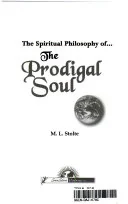
The Spiritual Philosophy Of-- the Prodigal Soul
 74
74

The Spiritual Philosophy Of-- the Prodigal Soul
M. L. Stolte's "The Spiritual Philosophy Of-- the Prodigal Soul" offers a thoughtful, albeit dense, examination of the soul's cosmic journey. The book distinguishes itself by reframing the well-worn 'prodigal son' parable into a metaphysical narrative of spiritual homecoming, moving beyond simple moralistic interpretations. Stolte’s strength lies in the intricate way she connects psychological states to cosmic realities, particularly in her discussions on the soul's perceived alienation from its source. A notable limitation is the demanding prose; readers unfamiliar with metaphysical terminology will require significant patience and perhaps supplementary texts. The section exploring the 'Veil of Forgetfulness' is particularly arresting, presenting a vivid, if abstract, portrayal of how souls become entangled in the material plane. Ultimately, the work provides a challenging but rewarding perspective for dedicated seekers.
📝 Description
74
M. L. Stolte's The Spiritual Philosophy Of-- the Prodigal Soul, published in 2002, reinterprets metaphysical concepts concerning the soul's return.
This 2002 book examines consciousness and the soul's perceived separation from its origin. It does not propose a new system but reframes existing metaphysical ideas. The work focuses on the soul's journey back to its spiritual source, engaging with themes of alienation and self-discovery. It posits an inherent divinity within all beings, suggesting this is a core aspect of existence.
The text is intended for individuals already engaged with spiritual philosophy or those seeking a deeper understanding of metaphysical discussions. It will appeal to readers interested in theological and metaphysical ideas that extend beyond conventional religious frameworks. Those pursuing personal spiritual growth or philosophical reflection on existence will find relevant material within its pages. The discussion moves toward reintegration and understanding the soul's path.
Published in 2002, Stolte's work connects to a lineage of esoteric thought that addresses the soul's trajectory. It follows a period of renewed scholarly and popular interest in Gnosticism and Neoplatonism, traditions that often describe a divine essence within humanity that has become estranged. The book's emergence in the early 21st century aligns with contemporary spiritual inquiry often pursued outside established religious institutions, drawing on a mix of philosophical and mystical sources.
💡 Why Read This Book?
• Gain a unique metaphysical interpretation of the 'Prodigal Soul' archetype, moving beyond common allegorical readings, as presented in the text's central narrative. • Understand the concept of the 'Veil of Forgetfulness' and its role in the soul's journey towards self-realization, a specific motif explored within the book. • Grasp the spiritual philosophy of homecoming and reintegration, offering a framework for personal spiritual development that Stolte outlines from 2002.
⭐ Reader Reviews
Honest opinions from readers who have explored this book.
❓ Frequently Asked Questions
What is the central metaphor in "The Spiritual Philosophy Of-- the Prodigal Soul"?
The central metaphor is the 'Prodigal Soul,' which represents the soul's descent into material existence and its subsequent journey of return to its spiritual origin, first published in 2002.
Who is M. L. Stolte?
M. L. Stolte is the author of "The Spiritual Philosophy Of-- the Prodigal Soul." Little biographical information is readily available, suggesting a focus on the work itself rather than the author's personal narrative.
Does the book offer practical exercises for spiritual growth?
While not a manual of step-by-step exercises, the book's philosophical framework, particularly its exploration of the soul's journey, implicitly guides the reader toward introspection and spiritual reorientation.
What kind of philosophical tradition does this book draw from?
The book draws from esoteric and metaphysical traditions, engaging with concepts common in Gnosticism and Neoplatonism, focusing on the soul's inherent divinity and its perceived separation from the source.
When was "The Spiritual Philosophy Of-- the Prodigal Soul" first published?
The book was first published in 2002, placing it within the early 21st-century landscape of esoteric and spiritual literature.
What does the 'Veil of Forgetfulness' represent in Stolte's philosophy?
The 'Veil of Forgetfulness' symbolizes the state of spiritual amnesia the soul experiences upon incarnating into the material world, obscuring its true divine nature and origin.
🔮 Key Themes & Symbolism
The Prodigal Soul Archetype
The core of Stolte's philosophy centers on the 'Prodigal Soul,' not merely as a biblical character but as a universal representation of consciousness that has descended into material form. This descent is framed not as a fall from grace but as a necessary phase of experiential learning. The soul, akin to the prodigal son, wanders through the 'far country' of materiality, often forgetting its divine origin. The book meticulously details this process, emphasizing the inherent, albeit obscured, connection to the divine source that eventually calls the soul back home.
The Veil of Forgetfulness
A crucial concept is the 'Veil of Forgetfulness,' which Stolte posits as the mechanism by which the soul becomes absorbed in the illusions of the material world. This veil obscures the soul's true nature and its connection to the divine. The work explores how this forgetfulness is not a punishment but a condition for experiencing individuality and the lessons inherent in separation. Understanding and penetrating this veil is presented as a primary goal of spiritual awakening.
Spiritual Homecoming and Reintegration
The ultimate trajectory of the Prodigal Soul is its journey of homecoming. This involves the active process of remembering, recognizing, and reclaiming one's divine identity. Stolte's philosophy emphasizes that this reintegration is not a passive event but an unfolding realization. The book suggests that through conscious effort and spiritual insight, the soul can overcome its alienation and return to a state of unity with the divine, completing its cycle of experience.
Non-Dualistic Perspective on Existence
Underlying the entire narrative is a profoundly non-dualistic viewpoint. Stolte's work suggests that the apparent separation between the soul and the divine, or between spirit and matter, is ultimately an illusion. The 'far country' is not truly separate from the 'Father's house.' This perspective reframes the challenges of existence not as cosmic errors but as integral parts of a unified, divine unfolding. The book encourages readers to see the divine presence within all experiences, even those of suffering and confusion.
💬 Memorable Quotes
Direct passages from the work, attributed to the author.
“The far country is not outside the Father's house, but a hidden chamber within it.”
— This interpretation emphasizes the non-dualistic core of the philosophy, suggesting that the perceived separation from the divine is an illusion, and the material realm is an intrinsic part of the spiritual totality.
“To remember is to return; the veil of forgetfulness is pierced by the light of inherent knowing.”
— This captures the essence of spiritual awakening in Stolte's work, where the process of remembering one's true nature is synonymous with returning to the divine source.
“Alienation is the shadow cast by the brilliance of divine individuality.”
— This interpretation suggests that the feeling of being lost or separate arises not from a lack of divinity, but from the very intensity and uniqueness of the divine spark within each soul.
“The prodigal's return is the universe's affirmation of its own wholorneness.”
— This concept frames the individual soul's spiritual homecoming as a reflection and confirmation of the universe's ultimate unity and completeness, a key tenet of the book's metaphysical outlook.
💡 Key Ideas
Editorial paraphrase of the work's core concepts — not direct quotes.
The soul's journey into materiality is a deliberate act of forgetting, a necessary passage for the fullness of divine experience.
This paraphrased concept highlights Stolte's view that the soul's descent is not accidental but purposeful, enabling a richer understanding of existence through contrast and experience.
🌙 Esoteric Significance
Tradition
Stolte's work aligns with perennialist and Gnostic-influenced esoteric traditions, emphasizing an inherent divine spark within humanity that has become obscured. It departs from strictly dualistic frameworks, positing a non-dual reality where the material and spiritual are ultimately unified. This approach shares common ground with Neoplatonic ideas of emanation and return, as well as certain interpretations of Vedanta, focusing on the soul's journey back to its source, which is not external but integral.
Symbolism
The 'Prodigal Soul' is the central symbol, representing consciousness's journey into separation and its eventual return. The 'Veil of Forgetfulness' symbolizes the illusion of materiality and the obscuring of divine awareness. The concept of the 'Father's House' represents the ultimate, unified divine reality from which the soul originates and to which it aspires to return, signifying wholeness and absolute being.
Modern Relevance
Contemporary seekers exploring non-dual philosophies, consciousness studies, and the psychology of spiritual development can find resonance in Stolte's work. Thinkers and practitioners interested in reframing personal struggles as part of a larger spiritual journey, particularly those disillusioned with orthodox religious dogma, draw upon these ideas. The book's emphasis on inherent divinity speaks to modern spiritual individualism and the quest for self-realization outside traditional structures.
👥 Who Should Read This Book
• Students of comparative religion and esoteric philosophy seeking nuanced interpretations of soul cosmology. • Individuals grappling with feelings of alienation or existential longing who are open to metaphysical frameworks for understanding their experience. • Philosophically inclined readers interested in the nature of consciousness and reality, particularly those drawn to non-dualistic perspectives.
📜 Historical Context
M. L. Stolte's "The Spiritual Philosophy Of-- the Prodigal Soul," published in 2002, emerged within a fertile period for esoteric thought, building upon and reinterpreting currents that gained momentum in the late 20th century. The work engages with themes resonant with Gnostic and Neoplatonic traditions, which experienced renewed interest following scholars like Elaine Pagels and the broader New Age movement's exploration of inner divinity. Stolte's approach, focusing on the soul's journey and inherent divinity, can be seen as a contemporary echo of earlier metaphysical explorations. While not directly engaging with specific contemporaries in a polemical manner, the book participates in a broader dialogue about consciousness and spirit that included figures like Ken Wilber and contemporary explorations of non-duality. Its publication predates the widespread digital dissemination of esoteric texts, positioning it as a distinct contribution to the printed philosophical literature of its time.
📔 Journal Prompts
Reflect on the 'Veil of Forgetfulness' and its manifestations in your daily life.
Consider the 'Prodigal Soul' archetype and your personal journey of return.
What does 'spiritual homecoming' signify in your understanding of existence?
Explore the concept of the 'Father's House' as inherent reality.
How does the idea of divine individuality relate to your sense of self?
🗂️ Glossary
Prodigal Soul
The central archetype representing the soul's descent into material existence and its subsequent journey back to its divine origin, characterized by a period of forgetfulness and alienation.
Veil of Forgetfulness
The spiritual condition or illusion that causes the soul to lose awareness of its divine nature and its connection to the source while incarnated in the material world.
Father's House
Represents the ultimate divine reality, the source from which the soul originates. It symbolizes wholeness, unity, and the true spiritual home of consciousness.
Materiality
The field of physical existence, perceived as a place of learning and experience for the soul, distinct from but ultimately connected to the spiritual realm.
Homecoming
The process of spiritual reintegration, where the soul remembers its divine origin and returns to a state of conscious unity with the divine source.
Alienation
The feeling of separation or being lost that the soul experiences in the material world, a state that precedes and motivates the journey of return.
Divine Individuality
The unique expression of the divine spark within each soul, which can paradoxically lead to a sense of separation while being an essential part of the divine whole.
This book appears in 1 collection
🔮 Readers Also Liked
Browse all →







From the “Spiritual Awakening” Collection
View all →



More Free Magic & Ritual Books
View all →