The Spirit Book
 78
78

The Spirit Book
Raymond Buckland’s *The Spirit Book* offers a meticulously researched, almost anthropological survey of spirit communication, moving beyond mere anecdote to contextualize the practice historically. Its strength lies in its encyclopedic breadth, charting the evolution of Spiritualism from its 19th-century ascendance through various mediums and practitioners. Buckland’s approach is notably dispassionate, presenting phenomena and belief systems without overt endorsement or dismissal, which is a welcome change from more polemical works.
However, this very detachment can sometimes leave the reader wanting a deeper exploration of the *experience* of communication. While the historical details are abundant, the subjective, lived reality for mediums or those seeking contact is often presented as data rather than lived experience. For instance, the detailed accounts of early séances and the Fox sisters' alleged rappings are fascinating, but the emotional or spiritual impact on participants is less emphasized. Despite this, the book serves as an invaluable reference, an anchor in the often-murky waters of psychic phenomena.
Read more ↓
Ultimately, *The Spirit Book* is an essential, if sometimes dry, compendium for anyone serious about understanding the history and mechanics of spirit communication.
📝 Description
78
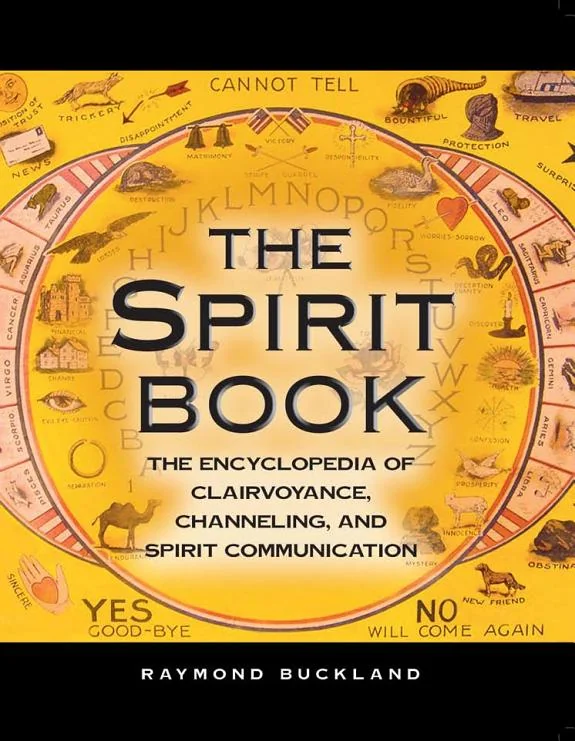
Raymond Buckland's 1980 "The Spirit Book" catalogs methods and history of spirit communication.
This volume serves as a detailed encyclopedia of spirit communication techniques and their historical development. Buckland covers methods ranging from clairvoyance to channeling, tracing their evolution and the individuals involved. The book outlines the rise of Spiritualism, a movement prominent in the 19th century, by examining its core beliefs and notable figures.
It is a resource for those interested in consciousness, the afterlife, and historical spiritual practices. Students of parapsychology, religious history, and esoteric traditions will find value here, as will anyone seeking to understand the global history of beliefs about spirit interaction. The book offers a structured look at mediumship and comparative spiritual practices.
Buckland places the search for spirit communication within a larger historical context, emphasizing the 19th-century surge in Spiritualism. This era saw increased public engagement and organized practices, influenced by figures like the Fox sisters. The book follows this trajectory, detailing the techniques and beliefs that characterized this period of spiritual inquiry.
Buckland's work chronicles the historical development of Spiritualism, a specific manifestation within the broader esoteric tradition of seeking contact with the spirit world. While it touches on broader occult interests, its primary focus is on the direct communication practices that defined the 19th-century Spiritualist movement. It details the evolution of techniques and beliefs that shaped this particular spiritual current, distinguishing it from other forms of occultism.
💡 Why Read This Book?
• You will learn about the historical development of Spiritualism, including its key figures and the rise of mediumship, as detailed in the sections on the 19th century. • You will gain a structured understanding of various communication techniques like clairvoyance and channeling, differentiating them from less defined spiritual concepts. • You will discover specific historical instances and personalities within the spirit communication movement, providing concrete examples beyond general theories of consciousness.
⭐ Reader Reviews
Honest opinions from readers who have explored this book.
❓ Frequently Asked Questions
What historical period does The Spirit Book primarily focus on for the development of Spiritualism?
The Spirit Book extensively covers the 19th century, which was a pivotal era for the growth and popularization of Spiritualism and various forms of spirit communication.
Who are some key figures mentioned or discussed in relation to spirit communication history?
While specific names vary by edition and focus, the work typically examines influential figures and pioneers within the Spiritualist movement and related fields of psychic research.
What are the main types of spirit communication methods explored in the book?
The book details methods such as clairvoyance, channeling, automatic writing, and trance states as primary avenues for alleged communication with spirits.
Is The Spirit Book a practical guide for beginners in mediumship?
While it explains methods, its primary focus is historical and encyclopedic rather than a step-by-step guide for developing personal psychic abilities.
Does The Spirit Book cover modern interpretations of spirit communication?
The book's core is historical, tracing the roots and evolution of the practice. Modern relevance is inferred through understanding these foundational historical contexts.
What is the author's stance on the validity of spirit communication?
Raymond Buckland maintains a generally objective and historical perspective, presenting information about beliefs and phenomena without explicit personal endorsement or refutation.
🔮 Key Themes & Symbolism
History of Spiritualism
The book meticulously charts the rise and evolution of the Spiritualist movement, particularly its significant surge in the 19th century. It details how beliefs in communication with the deceased became organized, moving from individual experiences to public demonstrations and formal societies. Buckland examines the social and cultural conditions that fostered this movement, highlighting key periods and geographical centers where Spiritualism gained prominence, offering a structured historical framework for understanding this enduring aspect of human belief.
Methods of Spirit Communication
A core focus is the cataloging and explanation of various techniques employed to communicate with spirits. This includes detailed explorations of clairvoyance, mediumship in its various forms (trance, physical, mental), automatic writing, and channeling. The work differentiates these methods, discussing their historical usage, perceived efficacy, and the theoretical underpinnings that have guided practitioners over centuries of exploration.
Key Figures in Psychic Research
Buckland profiles numerous individuals who played significant roles in the history of spirit communication and psychic phenomena. These range from early pioneers of Spiritualism to prominent mediums and researchers who shaped the discourse and practice. By examining their contributions, methods, and the controversies surrounding them, the book provides a biographical context for the broader historical narrative of exploring the spirit world.
Belief Systems and Phenomena
The encyclopedia addresses the underlying belief systems that support the possibility of spirit communication. It explores concepts of the afterlife, the nature of spirits, and the mechanisms through which interaction might occur. The work examines documented phenomena, such as apparitions, materializations, and spirit messages, presenting them within their historical and cultural contexts for critical review.
💬 Memorable Quotes
Direct passages from the work, attributed to the author.
“Spirits are constantly about us, and it is possible to speak to them.”
— This core tenet, central to Spiritualism, posits a persistent spiritual presence and the inherent potential for reciprocal communication between the living and the departed.
“The quest for communication spans three hundred years.”
— This statement frames the exploration of spirit interaction not as a recent fad, but as a continuous, long-standing human endeavor with deep historical roots.
“Clairvoyance, channeling, and spirit communication are the eternal quest.”
— This highlights the fundamental nature of seeking connection beyond the physical realm, categorizing these specific practices as key expressions of this enduring human drive.
“The history of Spiritualism is coaxed into...”
— This suggests a careful, deliberate unveiling of the historical narrative of Spiritualism, implying a detailed and nuanced presentation of its development and key moments.
“Methods of communication, their history, and the personalities involved.”
— This outlines the book's structure: an examination of *how* people believe spirits communicate, *when* these methods emerged, and *who* were the significant individuals driving these pursuits.
🌙 Esoteric Significance
Tradition
While not strictly adhering to a single esoteric lineage like Hermeticism or Theosophy, *The Spirit Book* draws heavily from the broad Western esoteric tradition, particularly its manifestation in 19th-century Spiritualism. It fits within a lineage that seeks to bridge the material and spiritual worlds through direct experience and verifiable phenomena, often diverging from more philosophical or ritualistic magical systems by emphasizing empirical observation of psychic events.
Symbolism
The book implicitly engages with symbols of transition and communication. The concept of the 'veil' between worlds is a pervasive symbolic motif, representing the barrier that mediums and practitioners aim to transcend. Likewise, symbols of light and darkness often represent spiritual presence versus absence or confusion. The act of 'channeling' itself can be seen as symbolic of a conduit or bridge, connecting disparate areas of existence.
Modern Relevance
Contemporary spiritual and New Age practices, as well as modern parapsychology research, continue to draw upon the foundational concepts and historical accounts detailed in *The Spirit Book*. Thinkers and practitioners interested in mediumship, energy healing, and altered states of consciousness often reference the historical precedents and methodologies documented by Buckland, seeing it as a crucial reference for understanding the evolution of these fields.
👥 Who Should Read This Book
• Students of Western Esotericism: Those interested in the historical development and diverse expressions of esoteric thought, particularly the phenomena of the 19th century. • Researchers of Religious History: Individuals studying the evolution of belief systems, religious movements, and the intersection of spirituality and popular culture. • Inquirers into Consciousness Studies: Anyone seeking to understand documented historical accounts and methodologies related to altered states, psychic phenomena, and consciousness beyond the physical.
📜 Historical Context
Raymond Buckland's *The Spirit Book* emerges from a rich vein of 19th-century Spiritualism, a movement that exploded in popularity following the alleged communications of the Fox sisters in Hydesville, New York, in 1848. This era was characterized by widespread interest in phenomena beyond conventional scientific understanding, fueled by social upheaval, religious questioning, and the burgeoning field of psychical research. Buckland situates his work within this lineage, tracing the development of methods like channeling and clairvoyance that became central to Spiritualist practice. He implicitly engages with contemporaries and predecessors who documented or participated in these movements, though the book’s encyclopedic nature means it rarely focuses on direct debate with specific figures like Sir Arthur Conan Doyle or Allan Kardec, instead providing a comprehensive overview of the practices themselves. The reception of such works historically varied, often oscillating between fervent belief and sharp skepticism from scientific and religious establishments.
📔 Journal Prompts
The history of Spiritualism and its practitioners.
Methods of spirit communication like clairvoyance and channeling.
Key figures involved in the 19th-century psychic research movement.
The concept of the veil between worlds.
Examining the belief systems surrounding spirit interaction.
🗂️ Glossary
Clairvoyance
The purported ability to perceive objects, events, or people beyond the normal range of senses, often described as seeing visions or images.
Channeling
A form of mediumship where an individual acts as a conduit for a spirit or entity to communicate directly, often speaking or writing through the medium.
Spiritualism
A religious movement and belief system centered on the idea that the spirits of the dead can communicate with the living.
Mediumship
The practice by which individuals, known as mediums, claim to establish communication between the living and spirits of the dead.
Automatic Writing
A claimed psychic or spiritual phenomenon where a person's hand moves to write, draw, or paint without conscious awareness or control by the writer.
Trance State
An altered state of consciousness characterized by deep relaxation, heightened suggestibility, and often a disconnection from immediate surroundings, used by mediums for communication.
Apparition
The appearance of a ghost or ghostlike image of a person or animal, often seen as a visual manifestation of a spirit.